Do these 3 things before closing this tab:
1Clear out junk files and repair common Windows errors2Fix the driver behind crashes, sound loss and screen glitches3Repair Windows errors before they cause bigger problemsA working preview from Lovable, Bolt, or v0 is not enough to publish an app on Apple’s App Store. Apple reviews the submitted app’s actual experience and its compliance with Apple’s rules—not the builder used to create it. Use this checklist to verify the app, its listing, privacy disclosures, reviewer access, and build requirements before submitting.
1. Check the app’s experience on real target devices
- Test the core features on the iPhone and iPad models and operating-system versions you intend to support. Confirm that each important flow works from start to finish.
- Make sure the app is complete and usable, and that its App Store description accurately reflects what it does.
- Assess whether it feels like an iOS app rather than a website placed inside an app. Apple says that “Websites served in an iOS app, web content that is not formatted for iOS, and limited web interactions do not make a quality app.” A web-based implementation is not automatically disqualified, but a thin wrapper or limited interaction can raise a quality concern. See Apple’s App Store guidelines and App Review overview.
These criteria apply whether the workflow uses Lovable, Bolt, v0, an exported codebase, or another tool. Apple’s published guidance does not establish separate review rules for those builders.




As an Amazon Associate I earn from qualifying purchases.
2. Complete the App Store product page
In App Store Connect, prepare the app name, icon, description, screenshots, previews, and keywords. Complete the age-rating questionnaire and check that the listing accurately represents the app’s features and content. Apple’s submission guidance covers the information required for an app’s product page.
3. Reconcile privacy disclosures with the shipped app
- Provide an accessible privacy-policy link in the app and in its App Store Connect metadata.
- Describe the data the app collects, how it is collected and used, and relevant sharing with third parties.
- Review the SDKs and services included in the actual shipped build. App Store privacy responses need to account for integrated third-party code, not just data collection implemented directly by your app. Keep the answers accurate as practices change.
Apple’s App Review Guidelines and privacy information for App Store Connect explain these requirements.
4. Give App Review working access and enough context
Use App Review Information to explain the app’s purpose, features, intended audience, business model, external services, and the devices and operating-system versions you tested. If a reviewer needs an account or code to reach an important feature, provide current demo credentials and any required access details.
For an app offering subscriptions, Apple’s complete-review information asks for an expired-subscription demo account so reviewers can inspect the purchase flow. Confirm that supplied credentials work before submission; reviewers cannot assess a flow they cannot access.
5. Attach any category- or region-specific documentation
Depending on the app’s services and where it will be distributed, Apple may require evidence such as licenses, regulatory clearance, partnership documentation, or rights to protected content. Check the rules that apply to the app’s category and each intended distribution region. Apple identifies areas including medical, financial, cryptocurrency, gambling, and protected content in its review-completion guidance.
6. Confirm the SDK and deployment target for your upload date
Apple’s submission page, accessed October 7, 2026, says that beginning in April 2027, iOS and iPadOS submissions must be built with the iOS and iPadOS 27 SDK or later and target iOS 15 or later. That is a future requirement as of the date checked, not a rule that should be assumed to apply to every earlier upload. Check Apple’s live submission requirements before building a release, especially if your upload will occur near or after the effective date.
Choosing a build route: questions that matter
Apple’s guidance does not rank Lovable, Bolt, v0, native development, or web wrappers as separate submission categories. When choosing or maintaining a workflow, judge the delivered app against the practical questions below. These are ways to apply Apple’s review criteria, not an official Apple scoring system.
- Experience: Is the app complete, useful, and appropriately designed for iOS, or does it offer little beyond a website view?
- Capabilities: Which native features and external integrations does the submitted build actually use?
- Privacy: Do the app’s policy and App Store Connect responses account for first-party and integrated third-party data practices?
- Review access: Can a reviewer reach and test every important feature, including account-based or paid flows?
- Maintenance: Can your team update and rebuild the app as Apple’s requirements and the app itself change?
Before you submit
- Test the complete app on the target devices and OS versions.
- Check the product page, age rating, and metadata against the app’s actual behavior.
- Audit the shipped build’s data flows and align the privacy policy and App Store privacy responses.
- Test reviewer credentials and include the context needed to assess the app.
- Gather any documentation required for the app’s category or distribution regions.
- Verify the SDK and deployment-target rules in force on the planned upload date.
Apple’s review considers the particular submitted app and submission. Following a checklist can help catch gaps, but it cannot guarantee approval; review decisions depend on the app’s compliance with the applicable criteria.
Quick Recap
Best Value
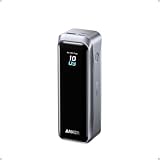
- 220W Total Output Power: Keep your office setup running strong with 220W total output from two USB-C ports and one USB-A port.
- Flight-Ready 20K Power: Carry 20,100mAh (72.36Wh) of portable, TSA-approved power, enough for up to 4.2 days of video streaming on an iPhone 17 Pro Max.
- 140W Max Fast Charging: Delivers up to 140W high-speed output for fast laptop charging when connected to a 5A cable. Charge a 16" MacBook Pro (M4 Pro) to 50% in 28 minutes.
- High-Speed 100W Max Recharging: Recharge Anker Prime Power Bank to 50% in 25 minutes using the 100W max USB-C input.
- What You Get: Anker Prime Power Bank (20K, 220W), 3.3 ft USB-C to USB-C charging cable (240W), travel pouch, welcome guide, 24-month warranty, and our friendly customer service.
Rank #4
Product prices and availability are accurate as of the date/time indicated and are subject to change. Any price and availability information displayed on Amazon at the time of purchase will apply.




