A simple xylophone routine works best when it moves from listening to single notes, then to a familiar melody and a short game. First check which notes your homemade or entry-level instrument can play; choose songs that fit those bars, and use clear start and stop cues. The plan below is a practical recommendation, not a tested duration or guaranteed learning method.
Set up the instrument and choose a song
Place the xylophone on a stable surface and check which bars are available. Sing a familiar melody once before playing so the learner knows what to listen for. “Happy Birthday” is one example used in a beginner activity from the Hong Kong Education Bureau; use only a section that fits the instrument’s range.
As an Amazon Associate I earn from qualifying purchases.
Agree on a start cue and a stop cue before picking up the mallet. A xylophone is played by striking its bars with a mallet, and beginner guidance emphasizes holding the mallet and hitting the intended note. Begin with controlled, gentle strikes rather than forceful hitting.
Follow this short practice sequence
1. Listen and prepare
Sing the chosen melody together, then point out or name the bars the learner will use. If the learner is very new, demonstrate one note and let them listen to its sound before asking them to play.
#1 Best Overall

- Rainbow-colored xylophone
- Includes an octave of notes
- Self-storing wooden mallets become the caterpillar’s antennas
- Helps children explore simple musical concepts; great for creative play, artistic expression, and fine motor skills
- Makes a great gift for preschoolers, ages 3 to 6, for hands-on, screen-free play
2. Warm up with single notes
Play a few individual notes slowly. After each strike, pause and listen until the sound fades; practice putting the mallet down or keeping it still on the stop cue. This makes careful note selection and listening part of the activity, rather than rushing straight into a song.
3. Echo a short pattern
Play a very short rhythm or sequence of notes, then invite the learner to repeat it. Start with a pattern small enough to remember after one hearing. Swap roles so the learner can choose a pattern for the adult or partner to echo. This is a suggested adaptation of listening and response activities, not a prescribed teaching protocol.
Rank #2
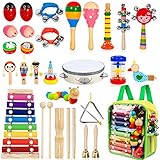
- [A Complete Kids Musical Instrument Set] - Including 33pcs 18 types shaking, tapping, beating and blowing instruments. Better way to start music than with a percussion set for preschoolers. Great and creative birthday gift for kids, boys, girls and toddlers.
- [Nontoxic and High Quality Materials] - Made of high quality non-toxic material, safe and reliable for little children. These instruments are made with lead free paint. Cpc Certified / Astm Certified.
- [Educational Musical Toys] - Various musical instruments provide a wide range of beautiful sounds keep time with the songs. It helps children to experiment with sounds, beat and rhythm.
- [Easy to Clean and Storage] - Comes with high quality clear compact backpack, convenient for your precious ones to collect toys, easy to carry when going out. Anywhere you can find a musical class.
- [Best After-sales Service] - All of our products are thoroughly tested before we ship them out to you. If it does not suit you for any reason, please contact us, we will take care of it in 12 hours!
4. Sing and play a melody
Sing the familiar song together, then play a short part that matches the bars available. Keep singing if it helps the learner follow the melody, and pause when a note is missing rather than trying to force the song onto an incomplete range.
5. Change one thing and close
Repeat a note or pattern softly, then more loudly, while keeping the strikes controlled. Finish with a turn-taking game: each player chooses one note or a short rhythm, plays only after the start cue, and puts the mallet down on the stop cue. Ask which pattern was easiest to repeat, then end the session.
Rank #3

- 【Child-Friendly Materials for Worry-Free Play】: This rainbow xylophone is made from materials free of BPA, lead, and phthalates, with no harsh odor. The wooden body is smoothly polished and splinter-free, while the colorful keys are securely attached. Two mallets designed for small hands make it easy for boys and girls to start playing
- 【Rainbow Fun That Inspires Imagination】: The bright rainbow colors invite children to tap, explore sounds, and enjoy open-ended play while encouraging creativity and imagination. Ideal for parent-child interaction and relaxed musical playtime. Please note: This product is a play toy and is not intended for professional performance
- 【Colorful Keys for Sound Exploration】: Features 8 brightly colored keys, each producing a clear, distinct sound when tapped. Repeated play lets children explore changes in tone, while the vivid colors support color recognition and visual discrimination, making early sound discovery engaging and fun
- 【Sturdy and Built for Lasting Play】: Made with quality wood and aluminum keys, the xylophone features a stable structure that resists loosening and warping. The two durable mallets withstand repeated tapping, making the set suitable for everyday musical play.
- 【Portable Design & Thoughtful Gift】: Lightweight and attractive, this wooden xylophone is easy to carry for home or on the go. Its colorful design and engaging play make it a thoughtful gift for birthdays and holidays. Parents can join the musical fun and enjoy meaningful bonding time with their children
Use games to build listening and turn-taking
- Play and stop: Start only on the agreed cue and stop promptly when signaled.
- Loud and quiet: Play the same note or pattern softly and then more loudly, and listen for the difference. Purdue ELM includes a loud/quiet contrast and stop-signal activity specifically for toddlers aged 12–24 months; that age framing applies to its activity, not to every learner.
- Echo and trade: Take turns making short patterns for the other person to repeat.
- Choose a note: Each player selects a bar in turn and says or sings the note before striking it.
- Compare listening: Listen to two contrasting pieces and describe what sounds different. WFMT’s lesson plan suggests listening to and comparing songs, including Saint-Saëns’s “Danse Macabre”; it is listening repertoire, not a beginner xylophone arrangement.
Singing games and classroom instruments are also discussed by the Kodály Center for Music Education in the context of music literacy. These ideas can make a practice session playful without requiring a long list of songs or a formal lesson plan.
Homemade xylophones: what to expect
PVC-pipe build
The Dallas Symphony Orchestra’s activity describes a PVC-pipe project using pipes cut to different lengths, two boards, string, and a mallet or small hammer, with adult help. Its instructions arrange the pipes from longest to shortest, secure them to a board frame, and say that shorter pipes produce higher notes. The activity states: “The best sound will be achieved by allowing a little less than a third of each pipe to extend off the frame.” Treat that as guidance for this particular project—not a guarantee of precise tuning or a standard scale.
Rank #4

- 【Package Include】:You will receive 2 pcs wooden xylophones for kids and 4 pcs child mallets in the package.It can enhance the relationship between children and parents,and add fun to the family by playing musical instruments toys.
- 【Product Size】:The size of this xylophone wooden instruments toy is 5 x 9.5 x 1.2 in/12.5 x 24.2 x 3 cm,and the length of the mallet is 2.6 in/6.5 cm.The vibrant keys ignite creativity and intelligence,introducing your little one to the world of music.
- 【High Quality】:Xylophone educational musical toy is made of high-quality wood and metal,sturdy and durable,odorless,and has smooth edges.The wooden mallet is designed specifically for children,making it easy to grip.
- 【Musical Educational Toys】:Wooden xylophone consists of 8 precisely tuned and brightly colored keys,which can enhance children's rhythm and music skills.Rich colors can exercise children's color cognition ability.
- 【Widely Used】:Xylophone wooden instruments toy is suitable as a music education toy for children,as well as a birthday gift,family prize,party gift,celebration item,holiday gift,Halloween gift,Christmas gift,etc.
Water-glass sound experiment
Carnegie Hall’s sound activity uses glasses filled with different amounts of water to explore xylophone-like sounds. It is a sound experiment, not a tuned xylophone for dependable melody practice. Glass can break, so consider the material and supervision appropriate to the learner; the activity page is not a child-safety assessment.
Crashes, No Sound, or Screen Glitches?
Random freezes, missing sound and display glitches usually trace back to one bad driver. Find and replace yours safely.Free scan · under a minuteWindows Errors? Fix Them Before They Spread
Repair common Windows errors and clear accumulated junk for a smoother, more stable PC - no reinstall needed.Free scan · no reinstallMatch the instrument to the goal
Before choosing songs or materials, decide whether the aim is sound exploration or playing recognizable melodies. For comparing instruments or builds, consider the following practical differences:
Best Value

- Classic pull-along toy musical instrument for toddlers
- Toddlers can use the tethered mallet to tap on the 8 colorful keys for fun sounds
- String and easy-rolling wheels let toddlers walk and pull the toy along
- This toy helps foster hand-eye coordination, gross motor skills, sensory skills and cause & effect
- For toddlers and preschool kids ages 18 months and older
- Playable range: Which notes are actually available, and can the chosen melody be played with them?
- Tuning consistency: Do repeated strikes on a bar sound consistent enough for the intended activity?
- Construction and durability: What are the bars or pipes made from, how are they supported, and how well will the instrument withstand regular handling?
- Mallet fit: Is the mallet suitable for the instrument? The cited lesson resources identify mallets as the playing implement but do not establish a specific model, material, or compatibility standard.
- Learner and purpose: Is this for supervised sound exploration, beginner melody practice, or classroom use?
For a beginner who wants more structured exercises, GIA Publications describes Primary Handbook for Mallets as an introductory resource for xylophone, marimba, vibes, and bells, for private or classroom use, with play-along audio. Check the publisher’s page for current edition and availability.
Quick Recap
Product prices and availability are accurate as of the date/time indicated and are subject to change. Any price and availability information displayed on Amazon at the time of purchase will apply.




