The Tool Desk
Outbyte PC Repair FREEClear out junk files and repair common Windows errorsFree Scan →Outbyte Driver Updater FREEScan for outdated or missing drivers - takes under a minuteDriver Scan →You can learn a columnar (ortholinear) keyboard arrangement without sacrificing your working typing ability, but treat the change as two separate decisions. Columnar geometry changes where the keys sit; Colemak or Dvorak changes which characters those keys produce. Start by changing only one variable when possible, practise the new mapping in short sessions, and keep your existing layout available for real work until the new one is reliable.
A practical routine is a layout-specific tutor for about 10 minutes a day, advancing only after accurate, hesitation-free practice. When your new-layout speed reaches roughly two-thirds of your former speed under comparable tests, begin using it for more everyday tasks. If you still need QWERTY, maintain it in a separate five-to-10-minute block rather than switching layouts repeatedly during one exercise.
As an Amazon Associate I earn from qualifying purchases.
First decide what “columnar layout” means
People use “columnar” to describe the physical arrangement of keys, while “layout” can also mean the software map that turns a key press into a character. They are related choices, not the same upgrade.
Physical geometry: row-staggered versus matrix
A conventional keyboard has rows that are horizontally staggered. An ortholinear or matrix board places keys in straight columns and rows. This changes finger travel and the location of familiar landmarks, but it does not automatically change the letters produced by each key. You can put a standard QWERTY mapping on a columnar board and learn the geometry first.
#1 Best Overall

- Ergonomic design: The split mechanical keyboard allows users to adjust the keyboard's spacing, tilt angle, and rotation angle, etc. It adopts a 3x6 column staggered split layout, with 3 thumb keys on each hand, repositioning the commonly used keys to an ergonomic thumb group for maximum efficiency, reducing wrist fatigue caused by long-term typing and repetitive movements, and reducing the risk of tenosynovitis.
- Hot-swappable low profile custom keyboard: Compatible with low profile mechanical switches, includes a two-in-one keycap and switch puller for easy replacement, equipped with pre-lubed low profile linear switches with only 40g actuation force, offering fast response and less finger fatigue, perfect for slim keyboard enthusiasts, long typing sessions, and e-sports gamers.
- RGB backlight: About 16.8 million RGB colors, you can enter VIAL to adjust the light color, brightness, speed, built-in rainbow, breathing, rhythmic light 45 preset light modes for you to choose, creating a perfect atmosphere for your typing experience, even in low light environments, you can easily identify the keys.
- Programmable keys: All keys are fully programmable. You can remap any key through VIAL create a custom quick access layer to speed up your workflow. With a simple mouse click and setting, any key can be mapped to a different function to create a keyboard layout and function settings that fully meet your needs, improving the comfort and efficiency of use.
- Wired connection: Equipped with a 1.5m USB-C cable and a 28cm TRS cable, the keyboard can be used in combination or independently on the left and right sides. The 40% ultra-compact layout (46 keys) provides more desktop operating space.
Software mapping: QWERTY, Colemak and Dvorak
A software layout changes the character assigned to each physical key. Colemak and Dvorak are alternative mappings that can be practised on an ordinary keyboard; buying a new board is not a prerequisite. If you change the board geometry and the character map together, you are learning two new spatial systems at once. The available guidance does not establish a universally best order for that combined transition, so choose the sequence that fits your work and tolerance for disruption.
Choose a target before you practise
Do not begin by buying hardware. Define the outcome you want, then select a mapping and practice method that support it.
| Decision | What changes | Lowest-risk starting point |
|---|---|---|
| Columnar geometry only | Key positions and hand movement; characters can remain QWERTY | Use QWERTY on the new board until the columns feel natural |
| Alternative software layout only | Characters generated by each key; physical board can stay unchanged | Install the target mapping and practise with a tutor before changing system-wide settings |
| Geometry and mapping together | Both key positions and character assignments | Expect a steeper adjustment; isolate each skill in short, controlled sessions |
Use the criteria that matter to your work
- Current layout: Colemak is described by its official materials as designed for a transition from QWERTY and as retaining many familiar shortcuts. Dvorak has a different arrangement and its own staged tutor.
- Language and punctuation: Check that the mapping handles the language, symbols and dead keys you use daily. A layout that is comfortable for English prose may require extra planning for programming, accented text or frequent punctuation.
- Operating-system support: Colemak is included with Windows 11 version 24H2 and newer according to its FAQ. Confirm your actual Windows version or the equivalent support on another operating system before following setup instructions; labels and availability can change.
- Shortcut habits: Inventory commands you use constantly, such as copy, paste, save, browser navigation and terminal shortcuts. Decide whether preserving their physical positions or their letter associations matters more to you.
- Physical change: If your main goal is wrist or finger positioning, test a columnar arrangement independently from a character remap. Neither the published layout guidance nor the available figures proves that an ortholinear board will improve comfort or speed for every person.
Set up the software without putting your job at risk
- Record your baseline. Take two or three typing tests in the language and mode you normally use. Keep the same text type, duration, punctuation setting and error scoring for later comparisons. Save both speed and accuracy; a faster score with more errors is not a useful recovery target.
- Keep a fallback. Leave QWERTY enabled as a second keyboard layout or retain a device on which you can work normally. Do not make the new mapping your only input method on the day you begin.
- Select a tutor for the intended map. Colemak Learn provides staged beginner lessons. A free Dvorak keyboard-training course offers five lessons and lets you practise before changing the computer-wide setting. Colemak Academy presents levels, all-word and full-sentence modes, mapping controls, and support for Colemak, Colemak-DH, Dvorak and custom layouts.
- Practise before a global switch. The Dvorak tutor specifically allows practice while your computer remains on its current mapping. This removes the pressure to type every password, message and work document in the new arrangement immediately.
- Check application-specific behaviour. Test your browser, terminal, code editor, remote-desktop software and password manager. Some applications or remote systems apply their own keyboard map, so a layout that works locally may not follow you into a remote session.
A practice routine that protects accuracy
Use short, daily sessions
Colemak’s learning guide recommends about 10 minutes each day for a couple of months. Treat that as a suggested schedule, not a promise that every learner will recover speed on that timetable. Consistency gives your fingers repeated exposure without forcing you to perform all day in an unfamiliar map.
Quick wins for a faster PC:
Scan for outdated or missing drivers - takes under a minuteDriver Scan →Clear out junk files and repair common Windows errorsFree Scan →Advance on fluency, not on a timer
The guide recommends repeating a lesson until you reach at least 97% accuracy without hesitation before moving on. That threshold belongs to the guide; it is not a benchmark validated across every learner or tutor. If you hit the percentage by guessing, slow down and repeat. The useful signal is accurate, automatic movement.
Keep your eyes off the keycaps
The learning guidance says: “Keep your eyes on the screen or the layout image, and never look at the keyboard when typing on Colemak.” Use an on-screen layout image if needed, but do not train yourself to hunt for printed legends. The Dvorak tutor likewise says you can retain your existing QWERTY labels while learning.
Do not relabel or rearrange keys just to match the map
The Colemak guide advises against relabeling or moving keycaps. Labels encourage looking down, and moving caps can relocate the tactile bumps on the F and J keys that many touch typists use as home-row landmarks. Leave the physical legends alone unless you have a specific accessibility reason to change them.
Rank #2

- Exclusive 50% Ortholinear Layout: Israfel incorporates a fantastic 50% ortho layout. It optimizes input efficiency by aligning each key in a vertical and horizontal pattern that matches the natural movement of the fingers. It not only improves accuracy but also reduces finger fatigue, making it ideal for users who spend extended periods typing, such as programmers and writers.
- Core56 Low-Profile System: This is a significant design in the overall KBDcraft keyboard structure. The 3-pin low-profile switches and hot-swap sockets, developed in collaboration with Kailh, create a thinner, more compact layout that enhances typing comfort while maintaining responsiveness. The custom low-profile MX-style compatible keycaps, produced by KeyTok, offer a smooth and comfortable typing experience.
- Hinge-Split Design: It allows Israfel to adjust the angle, offering up to 7 different tilt options, enabling users to set the keyboard at the angle that best suits their ergonomic preferences. This feature is particularly beneficial for long typing sessions, as it reduces strain on the wrists and shoulders, helping maintain good posture and reduce fatigue.
- Adaptive Gasket Mount: This design significantly enhances comfort and typing feeling. It provides more flexibility, reducing vibrations and noise when keys are pressed. The mount ensures even tactile feedback with every keystroke, promoting comfort during long typing sessions.
- High-Performance Custom Programming: Israfel offers powerful customization features, allowing users to configure key mappings, macro commands, and lighting effects through Vial software. You can define the function of each key, set up various shortcuts, and program macro combinations, enhancing workflow efficiency.
Stop when accuracy collapses
If your accuracy suddenly drops, take a short break rather than pushing through fatigue. The guidance does not provide a medical assessment or an individualized ergonomic protocol, so persistent pain, numbness or weakness should not be treated as a normal learning hurdle.
PC Slower Than It Used to Be?
A free scan shows the junk files, broken settings and background clutter dragging Windows down - then fixes them in one click.Free scan · Windows 10 & 11Outdated Drivers Are Slowing You Down
One free scan finds every outdated or missing driver and matches the right update for your exact hardware.Free scan · exact hardware matchMove from lessons to real typing in stages
Once the basic lessons feel automatic, introduce real words, sentences and work tasks in a controlled order.
- Single words: Use the tutor’s word mode to expose common letter combinations. Keep the goal accuracy and even rhythm, not a personal speed record.
- Sentences: Add capitalization, spaces and punctuation. Note which symbols or shortcut combinations remain awkward.
- Short private tasks: Write a note, search query or disposable document in the new layout. Keep important deadlines and customer-facing work on your fallback layout until errors are manageable.
- Longer sessions: Extend the duration only when your accuracy remains stable. Compare like with like: the same test language, duration and scoring rules each time.
- Everyday switch point: Colemak suggests moving into regular use at about two-thirds of your previous typing speed. This is the site’s rule of thumb, not independently established as an optimal threshold. Use it as a decision aid alongside error rate, fatigue and the consequences of mistakes.
- Speed practice: After beginner lessons, use typing tests or games to work on speed. Keep a dated log so a slow day does not look like a permanent setback.
Keep QWERTY ability while learning another map
If school, work, shared computers or games still require QWERTY, preserve it deliberately. Colemak recommends five to 10 minutes of QWERTY practice each day. Make that a separate block after the new-layout session, not a rapid alternation every few sentences. The recommendation is explicit, but there is no controlled evidence showing exactly how much QWERTY retention it guarantees for every learner.
A simple two-block schedule
- Block 1: Approximately 10 minutes on the new layout, using the next tutor lesson or a repeat of the current one.
- Block 2: Five to 10 minutes of QWERTY, using a comparable short text or test.
- During the day: Use the layout that fits the task. Avoid changing maps in the middle of a timed test or an important document.
When both maps are active, label their keyboard shortcuts in your operating system and learn the switching command. A visible indicator in the taskbar or menu bar can prevent an unexplained stream of incorrect characters.
Adding an ortholinear keyboard
A columnar board is optional. The official Colemak FAQ answers the question “Do I need to buy a new keyboard, move the keys or relabel them?” with: “No, in fact I recommend against it.” Learn the software mapping on your existing board first if uninterrupted work is your priority.
Recommended Free Tools
When hardware makes sense
Consider an ortholinear mechanical keyboard only if you specifically want straight columns, a different thumb arrangement, programmable layers or a board that fits your hands and desk. “Ortholinear mechanical keyboard” is a product category, not a requirement for Colemak or Dvorak. No particular model, price or availability is established here.
Rank #3
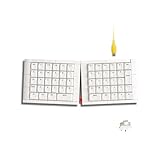
- Exclusive 50% Ortholinear Layout: Israfel incorporates a fantastic 50% ortho layout. It optimizes input efficiency by aligning each key in a vertical and horizontal pattern that matches the natural movement of the fingers. It not only improves accuracy but also reduces finger fatigue, making it ideal for users who spend extended periods typing, such as programmers and writers.
- Core56 Low-Profile System: This is a significant design in the overall KBDcraft keyboard structure. The 3-pin low-profile switches and hot-swap sockets, developed in collaboration with Kailh, create a thinner, more compact layout that enhances typing comfort while maintaining responsiveness. The custom low-profile MX-style compatible keycaps, produced by KeyTok, offer a smooth and comfortable typing experience.
- Hinge-Split Design: It allows Israfel to adjust the angle, offering up to 7 different tilt options, enabling users to set the keyboard at the angle that best suits their ergonomic preferences. This feature is particularly beneficial for long typing sessions, as it reduces strain on the wrists and shoulders, helping maintain good posture and reduce fatigue.
- Adaptive Gasket Mount: This design significantly enhances comfort and typing feeling. It provides more flexibility, reducing vibrations and noise when keys are pressed. The mount ensures even tactile feedback with every keystroke, promoting comfort during long typing sessions.
- High-Performance Custom Programming: Israfel offers powerful customization features, allowing users to configure key mappings, macro commands, and lighting effects through Vial software. You can define the function of each key, set up various shortcuts, and program macro combinations, enhancing workflow efficiency.
Colemak-DH and matrix boards
Colemak community documentation describes Colemak-DH differently for row-staggered boards and matrix or ortholinear boards. For matrix layouts it describes a version without the row-staggered Angle mod. This is a layout-specific implementation detail, not evidence that a matrix board is automatically faster or more comfortable. Confirm the exact variant in your firmware and operating-system settings before practising.
Free resources and how to use them
Colemak Learn
The staged lessons give you a sequence, an accuracy-based advancement rule and links to later typing tests and games. Use the lesson repetition guidance, then switch to varied text so you do not memorise one exercise.
Dvorak keyboard training
The free course has five lessons and lets you choose your own advancement pace. Its author offers completing a 100-word lesson in 15 minutes as an optional guideline. Treat that as a tutor-specific suggestion, not a universal standard or a required deadline.
Colemak Academy
The interface provides levels, all-word and full-sentence modes, mapping controls and support for Colemak, Colemak-DH, Dvorak and custom layouts. Its modes are useful for moving from isolated key patterns to continuous text.
Measure progress without fooling yourself
| Metric | How to record it | What it tells you |
|---|---|---|
| Accuracy | Percentage correct under the same test settings | Whether movements are becoming reliable |
| Speed | Words per minute or the tutor’s score, with duration and language noted | How quickly you can produce text under comparable conditions |
| Hesitation | Mark pauses, backtracking and searches for frequent keys | Whether a high score is truly automatic |
| Task performance | Count corrections or time on a real, low-stakes task | Whether tutor gains transfer to work you actually do |
| Comfort | Note fatigue or discomfort after each session | Whether to shorten, pause or change your setup; it is not a medical diagnosis |
What the published efficiency figures do—and do not—show
Colemak’s ergonomic page publishes comparative figures that are often quoted in discussions of alternative layouts:
- It says Colemak uses the home row 14% more than Dvorak and 122% more than QWERTY.
- Under a heading identifying same-hand row jumping, it says QWERTY is 1,500% higher than Colemak.
- Under a finger-distance heading, it says QWERTY is 102% higher than Colemak, or 118% higher when a 4% error rate is included.
These are comparisons published by the layout’s own site, accessed in 2026. The page text reviewed does not provide an independent study citation for them. They describe calculated layout characteristics, not a guarantee that you will type 14%, 122% or any other percentage faster, or that your hands will be healthier.
Rank #4

- Aligned Keys, Streamlined Workflow: Reimagine your typing experience with the EPOMAKER Hack70, with the 65% ortholinear layout that packs the minimalism style and ergonomic feature of luma40 but takes less adaptation time. Lines and rows are aligned in straight columns to eliminate the awkward diagonal reaching in traditional layout that often leads to wrist fatigue during long coding sessions or writing marathons, ideal for productivity boost and long-term comfort with minimal learning time.
- Minimalism Style, Maximum Durability: Designed to be the centrepiece of your workspace, the Hack70 mechanical keyboard features creamy white, edge-rounded body crafted from thick, substantially weighted ABS plastic, paired with black legends on matte white PBT keycaps. These dye-sublimated keycaps, durable against fade or greasy shine, comes in uniform height to maintain the geometric harmony of the grids, ensuring a sleek, subtle, elegant aesthetic that riches your desktop style without screaming for attention.
- Creamy Colour, Creamy Sound: The geometric harmony does not stop at appearance, as each keystroke on Hack70 creamy keyboard sounds consistent and pleasantly thocky. The superior Gasket-mount and dampening materials keeps the PCB float and absorb echo from each keypress, for a cushioned, creamy sound and buttery smooth typing feel that’s gentle on your joints. The factory lubed switch delivers pleasant sound right out of box, while the hot-swappable sockets allow you to switch up typing feel and sound with a simple pull and push, whether you desire the silent quietness or the audible feedback of tactile clicky.
- Your Keys, Your Rules: Get beyond the limits of these physical keys on the board, as the Hack70 custom keyboard support reprogram on every single key (including FN) with the VIA software. Whether you’re new to mechanical keyboard or experiences hobbyists, you can design the layout as you need, such as include a full numpad at the second layer, or a set of dedicated macros for gaming, photo editing or complex analysis, transforming the compact 65% layout to a full-sized powerhouse. With on-board memory, the remaps will be saved on your Hack70, keeping your custom shortcuts stay with you regardless of which computer you plug into.
- Wireless Connection, Limitless Compatibility: Take the Hack70 wireless keyboard as your one reliable companion for the entire digital ecosystem. Fully compatible with PS4/5, Xbox and Switch, this gaming keyboard works on Mac, WIN and Android systems with lag-free 2.4Ghz, versatile BT3.0/5.0 and a ultra-fast USB A-to-C cable for plug-and-play scenarios. Such versatility in connection means you can transition from coding on your laptop to typing an email on your tablet with a simple toggle, without missing the on-going forum discussion on your phone.
Troubleshoot the common failure points
“I am looking down constantly.”
Return to a slower lesson, display an on-screen layout image and keep the physical key legends unchanged. Accuracy without visual searching is a better milestone than a fast score achieved by hunting.
“My new layout works in the tutor but not in my editor.”
Check which application owns the keyboard setting, then test the operating-system layout indicator, remote-desktop session and editor-specific keymap. Practise a short disposable paragraph in each environment before using it for important work.
“My speed fell below two-thirds and work is suffering.”
Use QWERTY for time-critical tasks, shorten the new-layout block and repeat the last lesson until accuracy and hesitation improve. The two-thirds figure is a transition suggestion, not a requirement to stay switched on.
“I keep mixing QWERTY and Colemak.”
Separate the sessions, make the active layout visible and avoid changing maps mid-test. If necessary, disable automatic application-specific switching until your habits stabilise.
“The ortholinear board feels worse.”
Revert to the familiar board while retaining the software layout. Check tenting, key spacing, thumb reach and desk height, but do not assume discomfort is something to endure. Persistent symptoms warrant professional advice outside a typing tutorial.
Do these 3 things before closing this tab:
1Repair Windows errors before they cause bigger problems2Fix the driver behind crashes, sound loss and screen glitches3Clear out junk files and repair common Windows errorsQuick Recap
A practical decision checklist
- Have you written down whether you are changing geometry, character mapping or both?
- Can you return to QWERTY instantly for an urgent task?
- Is your tutor configured for the exact layout variant you intend to use?
- Are your baseline and follow-up tests comparable?
- Are you advancing at about 97% accuracy without hesitation, rather than chasing speed?
- Are your QWERTY maintenance minutes separate from your new-layout practice?
- Have you checked operating-system version support, especially if you use Windows 11?
- Are you treating published efficiency percentages as layout calculations rather than promises about your personal results?
Product prices and availability are accurate as of the date/time indicated and are subject to change. Any price and availability information displayed on Amazon at the time of purchase will apply.




