PowerPoint lets you add far more than just letters and numbers. Symbols like ©, ™, currency signs, arrows, math operators, and accented characters can make slides clearer, more accurate, and more professional.
This guide covers every reliable way to insert a symbol or special character in PowerPoint on Windows and macOS, plus practical workarounds for PowerPoint for the web. You’ll also get troubleshooting steps when you see blank boxes or missing glyphs.
As an Amazon Associate I earn from qualifying purchases.
Why symbols and special characters matter in PowerPoint
Symbols reduce ambiguity. For example, using the correct minus sign (−) instead of a hyphen (-) can prevent math/finance misunderstandings.
They also improve polish. A slide with consistent typography (proper quotes, en dashes, bullet symbols, and currency signs) tends to look more intentional and less “typed by hand.”
#1 Best Overall

- 【100% Layout, Zero Compromise】The KN104 features a familiar standard full-size (17.52" × 5.55" × 1.65") keyboard with number pad. The dedicated knob makes it easy to adjust volume (default) and backlight. Retaining the KN85's premium sound and performance while boosting daily productivity and data entry. Best for spreadsheets, accounting, coding and heavy data work. Prefer a more compact desk? Pick our matching KN85 (13.68" × 5.51" × 1.77") with a clean, minimalist layout
- 【Tri-Mode Connectivity for Multi-Device Workflow】Connect via USB-C, 2.4GHz wireless, or Bluetooth 5.0 (3 channels supported), with ultra-low latency (USB 2ms, 2.4G 5ms, BT 11ms). Switch seamlessly between Windows and Mac to work across your PC, laptop, tablet, smartphone, or gaming console. Perfect for programmers, students, creators, hybrid workers. The built-in 4000mAh rechargeable battery ensures stable wireless performance. Continue typing while charging via wired mode when power runs low
- 【Creamy Thocky Typing Sound】The gasket mount absorbs harsh vibrations and hollow echoes to produce a smooth marbly thock, rather than loud clacky taps. Each keypress feels softly cushioned. Whether you’re working late at home or typing in a shared office space, the mellow, ASMR-like tone makes every keystroke a genuinely enjoyable experience
- 【Hot-swap for Tailored Sound & Tactile】Pre-lubed Bsun linear switches (45-50gf actuation) deliver a buttery response. Compatible with both 3 pin and 5pin switches, they enables solder-free swapping. From beginners to frequent typists and dedicated writers, craft your preferred typing signature without complex modding
- 【RGB Backlighting & Programmable】A warm ambient glow surrounds PBT keycaps and case edges, creating a calm, inviting desk vibe for late-night workspace. Adjust hues and brightness through shortcut keys or companion software. The KN104 driver (Windows only, wired/2.4G mode) lets you remap keys and set custom macros to boost your daily productivity
Prerequisites and what you need to know first
Before you insert anything, check three basics: the cursor position, the selected text (if any), and the font. Where you place the cursor determines where the symbol appears.
- Cursor location: Click the text box where you want the symbol.
- Font matters: Some fonts don’t include every glyph. If the symbol shows as a square, you likely have a font coverage issue.
- Different symbol types: Quotes, dashes, currency, math symbols, and emoji are different character sets. The method that works fastest depends on the character type.
Method 1 (Windows): Insert symbol via the Ribbon
This is the fastest option when you just need a symbol and don’t know the exact character code.
- Open your presentation in PowerPoint for Microsoft 365 or PowerPoint 2019/2021 on Windows.
- Click inside the text box (or select the text) where you want the symbol.
- Go to the Insert tab.
- In the Symbols group, click Symbol (or a small Ω/Symbol button depending on your build).
- Select the symbol from the list. If you don’t see it, click More Symbols….
Method 2 (Windows): Use the Symbol dialog for exact characters
Use this when you need a specific character (like an en dash, section sign, or a particular arrow) and you want a precise match.
Quick wins for a faster PC:
Fix the driver behind crashes, sound loss and screen glitchesFind Drivers →Clear out junk files and repair common Windows errorsFree Scan →Scan for outdated or missing drivers - takes under a minuteDriver Scan →- Click in the text box where the symbol should go.
- Open Insert → Symbol → More Symbols….
- In the Font drop-down, choose a font with broad coverage (often Arial or Calibri works well).
- In the Subset drop-down, pick a relevant set (for example Currency Symbols, Mathematical Operators, or Arrows).
- Locate the character, click it once, then click Insert.
- Repeat for multiple symbols, then click Close.
If you frequently insert multiple characters from the same set, stay in the dialog and insert them one by one without closing it.
Method 3 (Windows): Insert by Unicode (code point) when you know it
If you know the Unicode code point (like U+00A9 for ©), this method helps you target the exact symbol.
- Open Insert → Symbol → More Symbols….
- Set the Font to something with broad coverage (Arial/Calibri are safe starting points).
- At the bottom of the dialog, look for the Character code field (it may show something like
00A9). - Type the hex code (e.g.,
00A9for ©) and press Enter. - Click Insert.
Not all versions of PowerPoint label the fields identically, but the Symbol dialog always has a character code concept. If you don’t see a character-code input, use the search and subset filters in the dialog instead.
Method 4 (Windows): Type Alt codes (works best with numeric keypad)
Alt codes can be fast for a known set of characters, especially if you’re using Windows and you have a numeric keypad.
Free tools Windows power users keep installed
One-click scans. No signup required.
Common examples (confirm for your keyboard/font settings before committing to a workflow):
Rank #2

- Innovative SilentTouch technology for same typing and clicking feel with 90% less noise (1)
- Keyboard with 8 convenient shortcuts and full numpad for efficient data entry and easier navigation. Gives you one-touch access to play/pause, volume, mute, and the Internet
- Contoured and portable shape with smooth, precise clicking and pointing on most surfaces and SilentTouch technology for quiet clicks
- Connect in 3 seconds (2) with a tiny receiver that delivers a strong, reliable 2.4 GHz wireless connection and 10 m range for a clean, clutter-free desk area
- Compatible with Windows or Chrome OS and easily connects for plug-and-play simplicity
| Goal | Typical key sequence |
|---|---|
| © copyright | Alt + 0169 |
| ® registered | Alt + 0174 |
| ™ trademark | Alt + 0153 |
| ± plus-minus | Alt + 0177 |
- Click into your PowerPoint text box.
- Press and hold Alt.
- Enter the numeric code on the numeric keypad.
- Release Alt.
If you only have a laptop keyboard without a keypad, these sequences may not work reliably. In that case, use Unicode insertion (Method 3) or copy/paste.
Method 5 (macOS): Insert symbols with Character Viewer
This is the most dependable approach on macOS because it provides searchable categories and modern emoji/special characters.
- Click inside the text box in PowerPoint (or select text).
- Open Character Viewer:
- Press Control + Command + Space, or
- Go to Edit → Emoji & Symbols (menu wording can vary by macOS version).
- Use the search bar to find the symbol (try keywords like “copyright”, “arrow right”, “degree”, or “currency”).
- Click the symbol to insert it.
Character Viewer supports punctuation variants, math symbols, and emoji. If you need something very specific, search by the symbol’s name rather than by appearance.
Method 6 (macOS): Use PowerPoint’s Insert menu
Depending on your PowerPoint macOS version, you may have a Symbol picker similar to Windows.
- Click in the text box where the symbol should appear.
- Go to Insert.
- Look for options like Symbol, More Symbols, or a similar dialog.
- Select a font and the symbol, then insert it.
If you don’t see a symbol dialog that’s as flexible as Windows, rely on Character Viewer (Method 5) for the best results.
Method 7 (Web PowerPoint): Use copy/paste and browser-based character pickers
PowerPoint for the web can be more limited than desktop PowerPoint. When the built-in Symbol dialog isn’t available, the most reliable approach is copy/paste.
- Open PowerPoint for the web and navigate to your slide.
- Click inside the text box where you want the symbol.
- Use one of these sources on your computer:
- Character Viewer (macOS): Control + Command + Space.
- Windows Character Map (search “Character Map”), or browser character picker tools.
- Copy the symbol.
- Paste into PowerPoint for the web (Ctrl+V / Command+V).
If paste creates a box or odd spacing, switch the text font to a common Unicode-capable font like Arial or Calibri, then paste again.
Do these 3 things before closing this tab:
1Fix the driver behind crashes, sound loss and screen glitches2Repair Windows errors before they cause bigger problems3Scan for outdated or missing drivers - takes under a minuteMethod 8: Copy and paste from Character Map or Emoji sources
This method is surprisingly effective when you need one-off characters and you don’t care about the insertion path—only the final glyph.
Rank #3

- All-day Comfort: The design of this standard keyboard creates a comfortable typing experience thanks to the deep-profile keys and full-size standard layout with F-keys and number pad
- Easy to Set-up and Use: Set-up couldn't be easier, you simply plug in this corded keyboard via USB on your desktop or laptop and start using right away without any software installation
- Compatibility: This full-size keyboard is compatible with Windows 7, 8, 10 or later, plus it's a reliable and durable partner for your desk at home, or at work
- Spill-proof: This durable keyboard features a spill-resistant design (1), anti-fade keys and sturdy tilt legs with adjustable height, meaning this keyboard is built to last
- Plastic parts in K120 include 51% certified post-consumer recycled plastic*
- On Windows, open Character Map (start menu search).
- Select a font (try Arial), find the symbol, and click it.
- Click Copy, then return to PowerPoint.
- Paste into the text box.
On macOS, Character Viewer is the equivalent tool. For emoji, you can also use your system emoji picker; just avoid “random websites” unless you verify the character code visually.
Method 9: Use AutoCorrect and custom shortcuts for frequent symbols
If you insert the same symbols repeatedly—like ™ or a consistent arrow—you can reduce friction by using AutoCorrect.
- In PowerPoint (desktop), go to File → Options.
- Select Proofing.
- Click AutoCorrect Options….
- On the AutoCorrect tab, in Replace, type a short trigger like
tmorco. - In With, paste the symbol you want (for example ™ or ©).
- Click Add → OK.
Common workflow: type your trigger in the slide text (e.g., “tm”), confirm it autocorrects to the symbol, and then keep moving.
Outdated Drivers Are Slowing You Down
One free scan finds every outdated or missing driver and matches the right update for your exact hardware.Free scan · exact hardware matchWindows Errors? Fix Them Before They Spread
Repair common Windows errors and clear accumulated junk for a smoother, more stable PC - no reinstall needed.Free scan · no reinstallMethod 10: Add symbols using Equation Editor (when it’s math)
For math-heavy slides (variables, operators, and relations), Equation Editor can be better than generic symbol insertion because it keeps typography consistent.
- Place your cursor where you want the equation or symbol.
- Go to Insert → Equation.
- Use the equation tools to add operators (like ≤, ≥, ≠) or build expressions.
- Type variables and math using the equation interface, not the normal text box (it helps formatting stay consistent).
If you only need one math symbol (like α or ∑), you can still use the equation editor—its font and spacing usually match the rest of your math content.
Common use-cases (quick targets)
Below are practical targets people often ask for when building slides. The “best method” is the one that minimizes mistakes and font issues.
Copyright, trademark, and registered symbols (© ™ ®)
Use Windows: Insert → Symbol → More Symbols… and choose from common subsets. Or use AutoCorrect for “tm”, “reg”, and “copy”.
The Tool Desk
Outbyte PC Repair FREEClear out junk files and repair common Windows errorsFree Scan →Outbyte Driver Updater FREEFix the driver behind crashes, sound loss and screen glitchesFind Drivers →On macOS, use Character Viewer search: type “copyright” and click ©.
Rank #4

- Multi-device Connectivity: AULA light up keyboard supports Bluetooth 5.0, 2.4GHz wireless and USB-C wired connectivity modes, you can switch flexibly to suit different scenes. Bluetooth keyboard is equipped with dual-mode rotary knob for easy adjustment of volume, audio and lighting effects.Whether it's for office, gaming or mobile use, this typewriter keyboard delivers a seamless experience for another level of efficiency
- Gaming Keyboard: All keys on this wireless keyboard support macro customization, which allows you to record and edit macros to program a series of complex actions into a key, useful in very exciting real-time games.Enjoy the fascination of technology and a new experience with the green membrane keyboard.
- Full Key Programmable: This custom keyboard supports full-key macro programming to create exclusive shortcut operations, helping you trigger complex commands with a single click and be a step ahead in the game. The unique dual-mode knob design of the purple keyboard wireless allows you to quickly switch between gaming and office modes. In addition, with 3 programmable shortcut keys (M1/M2/M3), the usb keyboard lets you easily set up personalized functions to improve operational efficiency
- Ergonomic Keyboard: This 96% layout retro keyboard combines vintage aesthetics with modern craftsmanship, and the integrated numeric keypad retains the familiar typing experience while freeing up more desktop space. This aula keyboard is equipped with a foldable two-stage stand, you can adjust the angle of the clicky keyboard according to your needs, reducing the pressure on your wrists and creating a more comfortable typing experience
- Comprehensive Sales: AULA S99 keyboard gaming comes with 1 Year long time after-sales service, whether it's a quality issue or a usage question, our professional team is always on standby to make sure your experience is smooth and without worry. This computer keyboard is compatible with Windows XP/7/8/10, Mac, Android and iOS. Please NOTE: this product is a membrane keyboard and does not support hot-swapping
Degree, multiplication, division (° × ÷)
These often live in currency/latin/number operator subsets depending on the font. Symbol dialog (Windows) or Character Viewer search (“degree”, “multiplication”, “division”) is usually fastest.
Arrows (→, ↔, ⇒, ↑)
Use Symbol dialog subsets like Arrows on Windows, or search “right arrow” in macOS Character Viewer. For flow diagrams, keep arrow style consistent across slides.
Bullet symbols and section markers (•, ▪, §)
Don’t replace bullets manually in random places—use PowerPoint’s bullet controls where possible. When you need a special bullet, insert it once and then duplicate or use AutoCorrect.
Accented characters (é, ñ, ü) and smart punctuation (– — “ ”)
On Windows, Symbol dialog can do it, but the more natural approach is using your system keyboard layout or AutoCorrect. On macOS, Character Viewer search (“e acute”, “en dash”, “smart quotes”) is reliable.
Independent reader supportYour contribution helps us test, update, and keep practical guides available for everyone.Troubleshooting: symbols show as boxes, wrong font, or don’t insert
Most symbol problems come from one of three causes: the font doesn’t support that glyph, you inserted the symbol in a different text style, or you’re pasting a visually similar character with a different code point.
Problem: a square box or question mark appears instead of the symbol
This usually means the chosen font doesn’t include that glyph. Change the font for the affected text.
- Select the symbol (or the whole text run).
- Change the font to a Unicode-friendly one like Arial or Calibri.
- Re-insert the symbol using Method 2 (Windows) or Character Viewer (macOS).
If you must use a brand font that lacks the glyph, you’ll need to fall back to a font that supports it, even if only for that character.
Problem: the symbol looks right in one machine but breaks on another
This is common when presenters exchange .pptx files across computers with different installed fonts.
Best Value
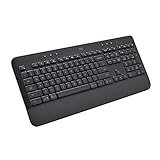
- All Day Comfort: Integrated soft-touch keyboard palm rest meets deep-cushioned keys with that instantly familiar feeling for a satisfying typing experience
- Achieve More with Less Effort: Wireless full-size keyboard layout with convenient access to all the right shortcut keys; save time with commands like mic mute, unmute, screenshot, and web navigation
- Connect the Way You Like: Wireless connectivity via BLE (Bluetooth Low Energy) wireless technology or the included Logi Bolt receiver
- Works on Multiple Platforms: Signature K650 Logitech Wireless Keyboard works with multiple operating systems—Windows, macOS, Chrome OS, Linux, iPadOS, iOS and Android
- Reliable and Hassle-Free: Your cordless keyboard won’t require new batteries for up to 36 months (may vary based on user and computing conditions); it is also easy to clean and spill-resistant
- Choose fonts that are widely available (Calibri, Arial, Times New Roman).
- Avoid inserting rare glyphs using fonts that aren’t guaranteed on other systems.
- Test by previewing on another device or exporting to PDF and reviewing.
Problem: pasted symbols don’t match what you copied
Some symbols have multiple Unicode variants that look similar. For example, hyphen-minus (-) versus en dash (–) versus minus sign (−).
- Use Symbol dialog (Windows) to insert from the correct code point.
- Or use Character Viewer and search by name for the exact variant.
- Compare by zooming in—then reinsert the correct one if needed.
Problem: the Symbol dialog isn’t showing the character you need
Try this sequence:
- Switch Font inside the dialog.
- Change the Subset filter.
- Use Character code (Method 3) if you know it.
- If still missing, use copy/paste from a known source and then apply a compatible font.
Problem: symbols shift, misalign, or look too big
Symbols can be affected by line height, font size, and text box formatting. If the symbol is part of a line, it should inherit the surrounding text formatting.
- Keep the symbol in the same text run as the rest of the text.
- Avoid mixing multiple fonts in one word unless necessary.
- If using Equation Editor, keep math content inside the equation object rather than mixing raw text.
Best practices for clean, consistent symbol formatting
- Pick the right font once: Insert multiple symbols using the same font to maintain consistent weight and height.
- Prefer system insert tools: Symbol dialog (Windows), Character Viewer (macOS) reduce the odds of incorrect Unicode variants.
- Don’t “eyeball” variants: Use the correct character for dashes and math operators when accuracy matters.
- Test exports: Always check the final look in PDF and on a different computer when the presentation will be shared widely.
Comparisons: which method to use for which situation
| Situation | Best method | Why |
|---|---|---|
| You need a symbol quickly | Ribbon → Symbol (Windows) or Character Viewer (macOS) | Fast selection without searching code points |
| You need a specific code point | Symbol dialog with character code (Windows) or Character Viewer search | Exact matching and fewer look-alike mistakes |
| You’re inserting math-heavy content | Equation Editor | Consistent spacing and math typography |
| You’re working in PowerPoint for the web | Copy/paste from Character Viewer or Character Map | Most dependable workaround for limited symbol tools |
| You insert the same symbols repeatedly | AutoCorrect (desktop PowerPoint) | Speed and consistency at typing time |
FAQs
Does PowerPoint for Windows support Unicode symbols?
Yes. You can insert Unicode characters via the Symbol dialog (including by character code when available). The result depends on font support, so pick a broadly compatible font if necessary.
What’s actually slowing this PC down?
Pick the symptom - the matching free tool is one click away.
Why do some symbols work in Word but not in PowerPoint?
It’s usually a font or text formatting difference. PowerPoint may be using a different default font for the selected text run, so reapply a font that contains the glyph, then reinsert the symbol.
Can I insert emoji in PowerPoint?
Yes, especially on macOS using Character Viewer. On Windows, emoji insertion is possible but can depend on the font installed and how PowerPoint maps the emoji glyphs. If emoji appears as boxes, switch fonts or use a different emoji character variant.
Are there any symbols that are risky for cross-device sharing?
Rare glyphs and symbols tied to specific fonts are risky. If the receiving computer lacks that font, PowerPoint may replace the glyph with a box. Use common fonts and verify with PDF export.
What’s the best way to insert special dashes (en dash and em dash)?
Use Symbol dialog (Windows) or Character Viewer search on macOS. Don’t rely on hyphen typing—many keyboards produce a hyphen-minus (-) unless your settings use smart punctuation.
Recommended Free Tools
Bottom Line
If you want the most reliable results, use the built-in Symbol tools on desktop (Windows) or Character Viewer on macOS. For repeated symbols, AutoCorrect saves time and keeps formatting consistent.
When a symbol shows as a box, switch to a Unicode-capable font (like Arial/Calibri) and reinsert. That one habit prevents most “it worked on my machine” problems.
Quick Recap
Product prices and availability are accurate as of the date/time indicated and are subject to change. Any price and availability information displayed on Amazon at the time of purchase will apply.




