Do these 3 things before closing this tab:
1Fix the driver behind crashes, sound loss and screen glitches2Repair Windows errors before they cause bigger problems3Scan for outdated or missing drivers - takes under a minuteTo find hard science fiction that fits your interests, start with the science subject you want to read about, then decide how much plausibility, technical explanation, and science-driven plotting you enjoy. “Hard SF” is not a fixed certification: the label can describe different combinations of subject matter, rigor, detail, and story style.
Decide what “hard SF” means for your next book
Readers use the term in several ways: fiction focused on physics or another hard science, stories that aim for believable science, books with substantial technical detail, or narratives driven by a scientific idea. A reader discussion about recommendation requests makes the practical point: defining what you mean helps other people suggest a better match. Read the discussion.
| # | Preview | Product | Price | |
|---|---|---|---|---|
| 1 |

|
Zero-Point Prop: Hard Science Fiction Thriller | $2.99 | Buy on Amazon |
| 2 |

|
Frequency: Hard Science Fiction | $6.99 | Buy on Amazon |
| 3 |

|
Dark Matter: A Novel | $11.65 | Buy on Amazon |
| 4 |
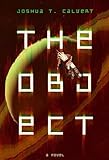
|
The Object: Hard Science Fiction | $7.99 | Buy on Amazon |
| 5 |

|
Children of Time | $8.69 | Buy on Amazon |
As an Amazon Associate I earn from qualifying purchases.
Before searching, specify four preferences:
- Subject: astronomy, physics, engineering, biology, chemistry, mathematics, or another field.
- Rigor: known science and plausible extrapolation, or a speculative premise that takes deliberate liberties.
- Presentation: substantial technical explanation, or a lighter science layer and faster narrative.
- Story mode: concept-led exploration, survival problem-solving, first contact, or another kind of plot.
These are useful filters, not a scoring system. A technically detailed book may not be the most plausible, and a plausible scientific premise may not be explained at length.
Use subject-organized recommendations to build a shortlist
For astronomy and physics, start with a topical index
Andrew Fraknoi’s Science Fiction Stories with Good Astronomy & Physics: A Topical Index, hosted by the Astronomical Society of the Pacific, organizes selected stories and novels under subject headings and briefly describes the science ideas. For example, it lists Larry Niven’s “Flatlander” under antimatter. The index is selective, covers astronomy and physics rather than every scientific field, and is version 6.3, dated October 2015. It is a discovery aid, not a current certification of scientific accuracy.
#1 Best Overall
For classic physics and astronomy novels, treat lists as entry points
Science Fiction and Fantasy Writers Association published Mike Brotherton’s list of ten classic hard-SF novels featuring physics and astronomy in 2012. It includes The Black Cloud by Fred Hoyle, Tau Zero by Poul Anderson, The Moon Is a Harsh Mistress by Robert A. Heinlein, Contact by Carl Sagan, and The Forever War by Joe Haldeman. SFWA presents the titles as entry points and notes that scientific understanding changes, so details in older fiction may have aged.
For biological sciences, use author names as leads, not title-level endorsements
Brotherton’s SFWA article also mentions Nancy Kress, Catherine Asaro, Linda Nagata, Chris Moriarty, Brenda Cooper, and Kay Kenyon as writers relevant to readers including biological sciences in their search. That mention is a way to find possible candidates; it does not classify a particular book by each author. Check individual titles for the subject and treatment you want.
Rank #2
Compare what the science actually does in each story
A genre label alone cannot tell you whether a book’s science will suit you. Tedd Roberts’s Baen essay, “Putting the Science in Science Fiction,” emphasizes scientific and engineering detail while also discussing the need to make science understandable and serve the story. A scientific idea may be the central problem characters must solve, a constraint shaping the setting, or mainly a premise that gets the plot underway.
Free tools Windows power users keep installed
One-click scans. No signup required.
Use this comparison when deciding between candidates:
Rank #3
| Question | What to check |
|---|---|
| Does it match my subject? | Look for the discipline or specific idea you want, rather than relying on the broad “hard SF” label. |
| How much explanation do I want? | Check whether technical detail is prominent or the science stays in the background. |
| How does it treat plausibility? | Identify the known science it uses and the speculative assumptions it makes. A plausible extrapolation and a deliberate liberty can both be part of a story. |
| How central is the science to the plot? | Decide whether you want a scientific concept to drive the action, constrain the characters, or provide the premise. |
| What kind of reading experience do I want? | Match the book’s emphasis to your preference for exploration, problem-solving, first contact, or another story mode. |
Roberts draws a distinction between hard SF that needs scientific and engineering detail and space opera that may use science that seems plausible without the same detailed accuracy. That distinction can help clarify expectations, but it does not make “hard” a universal standard or promise that every detail is correct.
Independent reader supportYour contribution helps us test, update, and keep practical guides available for everyone.Adapt the search when your interest is outside physics and astronomy
The most directly subject-organized resource reviewed here is the ASP index, and its scope is astronomy and physics. The SFWA list offers a route toward other fields through author mentions, including writers relevant to biological sciences, but does not supply an equivalent verified topical index for every discipline. For subjects such as chemistry, biology, or mathematics, use a specific concept or field as your search term, then check each proposed title rather than assuming that a broad genre label establishes a match.
Rank #4
When asking a reading group or bookseller for ideas, a request such as “I’m looking for biology-focused SF with plausible extrapolation, some technical detail, and a survival plot” gives them more to work with than “Recommend hard sci-fi.”
Recommended Free Tools
Quick Recap
Best Value
Product prices and availability are accurate as of the date/time indicated and are subject to change. Any price and availability information displayed on Amazon at the time of purchase will apply.




