You can reduce the chance of cracking or chipping concrete by using a compatible, sharp carbide-tipped masonry bit, positioning the hole carefully, and drilling steadily without forcing the tool. But no technique can guarantee damage-free drilling: the concrete’s condition, thickness, hole location, reinforcement, and any anchor installation all matter.
Before you drill: identify the hole’s purpose
A simple pass-through hole and an anchor hole are not interchangeable jobs. If you are installing an anchor, first find the instructions for that exact anchor model. They specify the required bit diameter and hole depth, which drilling methods are permitted, how the hole must be cleaned, and any limits for edge distance, spacing, or concrete thickness. Anchor requirements vary; do not substitute a general rule for the manufacturer’s instructions. See Hilti’s anchor installation instructions and the DEWALT AC100+ Gold technical bulletin.
As an Amazon Associate I earn from qualifying purchases.
Check the location and concrete
Avoid drilling close to an edge or into a thin, damaged section unless the applicable anchor documentation and structural design allow it. Edge distance, concrete cover, member thickness, and impact energy can affect the risk of spalling or splitting; there is no universal safe distance for every hole. Hilti discusses these factors in its Concrete-to-Concrete Handbook and technical guidance on edge distance.
If the hole is near a slab edge, in a thin or deteriorated member, intended for a structural anchor, or could intersect reinforcement or embedded services, stop and consult the responsible structural engineer or other qualified authority before drilling. Hilti’s handbook cautions against drilling through existing reinforcement or embedded objects without that consultation.
#1 Best Overall
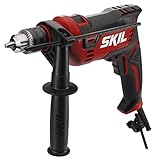
- High Torque 7. 5 Amp Motor – Ideal for demanding projects
- 2-in-1 Multi Function – Easy switch between drilling and hammer drilling, ideal for a wide range of drilling and hammer drilling applications
- 1/2 in. Heavy-Duty keyed Chuck - To accept large diameter bits for heavy duty work
- Side Assist Handle - For improved safety and accuracy
- 2-Finger Variable Speed Trigger - Provides increased control
Choose a bit and drill that fit the job
Use a carbide-tipped concrete or masonry bit with the diameter and working length the job requires. Its shank must match the drill: for example, SDS-Plus and SDS-Max are different connection systems and are not interchangeable. Hilti identifies its SDS-Plus TE-CX carbide bits for concrete and reinforced concrete. Check the bit maker’s compatibility information and your drill’s manual rather than relying on the label “masonry bit” alone.
A hammer drill is a practical portable choice for many ordinary concrete holes. It is not the right tool for every job: Hilti notes that deep or large-diameter holes can make hammer drilling impractical. For repeated drilling or dust-sensitive work, a compatible hollow drill bit paired with dust extraction may combine drilling and dust collection, but use that setup only if it is approved for the tool and permitted by the anchor instructions. Hilti lists a hollow drill-bit product category.
Rank #2
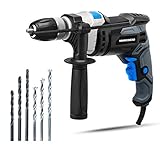
- Powerful 7. 5-Amp Motor – Corded hammer drill tackle the most demanding projects
- Keyless 1/2 Inch Metal Chuck – Powerful hammer drill Provides great convenience for frequent bit changes. Please note that this hammer drill can NOT be used in reinforced concrete walls.
- 2-in-1 Multi-Function - Easy switch , select the right function for each application in an instant
- Variable Speed Trigger - With preset selector and lock on, increased control and continuous operations, choose the speed you need as materials and conditions change
- Soft Grip Handle – Maximum comfort with relentless drill hammer in the palm of your hand
Drill the hole with control
- Set up safely. Wear appropriate eye and hearing protection. Arrange silica-dust controls before drilling; do not rely on an ordinary household vacuum as a substitute for a suitable dust-collection setup.
- Fit the specified bit. For an anchor, match the manufacturer’s required diameter and working depth. Confirm that the shank fits the drill securely.
- Set the correct mode. Use the hammer-drilling mode for concrete when the drill and bit are designed for it. As one application-specific example, Hilti’s adhesive-anchor instructions call for rotation-hammer mode with an appropriately sized carbide bit; follow your own tool and anchor instructions rather than treating that setting as universal.
- Start square to the surface. Hold the drill aligned with the intended hole as you begin, and keep it controlled rather than pushing hard to make it cut faster.
- Watch and pause when something changes. If the bit binds, the drill twists, or the concrete begins to chip or crack unexpectedly, stop. Do not force the bit through resistance or keep drilling into visible damage; reassess the location and the cause before continuing.
- Finish and clean as specified. For an anchor, use only the hole-cleaning procedure its instructions permit. Some systems require separate cleaning; others allow an approved hollow-bit and vacuum workflow. A hole that looks clear is not a substitute for the required cleaning process.
Controlled technique helps manage risk, but it cannot eliminate it. Hilti notes that concrete damage tendency is affected by impact energy as well as edge distance and cover.
Control silica dust
Drilling concrete can generate respirable crystalline silica dust. For covered construction work in the United States, OSHA’s construction standard includes a Table 1 method for handheld and stand-mounted drills: use a shroud or cowling with dust collection, with airflow at least as high as the tool manufacturer recommends, a filter efficiency of at least 99% and a filter-cleaning mechanism. OSHA also specifies a HEPA-filtered vacuum when cleaning holes. See 29 CFR 1926.1153, Table 1 and OSHA’s Handheld and Stand-Mounted Drills fact sheet.
Rank #3
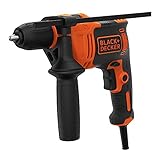
- POWERFUL 6.5 AMP MOTOR – Delivers 48,000 bpm to quickly drill through hard materials like concrete, stone, and brick.
- 2-POSITION SWITCH – Select standard drill for wood drilling or hammer drill for masonry drilling.
- 3-POSITION SIDE HANDLE – Keeps you comfortable and helps reduce muscle fatigue across a range of applications.
- 1/2 IN. SINGLE-SLEEVE CHUCK – Allows for easy bit changes and accommodates larger bits.
- CORDED – Corded drill offers unlimited runtime for even the biggest jobs.
Those OSHA requirements concern construction work in the United States; they should not be presented as the law for every location or every household DIY job. Follow applicable local rules and the dust-control equipment instructions wherever you work.
Quick Recap
Best Value
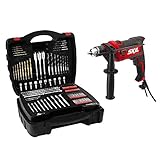
- Versatility at its best - From tightening screws to drilling into wood, metal and even concrete, this versatile hammer drill is the ideal DIY tool for a variety of home projects.
- Powerful - This drill is equipped with a high torque 7.5 Amp motor that makes it ideal for the most demanding projects.
- TACKLES TOUGH JOBS - This ½” heavy-duty keyed chuck allows for larger bits to power through heavy duty jobs.
- Speed control - The 2-finger variable speed trigger provides increased control.
- Drill longer and more comfortably - The lock-on button lets you to drill for long periods of time. This prevents finger fatigue and allows for different holding options for greater stability.
Rank #4

- 7.8 Amp motor provides high performance and overload protection
- Variable speed allows for precise hole placement on work surface
- Dual mode: hammerdrill/drill for wood, steel or masonry applications
- 4.3 lbs. - lightweight design for extended use and less user fatigue
- 360° side handle with depth rod offers greater control, versatility, and increased depth accuracy
Product prices and availability are accurate as of the date/time indicated and are subject to change. Any price and availability information displayed on Amazon at the time of purchase will apply.




