To play a micro:bit’s sound through a Snap Circuits Whistle Chip, plug the micro:bit into the Snap:bit board and connect the Whistle Chip across the board’s P0 snap and 3V. The featured project’s simplest wiring is a direct connection between snaps 0 and 3V; its instructions also describe bridging P0 to either 3V or GND. Use the project diagram and the instructions for your components when assembling.
What you need
- A BBC micro:bit, V1 or V2; Snap:bit’s maker says its board supports both versions.
- A Snap:bit board, which provides an edge-connector socket for the micro:bit and five snap terminals: P0, P1, P2, 3V and GND.
- A Snap Circuits Whistle Chip (WC), included in a compatible Snap Circuits kit. The featured project used a Snap Circuits Jr. 100 Experiments kit.
- For the project’s described power arrangement, a Snap Circuits battery holder and slide switch connected to the 3V snap.
The micro:bit Foundation describes its edge pins as a way to build circuits and connect external components, including buzzers and motors. Its board overview also identifies GPIO, 3V and ground pins. See the Foundation’s radio and pins overview and micro:bit features overview.
As an Amazon Associate I earn from qualifying purchases.
Connect the Whistle Chip
- Insert the micro:bit into the Snap:bit board’s edge-connector socket.
- Connect the Whistle Chip directly across the Snap:bit’s 0 (P0) and 3V snaps. This is the project author’s minimal setup and does not require extra wires.
- Follow the project diagram and the component instructions for the power arrangement. The project describes using a Snap Circuits battery holder and slide switch connected to the 3V snap.
- Load the MakeCode program before operating the assembled circuit. The project instructs users to disconnect both USB and the micro:bit battery pack before running it.
The project explains that the micro:bit sends its sound signal through P0 and that current through the Whistle Chip produces sound. Its broader wiring explanation allows WC to bridge P0 to either 3V or GND, but the explicit minimal arrangement is 0-to-3V; use the diagram for the setup you are building. The project text does not establish electrical limits for every board revision or Snap Circuits kit, so do not infer component ratings from the wiring description alone. Read the Whistle Chip project instructions alongside your hardware documentation.
Load and play the music program
The Hackster project, published October 29, 2019, describes a MakeCode program that plays “Ode to Joy.” Once the code is loaded and the circuit is powered according to the project instructions, the micro:bit’s P0 output drives the Whistle Chip. The exact program blocks and assembly diagram are on the project page.
#1 Best Overall

- Includes the BBC Microbit V2.2 which has new speaker sensor, Built-in 25 LEDs, 2 buttons, motion sensor, buzzer, light sensor, temperature sensor, compass, radio and Bluetooth wireless features make it easy to get you started with more fun projects.
- This is an easy to use electronic board that is very versatile and can be coded many different ways. It can be integrated with other coding tools and on many platforms.
- Coding is easy with online block gui, javascript and python. Compiles to hex file, which you then copy to microbit (looks like a drive to pc)
- Box contains: 1 micro:bit v2.2, 1 USB cable, 1 battery holder, 2 AAA batteries, user guide
- Free tutorials and project ideas available on the micro:bit website. The instructions are easy to follow for a beginner to learn to code with it.
What to expect from the sound
The project author reports that the Whistle Chip sounded louder than the Snap Circuits speaker in that particular setup. The author attributes the difference to the micro:bit pin’s weak current and the speaker’s higher resistance. This is an explanation of one project, not a measured sound-level comparison or a general specification for either component.
Adding a switch or more connections
Use a switch and LED in a countdown project
A related Snap:bit countdown timer project, published November 17, 2019, adds a red LED and press switch. In that example, the switch closes a P2-to-GND circuit that the program reads as an input; the LED is controlled through P1 while the micro:bit plays sound during countdown steps. See the countdown timer instructions for its wiring and code.
Rank #2

- 【About Starter Kit】 ElecFreaks Micro:bit Starter Kit is designed for microbit beginer who is beginning learning electric circuit and programming knowledge. They can use this micro:bit basic DIY kits to create or complete more experiment, such as traffic light , use photocell to control mircro:bit screen or LED.
- 【Abundant components】The Microbit Starter kit has provided 24 kinds of electronic components to help you start, including LED, button, buzzer, temperature sensor, trimpot, servo and motor etc. Micro:bit Starter kit can help us enter a wonderful of electronic world.
- 【Multiple Programming Languages】 This micro:bit Starter Kit supports Makecode graphical programming, JavaScript programming, Python and other programming methods. Microbit beginer can use programming to achieve what they want. It better improves interest in programming!
- 【Perfect and educational gift 】With all of the components, we offer 14 case to enable users to master the principles of electronic circuits, components, and basic programming.There will be learning link in the Guidance Manual.
- 【TIPS 】(1)WITHOUT micro: bit!!! Suitable for ages over 10 years old. (2)Wiki Tutorial Get: Pls enter "wiki.elecfreaks.com/en/" to learn. (3)Strong Technical Support—Pls click “elecfreaks” amazon store and click “Ask a question” to email us! Looking for your consultation!
Choose between the standard board and extension kit
The standard Snap:bit board exposes five snap terminals: P0, P1, P2, 3V and GND. For projects that need access to more pins, the maker says its extension kit provides access to all 21 micro:bit pins and includes five snap-to-female cables. The maker also separates introductory component-connection lessons from more complex coded projects, noting that the same circuit arrangement can behave differently when the program changes. Browse Snap:bit projects and the maker’s Snap:bit features for details.
Quick wins for a faster PC:
Clear out junk files and repair common Windows errorsFree Scan →Scan for outdated or missing drivers - takes under a minuteDriver Scan →Repair Windows errors before they cause bigger problemsFix Now →| Option | Pin access | Best suited to | Maker-listed RRP |
|---|---|---|---|
| Snap:bit board | Five snap terminals: P0, P1, P2, 3V and GND | Simple connections such as the Whistle Chip project | €29.99 |
| Snap:bit extension kit | All 21 micro:bit pins, using five snap-to-female cables | Projects needing connections beyond the board’s five snap terminals | €22.99 |
| Snap:bit combo kit | Not stated on the order page | Not stated on the order page | €44.99 |
These are RRPs listed on the maker’s order page, not confirmation of a current retailer price or stock. The page names Tindie, RobotShop, distributors and direct contact as ordering routes; check the Snap:bit order page for current details.
Quick Recap
Best Value
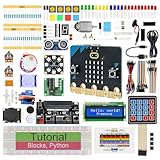
- micro:bit V2: Latest version official board, a pocket-sized device allows you to get hands-on with coding and digital making
- 2 Sets of Codes: Block-based visual programming language code and Text-based Python code
- 316-Page Detailed Tutorial: Provides step-by-step guide with basic electronics and components knowledge (The download link can be found on the product box) (No paper tutorial)
- 44 Projects from Simple to Complex: Each project has schematics, wiring diagrams, complete code and detailed explanations
- 225 Items in Total: This kit includes the common components, modules and sensors available for the board
Rank #4

- Specially designed for Microbit board. This kit includes a keyestudio sensor shield fully compatible with micro bit and other commonly used 37 kinds of sensor modules. It's compatible with both microbit v1.5 and v2, microbit board is not included!
- Designed to learn electronics programming. Great hands-on STEM kit to get started with the micro bit. The product needs to be debugged before use, such as an LED display module. Please use an external power supply and debug the backlight brightness.
- The kit gives 37 kinds of common sensors, such as Digital LED Module, Analog Temperature Sensor, Photocell Sensor, Ultrasonic Module etc, allow you make a lot of interesting projects like Traffic Light, Magnetic Check, Temperature Monitor, Joystick Test, Photo-interrupter, Gas Detection and so on.
- We have detailed tutorials (including an introduction, wiring diagram, test code, driver installation, Example Projects...... Step by step to explain how to use on our wiki page. Good for ages 15 years and up.
- Solder is very clean, everything is aligned nicely. All boards are well packed after function, voltage, current testing, and protected in a beautiful box. Up to FCC and CE Standard: made from environmentally friendly components and materials.
Rank #3

- Microbit controller V2.21 is included!onboard comes with BLE, accelerometer, electronic compass, three buttons, 5 x 5 LED dot matrix, mainly used for teens' programming education.
- Specially designed this starter kit includes commonly used resistors, LEDs, sensors, LED segment display and more to get you started with 18 interesting projects at least.
- We have detailed tutorials (including an introduction, wiring diagram, test code, driver installation, Example Projects...... Step by step to explain how to use on our wiki page.
- Each sensor is packaged individually and then held in a beautiful plastic box with compartments, it must be the best kit for you, your friends, and electric newbies or hobbyists.
- All boards are well-packed after function, voltage and current testing. The kit is well packaged, with each item packed separately.
Product prices and availability are accurate as of the date/time indicated and are subject to change. Any price and availability information displayed on Amazon at the time of purchase will apply.
Independent reader supportYour contribution helps us test, update, and keep practical guides available for everyone.



