Do these 3 things before closing this tab:
1Repair Windows errors before they cause bigger problems2Scan for outdated or missing drivers - takes under a minute3Clear out junk files and repair common Windows errorsChoose the byline that accurately reflects who reported or wrote the work and whose voice readers are being asked to hear. Use a named author for substantial individual work, a shared credit when multiple people made substantial contributions, and an organization byline when the piece deliberately represents an institutional position. If the credit line cannot explain each role clearly, add a contributor note.
What a byline tells readers—and what it does not
A byline identifies who wrote or contributed to a story; a dateline identifies where the basic information was obtained. The Associated Press makes that distinction in its newsroom guidance. A byline is an authorship and responsibility signal, not a substitute for attribution within the article: readers still need to know where material came from and which facts came from outside sources or agencies.
As an Amazon Associate I earn from qualifying purchases.
Choose among three common forms by asking who did the substantive work, whether the piece speaks personally or institutionally, and how readers can identify responsibility or seek a correction. These are practical recommendations drawn from AP and Guardian standards, not a universal rule for every publication or genre.
| Byline form | Use it when | What it signals | Editorial check |
|---|---|---|---|
| Named author | One person did the substantial reporting or writing. | An identifiable author is accountable for the work. | Check that the person’s contribution meets your policy; credit other substantial contributors separately. |
| Shared or team byline | Two or more people made substantial reporting or writing contributions. | The work was genuinely collaborative. | Agree on credit order and add a note for roles or contributions that the byline alone cannot explain. |
| Organization byline | The piece intentionally presents the publication’s or organization’s position. | The voice is institutional, rather than an individual’s personal argument. | Name the responsible desk or editor and provide a clear contact or correction route; do not use the label to conceal reporting credit. |
When to use a named author
Put an individual’s name on a story when that person did its substantial reporting or writing and can be held accountable for it. The AP’s guidance says that when a story has no dateline, the byline goes to the writer. It also allows a tag line to credit reporters who contributed substantial information. A tag line or contributor note can recognize meaningful work without implying that one person did everything.
#1 Best Overall

- This 2-inch by 8-inch name plate can be wall-mounted or sit on a desk, making your office look professional and communicating essential information to clients and staff members
- Each customized name plate has room for up to 2 lines of text. Engraved by a precision CO2 laser, lettering is easy to read, even from a distance
- The nameplates easily slide into their anodized aluminum wall or desk holders, which come in polished silver, matte black and polished rose gold options
- Choose between 12 different plate colors and 9 different fonts to ensure your desktop name plate matches your brand's aesthetic and your own personal sense of style
- These name plates are manufactured in the United States using high-quality, acrylic-based plastic for long-lasting results
Do not decide authorship solely by who performed the last rewrite. The editor may weigh who reported key facts; where more than one staffer made a substantial contribution, AP allows a double byline or an editor’s note. Describe contributions accurately when locations, research, photography, or editing matter to readers.
When a shared or team credit fits
Use a shared credit when several people materially shaped the reporting or writing. A double byline makes co-authorship visible; an editor’s note can explain the division of work when the names alone would leave readers guessing. Set a consistent policy for order and for contributions that merit acknowledgment but not co-authorship.
Rank #2

- CUSTOM NAME PLATE - These high-quality name plates are a great way for new employees to learn the names of their coworkers and vice versa. Select from 14 color options to give your nameplate more personality.
- DISPLAY YOUR WAY - Our name plates can come with a desk holder, a wall holder, or no holder at all if you already have one. Both holders have 3 color options that all look great on any name plate color selected. We even offer multiple ways for you to secure these holders.
- PERFECT FOR ANY WORKPLACE - All of our name plate colors, fonts, and holders offer a sense of professionalism, allowing them to fit in any work environment.
- VISIBLE SIZING - We offer 2 sizes of name plates, both of which are large and bold enough to never go unnoticed.
- MADE IN THE USA - These name plates are manufactured in the United States and use a high-quality, acrylic-based plastic meant for long-lasting results.
Keep the visible credit aligned with contributor metadata. AP’s metadata definition treats a byline as the party creating or contributing to content, with examples across text, graphics, audio, and third-party material. Different formats may display credits differently, but the underlying contributor information should not contradict what readers see.
When an organization byline is appropriate
An organization byline is useful when a publication intentionally speaks as an institution—for example, in an editorial or policy statement. AP metadata includes “The Associated Press” as a byline example. That identifies the institutional publisher; it does not prove that no individual wrote the piece.
Rank #3

- Premium Quality Construction – Each personalized name plate is crafted from durable materials with precision laser engraving, ensuring long-lasting text that won’t fade, peel, or rub off over time.
- Customizable Design Options – Personalize your desk or door name plate with your name, title, or custom text. Choose from multiple color combinations to match your office, home, or professional setting.
- Versatile Use – Perfect for desks, doors, and walls in offices, schools, hospitals, or home workspaces. Includes a holder for easy mounting and professional display anywhere you need identification.
- Professional & Stylish Look – Designed to give a clean, modern appearance while making your name or message stand out. Ideal for adding a touch of professionalism to any workplace or business environment.
- Made in the USA – Proudly manufactured by My Sign Center with strict attention to detail and quality. Every order is made to customer specifications to ensure complete satisfaction.
Establish a convention readers can understand. The Guardian has described leaders and editorials as channeling a newspaper’s editorial voice. In a 2010 debate, Scott Trust chair Liz Forgan argued that leaders should be signed, favoring visibility of the professional leader writer. The underlying choice is between making institutional voice legible and making individual responsibility visible; the historical debate does not show that either approach universally improves credibility. Whichever convention you choose, make the responsible desk or editor and the correction route findable.
Credit agency material and other outside contributions
If agency material is significant, credit the agency rather than implying that a staff member independently reported those facts. The Guardian’s readers’ editor described a case in which “staff and agencies” was appropriate for lightly rewritten wire copy, and said the Guardian’s code required credit for significant agency copy. That is a Guardian example, not a required label for every outlet.
Rank #4

- CUSTOM NAME PLATE - These high-quality name plates are a great way for new employees to learn the names of their coworkers and vice versa. Select from 14 color options to give your nameplate more personality.
- DISPLAY YOUR WAY - Our name plates can come with a desk holder, a wall holder, or no holder at all if you already have one. Both holders have 3 color options that all look great on any name plate color selected. We even offer multiple ways for you to secure these holders.
- PERFECT FOR ANY WORKPLACE - All of our name plate colors, fonts, and holders offer a sense of professionalism, allowing them to fit in any work environment.
- VISIBLE SIZING - We offer 2 sizes of name plates, both of which are large and bold enough to never go unnoticed.
- MADE IN THE USA - These name plates are manufactured in the United States and use a high-quality, acrylic-based plastic meant for long-lasting results.
Keep byline credit distinct from in-story attribution. A byline answers who produced the work; attribution tells readers where particular information or material originated. Neither one can replace the other.
Anonymous sources still require a reporter byline
The AP says stories that use anonymous sources must carry a reporter’s byline. Anonymity applies to the source, not to the reporting itself. The article should also give readers enough information about the source to assess credibility and, when relevant, explain the source’s motive.
Best Value
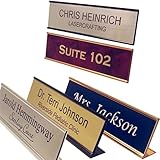
- Built to Last: Laser engraved directly into durable two-tone Acrylic based plastic, not printed or vinyl. The text won't fade, peel, scratch, or wear off over time.
- Customizable Desk or Door Name Plate: Choose from three sizes, 18 vibrant colors and multiple fonts to create a custom plaque that reflects your professional identity.
- Versatile Mounting Options: Display your name plate however works best for your space. Choose from desk holders in several styles, wall holders with adhesive or screws, or order the plate alone with foam tape or magnetic tape for direct mounting.
- Made in the USA: Each name plate is crafted at our workshop in Utah, not mass-produced overseas. Quality you can count on.
- Perfect for Any Workspace: Ideal for offices, reception desks, cubicle walls, home offices, medical practices, or anywhere a professional name plate is needed.
A practical decision check
- Identify the work. Establish who reported key facts and who did substantial writing, rather than assigning credit automatically to the final editor.
- Identify the voice. Decide whether readers are hearing an individual’s work or an institutional position.
- Account for others. Credit substantial co-contributors and significant agency material; use a note when the byline cannot explain roles clearly.
- Make accountability usable. Ensure readers can identify the responsible person or desk and find a way to report a correction.
- Check every format. Keep metadata consistent with visible credits, including when the work is audio, graphics, or other non-text content.
Does one byline type build more trust?
The cited AP and Guardian material sets out credit and attribution practices, not comparative measurements of trust, readership, or accuracy. It does not establish that named, team, or organization bylines have a universal trust advantage. Choose on the basis of accurate credit, transparent institutional voice, and clear accountability—not an unsupported claim about which label readers will trust most.
Quick Recap
Product prices and availability are accurate as of the date/time indicated and are subject to change. Any price and availability information displayed on Amazon at the time of purchase will apply.




