Recommended Free Tools
Choose an MDR provider by verifying what it can see, what its analysts are contractually required and authorized to do, and whether the complete service works in your environment. Start with your assets and response needs—not a vendor’s integration count or a single detection-coverage score.
1. Define what you need the provider to protect and do
Before comparing providers, map your environment and decide where external monitoring or response fills a real gap. Include endpoints, servers, identities, email, cloud workloads and applications, network telemetry, and operational technology (OT) where relevant. Identify the business services that depend on them and the systems whose disruption would have the greatest impact.



As an Amazon Associate I earn from qualifying purchases.
Record your current EDR, XDR, SIEM, ticketing, and identity tools; applicable compliance requirements; acceptable data locations; incident contacts; and the response actions your staff can handle. Decide which actions the provider may take without waiting for further approval. For example, isolating an endpoint, disabling an account, or blocking an indicator can have different operational consequences and may require different approval rules.
- Which assets and business services are highest priority?
- What threats or failure scenarios matter most to your organization?
- Which environments, tools, and telemetry sources must the service use?
- What can your own team investigate or contain, including outside business hours?
- Which actions may the provider take independently, and which require your approval?
- What compliance, privacy, and data-residency constraints apply?
NIST SP 800-35, published in 2003, frames security-service selection, implementation, and management as a lifecycle. Its broad selection factors include the service arrangement, provider qualifications and capabilities, experience, viability, employee trustworthiness, and ability to protect the organization’s systems and information. It is general security-service guidance, not an MDR-specific standard.
#1 Best Overall
2. Turn “coverage” into a verifiable inventory
Ask each candidate to complete a coverage matrix for your actual environment. A product or integration appearing on a supported-products list does not establish that your assets are monitored, that useful telemetry reaches the provider, or that its analysts can act on an alert. Coverage depends on deployment mode, licensing, configuration, integration, and the service scope in your agreement.
| For each asset or data source, verify | What to ask the provider |
|---|---|
| Scope | Is this source included in the contracted service, and which assets are explicitly excluded? |
| Prerequisites | Which agent, license, connector, product mode, permissions, and configuration are required? |
| Telemetry | What events or data are collected, and what investigation or detection depends on them? |
| Response | Which actions can the provider perform on this source, and which need customer approval? |
| Dependencies and gaps | What other tools or data are needed? How are missing sensors, offline assets, or misconfigurations identified and corrected? |
| Data handling | Where is data processed and retained, for how long, and under what access and deletion terms? |
Ask the provider to show how it identifies assets that stop reporting or never onboard correctly, who owns remediation, and how unresolved coverage gaps are escalated and reported. A useful answer names the responsible party and the evidence you will receive, rather than promising to “monitor the environment.”
Check capability against service scope
A platform’s technical capability does not prove that the MDR team has the permissions, product mode, or contractual authority to use it. Microsoft’s Defender Experts service documentation, for example, says the service covers eligible Defender products that are licensed and properly deployed, and that configuration can affect service depth. It describes active-mode products as fully covered; products in passive mode may be non-actionable, with guided response possible but provider remediation unavailable. Microsoft also specifies prerequisites and exclusions. These are conditions for that Microsoft service, not a general rule for MDR.
Do these 3 things before closing this tab:
1Clear out junk files and repair common Windows errors2Scan for outdated or missing drivers - takes under a minute3Repair Windows errors before they cause bigger problemsProvider eligibility can also be narrower than the phrase “MDR service” suggests. CIS’s public service page describes endpoint deployment, continuous SOC monitoring, and access to incident-response assistance, and states availability for U.S. state, local, tribal, and territorial government entities. That stated eligibility should not be generalized to other providers or customer types.
Compare actual coverage, not integration counts
Compare breadth across asset classes, completeness for your own environment, sensor and license prerequisites, integration with existing tools, ability to correlate activity across domains, data residency, and the process for finding and closing gaps. A provider may support many products while leaving a critical asset class, response action, or data source outside your contracted scope.
3. Write response commitments so they can be measured
Ask for a service-level schedule that defines severity, clocks, operating hours, customer dependencies, evidence, and remedies. Separate incident handling from portal or platform availability. “Response time” is too vague to compare: acknowledging an alert is not the same as investigating it, notifying you, containing a threat, or completing remediation.
Rank #3
| Measure | Define in the agreement |
|---|---|
| Acknowledgment | What event starts the clock, what counts as acknowledgment, and whether it is measured from an alert, provider receipt, or another event. |
| Investigation | When analysts must begin work, what “begin” means, and whether there is a separate target for completing investigation. |
| Customer notification | Whether the clock starts at initial alert or after confirmation and severity assignment; who is contacted and through which channels. |
| Containment | When an approved containment action must be initiated, what customer approvals or access it depends on, and who performs it. |
| Remediation | Whether the provider is responsible for remediation at all; if so, which tasks, systems, and completion conditions are in scope. |
| Availability | Portal or platform availability commitments, reported separately from incident-handling measures. |
For every measure, establish the start and stop events, severity-classification authority, applicable hours and holidays, customer dependencies, exception rules, reporting evidence, and consequence of a miss. Clarify what happens if the provider fails to detect an event or assigns it an incorrect severity, and how corrective action is documented. Distinguish binding contractual service-level agreements (SLAs) from service-level objectives (SLOs) that express goals without the same contractual remedy.
What’s actually slowing this PC down?
Pick the symptom - the matching free tool is one click away.
CRITICALSTART’s 2024 buyer guide recommends contractual SLAs for detection, response, and containment rather than relying on SLOs. That is vendor-authored purchasing guidance, not evidence of an industry-wide standard. A surfaced NTT Samurai MDR description illustrates why definitions matter by separating portal availability from incident reporting and specifying reporting time after severity determination; that document is marked superseded, so it should not be used as a current term or benchmark.
The reviewed material does not establish a universal numerical MDR response target. Set requirements from business impact, likely scenarios, internal response capacity, and the actions the provider is actually contracted and authorized to perform. Do not compare quoted times until the measured event, hours, and clock rules match.
Independent reader supportYour contribution helps us test, update, and keep practical guides available for everyone.4. Test the complete service path safely
A controlled exercise should test more than whether a platform emits an alert. It should follow relevant behavior from telemetry through analyst triage, customer communication, and the response action agreed in the contract. Use a written authorization and a scope appropriate to your organization.
Prepare the exercise
- Document written authorization, test objectives, relevant behaviors, and the systems in scope.
- Agree on the exercise window, excluded assets, safety controls, stop conditions, and test contacts.
- Specify which provider and customer actions are allowed, including any approvals needed for containment.
- Use synchronized time sources and decide in advance how timestamps and other evidence will be captured.
Trace each behavior through the service
- Telemetry: Was the necessary source onboarded, configured, and reporting during the exercise?
- Detection: Did the provider identify the behavior, and was the alert relevant to the tested activity?
- Analysis: Did analysts investigate and correlate the event with useful context rather than simply forward an alert?
- Communication: Did the right contacts receive the notification through the agreed channel, with the information needed to act?
- Response: Did the permitted containment action occur, and did any approval or access dependency delay it?
Record missed detections, false positives, gaps in telemetry, investigation or escalation delays, customer dependencies, and corrective owners. Agree who will fix each issue and how the relevant part of the service will be retested. Repeat testing after material changes or remediation.
Windows Errors? Fix Them Before They Spread
Repair common Windows errors and clear accumulated junk for a smoother, more stable PC - no reinstall needed.Free scan · no reinstallOutdated Drivers Are Slowing You Down
One free scan finds every outdated or missing driver and matches the right update for your exact hardware.Free scan · exact hardware matchMITRE ATT&CK Evaluations are useful for organizing questions about technique-level detection, alert context, precision, speed, and false-positive validation. Their results are structured around particular scenarios; they are not a universal guarantee or a substitute for testing in your environment. As of October 7, 2026, the surfaced Enterprise round-8 page described publication as planned for December 2026; that schedule is time-sensitive, and no result should be inferred from a planned publication date.
Best Value
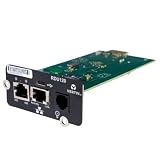
- UL2900-1 CYBERSECURITY CERTIFIED: Have peace of mind that you are securely communicating online.
- SECURE BOOT WITH A HARDWARE TRUST ANCHOR: Prevent unauthorized tampering of the installed software.
- FLEXIBLE COMMUNICATION: Have flexible communication regardless of device protocol- SNMP, Modbus, and BACnet.
- STANDARD RESTFUL API SUPPORTING CUSTOMER-BASED TOOLS: Configure and update devices with ease.
- 1 GB ETHERNET SUPPORTS MODERN NETWORK ENVIRONMENTS: Get web access via popular web browsers.
5. Evaluate the provider relationship and full cost
Detection and response are only part of the service. Request evidence that helps you assess how the provider will work with your staff and systems:
- A demonstration using workflows relevant to your environment, plus sample reports and escalation runbooks.
- Onboarding milestones, integration responsibilities, and a clear process for handling configuration and coverage gaps.
- Staffing information, analyst qualifications, escalation routes, and references from comparable customers.
- Data-processing and residency terms, retention and deletion provisions, and contract exit and data-return procedures.
- Pricing assumptions covering implementation, required licenses or tools, asset or data-volume thresholds, optional response work, and incident-retainer fees.
KPMG’s 2023 MDR selection guide recommends assessing provider experience and capabilities, service quality and pricing, SOC staffing, data collection and hosting, integration, customization, onboarding, reporting, SLAs, incident management, and references. It is advisory guidance, not a comparative market study. Evaluate the total cost and operating effort against the scope you actually need, rather than comparing headline prices detached from included tools and response duties.
Make the selection decision
Choose the provider whose documented coverage matches your priority assets, whose telemetry and permissions support the response you expect, whose commitments are measurable and contractually clear, and whose service passes an authorized end-to-end exercise. Treat gaps, exclusions, dependencies, and customer obligations as part of the decision—not as details to resolve after signing.
The Tool Desk
Outbyte Driver Updater FREEFix the driver behind crashes, sound loss and screen glitchesFind Drivers →Outbyte PC Repair FREERepair Windows errors before they cause bigger problemsFix Now →Quick Recap
Product prices and availability are accurate as of the date/time indicated and are subject to change. Any price and availability information displayed on Amazon at the time of purchase will apply.




