Do these 3 things before closing this tab:
1Clear out junk files and repair common Windows errors2Fix the driver behind crashes, sound loss and screen glitches3Repair Windows errors before they cause bigger problemsChoose a washing machine in this order: make sure the exact model fits your room and access route, match its drum capacity to the loads you actually wash, compare efficiency labels, then select cycles and smart features that solve real problems. A larger drum or a longer feature list is not automatically better if the washer cannot be installed, wastes water for your routine, or leaves you unsure which setting to use.
The guidance below applies mainly to U.S. efficiency labels and examples from U.S. and UK manufacturer guides. Dimensions, cycles, apps, certification, and availability vary by model and market, so verify the specification sheet for the machine you intend to buy.
As an Amazon Associate I earn from qualifying purchases.
1. Measure the space before comparing features
Fit is the first buying decision. A washer that cannot pass through the doorway, sit level, connect safely, or open fully is the wrong washer regardless of its capacity or efficiency.
Measure the installation location
- Width, height, and depth: Use the manufacturer’s exact dimensions for the model and configuration, not a retailer’s rounded category measurement.
- Clearance: Leave the space required for hoses, power connections, ventilation where applicable, and service access. The required clearance differs by model.
- Door or lid movement: A front-loader needs room for the door to swing out; a top-loader needs enough overhead clearance for the lid and for you to load it comfortably.
- Floor and level: Confirm that the floor can support the appliance and that the washer can be leveled. An uneven installation can cause vibration and movement.
- Connections: Check the location of water supplies, drain, and electrical outlet against the washer’s installation instructions.
Measure the route to the room
Measure entry doors, hallways, stair turns, elevator openings, and any tight corners between delivery point and the laundry area. Include packaging dimensions when the retailer or manufacturer provides them. A machine can fit the final alcove but still fail at the front door or a narrow stair landing.
#1 Best Overall

- Tough Action for Tough Stains: Our top load clothes washer features a Triple Action Impeller to tackle your toughest loads in three powerful ways: Spraying Action to attack dirt from every angle with a concentrated detergent mix, Wash Basket Action to move the wash basket back and forth, and Impeller Action to move clothes in a circular pattern
- More Laundry, Less Time: Our high-efficiency top load washer features Express Wash to clean small loads in just 30 minutes (based on a 3-lb load, default cycle setting), and Accela Wash to clean full-size loads up to 51% faster (compared to a standard 8-lb load, normal cycle, warm wash temp, extra heavy soil setting) - so you spend less time doing laundry
- Wash Your Way: Features 10 wash cycles to custom wash your loads including Heavy Duty, Whites, Towels, Delicates, and Express Cycles. Select from 4 temperature options and rinse with Extra Rinse to help protect sensitive skin. Soft Close lid has tempered glass and won’t slam shut
- Easy to Operate: Use the intuitive light-touch controls to select the load and cycle options that match the fabric types in each load. Plus, the convenient LED lights provide time remaining and cycle status information
- Reduce and Save: Energy savings includes Cold Clean which cleans gently & completely while using up to 90% less energy (when compared to the normal cycle, default settings, 8-lb load)
Choose a configuration that suits the room
Common configurations include side-by-side units, stacked washer-and-dryer sets, and all-in-one washer-dryer designs. Stacking requires compatible models and, usually, a manufacturer-approved kit. An all-in-one can save floor space but has model-specific capacity, cycle, and drying characteristics. Availability and dimensions vary by market; treat a configuration as a space decision, not a universal ranking.
2. Match capacity to your laundry pattern
Capacity is the drum’s rated volume, usually expressed in cubic feet. It is not a dependable prescription based only on the number of people in a household. Two people who wash bedding frequently may need more capacity than four people who wash small loads every few days.
Look at what you wash and how often
- Estimate the usual size of your loads and how many loads you run in a typical week.
- List bulky items—comforters, towels, workwear, or washable pet bedding—that need room to move freely.
- Consider whether you prefer frequent small loads or fewer, fuller loads.
- Check whether the washer’s manual places restrictions on bulky articles or requires a special cycle.
A larger drum can reduce the number of loads when it is filled appropriately, but it does not make sense to buy extra capacity that your space, budget, or routine cannot use. Overloading prevents proper movement and rinsing; underusing a very large drum can make each cycle inefficient for your household.
What’s actually slowing this PC down?
Pick the symptom - the matching free tool is one click away.
Why capacity examples need a caveat
Manufacturer guides sometimes translate capacity into an illustrative number of shirts or other garments. LG’s published examples are based on a cotton cycle and may differ on other cycles. Such examples are market-specific illustrations, not a universal conversion from cubic feet to a household size. Use the exact model’s capacity, loading guidance, and your own bulky-item needs as the decision points.
Front-load and top-load capacity decisions
Do not assume one loading style always offers more usable capacity. Compare the stated drum volume and the opening dimensions for the models you can install. A front-loader may be easier to pair with a dryer in a stack, while a top-loader may be more convenient if bending to a low door is difficult; those are fit and accessibility considerations rather than efficiency guarantees.
3. Compare energy and water information correctly
Use two different kinds of evidence: the yellow EnergyGuide label for estimated consumption and cost among similar appliances, and ENERGY STAR certification as a separate efficiency designation. Neither label predicts your exact bill because loads, cycles, utility rates, and habits change actual use.
Read the EnergyGuide label
The Federal Trade Commission’s EnergyGuide estimate is designed to compare similar appliances. Check the estimated annual energy use and estimated annual operating cost, and compare washers of comparable size and type. The estimate is a standardized comparison tool, not a guarantee of what your household will pay.
Rank #2
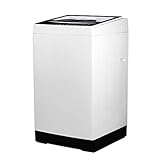
- WASH UP TO 11 LBS.—Wash up to 11 lbs. of laundry at a time with this superior BLACK+DECKER best portable washer. Our portable clothes washer (21.3” x 21.7” x 36.6”) has 6 cycle selections—Normal, Heavy, Delicate, Quick, Bulky, and Spin Only. Even suitable for baby clothes, diapers, and lingerie..ENERGY-EFFICIENT OPERATION: Built-in lint-filter that does not need to be replaced, just clean it about once a month designed for high-efficiency detergents and cold water use only..Operation mode : Automatic.
- IMPRESSIVE FUNCTIONALITY—With your new washer machine (70.5 lbs.) you have 3 water level choices for small, medium, and large loads as well as Hot, Warm, and Cold temperature settings. You can even select Delay Start up to 24 hours.
- STAINLESS STEEL TUB— This 1.7 cu. ft. portable washing machine features a durable, rust and corrosion-resistant stainless steel tub with top loading transparent quiet close lid. See your clothes cleaned in real time with our outstanding impeller washer!
- ADDITIONAL FEATURES—There’s a lot going on with our amazing washing machine, including auto unbalance detection to ensure your laundry is being cleaned at peak performance.as well as auto shutoff safety features and child lock protection.
- DESIGNED FOR MOBILITY— This fantastic portable clothes washer machine can easily be transported from room to room thanks to two rollers, two side handles, and adjustable leveling legs. Also included with our compact washer is a connector adaptor, water supply hose, and drain hose.
Check ENERGY STAR status
ENERGY STAR states that certified clothes washers use about 20% less energy and about 30% less water than regular washers. For full-sized certified washers, the program reports about 14 gallons per load compared with 20 gallons for a standard machine. It also estimates about 300 loads of laundry per year for the average American family and about $530 in energy-cost savings over a certified washer’s lifetime. Those are program-level estimates; your result depends on the model, load size, cycles, water temperature, local rates, and usage.
Certification is not the same thing as an EnergyGuide estimate. Use the label to compare the numbers for similar models, then verify the model in the current ENERGY STAR product listings before purchase.
Understand IMEF and IWF
When the values are available, ENERGY STAR’s residential metrics add detail:
- IMEF (Integrated Modified Energy Factor) accounts for washer-cycle and standby energy, water-heating energy, and the energy needed to run the dryer. A higher IMEF indicates greater efficiency.
- IWF (Integrated Water Factor) expresses water consumed in gallons per cubic foot of capacity. A lower IWF indicates greater water efficiency.
IMEF and IWF may not appear on the yellow EnergyGuide label, so look for them in the specification or certification information. Compare like with like: capacity category and loading style affect the values.
The Tool Desk
Outbyte PC Repair FREEClear out junk files and repair common Windows errorsFree Scan →Outbyte Driver Updater FREEFix the driver behind crashes, sound loss and screen glitchesFind Drivers →Do not carry old criteria forward automatically
An ENERGY STAR criteria page accessed in 2026 says its criteria were changed April 22, 2021. For residential washers over 2.5 cubic feet, it lists front-load thresholds of IMEF at least 2.76 and IWF no more than 3.2, and top-load thresholds of IMEF at least 2.06 and IWF no more than 4.3. At or below 2.5 cubic feet, it lists IMEF at least 2.07 and IWF no more than 4.2. Because criteria can change, use the live ENERGY STAR criteria and product finder when checking a current model rather than treating these figures as permanent rules.
The separate “Most Efficient” recognition is year-specific. The 2025 criteria document was released in September 2024 for the 2025 recognition period and included additional requirements such as energy and water thresholds and a cleaning score. Do not describe a washer as meeting 2026 Most Efficient criteria unless the current program lists it that way.
4. Choose cycles for your clothes and soils
A cycle name is not a standardized performance promise. Manufacturers can use the same name for different temperatures, agitation patterns, times, water levels, and spin speeds. Start with garment-care labels and the washer manual, then select the cycle that matches the load.
Rank #3

- Large 4.8 Cu. Ft. Capacity : Wash more in fewer loads—perfect for families and busy households with heavy laundry demands.
- UltraFresh Vent System with OdorBlock: Helps eliminate excess moisture after each wash cycle, keeping your washer interior fresh between uses.
- Built-In WiFi with SmartHQ App Integration: Remotely control your washer from your phone—start, stop, monitor, and receive alerts anytime, anywhere.
- Quick Wash Cycle (20 Minutes): Perfect for lightly soiled clothes, this cycle delivers a fast and efficient clean when time is limited.
- Time Saver Mode (35 Minutes): Enjoy a full, deep clean in just 35 minutes—ideal for mixed loads on busy days.
Build a useful cycle checklist
- Everyday or normal: For routine, colorfast items when the care label permits.
- Delicate or gentle: For fabrics that need less agitation or a slower treatment.
- Heavy-duty: For durable items with substantial soil, provided the care label allows it.
- Quick or express: For small, lightly soiled loads; it is not a substitute for a full cycle on heavily soiled clothing.
- Bedding or bulky: Useful only if the drum and the model’s instructions support the article being washed.
- Sanitize or allergen-oriented options: Check the temperature, time, and care-label requirements rather than assuming the label means the same thing across brands.
- Rinse and spin: Helpful when you need an additional rinse or want to spin a previously washed load.
Also compare adjustable options such as temperature, soil level, extra rinse, pre-soak, and spin speed. A shorter menu with clear controls can be more useful than dozens of presets you will not recognize.
Use water temperature deliberately
ENERGY STAR recommends full loads where practical because a washer uses about the same energy regardless of load size. It also identifies cold water as a way to reduce energy for most routine loads because heating water is a major share of operating energy. Oily stains may need warmer water, and ENERGY STAR notes that hot water can be useful temporarily when household members are sick. Follow the garment label, detergent directions, and machine guidance rather than applying one temperature to every load.
Consider spin performance
A high or extended spin, when appropriate for the fabric, can leave less moisture in the load and reduce dryer time. That can lower the energy used after washing, but a faster spin is not suitable for every textile. Use the machine’s fabric guidance and care labels to avoid unnecessary wear or creasing.
5. Decide whether smart features are worth it
Connected functions primarily add convenience and information. They do not establish a universal cleaning advantage or guaranteed savings. Pay for them when they solve a specific problem in your routine.
Functions you may find
- Remote start, stop, or delayed scheduling.
- Completion notifications sent to a phone.
- Fault notifications and guided diagnostics.
- Downloaded or custom cycles.
- Washer-and-dryer coordination, such as syncing selections between compatible appliances.
A U.S. buying guide from Samsung describes these Wi-Fi functions, while an LG UK guide describes ThinQ remote operation, alerts, troubleshooting, and cycle downloads. These are manufacturer descriptions, not a promise that every model includes every function.
Free tools Windows power users keep installed
One-click scans. No signup required.
Check the connectivity requirements
- Confirm that the exact model—not just the product family—supports the feature you want.
- Check whether remote control requires a particular app, account, Wi-Fi band, phone operating system, or internet connection.
- Read the privacy, notification, and account requirements before installing the appliance.
- Verify whether a downloaded cycle replaces an existing preset, requires a subscription, or is unavailable in your country.
- Make sure the washer can still run its essential cycles if the network or app is unavailable.
If you mainly want an end-of-cycle reminder, a notification may be worthwhile. If you rarely use remote scheduling and do not want another account or connected device, conventional controls may be the better choice.
Independent reader supportYour contribution helps us test, update, and keep practical guides available for everyone.6. Compare models with one decision table
When you have two or more candidates, record the evidence in the same order for each model. “Not stated” is more useful than guessing when a specification is missing.
Rank #4
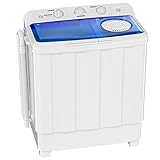
- [Large Capacity Twin tub Washer] Auertech portable mini washer has two separate tubs, washing tub and spin tub, allowing you to wash and dry clothes at the same time. The compact and lightweight design makes it easy to fit in bathrooms or closets. Perfect for dorms, apartments, RVs, etc. Note: There is water in the washing machine because it is tested before packaging, we do not sell used products!
- [Powerful Performance] Equipped with a 1300 rpm powerful motor, clothes can be washed quickly and efficiently. Washer capacity: 18lbs, Spin capacity: 10lbs. Recommended maximum water line: 13.5 inches. The transparent window allows you to see the process of washing or spinning. Our mini washer machine can achieve low consumption and save water, while free your hands.
- [Equip with Drain Pump & Adjustable Inlet Hose] This portable washing machine equipped with a drainage pump. You can choose freely drain water to a higher position or a convenient place randomly. You never need to worry about the drainage problem.
- [Separate Time Control & Lint Filter]Users can control washing time, washing mode and spinning time through the three control switches on the panel. There is two water inlets on the panel for connecting the hose to easily add water. With the simple control panel, this mini washer is easy to operate and you can get clean clothes in three steps.
- [Product Usage Tips] 1. Don't overload. Overload may cause the motor to turn on overheating protection. 2. Balance the spinner to prevent it from losing balance, hitting the inner walls, stopping work. 3. If the machine doesn’t drain, check that the water hose is not clogged or bent, which may prevent the spinner from working properly. 4. Make sure the drain height is less than 45 inches.
| Decision area | What to record | Why it matters |
|---|---|---|
| Fit and installation | Exact width, height, depth, required clearance, access route, door or lid swing, hookups, and stacking or combo compatibility | Prevents an installation failure or an unusable opening |
| Capacity and laundry pattern | Drum volume, opening size, bulky-item guidance, and fit with your typical load frequency | Balances fewer loads against overbuying and overloading |
| Energy and water | EnergyGuide annual energy use and cost, ENERGY STAR status, IMEF, and IWF when listed | Separates standardized comparisons from program certification and efficiency metrics |
| Cycles and controls | Cycles you actually need, adjustable temperature and spin, extra rinse, and control clarity | Matches the machine to fabrics, stains, and your willingness to manage settings |
| Smart features | Remote operation, alerts, diagnostics, downloads, app, account, and Wi-Fi requirements | Shows whether connectivity is useful rather than merely impressive |
| Ownership and care | Maintenance instructions, door-management guidance, child-safety controls, and service information | Supports reliable use after installation |
7. A practical buying process
- Record the room: Measure the alcove, route, doors, stairs, hookups, and the space needed to open the door or lid.
- Describe your laundry: Note weekly load count, usual soil, fabrics, and the largest items you wash.
- Set a capacity range: Eliminate machines that cannot handle your bulky items or that exceed the available space.
- Shortlist loading styles and configurations: Decide whether side-by-side, stacked, or all-in-one installation fits your room and accessibility needs.
- Check current specifications: Use the exact model number to verify dimensions, cycles, capacity, certification, and app compatibility.
- Compare efficiency evidence: Read EnergyGuide estimates, confirm ENERGY STAR status, and compare IMEF and IWF when listed.
- Inspect the cycle list: Match settings to your care labels and common soils; ignore presets that do not serve your routine.
- Evaluate smart functions: Confirm the app and connectivity requirements and decide whether alerts or remote scheduling justify them.
- Plan installation and care: Follow the manufacturer’s leveling, connection, maintenance, and safety instructions. Confirm delivery, installation, and old-unit removal terms for your location.
8. Common mistakes and how to avoid them
Buying by household headcount alone
Household size does not reveal load frequency, bulky items, or whether people wash separately. Base capacity on your actual laundry pattern.
Measuring only the alcove
Ignoring the delivery route, door swing, hose space, or stacking requirements can make a correctly sized machine impossible to install.
Recommended Free Tools
Comparing unlike efficiency numbers
Compare similar capacities and configurations. Treat EnergyGuide estimates, ENERGY STAR certification, IMEF, and IWF as related but different information.
Assuming cycle names are universal
Read the manual and care labels. A “quick,” “sanitize,” or “bedding” cycle can differ substantially between models.
Equating more spin with better washing
Spin mainly affects residual moisture and drying time. Select a speed suitable for the fabric.
Paying for connected features you will not use
Remote controls, diagnostics, alerts, and downloads are optional conveniences. Confirm that the app works in your market and that the washer remains usable without it.
Forgetting routine maintenance
Follow the manufacturer’s cleaning and maintenance directions. For front-loaders, leaving the door ajar after use when appropriate lets moisture evaporate. Keep child-safety guidance in mind, especially where controls or doors are accessible.
Quick Recap
9. Final selection checklist
- The exact model fits the room, route, clearances, connections, and opening direction.
- Its capacity matches your usual loads and largest washable items.
- You compared EnergyGuide estimates for similar machines.
- You verified current ENERGY STAR status and reviewed IMEF and IWF where available.
- Its cycles and adjustable options match your garments, soils, and care labels.
- Its spin choices suit your fabrics and drying setup.
- Smart features, if any, work in your market and justify their app, account, and Wi-Fi requirements.
- You have read the installation, maintenance, and child-safety instructions.
Product prices and availability are accurate as of the date/time indicated and are subject to change. Any price and availability information displayed on Amazon at the time of purchase will apply.




