Recommended Free Tools
A YouTube distribution strategy is a repeatable way to help the right viewers find a video, understand why it is worth watching, and decide to return. Start with a specific audience need, choose a topic and format that serve it, package the video honestly, use relevant YouTube and external routes, then study how viewers actually found and watched it. There is no guaranteed algorithm formula: YouTube says recommendations are personalized and creators should focus on whether their audience likes the content.
What a YouTube distribution strategy includes
Distribution is more than sharing a link after upload. It connects five decisions: who the video is for, what need it answers, which format suits the idea, how its title and thumbnail set expectations, and where viewers can encounter it. Analytics then show which routes and choices deserve another test.
As an Amazon Associate I earn from qualifying purchases.
YouTube’s recommendation guidance says its system does not favor a particular video format as a general rule. Viewer history and response matter, as do factors outside a channel’s control, including topic interest, competition, and seasonality. A successful upload is useful evidence, not a promise of continued impressions. YouTube Help puts the creator’s question this way: “Instead of asking, ‘Does the algorithm like my content?,’ creators should focus on their ‘audience’ and ask, ‘Does my audience like this?’” (YouTube’s Recommendation System; Search & discovery tips — Video).
1. Define the viewer and the outcome
Describe an intended viewer by what they want to learn, solve, experience, or follow—not only by broad demographics. Then state what a successful viewing experience should accomplish: answer a question, demonstrate a task, provide a complete performance, or invite discussion around a timely event.
#1 Best Overall

- 12G-SDI Connections: This Videohub 12G model features 10 12-G SDI inputs and outputs for routing up to 10 different video standards at the same time. It supports up to DCI 4K60 resolution with 4:2:2 8 or 10 bit color routing or 4:4:4 12-bit up to DCI 4K30.
- Full SDI Re-Clocking: Every 12G-SDI input features built-in re-clocking which regenerates the video signal for maximum quality allowing for longer cables and reducing or eliminating signal loss and jitter.
- Front Panel: The built in front control panel lets you route video, so you get the perfect solution for live production racks that don't have the space for extra hardware panels. The front panel is similar to a Videohub Master Control Pro and it features a spin knob for browsing, direct entry buttons for speed and an LCD for displaying labels. However because the panel is built into the router, you can also see live video on the LCD! The LCD also has menus so it lets you change router settings.
- Videohub Setup Utility: Included software lets you customize the router input and output labels. ou can even enable the take button to be used when changing sources, plus the take button can be enabled for each specific video output. The Videohub Setup also lets you program the buttons on the front panel, update the router software, or configure external hardware panels. The software supports Mac and Windows and can be connected via Ethernet or USB.
- Includes: Blackmagic Design Videohub 10x10 12G (VHUBSMAS12G1010), 6ft power cord and 5-pack of SolidSignal Cable Ties.
Use YouTube Studio’s Audience tab to look for useful context, including “What your audience watches,” “Channels that your audience watches,” and reports about the formats they watch. These can suggest adjacent topics, potential collaboration areas, and format preferences. Treat them as clues to investigate rather than instructions to copy. YouTube notes that audience data can be limited, and its “monthly audience” is a rolling estimate of unique viewers over the preceding 28 days—not a subscriber count (Understand your YouTube audience).
2. Choose topics with audience value and a clear entry point
Begin with subjects your intended viewers already care about, then make the value of each video specific. Specialist material can reach beyond existing fans when it is framed around an accessible question or problem, but do not dilute the substance merely to make a topic sound broad.
Rank #2
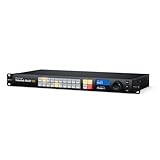
- SUPERIOR CONNECTIVITY - Features 20 12G-SDI inputs and 20 12G-SDI outputs, automatically detecting and switching between different SD, HD, and Ultra HD video standards for seamless integration.
- ULTIMATE COMPATIBILITY - Supports a wide range of video standards including SD, HD, 2K, Ultra HD, and 4K, ensuring it fits into any professional broadcast or production workflow with ease.
- ENHANCED CONTROL - Offers a built-in control panel with 24 buttons, a search dial, and a 2.2" LCD for local operation, plus software control for Mac and Windows for remote management.
- ROBUST RELIABILITY - Includes SDI re-clocking on all SDI outputs to reduce jitter and maintain signal integrity over long cable runs, ensuring pristine video quality in every transmission.
- SEAMLESS INTEGRATION - Equipped with Ethernet for network control, USB-C for computer interface, and reference inputs/outputs for synchronization, fitting effortlessly into existing systems.
Search interest is only one consideration. Topic demand changes, competitors may attract the same viewers, and seasonal shifts can alter interest. A topic that performed well once does not establish that its audience or impressions will remain constant. Keep a short list of ideas that connects audience questions to the channel’s knowledge or point of view, and choose the next video based on both usefulness and a realistic ability to deliver it well.
3. Match the format to the idea and the audience
Choose Shorts, long-form video, or a live stream according to the viewer’s purpose and the way your audience uses each format. A Short may offer a quick discovery point; long-form can develop a subject in depth; live can support timely coverage or direct interaction. These are practical jobs, not platform guarantees. Production capacity and a sustainable workflow matter too.
Rank #3

- 12G-SDI Connections: This Videohub 12G model features 20 12-G SDI inputs and outputs for routing up to 20 different video standards at the same time. It supports up to DCI 4K60 resolution with 4:2:2 8 or 10 bit color routing or 4:4:4 12-bit up to DCI 4K30.
- Full SDI Re-Clocking: Every 12G-SDI input features built-in re-clocking which regenerates the video signal for maximum quality allowing for longer cables and reducing or eliminating signal loss and jitter.
- Front Panel: The built in front control panel lets you route video, so you get the perfect solution for live production racks that don't have the space for extra hardware panels. The front panel is similar to a Videohub Master Control Pro and it features a spin knob for browsing, direct entry buttons for speed and an LCD for displaying labels. However because the panel is built into the router, you can also see live video on the LCD! The LCD also has menus so it lets you change router settings.
- Videohub Setup Utility: Included software lets you customize the router input and output labels. ou can even enable the take button to be used when changing sources, plus the take button can be enabled for each specific video output. The Videohub Setup also lets you program the buttons on the front panel, update the router software, or configure external hardware panels. The software supports Mac and Windows and can be connected via Ethernet or USB.
- Includes: Blackmagic Design Videohub 20x20 12G (VHUBSMAS12G2020), 6ft power cord and 5-pack of SolidSignal Cable Ties.
| Format | Useful question to ask | How to assess it |
|---|---|---|
| Shorts | Can the idea deliver a complete, clear moment or entry point in a short viewing session? | Compare its reach route and viewer response with other Shorts, not with long-form or live by a single view benchmark. |
| Long-form video | Does the viewer need context, a sequence of steps, or sustained depth? | Review discovery sources, impressions, watch-time relationship, and audience retention alongside comparable videos. |
| Live stream | Does the subject benefit from being timely, communal, or interactive? | Evaluate the routes viewers used and how they watched; compare with similar live content and the stream’s purpose. |
Audience overlap across formats is measurable, but viewers who watch a channel’s Shorts do not necessarily follow its long-form videos or live streams. YouTube recommends comparing similar formats and experimenting rather than assuming one format will transfer its audience to another. It also states that Shorts performance does not negatively affect long-form video recommendations. There is no required minimum posting cadence for Shorts, and no universal format mix or ratio that suits every channel (Search & discovery tips — Shorts; Understand your YouTube content performance).
4. Package each video clearly and deliver on the promise
A title and thumbnail should make the video’s payoff easy to understand and set an accurate expectation. For a video intended to answer a search query, keep the title, description, tags, and actual content relevant to that query. YouTube says tags can help, but are not essential for discovery; they are mainly useful for common spelling variations. Avoid keyword stuffing and packaging that promises something the video does not provide.
Rank #4

- HIGH RESOLUTION - Supports SD, HD, 2K, Ultra HD, and 4K video standards, ensuring compatibility with a wide range of video formats for professional-grade video switching and distribution.
- LOW LATENCY - Features video input re-sync on all 4 inputs, providing clean switching between sources, crucial for live productions and broadcast environments where timing is critical.
- EASY SETUP - Includes a user-friendly Blackmagic Videohub software control panel for Mac and Windows, plus a USB-C port for software updates and setup utility connections.
- RELIABLE CONNECTION - Equipped with SDI reclocking on all SDI outputs, maintaining signal integrity over long cable runs, essential for dependable video distribution in professional settings.
- WIDE COMPATIBILITY - Automatically selects between various SDI standards, from 270Mb SD to 12G-SDI, on each input, accommodating different television standards simultaneously.
The opening should quickly confirm that the viewer chose the right video. Move into the promised answer, demonstration, or experience instead of delaying it with a long preamble. Then use audience retention reporting to see where viewers stayed, skipped, or left. A weak opening, unclear structure, or mismatch between promise and delivery may be a more useful next experiment than adding more tags (Understand your content performance for YouTube’s recommendation system).
Quick wins for a faster PC:
Fix the driver behind crashes, sound loss and screen glitchesFind Drivers →Repair Windows errors before they cause bigger problemsFix Now →Scan for outdated or missing drivers - takes under a minuteDriver Scan →5. Use distribution routes that fit the viewing journey
Think of distribution as a set of routes to measure, not a list of mandatory promotional chores. YouTube Analytics can report discovery through Search, Browse features, Suggested videos, the Shorts feed, channel pages, and external referrals. Which sources matter depends on the particular audience and video. A search-led tutorial and a timely live event may have very different discovery patterns.
Best Value

- SEAMLESS SWITCHING - Features 8 SDI video inputs with automatic switching between SD, HD, 3G, 6G, and 12G-SDI standards, ensuring compatibility with various video formats for a streamlined workflow.
- HIGH RESOLUTION SUPPORT - Handles up to 2160p60 Ultra HD and 4K DCI video standards, providing pristine image quality and detailed resolution for professional video applications.
- REAL-TIME MONITORING - Equipped with 4 SDI video outputs, each featuring SDI reclocking, which enhances signal integrity for reliable, high-quality video distribution and monitoring.
- FLEXIBLE CONTROL OPTIONS - Offers built-in control panel with 12 buttons, plus software control for Mac and Windows, and supports Blackmagic Smart Control Pro for versatile operation.
- EASY INTEGRATION - Includes Ethernet connectivity for remote control and configuration, along with a USB-C port for webcam output, software updates, and Videohub Setup Utility connection.
- Search: Make the subject and intended answer legible in the title and description, and ensure the video actually addresses the query.
- Browse and Suggested: Use a clear, honest title and thumbnail so viewers can judge the video’s value when it appears among other viewing choices.
- Shorts feed: Publish a Short when the idea works in that format, then check whether it reaches the audience you intended rather than assuming viewers will move to another format.
- Channel pages, playlists, and posts: Use these when they make it easier to continue a relevant viewing journey. Inspect their reporting instead of presuming they drive results.
- External referrals: Share elsewhere when there is a genuine audience fit, such as a relevant community or your own site. Track the resulting external traffic; there is no guaranteed cross-posting formula.
Studio’s Content analytics reporting distinguishes Videos, Shorts, Live, Posts, Playlists, and Podcasts, and includes views, impressions, format overlap, and “How viewers found your content.” Traffic-source reports help separate platform discovery from external referrals (Check your YouTube impressions and watch time; Check your YouTube Analytics).
6. Review results and choose one next experiment
After publishing, use Studio Analytics to understand a video’s path through discovery and viewing. In the Content tab, inspect traffic sources, impressions and their relationship to watch time, and format overlap where relevant. Open audience retention to examine how viewing changes through the video. Use Advanced Mode when you need more detailed comparisons or exports.
- Choose a fair comparison. Compare similar content and formats over comparable periods. Note differences in publication volume, topic, season, and external activity rather than treating every upload as an identical test.
- Trace the route. Identify whether viewers came from Search, Browse, Suggested, Shorts feed, channel pages, or external sources. Ask whether those routes fit the intended audience.
- Inspect the viewing experience. Put impressions and watch-time context beside retention and viewer response. A large number in isolation does not explain whether the right viewers found value.
- Make one focused change. Test a clearer title or thumbnail, a faster opening, a different format, or a more accessible framing of the topic. Avoid changing several variables at once if you want to learn which adjustment helped.
- Record what happened. Keep the observation and the next hypothesis. Repeat what seems useful only when it continues to serve the audience; do not turn one result into a universal rule.
Do not optimize to an invented target CTR, retention percentage, upload frequency, or view count. YouTube’s guidance does not set a universal posting cadence for Shorts; publishing when your audience is active may help early views, but upload time is not known to affect long-term viewership (Search & discovery tips — Shorts; YouTube’s Recommendation System).
Free tools Windows power users keep installed
One-click scans. No signup required.
7. Interpret view counts in context
YouTube’s Content analytics guidance says that beginning August 24, 2026, a view is counted when playback begins across Shorts, long-form videos, and live streams. The same guidance says YouTube Partner Program earnings and eligibility continue to rely on engaged or qualified measures. As a result, public view counts should not be treated as equivalent to monetization eligibility, earnings, watch hours, or other engagement measures. Check the current metric definitions in Studio when comparing results, especially across the change in counting method (YouTube Analytics: Content tab).
Or let it run in the cloud
If your distribution plan includes a prerecorded video running as a 24/7 YouTube live stream, StreamNeo can handle the playback from the cloud. Upload a recording or build a playlist, add your YouTube stream key once, and go live. Nothing has to stay on at home; the video streams as uploaded at any quality up to 4K 60fps for one flat price per slot, and StreamNeo automatically recovers if YouTube drops the stream. The first day is free with no card. Monthly pricing is $9.99 per month. It is for uploaded videos streamed to YouTube, not a camera feed. See StreamNeo or start the free first day.
Quick Recap
Product prices and availability are accurate as of the date/time indicated and are subject to change. Any price and availability information displayed on Amazon at the time of purchase will apply.




