Recommended Free Tools
To build a real estate website, first decide whom it serves and what visitors should do; then choose a platform, organize useful pages, secure authorized listing access if needed, make listing displays and lead forms clear, review accessibility, and set up ongoing maintenance. IDX is optional, but displaying MLS listings generally requires authorization and compliance with the rules of the relevant MLS.
1. Define your audience and the job of the site
Choose a primary audience and service area before selecting a design or platform. A site for first-time buyers in one city needs different navigation and information from one focused on sellers, rentals, luxury homes, or a particular property type.



As an Amazon Associate I earn from qualifying purchases.
Choose the main actions you want the site to support. These might include browsing properties, requesting a home valuation, learning about your buying or selling process, or contacting your team. Make the opening message specific about whom you help and where you work, rather than relying on a generic slogan.
What’s actually slowing this PC down?
Pick the symptom - the matching free tool is one click away.
2. Choose a build path and domain
There is no universally best platform. Compare the routes below against your market’s listing-access requirements, your maintenance capacity, and how much control you need over design and content. CRMLS describes both vendor-based and in-house implementation routes; its guidance is specific to its service area, not a universal MLS rule. CRMLS IDX Resources
#1 Best Overall
| Build path | MLS coverage and approval | Maintenance | Design flexibility | Lead handling | Content control |
|---|---|---|---|---|---|
| All-in-one real estate platform | Verify supported MLSs and the approval process for your market before committing. | Check which updates and technical tasks the provider handles and which remain yours. | Depends on the platform’s templates and customization options. | Confirm how inquiries are routed, which team members receive them, and how calls to action are configured. | Check how easily you can edit, export, or move your content. |
| General content management system with an IDX vendor | Confirm the vendor is authorized for the relevant MLS and that your intended display is permitted. | You may need to coordinate the website, vendor integration, and MLS-related requirements. | Often offers broad control over non-listing pages; the IDX display may have separate constraints. | Check whether forms and listing inquiries can be routed to the right person. | Review what you can manage directly and what depends on the vendor. |
| Custom or in-house build | Arrange the necessary MLS authorization and data license; a direct feed can add licensing and compliance responsibilities. | Your team or contractor must plan for updates, feed maintenance, and rule changes. | Can be tailored to your needs, subject to data-use and MLS rules. | Specify routing, form behavior, and responsibility for responding before development begins. | Agree who owns the code, content, and data-related implementation. |
These are questions to verify, not guarantees about every platform or vendor. Ask for market-specific confirmation before signing a contract or building around an assumed feed. Register a domain that is easy to identify and maintain; make sure the brokerage or business can retain control of the domain and site accounts if staff or vendors change.
3. Plan the site structure and content
Build navigation around what a prospective client needs to know, not around internal team terminology. A practical starting structure is:
Rank #2
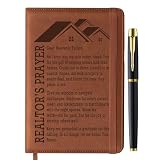
- Premium Realtor Gifts for Realtors and Real Estate Enthusiasts: Crafted with quality artificial leather and exquisite sewing craftsmanship, our realtor notebook exudes sophistication and durability that stands up to busy realtor schedules. Each set includes one realtor-inspired A5 notebook and one smooth metal ballpoint pen—an all-in-one realtor gift package that makes it a perfect, ready-to-give present for any occasion, no extra preparation required
- Unique and Practical Realtor Accessory: Features a replaceable inner core design, allowing the stylish realtor-themed cover to be reused even after the inner pages are used up—ideal for realtors who value both sustainability and functionality. Additionally, the front and back covers are equipped with card slots (perfect for realtor business cards) and a pen loop, providing convenient storage for cash, client info, and other small items realtors need on the go, seamlessly blending beauty with practicality
- Perfect Realtor Gifts for Women and Men: The notebook cover is imprinted with delicate realtor’s prayer patterns and text, boasting a professional yet heartfelt style that resonates with realtors, real estate agents, or anyone in the real estate industry. These realtor gifts are thoughtful and practical, making them an ideal choice for the special realtors in your life, whether male or female
- Versatile A5 Size for Busy Realtors: Designed in standard A5 size (approximately 8.5 x 5.7 inches), our realtor notebook contains 100 sheets (200 pages) for ample writing space—perfect for realtors to jot down client details, property notes, showing times, and real estate to-do lists. It also comes with a ribbon bookmark for easy page marking and an elastic band to keep the notebook securely closed, preventing pages from bending or getting damaged during busy realtor workdays
- Ideal Realtor Gifts for All Occasions: This realtor notebook set is a special realtor gift for friends, family, colleagues, and superiors who are realtors or work in the real estate field. It serves as a meaningful and practical realtor present for retirements, birthdays, Valentine’s Day, Christmas, and other important occasions—conveying your care and appreciation for the hardworking realtors in your life in a unique, memorable way
- Home: State whom you serve, where you work, and the next useful action.
- About the agent or brokerage: Present accurate professional identity and ways to make contact.
- Service areas: Explain local knowledge with original, specific information instead of interchangeable neighborhood copy.
- Buying and selling: Describe your process and how clients can take a next step.
- Listings or property search: Include this only if you have a permitted, reliable way to display listings.
- Contact: Provide a working contact method and set clear expectations for inquiries.
- Specialty pages: Add pages for a genuine focus, such as rentals or a distinct property type, when they help clients make decisions.
Use accurate business details throughout the site. For REALTORS®, the National Association of REALTORS® 2026 Code of Ethics includes advertising provisions addressing the firm’s identity. Applicable requirements for other businesses may differ. NAR 2026 Code of Ethics and Standards of Practice
4. Add property search only through an authorized route
If visitors need searchable listings, check with your local MLS or an authorized vendor before choosing an integration. IDX is not simply a design feature: the right to display listing data, the permitted display, and ongoing compliance depend on the relevant MLS’s authorization and rules. An agent’s MLS login alone should not be treated as permission to republish listings on a public website.
Ask the MLS or vendor to confirm, for your market, what access is available, what licensing or approvals are required, which listings may appear, and who is responsible for compliance and corrections. Keep those answers with your project documentation and revisit them if your provider, feed, or MLS rules change.
Understand the data connection
RESO Web API is a common standard for transporting real estate data between systems; it does not itself grant permission to use listing data. RESO reports that at least 90% of MLSs in the industry have RESO-certified Web API services, based on data updated October 6, 2026. That is a technical adoption measure, not a measure of consumer use or website performance. RESO Certification and MLS Map
Some systems still use RETS, a legacy transport standard that RESO says it stopped certifying in 2018. Ask which connection your proposed provider supports and whether it is approved for the MLS you need.
5. Make listing displays and lead capture clear
Follow the display rules of the MLS that authorizes your listing data. Requirements vary by market. As a regional example, CRMLS says listing attribution must be placed directly beside a key listing field or photo, remain legible, and clearly identify the listing broker, office, or agent. It also states: “Any Call-to-Action button, box, or link must specify which agent will be responding.” These are CRMLS requirements, not a universal rule for all MLSs. CRMLS IDX Standards of Practice
Best Value

- Complete Open House Kit: Everything you need for a successful showing — this set includes 2 Open House Sign-In Books and 2 Realtor Tent Cards. A must-have package for real estate agents to create a professional and organized open house experience.
- Ideal Sizes for Professional Display: The tent cards measure 5.5 x 8 inches, making them highly visible to guests, while the sign-in books are full letter size (8.5 x 11 inches) — perfect for collecting visitor information clearly and efficiently during property showings.
- Durable and Premium Materials: Crafted with high-quality, thick paper, each book ensures a smooth writing surface and long-lasting use. Built to handle frequent open house events, these materials reflect professionalism and attention to detail.
- Inviting & Thoughtful Design: Each piece is designed to make guests feel welcome. The tent cards include friendly messages like “Open House Visitor Registration” and “See Yourself Living Here”, helping create a warm, engaging environment that encourages meaningful connections.
- Organized Visitor Tracking & Lead Collection: Easily record names, emails, and phone numbers of all attendees — perfect for following up with potential buyers. An essential real estate supply to help agents build client relationships and maintain accurate records after every showing.
Make each inquiry route understandable: identify who will receive a message and who will respond. Keep forms limited to information needed for the stated purpose, and explain how the information will be handled. Under the NAR 2026 Code, REALTORS® who intend to share or sell consumer information gathered online shall clearly disclose that possibility. That provision applies to REALTORS®; it should not be presented as a rule governing every real estate business.
6. Review accessibility and mobile usability
Use the W3C’s Web Content Accessibility Guidelines (WCAG) as a design reference. WCAG 2.2 is the latest version in the WCAG 2 family covered by W3C’s overview. Its criteria are organized around four principles: content should be perceivable, operable, understandable, and robust. W3C WCAG 2 Overview · WCAG 2 at a Glance
Review the site with real tasks, including on a phone and with a keyboard. Check that images have useful text alternatives where needed, controls can be operated without a mouse, form fields have clear labels, and error messages explain how to correct a problem. A checklist or automated scan can reveal some issues, but it cannot establish legal compliance on its own. Applicable legal obligations depend on the business and jurisdiction.
7. Launch, monitor, and maintain the site
Before launch, assign an owner for each ongoing responsibility. Then test the complete visitor journey, not just the homepage.
- Check content and links: Confirm contact details, professional identity, service-area information, and navigation links are accurate.
- Submit test inquiries: Verify forms work, confirmation messages make sense, and messages reach the intended person.
- Test on mobile and keyboard: Check navigation, forms, property search, and key actions on small screens and without a mouse.
- Review listing displays: If you use IDX, check attribution, calls to action, and any other requirements set by the relevant MLS.
- Set a correction process: Give a named person responsibility for reviewing and updating stale or inaccurate information.
- Revisit access and disclosures: Review feed authorization, display rules, consumer-data explanations, and accessibility as the site, providers, or applicable requirements change.
For REALTORS®, the NAR 2026 Code of Ethics, Standard of Practice 1-6, says: “When it becomes apparent that information on a REALTOR®’s website is no longer current or accurate, REALTORS® shall promptly take corrective action.” Keep an owner and a practical correction route so outdated information can be addressed. NAR 2026 Code of Ethics and Standards of Practice
Quick Recap
Product prices and availability are accurate as of the date/time indicated and are subject to change. Any price and availability information displayed on Amazon at the time of purchase will apply.




