A strong YouTube live strategy starts with a clear reason for viewers to show up, then matches that purpose to a format and schedule you can sustain. Plan the stream’s job, choose the simplest production method that fits, schedule and promote it, test the broadcast path, and review results against your goal. YouTube does not prescribe one ideal cadence or guarantee growth from going live.
1. Give each stream a job
Start with the live viewer experience you can offer—not with equipment or a target number of broadcasts. YouTube describes Live as a way to create in-the-moment experiences and connect with viewers in real time; live chat can make that connection conversational. YouTube’s overview of why to choose Live points to the format’s real-time value.
As an Amazon Associate I earn from qualifying purchases.
Choose one primary job for each recurring program, such as answering audience questions, teaching a process, hosting a discussion, playing with the community, covering an event, or offering a members-only experience if that feature is available and appropriate. State the viewer payoff plainly in the title and opening. A stream intended to build community may call for interaction; a lesson needs a useful demonstration; event coverage needs timely context.
What’s actually slowing this PC down?
Pick the symptom - the matching free tool is one click away.
Be explicit about the goal. YouTube’s schedule guidance distinguishes programming focused on revenue, subscriber growth, or reach. Those aims can lead to different topics and expectations, so avoid treating every stream as if it should optimize the same outcome. YouTube’s live upload-schedule guidance can help frame the choice.
#1 Best Overall

- Compatible with Nintendo Switch 2’s new GameChat mode
- Auto-Light Balance: RightLight boosts brightness by up to 50%, reducing shadows so you look your best—compared to previous-generation Logitech webcams (1)
- Privacy with a Slide: The integrated webcam cover makes it easy to get total, reliable privacy when you're not on a video call
- Built-In Mic: The built-in microphone lets others hear you clearly during video calls
- Easy Plug-And-Play: The Brio 101 works with most video calling platforms, including Microsoft Teams, Zoom and Google Meet—no hassle; it just works
2. Pick the simplest format that serves the content
YouTube supports mobile, webcam, and encoder streams. Choose based on what viewers need to see and hear, and on how much production work you can reliably handle. Expensive equipment is not a prerequisite; YouTube says a laptop and webcam can be enough to start. YouTube’s live streaming tips for computers describe the main approaches.
| Format | Good fit | Trade-off to plan for |
|---|---|---|
| Mobile | Vlogs and quick updates where portability matters. | Mobile live streaming has additional eligibility requirements. |
| Webcam | Computer-based discussions, teaching, or a simpler desk setup. | Less suitable than an encoder workflow when the production needs complex overlays or multiple external sources. |
| Encoder | Gameplay, overlays, external cameras or microphones, and more involved productions. | More setup and testing; YouTube recommends professional-grade hardware encoders for higher-production events. |
Think of upgrades as a response to an identified problem. If viewers cannot hear you clearly, investigate the microphone and audio path; if the stream drops, investigate network capacity and configuration. Do not buy a camera, microphone, or encoder merely because a strategy article lists one. YouTube’s streaming tips cover preparation and reliability.
Decide on horizontal, vertical, or both before launch
YouTube’s current setup guidance says Live Control Room can send horizontal (16:9) and vertical (9:16) versions at once by default. The vertical version is center-cropped unless you choose another layout, and vertical live streams can be surfaced in the Shorts feed. Some features differ between formats, including ad formats and live redirect. YouTube says vertical cannot be added after a stream has started, so settle framing and feature needs beforehand. YouTube’s live setup guidance explains current format options.
3. Set a cadence you can maintain
Choose a frequency and duration that fit your preparation capacity and deliver enough value to justify viewers’ time. Then make the day, time, and recurring format recognizable. YouTube does not provide a universal best frequency or stream length; its guidance instead asks creators to consider content volume, archives, production cost, preparation time, and each stream’s goal.
- Decide whether the archive should remain public and how a livestream fits beside regular videos and Shorts.
- Allow new uploads room to breathe, and account for breaks or weeks when production capacity is lower.
- Communicate the schedule and any changes; YouTube suggests the channel banner as one place to display it.
- Compare time and production cost with viewership and revenue where relevant, rather than assuming more streams are automatically better.
These are planning factors, not a platform-mandated formula. A dependable, useful schedule is more practical than one that strains the creator or makes the content feel repetitive. YouTube’s live schedule guidance discusses schedule communication and planning.
Rank #2

- 1080P Webcam with Cover for Video Calls - EMEET computer webcam provides design and Optimization for professional video streaming. Realistic 1920 x 1080p video, 5-layer anti-glare lens, providing smooth video. C960 computer camera delivers 1920x1080 video with fixed focus (11.8–118.1 inches), so as to provide a clearer image. C960 USB webcam has a cover and can be removed automatically to meet your needs for privacy. For optimal image performance, use the webcam in a well-lit environment.
- Built-in 2 Omnidirectional Mics - EMEET webcam with microphone for desktop features 2 built-in omnidirectional microphones, picking up your voice to create clear audio for communication. When installing the webcam, select EMEET C960 as the default microphone input device in your computer and video applications and select C960 as the default device in Zoom/Teams and ensure microphone permissions are enabled for proper use. Please note that C960 does not include built-in speakers.
- Automatic Light Adjustment - Automatic exposure adjustment is applied in EMEET HD webcam 1080p so that the streaming webcam can deliver stable image performance. EMEET C960 camera for computer also features color adjustment and exposure optimization to help you look your best. For optimal video quality, it is recommended to use the webcam in normal or well-lit environments and select suitable video settings in your application. Proper lighting helps achieve a clearer and more balanced image.
- Plug-and-Play & Upgraded USB Connectivity - New C960 webcam features both USB Type-A & A-to-C adapter connections for wider compatibility. For stable performance, connect the webcam directly to the computer's main USB port and ensure the device is recognized correctly. If a hub or docking station is used, please ensure it provides sufficient power and stable data transmission, as limited ports may affect performance. 90° wide-angle lens captures more participants without frequent adjustments.
- High Compatibility & Multi Application - C960 webcam for laptop is compatible with Windows 10/11, macOS 10.14+, and Android TV 7.0+. Not supported: Windows Hello, TVs, tablets, or game consoles. It works with Zoom, Teams, Facetime, Google Meet, YouTube and more. Please select C960 webcam as the default camera and microphone device in your application and ensure camera/microphone permissions are enabled, especially on macOS. (Tips: Incompatible with Windows Hello)
4. Schedule, package, and promote each broadcast
- Schedule in Live Control Room when advance notice helps. An upcoming stream may appear in subscribers’ feeds, where viewers can choose “Notify me.” Scheduling also gives you a URL to share. YouTube’s live stream settings guide explains these options.
- Write an accurate title and description. Tell viewers what will happen and why joining live is useful. Avoid promising an outcome the stream cannot deliver.
- Share the stream URL where your audience will see it. If you reuse stream settings, review copied metadata and the stream key before each broadcast; an old title, description, or key can create avoidable problems.
- Use a trailer only if eligible and useful. YouTube limits trailers for scheduled streams to creators with more than 1,000 subscribers and no Community Guidelines strikes.
- Use tags sparingly. YouTube says tags have a minimal role in discovery except for commonly misspelled content terms, so tag-stuffing should not be the center of a promotion plan.
For timing, check YouTube Studio’s audience report for “When your viewers are on YouTube.” It reflects activity across YouTube during the previous 28 days, so use it as an input when choosing a time—not as a promise that a particular slot will perform better. YouTube’s audience analytics guidance describes the report.
5. Prepare the broadcast path and viewer experience
Check eligibility and access
YouTube says live streaming requires a verified channel and no live-streaming restrictions in the previous 90 days; its general guidance also gives a minimum age of 16. Mobile streaming and monetization features have additional requirements. Check the current requirements for your channel and region before announcing a date. YouTube’s getting-started page covers live eligibility.
Test bandwidth, setup, and viewing
- Check outbound upload bandwidth, not only download speed. YouTube recommends leaving 20% headroom above the total stream bitrate; shared networks can limit the bandwidth available to an individual stream.
- Test the full setup before the event. For an encoder event, YouTube advises setting up at least two hours ahead and starting the encoder at least 15 minutes before the scheduled event.
- Preview the stream in Live Control Room, test any backup or failover path you plan to use, and confirm viewers can access it from the watch page, channel page, and a mobile device.
- Monitor audio and video during the broadcast. For longer productions, check local archive storage so a growing recording does not cause a separate local problem.
These checks are especially useful when the stream depends on external equipment or a shared connection. The goal is to catch a failure before viewers do, not to build a more elaborate setup than the content requires. YouTube’s streaming tips cover bandwidth headroom and testing, and its encoder instructions cover advance setup. YouTube says encoder streams under 12 hours are automatically archived; decide whether the archive should be public as part of the plan.
Set chat and handoff expectations
Decide who will monitor live chat, what conduct is acceptable, and whether comments should be held or sorted using the available stream settings. If you plan to use a live redirect, prepare the destination Premiere or stream first and tell viewers what will happen so the handoff is not a surprise.
Independent reader supportYour contribution helps us test, update, and keep practical guides available for everyone.6. Review performance against the stream’s job
After each broadcast, compare the outcome with its stated purpose and review the practical measures that fit it. For a community program, examine attendance and whether people return; for a lesson, consider watch time and whether viewers stay through the useful demonstration; for a monetized stream, review revenue only if the channel has access to the relevant feature. These are ways to interpret your own results, not guarantees from YouTube.
Rank #3
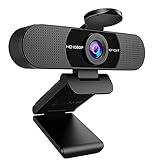
- Full HD 1080P Webcam with Cover for Video Calls - EMEET computer webcam provides design and Optimization for professional video streaming. Realistic 1920 x 1080p video, 5-layer anti-glare lens, providing smooth video. The fixed focal length makes the object in the focal length range of 11.8-118.1 inches, so as to provide a clearer image. The C960 usb webcam has a cover and can be removed automatically to meet your needs for protection. It is a great choice for home office.
- Built-in 2 Noise Reduction Mics - EMEET webcam with microphone for desktop is 2 built-in omnidirectional noise reduction microphones, picking up your voice and filtering out background noise to create an excellent radio effect.EMEET computer webcam enables you to enjoy crystal clear voice for communication. (When installing the web camera, remember to select EMEET C960 usb webcam as the default device for the microphones)
- Low Dependence on Light Condition - Automatic low-light correction technology is applied in EMEET HD webcam 1080p so that the streaming webcam could capture the image in dim light. EMEET C960 camera for computer also has low-light boost, color boost and adjust exposure so you look your best, even in dim and harsh lighting. Imagine you are working in front of a sunny window. Is it convenient for no need to draw the curtains first when a video call comes in to get a normal exposure picture?
- Plug-and-play & 90 Degrees Wide View - No driver required. EMEET C960 pc webcam can be used without drivers to realize plug and play for saving your trouble. The convenient foldable design of web camera allows you to take it anywhere, and the USB cord is long enough for any task. The 90° wide-angle lens of USB camera can accommodate more participants. In video calls, there is no need to frequently adjust the direction of the web cam to show people in different positions.
- High Compatibility & Multi Application - C960 webcam for laptop is compatible with Windows 10/11, MacOS10.14 or later, Linux, Android TV 7.0 or later. The compatibility of the streaming camera is super wide for major software like Zoom, Teams, Facetime, Google Meet, YouTube and more. Whether this web camera is used for online studying/ teaching, home office, conference, meeting or video calling, the web camera is perfectly suitable for you as a tripod-ready universal clip. (Tips: Incompatible with Windows Hello functions)
Include preparation time and production cost in the review, as YouTube recommends. Use the audience timing report’s previous-28-day window as one scheduling input. Where practical, change one major variable—such as timing or format—at a time, so the next result is easier to interpret. YouTube’s schedule guidance and audience analytics guidance provide context for those decisions.
Recommended Free Tools
7. Treat monetization as optional and conditional
YouTube lists live ads, Super Chat and Super Stickers, channel memberships, Shopping, and YouTube Premium revenue among live monetization options. Availability depends on feature eligibility, and ads are not guaranteed to serve in every slot. Match monetization choices to the stream and audience instead of budgeting around a guaranteed return. YouTube’s live monetization tips outline options and its live monetization guidance explains ad delivery.
YouTube reports that creators who chose live automatic mid-roll ads had over 20% average uplift in in-stream ad revenue per hour versus channels that had not turned them on, averaged across 207 countries in January 2024. This is YouTube’s platform-reported comparison, not an individual forecast or a causal guarantee. YouTube describes automatic mid-roll settings intended to limit disruption, including pauses around high-engagement moments and some fan payments; ads can still fail to serve in a given slot. Review the current controls and decide whether the trade-off suits your program.
Or let it run in the cloud
If your strategy is to keep a prerecorded program live continuously rather than host a camera-based broadcast, StreamNeo is a YouTube-only cloud option: upload a recording or build a playlist, add your YouTube stream key once, and go live. It loops uploaded videos; it does not broadcast from a camera.
- Your computer and home connection do not have to stay on.
- Every slot streams your upload as made, up to 4K 60fps, at one flat price per slot; there are no quality tiers or re-encoding.
- It attempts automatic recovery if YouTube drops the stream.
- The first day is free with no card, one free day per account. Billing periods include a day, a week, a month, six months, or a year, and you can cancel any time.
Each slot includes one always-on stream, 10 GB storage per slot pooled across active slots, 24/7 looping and playlists, automatic recovery, and StreamNeo team support. UPI and cards are accepted in India; card checkout is available worldwide. For five or more slots, contact support. The monthly option is $9.99 per month. Same product on every plan; only the billing length changes.
Free tools Windows power users keep installed
One-click scans. No signup required.
Quick Recap
To try it, start a StreamNeo account.
Product prices and availability are accurate as of the date/time indicated and are subject to change. Any price and availability information displayed on Amazon at the time of purchase will apply.




