Rebuild your monthly budget around your new take-home pay—not the headline raise—and assign the extra money before higher spending becomes automatic. Start with the amount that actually arrives after deductions, list current costs and goals, then check the plan against real spending and adjust it.
1. Start with the income you can actually spend
A raise stated as an annual salary or percentage does not tell you exactly how much more money will be available each month. Base the budget on take-home pay shown on your pay statement or deposited into your account; do not assume your spendable income rose by the same percentage as your salary.
As an Amazon Associate I earn from qualifying purchases.
Write down all income sources and the monthly amounts you can reasonably count on. If your income is irregular, consumer.gov’s budgeting guide suggests estimating monthly income by dividing last year’s total income by 12. Treat that as a starting estimate, not a forecast: if your circumstances have changed significantly, adjust the estimate to reflect what you now expect.
Quick wins for a faster PC:
Scan for outdated or missing drivers - takes under a minuteDriver Scan →Repair Windows errors before they cause bigger problemsFix Now →2. Rebuild the spending picture
List fixed bills, variable day-to-day costs, and savings or debt commitments. Include due dates as well as amounts so you can see when money needs to be available. The CFPB’s budgeting guidance recommends updating a budget when employment or spending habits change—which makes a raise a useful point to revisit the plan.
#1 Best Overall

- Effective Budget Planning - Take control of your finances with the budget account book. This comprehensive planner allows you to plan and track your income, expenses, savings, and financial goals in one convenient place. With its intuitive layout and easy-to-use sections, you can stay organized and make informed decisions to achieve financial success.
- User-Friendly Layout - The budget planner features a user-friendly layout designed for easy navigation and organization. Each month, you'll find dedicated budget pages where you can set financial goals, track your income, and plan your expenses. Additional sections include debt trackers, savings goals, bill payment trackers, and more, making it simple to stay on top of your finances.
- Undated Monthly Calendar & Bonus Stickers - Featuring undated calendar each month, you'll have ample space to mark paydays, bills due, appointments, and important dates. Say goodbye to difficult writing spaces. Plus, we've included 3 cute sticker sheets that allow you to personalize your financial organizer and make budgeting more fun. Dates are not pre-printed and are completed by the user.
- Reliable and Convenient Design - Our monthly budget planner is designed for your convenience and built to last. The elastic band keeps everything securely in place, and the dual-sided pocket provides extra storage. Experience a budget planner that combines practicality and durability.
- Master Budgeting with Ease - Our financial planner includes a complete guidebook that provides valuable insights and instructions for optimal usage. From setting financial goals to tracking expenses, this guidebook offers step-by-step guidance and practical tips. Whether you're new to budgeting or an experienced user, this resource will help you make the most of your budget planner, empowering you to achieve financial success.
Compare your list with actual transactions rather than relying only on memory. Track spending in a format you will keep using; if a full month feels like too much to start, the CFPB suggests tracking a week at a time. Free worksheets from the CFPB and consumer.gov can help organize the figures. A notebook or app is optional, not a requirement.
3. Decide what the additional take-home money should do
Before it disappears into a larger routine, give the increase explicit assignments. The right mix depends on your circumstances and priorities; the available guidance does not prescribe one allocation for everyone. Consider these options in light of what you need, when you may need it, and whether the commitment is easy to change.
Rank #2

- Effective Budget Planning - Take control of your finances with the budget account book. This comprehensive planner allows you to plan and track your income, expenses, savings, and financial goals in one convenient place. With its intuitive layout and easy-to-use sections, you can stay organized and make informed decisions to achieve financial success.
- User-Friendly Layout - The budget planner features a user-friendly layout designed for easy navigation and organization. Each month, you'll find dedicated budget pages where you can set financial goals, track your income, and plan your expenses. Additional sections include debt trackers, savings goals, bill payment trackers, and more, making it simple to stay on top of your finances.
- Undated Monthly Calendar & Bonus Stickers - Featuring undated calendar each month, you'll have ample space to mark paydays, bills due, appointments, and important dates. Say goodbye to difficult writing spaces. Plus, we've included 3 cute sticker sheets that allow you to personalize your financial organizer and make budgeting more fun. Dates are not pre-printed and are completed by the user.
- Reliable and Convenient Design - Our monthly budget planner is designed for your convenience and built to last. The elastic band keeps everything securely in place, and the dual-sided pocket provides extra storage. Experience a budget planner that combines practicality and durability.
- Master Budgeting with Ease - Our financial planner includes a complete guidebook that provides valuable insights and instructions for optimal usage. From setting financial goals to tracking expenses, this guidebook offers step-by-step guidance and practical tips. Whether you're new to budgeting or an experienced user, this resource will help you make the most of your budget planner, empowering you to achieve financial success.
| Use | When it may fit | Trade-off to consider |
|---|---|---|
| Emergency savings | You have little cash set aside for unexpected expenses or a recent surprise has disrupted your finances. | Money kept accessible can provide a buffer, but deciding how much to save depends on your situation and past unexpected expenses. |
| Debt payments | Debt payments are a major burden or you want to direct more money toward paying balances. | An extra payment reduces money available for other goals; consider the terms and costs of your own debts rather than treating one suggested threshold as a universal rule. |
| Retirement or other longer-term savings | You want to build assets for a goal that is not an immediate expense. | Money set aside for longer-term goals may not be as readily available for near-term needs. |
| Intentional enjoyment | You want to improve quality of life in a way that matters to you. | A deliberate amount is different from allowing every new expense to become permanent; recurring upgrades can make the budget less flexible. |
The CFPB’s emergency-fund guide says the amount needed depends on a person’s situation. Likewise, the options above are priorities to weigh, not a ranking that applies to every household. A 2024 Associated Press report by Chanelle Bessette, supplied by NerdWallet for educational and informational purposes, discusses savings, debt, retirement, and discretionary spending as choices raised by interviewed personal-finance experts. One expert’s suggested debt or savings milestones are opinions, not CFPB requirements.
4. Use a rule of thumb only if it helps
The CFPB’s 2016 worksheet, “My spending rule to live by,” describes a 50/20/30 guideline: 50 percent of take-home pay for needs, 20 percent for savings and debt payments, and no more than 30 percent for wants. It is a rule of thumb, not a required budget. The worksheet recognizes that standard rules may not fit an individual’s circumstances and invites people to choose a personal rule.
Rank #3

- Effective Budget Plan Book – Take control of your finances with the SUNEE budget account book. This all-in-one budget planner allows you to plan and track your income, expenses, savings, and financial goals. Its intuitive layout and easy-to-use sections help you stay organized and make smart decisions to reach financial success. Our financial planner also included a comprehensive guidebook with valuable tips and instructions to help you get the most out of your budgeting planner.
- Full-Page Calendars – Each month’s full-page calendar provides plenty of space to track paydays, bills due dates, appointments, and important events. No more cramped boxes or tight writing areas, you can easily plan and organize your schedule at a glance.
- Colorful Pages Layout and Tabs – This vibrant budget planner features a user-friendly design for easy navigation and organization. Each month includes dedicated budget pages to set financial goals, track income, and plan expenses. Additional sections like debt trackers, savings goals, and bill payment trackers make managing your finances a breeze. The colorful backgrounds on each page offer clear, instant visibility.
- Bonus 4 Stickers and Convenient Design – This monthly budget planner is built for convenience and durability. Water-resistant cover protects against spills, while the elastic band keeps everything secure, and the dual-sided pocket offers extra storage. Plus, we’ve included 4 adorable sticker sheets to personalize your planner and make budgeting more enjoyable. Experience a budget planner that combines practicality with lasting quality.
- UNDATED DESIGN & 1 YEAR USE - Undated finance books start with 1 page-financial goals, 1 page-Mind Map, 1 page-Financial Strategy, 1 page-Tactics, 2 pages-Important Dates, 4 pages-Bill Tracker, 4 pages-Saving Tracker, 8 pages-Debt Tracker, followed by 12 Months(10 pages per month, 1 unique color for each month). 2 pages-Christmas Budgeting, 2 pages-Yearly Summary, 2 pages-Check Register and 12 pages-Notes(dotted). It is UNDATED, so you could start at any time, suitable for 1 year use.
If your current bills make those percentages unrealistic, use the idea as a prompt to examine categories rather than as a test you have failed. Your budget should reflect actual obligations and goals; the figures do not decide which priorities matter most to you.
5. Make the plan repeatable, then review it
Choose an amount for each priority and build it into the monthly plan. The CFPB identifies specific contributions, recurring transfers, and adjustments to cash flow as possible ways to save. If you automate transfers, monitor account balances so they do not trigger overdraft fees. Some one-time income can also be used for a savings goal, but that does not substitute for checking whether recurring expenses fit your regular income.
Rank #4
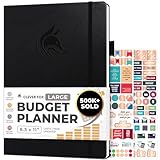
- Achieve Financial Mastery & Goals – master home finance, boost savings, and manage cash flow seamlessly with Clever Fox expense tracker notebook – guiding you to your financial freedom.
- Maximize Financial Goals – This large bill tracker notebook is more than a tool—it's your strategy for financial success. Break down big goals into manageable tasks and take small steps.
- Effortlessly Manage Spending, Debts, and Savings – This 12-month finance planner features an undated format with monthly calendars, budget plans, expense trackers, 8 savings and 12 debt trackers.
- Sized at 8.3x11 inches, this budgeting book includes a vegan leather cover, premium 120gsm paper, pen holder, elastic band, triple bookmarks, receipt pocket, budgeting stickers & detailed user guide.
- 60-Day Promise – Not satisfied with your mini budget planner? We'll refund or replace your budgeting planner. Simply message us for an easy return of your pocket-sized monthly budget planner.
After a month, compare the plan with what actually happened: income received, bills paid, variable spending, and amounts saved or paid toward debt. Revise next month’s budget where estimates were off or priorities have changed. A budget is a written plan for monthly spending, as consumer.gov puts it—not a one-time calculation after a raise.
Do these 3 things before closing this tab:
1Scan for outdated or missing drivers - takes under a minute2Repair Windows errors before they cause bigger problems3Fix the driver behind crashes, sound loss and screen glitchesHow to avoid lifestyle creep without rejecting every upgrade
Spending more as income rises is often called lifestyle creep. It is not inherently wrong to choose a better quality of life; the risk is that new recurring costs grow automatically before you consider savings, debt, or other goals. In the AP report, Girls on the Money founder Mabel Nuñez warned that raising spending on a new car, a new home, or frequent outings can cause spending to surpass new income. Mindful Money Coaches’ Liz Carroll put the alternative succinctly: “Give your future self a share.”
Best Value

- Effective Budget Planning - Take control of your finances with the budget account book. This comprehensive planner allows you to plan and track your income, expenses, savings, and financial goals in one convenient place. With its intuitive layout and easy-to-use sections, you can stay organized and make informed decisions to achieve financial success.
- User-Friendly Layout - The budget planner features a user-friendly layout designed for easy navigation and organization. Each month, you'll find dedicated budget pages where you can set financial goals, track your income, and plan your expenses. Additional sections include debt trackers, savings goals, bill payment trackers, and more, making it simple to stay on top of your finances.
- Undated Monthly Calendar & Bonus Stickers - Featuring undated calendar each month, you'll have ample space to mark paydays, bills due, appointments, and important dates. Say goodbye to difficult writing spaces. Plus, we've included 3 cute sticker sheets that allow you to personalize your financial organizer and make budgeting more fun. Dates are not pre-printed and are completed by the user.
- Reliable and Convenient Design - Our monthly budget planner is designed for your convenience and built to last. The elastic band keeps everything securely in place, and the dual-sided pocket provides extra storage. Experience a budget planner that combines practicality and durability.
- Master Budgeting with Ease - Our financial planner includes a complete guidebook that provides valuable insights and instructions for optimal usage. From setting financial goals to tracking expenses, this guidebook offers step-by-step guidance and practical tips. Whether you're new to budgeting or an experienced user, this resource will help you make the most of your budget planner, empowering you to achieve financial success.
Make upgrades a conscious budget decision. Price the recurring cost, decide what it displaces, and leave room for the goals you chose. That lets you enjoy some of the raise without committing all of it to expenses that are difficult to unwind.
Quick Recap
Product prices and availability are accurate as of the date/time indicated and are subject to change. Any price and availability information displayed on Amazon at the time of purchase will apply.




