Free tools Windows power users keep installed
One-click scans. No signup required.
The quickest Windows 10 bass adjustment is usually right-click the taskbar speaker icon → Sounds → Playback → select your device → Properties → Enhancements → Bass Boost. That checkbox appears only when the active audio driver and hardware expose the effect. If it is missing, update or reinstall the manufacturer’s audio driver, try the device’s Equalizer or Bass Management controls, and remember that software cannot make small laptop speakers reproduce frequencies they cannot physically produce.
What Windows 10 can—and cannot—do for bass
Windows 10 does not provide one universal bass slider for every computer. Bass processing is supplied through the playback device, its driver, and sometimes the PC maker’s audio control panel. One machine may show Bass Boost, Equalizer, Loudness Equalization, or Bass Management; another may show none of them even though both run the same Windows edition.
As an Amazon Associate I earn from qualifying purchases.
Microsoft describes the Equalizer effect as “The Equalizer effect is used to alter the frequency response of an audio system using linear filters.” In practical terms, an equalizer raises or lowers selected frequency bands. Bass Boost is a preset or processing object intended to increase the perceived low end, while Bass Management routes low-frequency content to an appropriate speaker or subwoofer. Loudness Equalization reduces perceived volume differences between quiet and loud material; it is not the same as adding deep bass.
The Tool Desk
Outbyte Driver Updater FREEScan for outdated or missing drivers - takes under a minuteDriver Scan →Outbyte PC Repair FREEClear out junk files and repair common Windows errorsFree Scan →There is also a physical limit. Microsoft notes that laptop speakers may have limited bass capability and that boosting can improve perceived quality only in the frequency range those speakers support. A large software boost cannot turn a thin laptop driver into a subwoofer. Excessive gain instead causes clipping, muddy speech, rattling, or shutdown of a speaker’s protection circuit.
#1 Best Overall

- Comfort is King: Comfort’s in the Cloud III’s DNA. Built for gamers who can’t have an uncomfortable headset ruin the flow of their full-combo, disrupt their speedrun, or knocking them out of the zone.
- Audio Tuned for Your Entertainment: Angled 53mm drivers have been tuned by HyperX audio engineers to provide the optimal listening experience that accents the dynamic sounds of gaming.
- Upgraded Microphone for Clarity and Accuracy: Captures high-quality audio for clear voice chat and calls. The mic is noise-cancelling and features a built-in mesh filter to omit disruptive sounds and LED mic mute indicator lets you know when you’re muted.
- Durability, for the Toughest of Battles: The headset is flexible and features an aluminum frame so it’s resilient against travel, accidents, mishaps, and your ‘level-headed’ reactions to losses and defeat screens.
Fastest method: enable Bass Boost
- Play a familiar song or video at a moderate volume. Using known material makes changes easier to judge and reduces the temptation to compensate for a poor recording by turning the level too high.
- Right-click the speaker icon on the Windows taskbar and select Sounds. If the taskbar is crowded, open Control Panel → Hardware and Sound → Sound instead.
- Open the Playback tab. Identify the device carrying your sound—such as Speakers, Headphones, HDMI audio, or a USB headset—and click it once.
- Choose Properties, then open the Enhancements tab.
- Check Bass Boost if it is listed. Some drivers provide a Settings button beside the effect; use it only when available and begin with the smallest offered value.
- Select Apply, then OK, and listen again. Compare at the same master volume rather than turning the volume up after enabling the effect.
If the Enhancements tab or Bass Boost entry is absent, that is normally a driver or hardware availability issue—not a hidden Windows switch. Continue with the checks below.
Check volume and application routing first
Low bass can be caused by a quiet application, a muted channel, or audio being sent to the wrong output. Before changing processing, verify the basic levels.
- Right-click the taskbar speaker icon and open Open Volume mixer (or Volume mixer, depending on the Windows 10 build).
- Raise the Device or system slider and the slider for the affected application. Make sure neither is muted.
- Confirm that the application is using the intended output. A browser might be routed to headphones while you are adjusting the laptop speakers, for example.
- Check the application’s own volume control and any in-app audio preset. A music player’s “small speakers” or “voice” mode can reduce low frequencies before Windows receives the signal.
Test one source at a time. If only one program sounds thin, its mixer level or internal audio setting is more likely than a system-wide bass problem.
Windows Errors? Fix Them Before They Spread
Repair common Windows errors and clear accumulated junk for a smoother, more stable PC - no reinstall needed.Free scan · no reinstallCrashes, No Sound, or Screen Glitches?
Random freezes, missing sound and display glitches usually trace back to one bad driver. Find and replace yours safely.Free scan · under a minuteUse Equalizer or vendor audio controls carefully
When Windows lists Equalizer
Some playback devices show Equalizer in the Enhancements list. Enable it and choose Settings if the driver supplies an equalizer interface. Raise the lowest one or two bands slightly, then listen to bass instruments and voices together. A modest change is easier to evaluate than moving every slider to the top.
Large boosts can exceed the available headroom in a recording or amplifier. The audible symptoms are harsh crackles on kick drums, flattened transients, buzzing, or voices that become hollow. If that happens, lower the bass bands or reduce the master volume before trying again. Equalizer processing can also be disabled for a particular playback device by clearing its checkbox.
When the PC maker supplies a separate panel
Many manufacturers expose additional controls in a vendor audio application or in a tab added to the device properties. Look for labels such as Equalizer, Bass, Speaker fill, Room correction, or Bass Management. The exact names depend on the driver, and a control shown for built-in speakers may disappear when Bluetooth, HDMI, or USB audio is selected.
Rank #2

- Enjoy expansive cinematic sound. Big 50 mm audio drivers deliver an incredible sound experience
- Hear Enemies From All Sides. DTS Headphone:X 2.0 surround sound(1) lets you hear enemies sneaking behind you, special ability cues, and immersive environments. It’s positional clarity that can make the difference between victory and defeat. Experience three-dimensional audio that goes beyond 7.1 channels to make you feel like you’re right in the middle of the action. (1) DTS Headphone:X 2.0 requires Logitech G HUB Software.
- Be Heard Loud and Clear. The big 6 mm boom mic makes sure you’re heard by gaming partners and mutes when flipped up.
- Use One Headset For Most Game Platforms. Your headphones work with your PC or Mac via USB DAC or 3.5 mm cable, mobile devices with 3.5 mm cable or with gaming consoles including PlayStationⓇ 5 and PlayStationⓇ 4 (USB wireless stereo sound only), Nintendo Switch (wireless stereo sound when docked)
- Game for Hours in Comfort. Everything about these headphones is about comfort: The deluxe lightweight leatherette ear cups and headband are made to keep pressure off your ears. Ear cups rotate up to 90 degrees for convenience.
Make one change at a time and keep a note of the original setting. That makes it possible to return to a neutral profile if a preset introduces distortion or delays.
Do not confuse Loudness Equalization with sub-bass
Loudness Equalization is designed to reduce the perceived difference between quiet and loud portions of a track. It may make quiet bass lines easier to hear at a low listening level, but it does not extend the speaker’s frequency range. It can also reduce musical dynamics. Use it only when the problem is inconsistent loudness, not when the goal is deeper low-frequency reproduction.
What to do when Bass Boost is missing
Install the correct manufacturer driver
Windows may be using a basic audio driver that provides sound output but not the vendor’s enhancement objects. Download the current Windows 10 audio driver from the computer, motherboard, or sound-device manufacturer for your exact model and edition. Avoid installing a package intended for a different model simply because the names look similar.
- Save your work and close audio applications.
- Install the manufacturer package, following its prompts. Some installers remove the old package and reboot automatically.
- Restart Windows even if the installer does not require it.
- Return to Sounds → Playback → device → Properties and check whether Enhancements, Bass Boost, or Equalizer now appears.
On a desktop, also check whether the selected device is the motherboard output, a graphics-card HDMI output, a USB DAC, or a separate sound card. Each can have a different driver and therefore a different set of effects.
Update or reinstall through Device Manager
- Right-click Start and open Device Manager.
- Expand Sound, video and game controllers. Identify the audio device currently in use.
- Right-click it and choose Update driver. If you already downloaded a manufacturer package, run that package instead of relying only on Windows’ automatic search.
- If the device is malfunctioning, choose Uninstall device, restart Windows, and install the correct manufacturer driver. Do not remove an unknown device unless you have confirmed what it controls.
After a driver change, Windows can switch the default output. Reopen the Playback tab and set the intended device as Default before retesting.
Check whether an update replaced the vendor package
A Windows update can replace a customized audio driver with a generic one. If Bass Boost disappeared immediately after an update, install the current package supplied for your PC model, restart, and inspect the Enhancements tab again. If the manufacturer has no Windows 10 package for your exact model, the missing effect may not be recoverable through Windows settings alone.
Rank #3

- TRIFORCE 50MM DRIVERS GEN-2 — Tuned for improved clarity and positional performance, the Gen-2 drivers not only deliver more powerful audio, but have an improved soundstage to clearly hear every footstep and audio cue
- DETACHABLE HYPERCLEAR CARDIOID 9.9MM MIC — The mic’s unidirectional pickup pattern ensures more voice and less noise, while its detachable design allows for easy removal when not in use
- HYPERSPEED WIRELESS — Featuring an ultra-fast 2.4 GHz wireless connection, enjoy high-performance, low-latency competitive play with sound that’s perfectly synced to the game
- 3 MODES OF CONNECTIVITY — Gain the competitive edge when gaming on PC, console or mobile; seamlessly switch between 2.4 GHz and Bluetooth with SmartSwitch Dual Wireless or stay plugged in for non-stop gaming via USB
- 7.1 SURROUND SOUND — With our advanced 7.1 surround sound, enjoy true-to-life acoustics that optimizes the game’s sound design to hear everything like being right in the middle of it all
Change the default format when sound is thin or unstable
The playback device’s format can affect compatibility with its driver and enhancements. In Sounds → Playback → device → Properties, open the Advanced tab and test another value under Default Format. Apply one change, play the same material, and keep the setting that is stable and clear.
There is no single format that is best for every device. A setting that works for built-in speakers may cause crackling through a USB interface, while another may make an HDMI receiver stop responding. Record the original value so you can restore it if the test does not help.
Fix crackling, clipping, or muddy bass
Temporarily disable all enhancements
Return to the Enhancements tab and select Disable all enhancements if that option is present. Play the same track. If the distortion disappears, re-enable only Bass Boost or Equalizer and use a smaller adjustment. This isolates processing from a damaged cable, failing speaker, or bad recording.
What’s actually slowing this PC down?
Pick the symptom - the matching free tool is one click away.
Reduce gain before raising the Windows volume
Boosting several equalizer bands can cause digital clipping even when the Windows volume slider is below 100 percent. Lower the bass bands, reduce any preamp control in the audio application, and then set a comfortable listening level. Do not use a higher master volume to compensate for a distorted boost.
Restart the Windows audio services
- Press
Win + R, typeservices.msc, and press Enter. - Find Windows Audio, right-click it, and choose Restart.
- Do the same for Windows Audio Endpoint Builder.
- Close the Services window and test the playback device again.
This can clear a stuck audio session, but it will not repair a physically damaged speaker or an incompatible driver.
Separate software distortion from hardware damage
- Test another application and another recording. If only one track distorts, the source may already be clipped.
- Test headphones or another speaker set. If the alternate device is clean, the original speakers, cable, or amplifier may be at fault.
- Test the original device with enhancements disabled. Persistent rattling at normal volume points toward hardware rather than Bass Boost.
- Check whether the distortion changes when the laptop is moved or the cable is touched. Intermittent changes can indicate a connector or cable problem.
Why laptop speakers often cannot deliver deeper bass
Low frequencies require speaker-cone movement and enclosure volume. Thin laptop enclosures and small drivers have limited output at the bottom of the audible range. Microsoft’s guidance therefore describes bass boosting as an improvement within the range the speaker supports, not a way to create frequencies outside that range.
Rank #4
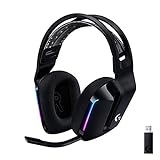
- Personalize your Logitech wireless gaming headset lighting with 16.8M vibrant colors. Enjoy front-facing, dual-zone Lightsync RGB with preset animations—or create your own using G HUB software.
- Total freedom - 20 meter range and Lightspeed wireless audio transmission. Keep playing for up to 29 hours. Play in stereo on PS4. Note: Change earbud tips for optimal sound quality. Uses: Gaming, Personal, Streaming, gaming headphones wireless.
- Hear every audio cue with breathtaking clarity and get immersed in your game. PRO-G drivers in this wireless gaming headset with mic reduces distortion and delivers precise, consistent, and rich sound quality.
- Advanced Blue VO CE mic filters make your voice sound richer, cleaner, and more professional. Perfect for use with a wireless headset on PC and other devices—customize your audio with G HUB.
- Enjoy all-day comfort with a colorful, reversible suspension headband designed for long play sessions. This wireless gaming headset is built for gamers on PC, PS5, PS4, and Nintendo Switch.
When the built-in speakers reach their physical limit, the practical upgrade is a set of PC speakers with a subwoofer or another external audio system. A subwoofer has a driver and enclosure designed for low frequencies, so it addresses the hardware constraint that software cannot remove. Check the connection your computer supports, available desk space, independent volume controls, and return policy before buying.
Compare the available bass paths
| Approach | Low-frequency capability | Controls | Main risks | Cost and setup |
|---|---|---|---|---|
| Bass Boost in Windows Enhancements | Limited to the existing speaker or headphone hardware | Usually system-wide for the selected playback device | Clipping, muddy speech, speaker distortion | No purchase; availability depends on the driver |
| Equalizer or Bass Management | Can shape supported frequencies and route bass where the hardware allows | May be system-wide or supplied by a vendor application | Incorrect routing, excessive gain, incompatible presets | No purchase when included with the driver; setup varies |
| Loudness Equalization | Does not extend frequency response; can make quiet bass easier to hear | Usually a playback-device enhancement | Reduced dynamics or pumping on some material | No purchase; driver-dependent |
| External speakers with a subwoofer | Provides a physically dedicated low-frequency driver | Hardware controls plus Windows output settings | Desk space, cabling, compatibility, and excessive volume | Requires a purchase and available connection |
| Headphones or a USB audio device | Depends on the selected model and its driver; may bypass laptop-speaker limits | Device, driver, and sometimes application controls | Driver differences, latency, or a new default-output selection | Requires compatible hardware and setup |
The deciding factors are the hardware’s actual low-frequency extension, whether the driver exposes Bass Boost or Equalizer, the chance of clipping or muddy speech, whether control is per application or system-wide, and the cost and physical space of an external solution.
Per-application and system-wide behavior
Enhancements in the classic Sound panel generally apply to the selected playback device, so every application using that device can be affected. An application equalizer may apply only to that program. If two programs sound different, compare their mixer levels and internal presets before changing the Windows device profile.
Switching from speakers to Bluetooth, HDMI, a monitor, or a USB headset selects a different playback endpoint. Recheck its Properties page; the new endpoint may not support the same effects. A profile that sounds good on laptop speakers can overemphasize bass on headphones.
A complete troubleshooting sequence
- Verify the correct output device and raise both system and application levels in Volume Mixer.
- Open the device’s Enhancements tab and enable Bass Boost if it exists.
- If available, use Equalizer or Bass Management with small adjustments and moderate volume.
- Disable enhancements to determine whether distortion is caused by processing.
- Test another Default Format under Advanced.
- Restart Windows Audio and Windows Audio Endpoint Builder if crackling or a stuck session continues.
- Install or reinstall the exact manufacturer audio driver, restart, and inspect the controls again.
- Test another application, recording, and output device to separate source, software, and hardware faults.
- If the speakers still cannot produce the desired low end, use external speakers with a subwoofer rather than applying a larger software boost.
Windows 10 support status and 2020-tip context
These procedures describe the classic Windows 10 Sound control panel used by the 2020-era guidance. Microsoft ended Windows 10 support on October 14, 2025. The controls may continue to function on an existing installation, but driver availability and security support are legacy-platform considerations. A current manufacturer driver may be unavailable for older hardware, and moving to a supported Windows release can change the names or location of audio controls.
If you remain on Windows 10, keep a copy of the working audio driver and note your device’s original format and enhancement settings. That makes recovery easier after a driver replacement or system reset.
Quick Recap
As an optional shortcut for a missing, outdated, corrupted, or absent audio driver, Outbyte Driver Updater can scan more than 100 devices, show the current and recommended driver version, install official drivers, and provide backup, restore, and scheduled scans. It runs on Windows 11, 10, 8, and 7, with a 2-day free trial and no credit card before a subscription; results vary, and manual checks remain appropriate when a driver package or hardware fault needs model-specific diagnosis.
Product prices and availability are accurate as of the date/time indicated and are subject to change. Any price and availability information displayed on Amazon at the time of purchase will apply.




