Automate a ticket action by defining what should happen, what event or time condition should start it, which tickets qualify, and what the rule should change. The core pattern is if specified conditions are true, then perform selected actions. Use event-based triggers for immediate reactions, time-based automations for elapsed intervals, and macros when an agent should choose to apply a repeatable set of actions.
Rules can affect one another: changing a field or status may make a ticket eligible for later rules, and a recurring time rule can keep firing unless its conditions stop matching. Plan the sequence and test both matching and near-matching cases before relying on it.
As an Amazon Associate I earn from qualifying purchases.
Choose the right workflow pattern
Start with when the action should happen. The three common mechanisms are not interchangeable: triggers respond to ticket events, automations respond to elapsed time, and macros are applied by an agent.
Do these 3 things before closing this tab:
1Fix the driver behind crashes, sound loss and screen glitches2Repair Windows errors before they cause bigger problems3Scan for outdated or missing drivers - takes under a minute| Pattern | Starts when | Best suited to | Important design point |
|---|---|---|---|
| Trigger | A ticket is created or updated | Immediate assignment, field changes, or notifications | Rules may be evaluated in order; one rule’s actions can affect whether later rules match. Zendesk documentation |
| Automation | A specified amount of time has elapsed | Follow-up or status changes based on ticket age or state duration | In Zendesk, automations run hourly on non-closed tickets and need an action that makes a condition stop matching. Zendesk documentation |
| Macro | An agent applies it to a ticket | Standard replies and repeatable updates that should remain under agent control | It is an agent-invoked shortcut, not an automatic background rule. Zendesk documentation |
Use a trigger for an immediate reaction
A trigger evaluates conditions after ticket creation or an update, then performs actions when the conditions match. For example, a billing request can be routed to the billing team when it is created, or a requester can be notified when an appropriate ticket event occurs. Intercom also documents ticket-created and teammate-state-change triggers. Zendesk trigger guidance · Intercom ticket-trigger guidance
#1 Best Overall
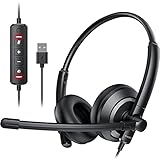
- ✅【Clearer Calling with Noise Cancelling MIC&Never Drop】Using the noise reduction technology can eliminate up to most surrounding noise,and wired noise cancelling is never drop and more stable than wireless headset. USB headphones can pick up your voice more accurately, allowing your friends to hear you more clearly. This is perfect for online courses, Skype chats, call centers, webinar presentations, office, corporate, Rosetta Stone, Dragon Talk, conference calls, and remote work.
- ✅【Long-lasting Comfort,4oz Lightweight】USB headset with microphone is not only light but also ergonomically designed, which can be adjusted freely according to different head shapes to ensure that everyone can find the most comfortable wearing method. The earmuffs are soft and fits snugly to the ears without causing any pressure on the ears. It is very suitable for long-term wearing, and you can enjoy long-lasting comfort whether you are working from home,studying or entertaining at home.
- ✅【Enhanced Sound & MIC Mute】The USB headset has high-quality audio performance, can transmit and receive sound clearly, and guarantees the quality of the call. MIC mute and speaker mute are convenient for users to operate during a call, and it also has a volume adjustment function, which can adjust the call volume according to user needs.
- ✅【Strong Built-in Steel Bars&USB Connection】Strong steel bars built into the headband of the headphone, which is stronger than other pure plastic headset and not easy to break. The USB headset with microphone is suitable for PC/tablet/Mac/iOS/laptop/Android phone and other devices with USB port.
- ✅【24 months Warranty Guarantee 】We can provide 100% after-sales service and we are here to promise that if you need help when using headset ,please believe us and contact us first time to help you if you need .We will unconditionally refund or resend new headset to you for free and you don't have to return goods if you are unsatisfied with headset.
Use an automation for elapsed time
Choose an automation when the clock matters—for example, when a ticket has remained open or pending for a specified interval. Zendesk documents conditions such as hours since a ticket was created, opened, pending, on hold, or solved. Its automations run hourly on non-closed tickets, so an elapsed-time rule is not an exact-to-the-minute timer. Zendesk automation guidance
Use a macro when an agent should decide
A macro packages actions for an agent to apply, such as adding a public response, changing the status to solved, and adding a tag. It suits consistent handling that still needs human judgment at the point of use. Zendesk macro guidance
Build a ticket workflow step by step
- Write the outcome in operational terms. Make it observable: “Route billing requests to the billing team” is more actionable than “handle billing better.” Decide whether the outcome is an assignment, field or status change, comment, notification, or a combination.
- Choose the start condition. Specify ticket creation, a relevant field or state changing, or a defined period elapsing. If an agent must choose when to act, use a macro rather than a background rule.
- Define which tickets qualify. List the required fields, tags, teams, agents, forms, and ticket states. Decide whether all conditions must match or whether any one of them is sufficient. Confirm that the fields and other values the rule depends on exist in the account.
- Select a small, clear set of actions. Use only the changes needed for the outcome. Separate internal updates from customer-facing communications, and check whether each comment is public or private before enabling it.
- Review rules that may overlap. Find other rules that can match the same ticket. Check execution order and consider how an action—such as changing a status, field, or tag—could make a later rule match or prevent it from matching.
- Prevent unintended repeat execution. For an elapsed-time rule, include a condition and an action that cause the ticket to stop qualifying after the action runs. More generally, make recurring rules stop matching after they have done their job, especially when actions send notifications or make repeated changes.
- Test representative tickets. Check a ticket that should match, a near-match that should not, one that has already been handled, and a case where more than one rule could apply. Observe actual ticket behavior and adjust the conditions or ordering if the result differs from the intended sequence.
- Validate external actions before relying on them. For a connected system, confirm permissions, the data being passed, failure handling, plan eligibility, and any usage or credit limit with current vendor documentation and the target account.
Design conditions and actions deliberately
Make the “if” precise
Conditions are the gate that limits a rule to the right tickets. Combine meaningful criteria—such as ticket type, form, status, tag, or elapsed time—rather than relying on a broad match that could sweep in unrelated work. If a rule requires a form, field, team, or tag, make sure that value is available and consistently applied before the rule runs.
Quick wins for a faster PC:
Fix the driver behind crashes, sound loss and screen glitchesFind Drivers →Repair Windows errors before they cause bigger problemsFix Now →Scan for outdated or missing drivers - takes under a minuteDriver Scan →Rank #2

- Digital Stereo Sound: Fine-tuned drivers provide enhanced digital audio for music, calls, meetings and more
- Rotating Noise Canceling Mic: Minimizes unwanted background noise for clear conversations; the rotating boom arm can be tucked out of the way when you’re not using it
- Handy In-line Controls: Simple in-line controls on the headset cable let you adjust the volume or mute calls without disruption
- Plug-and-Play USB Computer Headset: Simply plug the USB-A connector into your computer and you’re ready to talk or listen without the need to install software
- Padded Comfort: Comfortable headphones with adjustable headband features swivel-mounted, leatherette ear cushions for hours of comfort and is easy to clean
Make the “then” predictable
Actions can assign a ticket, update fields or status, add a comment, or send a notification, depending on the platform and rule type. Decide which changes are internal and which are visible to the requester. Then consider the effects of those changes: a new status or tag can alter eligibility for another rule.
Control ordering and repeat behavior
Where a platform evaluates rules in order, ordering is part of the workflow—not just housekeeping. A rule that changes a ticket may alter the result of a later rule. Time-based rules need special care because they can be evaluated repeatedly; make the ticket cease to qualify, or otherwise design the rule so a completed action does not fire again.
Examples from support platforms
The examples below illustrate documented workflow patterns. They are not a complete feature matrix, and equivalent capabilities should not be assumed across products.
Rank #3

- Crystal-Clear Calls with ANC & ENC—Our noise cancelling headset features advanced Hybrid Active Noise Cancellation (ANC) to block out background noise for your focus(press ANC button, enjoy 3 modes), wireless headset with mic combined with Environmental Noise Cancellation (ENC) through the microphone to ensure your voice comes through clearly—even in noisy offices or busy homes. Be perfectly heard on every Zoom, Teams, or customer call
- Plug-and-Play Qualcomm USB Dongle for PC/Mac Use—Headsets with microphone for work come with a dedicated Qualcomm USB-A dongle, providing a more stable, low-latency connection than standard Bluetooth. Work headset with mic is the perfect solution for computers without built-in Bluetooth or with restricted settings. USB dongle plug-and-play (Not compatible with landlines/desk phones/VoIP phones)
- Dual Connectivity & Intuitive Flip-to-Mute Microphone—Noise cancelling headphones for work stay connected to two devices at once via adaptor and Bluetooth. The innovative flip-to-mute microphone boom allows you to mute conversations instantly and reliably with a simple, physical flip—ensuring privacy and convenience without fumbling for buttons (MFB answers/ends cell calls only)
- Advanced Bluetooth 5.4—Powered by the latest Bluetooth 5.4, the wireless headphones with mic offer faster pairing, a rock-solid connection, and significantly lower battery consumption. Enjoy the freedom to move around your workspace with an impressive 33-foot operating range, all while maintaining crystal-clear audio without dropouts
- All-Day Comfort—With breathable leather ear cushions, an adjustable headband, 270° rotatable microphone, Bluetooth headset with microphone remains comfortable through the longest shifts. Quick 2-hour charge delivers up to 35 hours of talk time or 50 hours of music, making wireless computer headset with microphone ideal for back-to-back meetings and international travel.
Zendesk: triggers, automations, macros, and action flows
Zendesk documents triggers for actions following ticket creation or updates, automations for elapsed-time conditions, and macros for agent-applied sets of actions. Its automation documentation says rules run hourly on non-closed tickets and require an action that cancels a condition, helping avoid repeated firing. Zendesk gives closing a solved ticket after 96 hours (four days) as an example and describes the interval as a best estimate for a minimum solved period; it is a vendor example, not a universal support standard. Triggers · Automations · Macros · 96-hour example
Intercom: ticket events and categories
Intercom documents workflows for assignment by ticket type, closing tickets after a period, sending ticket forms, and updating state after a customer or teammate reply. Its ticket-trigger documentation distinguishes Customer, Back-office, and Tracker categories. Those categories and examples are specific to Intercom’s documented workflow model. Intercom ticket-trigger guidance · Intercom ticket workflow guidance
Freshdesk: creation rules
Freshdesk’s documented ticket-creation rule examples include assignment, field updates, spam management, and notifications. These show practical ways to react when a ticket is created; they do not establish that Freshdesk’s rules work identically to another platform’s triggers or automations. Freshdesk ticket-creation rules
Rank #4

- Noise Cancelling Headset with Microphone; EKVANBEL UPGRADE wireless headset built in Qualcomm chip QCC3040 and AI environmental noise cancellation microphones, it can eliminate Most of the ambient noise, whether you are in a busy central area or on a truck, callers can seamlessly communicate with you like face-to-face, making it the ultimate choice for remote workers. Our Bluetooth headset is equipped with separate mute buttons, your conversations are yours
- Large battery capacity & LED Display; Wireless Headphone battery capacity is 150mAh, single charge can last for 25 hours(50% volume), and it can be fully charged in 3H. Wireless earpiece comes with a 1000mAh charging case, it’s convenient for you to travel for a long time without frequently searching for a charging port. The charging box has LED digital display to show the battery life that more intuitively reminds you the remaining battery of the charging box
- Simple operation & Practical; A6L Bluetooth Earpiece have multiple buttons for easy operation. Press the silver button above the earphones twice to activate your voice assistant. There is an independent mute button on the side of the earphone, which will prompt you to "mute on" when clicked during a phone call, and "mute off" when pressed again. It’s a perfect wireless Headset with mic for PC, phone, laptop, office worker, climber, trucker. PS:This page has an e-manual for reference
- USB Dongle & Bluetooth 5.3; The bluetooth headset for computer is equipped with the latest Bluetooth 5.3. It supports Bluetooth to connect two devices at a time, you can promptly answer calls from another phone through A6L when you you do something else, you will never miss a phone call. The wireless headset for computer comes with Dongle, it available to desktop computers. And if your device doesn’t have Bluetooth function, plug the dongle in USB port and it will automatically connect to A6L
- Customizable Fit for all Day Comfort; This headset come in three sizes with a total of six earplugs for a perfect fit on each ears. Ergonomic design ultimate comfort eartips is designed to fit the shape of your ears that will not fatigue even after one day wearing. And please reboot the headset according to the instructions when there is a problem with the connection
When a workflow crosses into another system
A workflow that reaches beyond the help desk needs more than a ticket condition and action. Zendesk describes action flows that can include triggers, branches, loops, custom code, and external actions. Its example changes a ticket’s priority, creates and links a Jira issue, and sends a Slack notification after the ticket form changes to an incident form. Action-flow usage is measured in action credits, so confirm the current allowance in the account before building around it. Zendesk action-flow guidance
- Check that the integration is authorized and that it can access the required records.
- Confirm which ticket values are sent to the external system and how records are linked back.
- Decide what should happen if the external action fails or returns incomplete data.
- Check plan eligibility and any action-credit or usage allowance in the account.
Common workflow failures and how to prevent them
- Too many tickets qualify: Narrow the conditions and test a near-match, not just a ticket that should pass.
- A later rule behaves unexpectedly: Review rule order and inspect how earlier actions change the fields or state used by later conditions.
- A time rule repeats: Add a condition/action pair that makes the ticket stop matching after the work is complete.
- A message reaches the wrong audience: Distinguish internal notes from public replies and notifications before activating the action.
- An integration does not complete the task: Check permissions, transmitted data, failure handling, account entitlements, and any usage limit.
How to choose an approach
- Choose a trigger when an immediate ticket event should cause a reaction, such as routing a newly created request.
- Choose an automation when a condition depends on time elapsed or how long a ticket has remained in a state.
- Choose a macro when agents need a consistent shortcut but should decide whether and when to apply it.
- Choose a multi-step action flow when the process needs branches or actions in external systems; confirm the account’s permissions and usage allowance first.
Frequently Asked Questions
What is the difference between a trigger and an automation?
A trigger reacts to ticket creation or an update. An automation reacts to elapsed time; in Zendesk, automations run hourly on non-closed tickets.
Free tools Windows power users keep installed
One-click scans. No signup required.
Is a macro an automatic ticket workflow?
No. A macro is a set of actions an agent applies to a ticket, rather than a background rule that runs automatically.
How do I stop an automation from running repeatedly?
Design its conditions and actions so the ticket stops qualifying once the automation has done its work. Zendesk specifically says an automation must include an action that cancels a condition.
Can a ticket workflow update an external system?
Some platforms document external actions in multi-step flows. For example, Zendesk documents an action flow that creates and links a Jira issue and sends a Slack notification; availability and usage limits depend on the account.
Quick Recap
Product prices and availability are accurate as of the date/time indicated and are subject to change. Any price and availability information displayed on Amazon at the time of purchase will apply.




