Free tools Windows power users keep installed
One-click scans. No signup required.
Keep price-history filtering, sorting, and limiting in PostgreSQL; let Next.js render only the records the page needs. Consider PostgreSQL partitioning only if measured query patterns and data volume justify its extra operational work. Neither the title nor the framework documentation establishes a row-count limit, a suitable partition interval, or expected latency for a particular tracker.
Keep database reads on the server and return only what the page needs
In a Next.js App Router application, a Server Component can query an ORM or database client directly. Next.js documentation explains that credentials and query logic used this way are not included in the client bundle. That keeps database access out of browser code, but it does not replace authentication or authorization: protect each page, action, or endpoint according to who is allowed to see or change its data. See the Next.js documentation on fetching data.


As an Amazon Associate I earn from qualifying purchases.
Use a Route Handler or API boundary when the product needs a client-side request or an endpoint consumed separately. Whichever path serves a request, avoid exposing database credentials to the browser and ensure the server checks permissions before returning user-specific data.
Query a bounded slice of price history
A chart rarely needs every observation ever collected. Ask PostgreSQL for the game and other relevant dimensions, time range, sort order, and maximum number of points required by the view. Return that result to the component instead of loading a broad history and filtering or sorting it in JavaScript.
#1 Best Overall

- 【Perfect Smart Watch for Kids】The smart watch for kids with sleep monitor, heart rate, blood oxygen, stress,100+ sport modes, DIY dial, voice assistant, SOS, music, sedentary/drink water reminder, alarm clock, Torch, class mode, camera, games, storybook, voice recorder, learn card, calculator, pedometer, multi-languages, bluetooth call and many other functions. This is an excellent gift for boys and girls for birthdays, Easter, Christmas, holidays, and vacations.
- 【24/7 Health Guardian】Smartly monitors heart rate, blood oxygen, sleep and stress levels around the clock. Analyzes sleep stages (light/deep) using a 2,000+ pediatric health database to generate actionable insights. Triggers vibration alerts for abnormal data, helping parents detect risks like exercise overload or sleep disorders in real time.
- 【1.85" Interactive Display & Growth Rewards System】Features a vibrant HD touchscreen with 100+ personalized watch faces (regularly updated) and custom photo dials to capture precious moments. Exclusive "Reward Coins" system: Kids earn virtual coins by completing fitness goals or learning cards or specific tasks, which can be redeemed for games/audiobooks or other rewards - making life fun while cultivating self-discipline.
- 【Study Focus Mode & SOS】Parents can block distractions during class via app scheduling (minute-level precision). This allows children to concentrate on their tasks at school. In an emergency, kids can press and hold the side button for 3 seconds to activate the SOS alarm to attract the attention of people around them and get help.
- 【IP68 Waterproof & Durability】This kids watch built with a sturdy stainless steel case(1.5-meter drop tested) and IP68 waterproofing for storms/pool play. Smart Watch for Kids Teens Automatically counts steps, distance, calories burned, and active minutes and Supports 100+ sports modes.
For example, assuming a schema with these columns, a time-window query could look like this:
SELECT observed_at, price
FROM price_observations
WHERE game_id = $1
  AND observed_at >= $2
  AND observed_at < $3
ORDER BY observed_at ASC;
The table and column names are illustrative, not a prescribed schema. Add filters for dimensions the product actually distinguishes, such as storefront or region, and use parameters rather than constructing SQL from user input. Choose a limit or pagination strategy appropriate to the view; a very long selected range may still contain more points than a chart can usefully display.
Rank #2
Next.js’s App Router tutorial demonstrates querying only the latest five records and warns that fetching and sorting every row in application memory increases data transfer and JavaScript work as an application grows. That example supports bounded database queries; it is not a recommended point count for a price chart. See Next.js Learn: Fetching Data.
Recommended Free Tools
| Approach | What happens | Trade-off |
|---|---|---|
| Filter and order in SQL | PostgreSQL returns the requested slice. | Transfers fewer unnecessary rows and avoids doing broad filtering and sorting in application memory. |
| Load a broad history, then process it in the app | The application receives rows it may later discard. | Can increase transfer volume and JavaScript work; avoid it when the page needs only a bounded subset. |
Choose chart data to match the product
Decide whether the interface needs raw observations, a selected interval, or a pre-aggregated series. The right choice depends on what users must inspect: exact recorded prices, a readable long-range trend, or both. The cited framework and database documentation does not prescribe a chart-resolution strategy for price tracking.
- Raw observations: useful when users need the recorded values, but long periods can produce many points.
- Selected intervals: can limit the displayed history to a user-chosen time range.
- Derived or aggregated points: may reduce the amount of chart data, but require a decision about how to summarize observations and preserve the detail users need.
Downsampling, rollup tables, caching, and retention limits are possible design choices, not automatic requirements. Validate them against the product’s chart needs, query workload, and data-handling obligations before adopting them.
Evaluate partitioning against actual access patterns
PostgreSQL declarative partitioning divides one logical table into smaller physical pieces. PostgreSQL 18’s documentation describes partitioning as potentially beneficial in certain situations, including when activity is concentrated in one or a small number of partitions. It is not a guaranteed speedup for every query. Read PostgreSQL 18: Table Partitioning.
Rank #4

- Brand New in box. The product ships with all relevant accessories
A time-based partition key is one possibility for timestamped observations if the tracker’s common queries constrain time. That is a hypothesis to test with representative queries, not a universal recommendation. If important reads routinely omit the partition key, partitioning by time may not help those reads. Compare representative queries and write behavior before choosing a partition strategy.
The Tool Desk
Outbyte Driver Updater FREEFix the driver behind crashes, sound loss and screen glitchesFind Drivers →Outbyte PC Repair FREEClear out junk files and repair common Windows errorsFree Scan →| Design | Questions to answer | Operational consequence |
|---|---|---|
| One unpartitioned history table | Do measured query and write patterns meet the application’s needs? | Avoids partition-boundary creation and management; still requires workload-appropriate query and index design. |
| Partitioned history table | Do common predicates align with partition bounds, and can PostgreSQL prune irrelevant partitions? | Requires a plan for matching inserts, creating partitions, and maintaining them over time. |
Plan partition pruning and partition creation together
Partition pruning lets PostgreSQL skip partitions that cannot match a query. Queries need predicates that align with partition bounds for pruning to be useful, and relevant settings must not disable it. A partitioned design also changes insert operations: a row must match an existing partition or the insert can fail.
Best Value
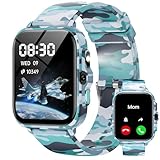
- First Launched Ai-integrated Kids Smart Watch: This advanced kids smart watch features an Ai Customized Watch Face, allowing children to personalize their device by their voice command. With the integrated Ai Question and Answer feature, kids can ask questions and receive instant, accurate responses, fostering curiosity and learning in an engaging way. Additionally, the AI Image Recognition capability encourages exploration by identifying objects, animals, and places, bringing the world to their fingertips
- Sleep Tracking and Heart Rate Monitor: This kids smart watch helps parents keep track of their child's heart health, ensuring they stay active and healthy. Smart watch for kids offers advanced sleep tracking capabilities, providing a detailed analysis of deep sleep, light sleep, and wake-up times to help children develop healthier sleep habits.
- All-day Activity Tracking and Multi-sport Modes: This kids smart watch offers all-day activity tracking to monitor your child's movement (Steps, Calories, Distance) and encourage a healthy lifestyle. Whether they are running, jumping, or playing their favorite sports, the watch features multi-sport modes that adapt to various activities, ensuring accurate tracking and engagement.
- Puzzle Games and Music Player and Camera: This innovative kids smart watch combines fun and learning through engaging puzzle games, an integrated music player, and a built-in camera. Get ready to inspire your child's adventures with the ultimate blend of entertainment and education!
- IP68 Waterproof and 30 Days Standby: This cutting-edge kids smart watch features an impressive IP68 waterproof rating, ensuring it can withstand splashes and accidental submersion in water, making it perfect for active kids who love to play outdoors.It offers up to 30 days of standby time, allowing your child to stay connected without the constant need for recharging.
Plan and monitor partition creation before the next boundary. PostgreSQL’s partitioning documentation describes a script as one practical approach for recurring time partitions. The documentation does not establish a best interval for this tracker; do not choose monthly, yearly, or another interval without workload, retention, and operations evidence. See the same PostgreSQL partitioning documentation.
Gather workload requirements before fixing the schema
A credible capacity or schema plan needs project-specific inputs. The topic alone does not establish the number of games, storefronts, regions, or currencies; collection permissions; polling cadence; observation volume; ingestion concurrency; correction and deduplication rules; retention period; chart resolution; alert needs; or uptime target. These choices affect data constraints, indexes, ingestion design, caching, and whether partitioning is worth operating.
- Define what identifies a game and which storefront, region, and currency distinctions the tracker preserves.
- Confirm source terms and collection permissions, then estimate collection cadence and concurrent ingestion.
- Specify how repeated, corrected, or conflicting observations should be handled.
- Set history-retention and chart-resolution expectations, including whether users need raw records or summarized trends.
- Establish query patterns, concurrency, and latency goals before selecting indexes or a partition key and interval.
Without those inputs, a precise row forecast, index list, partition interval, database-size estimate, or latency promise would be guesswork. PostgreSQL’s documentation explains behavior, not the capacity or performance of this particular workload.
Do these 3 things before closing this tab:
1Repair Windows errors before they cause bigger problems2Scan for outdated or missing drivers - takes under a minute3Clear out junk files and repair common Windows errorsQuick Recap
Product prices and availability are accurate as of the date/time indicated and are subject to change. Any price and availability information displayed on Amazon at the time of purchase will apply.




