Do these 3 things before closing this tab:
1Repair Windows errors before they cause bigger problems2Fix the driver behind crashes, sound loss and screen glitches3Clear out junk files and repair common Windows errorsYes. A French research team reported turning water-hyacinth roots that had absorbed palladium from contaminated water into an ecocatalyst for Suzuki cross-coupling. The work connects metal recovery with catalyst preparation, but it remains a reported research result—not evidence of commercial-scale use. The 2017 account also flags a practical concern: plants may absorb different amounts of palladium, potentially making batches less consistent.
How the roots were turned into a catalyst
The roots were not used as an ordinary plant extract. The researchers first used them to capture palladium from contaminated water through rhizofiltration. According to Chemistry World’s 2017 report, after three days the team harvested and heated the roots to remove organic material, treated the remaining ash with hydrochloric acid, and filtered it. The report says this produced about 200 mg of catalyst per plant; that is the figure reported for this process, not a general yield for other plants or conditions.
As an Amazon Associate I earn from qualifying purchases.
The related FR3064496A1 patent describes a broader approach: plant-derived material accumulates metals such as palladium, then undergoes thermal processing and, where applicable, acid treatment. It proposes the resulting materials for Suzuki and other cross-coupling reactions. A patent documents claims and examples; it does not establish that a process has been commercialized.
What the catalyst does in the Suzuki reaction
Suzuki–Miyaura coupling forms a carbon–carbon bond by joining an aryl or heteroaryl halide with an organoboron partner. Chemistry World reports that the plant-derived catalyst promoted couplings of several heteroaryl compounds without added ligands or additives in the cases described. The report says some cases were more active than traditional catalysts, but it does not establish a universal performance ranking.
#1 Best Overall

- ✔ 66 ACTION-PACKED SCIENCE EXPERIMENTS – Includes 26 step-by-step guided activities and 40 bonus DIY ideas using household items. Explore fizzy explosions, color changes, bubbling potions, and more.
- ✔ REAL SCIENCE, SERIOUS FUN – Learn chemistry concepts like acid-base reactions, states of matter, pH indicators, and gas expansion—all through hands-on, kid-friendly experiments.
- ✔ VOLCANOES, GLOW LAVA & SLIME – Make your own volcano with plaster and paint, create glowing potions and blue lava, blow up gas balloons, and mix gooey self-siphoning slime.
- ✔ INCLUDES TOOLS & INGREDIENTS – Comes with test tubes, food coloring, volcano mold, citric acid, slime mix, popping crystals and more to start a home science lab performing exciting experiments.
- ✔ STEM LEARNING FOR AGES 8+ – Perfect for future scientists and curious kids. Encourages critical thinking, creativity, and scientific exploration with clear instructions and adult supervision.
The patent provides a specific laboratory example, not a recipe whose outcome can be assumed for every substrate:
- Aryl halide: 1.25 mmol
- Phenylboronic acid: 1.3 mmol
- Potassium carbonate: 1.5 mmol
- Palladium-based Eco-Pd loading: 0.1 mol%
- Solvent volume: 2.5 mL
- Conditions: argon at 95 °C for two hours
- Measurement: product extraction followed by GC/MS conversion measurement
Among the patent’s examples, water-hyacinth-root powder in glycerol gave 92% conversion. That is a result for the stated example, not a guaranteed yield for other substrates, catalyst batches, or reaction conditions.
Rank #2
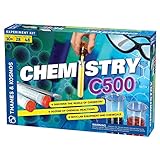
- An introductory tour of chemistry with 28 classic experiments
- Discover the colorful effects of acids and bases
- Make fizzy and foamy reactions and write messages with invisible ink
- Learn about reactions between solids, liquids, and gases
- The 48-page, full-color experiment manual gives simple instructions for setting up and performing each experiment, and then clear explanations of what happened and why
What is promising—and what remains uncertain
The approach’s central idea is to recover palladium from polluted water and put it to use in a catalyst, rather than treating the roots solely as waste after metal uptake. Claude Grison, who led the team, told Chemistry World: “We show that ecological recycling can be considered as a “resource” of metal catalysts.” Grison also said: “The plant is easily available and abundant, the process is simple and easy to scale up.” These are the researcher’s comments, not a measured lifecycle assessment or proof that large-scale production followed.
Crashes, No Sound, or Screen Glitches?
Random freezes, missing sound and display glitches usually trace back to one bad driver. Find and replace yours safely.Free scan · under a minutePC Slower Than It Used to Be?
A free scan shows the junk files, broken settings and background clutter dragging Windows down - then fixes them in one click.Free scan · Windows 10 & 11Nicholas Leadbeater, identified in the report as a green-chemistry researcher at the University of Connecticut, said: “Using the roots of a plant as the catalyst to perform Suzuki couplings in glycerol certainly checks a number of “green” boxes.” He also cautioned that plants can accumulate different quantities of metal depending on where they grow. That variability could affect reproducibility, so consistent catalyst composition and batch-to-batch reaction performance are important questions.
Rank #3
![[239 PCS] Organic Chemistry Model Kit | Molecular Model Kit for Students](https://m.media-amazon.com/images/I/511A7UN+wEL._SL160_.jpg)
- 𝐇𝐀𝐍𝐃𝐒-𝐎𝐍 𝐂𝐇𝐄𝐌𝐈𝐒𝐓𝐑𝐘 𝐋𝐄𝐀𝐑𝐍𝐈𝐍𝐆: Take chemistry beyond memorizing formulas with an interactive learning experience students can physically handle. Manipulating the pieces of this molecule kit gives learners a more engaging way to practice identifying atoms, connecting bonds, and studying molecular structures.
- 𝐓𝐔𝐑𝐍 𝟐𝐃 𝐃𝐈𝐀𝐆𝐑𝐀𝐌𝐒 𝐈𝐍𝐓𝐎 𝟑𝐃 𝐌𝐎𝐃𝐄𝐋𝐒: Make textbook structures easier to interpret by transforming flat molecular diagrams into physical 3D models. With the help of this chemistry modeling kit students can see the position of atoms and bonds from different angles, helping them better understand molecular shape and arrangement.
- 𝐁𝐔𝐈𝐋𝐃, 𝐄𝐗𝐏𝐋𝐎𝐑𝐄 & 𝐑𝐄𝐁𝐔𝐈𝐋𝐃: Encourage active discovery by letting students construct a structure, adjust its arrangement, and build it again for continued practice. The reusable pieces make it easy to explore different molecular configurations without needing a new model for every lesson.
- 𝐄𝐅𝐅𝐎𝐑𝐓𝐋𝐄𝐒𝐒 𝐀𝐒𝐒𝐄𝐌𝐁𝐋𝐘: Designed for smooth, straightforward model building, the pieces connect easily so students can spend less time figuring out how to assemble the kit and more time exploring chemistry. Simple construction also makes it convenient for repeated classroom or study use.
- 𝐆𝐈𝐕𝐄 𝐓𝐇𝐄 𝐆𝐈𝐅𝐓 𝐎𝐅 𝐃𝐈𝐒𝐂𝐎𝐕𝐄𝐑𝐘: Bring a creative twist to science gifting with this organic chemistry molecular model kit made for curious students, chemistry fans, and STEM enthusiasts. Whether for a birthday, classroom reward, holiday, or special occasion, it gives recipients something interesting to build, examine, and enjoy.
The same 2017 report said the team was working toward a larger-scale pilot and was interested in polluted quarry and industrial effluents. That describes an ambition at the time; it does not establish that a pilot later took place. The available reporting and patent do not establish commercial deployment or provide broader environmental-impact statistics.
How to interpret the comparison with conventional catalysts
The reported work suggests a different source and preparation route for palladium, but the available sources do not provide a complete controlled, like-for-like comparison with conventional catalysts. A meaningful comparison would need to hold the reaction substrate and solvent constant and examine catalyst loading, measured conversion, recovery or reuse, and reproducibility across batches, alongside the palladium source and processing steps. Without those matched data, the examples show that the ecocatalyst can promote specified reactions—not that it is generally greener, cheaper, or more effective.
Rank #4
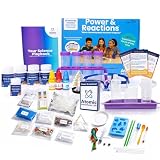
- Complete Science Kit for Kids - This kids science kit provides more materials than standard kits. Equipped with beakers, droppers, cards, & many more, it’s the ideal science kit for 7 to 12-year-old kids.
- 40+ Kids Science Experiments - Turn your home into a science lab with over 40 hands-on activities. From color changes to energy-releasing reactions, this chemistry set makes chemistry approachable & exciting.
- All-Inclusive Chemistry Set - Eliminate the hassle of searching for supplies! Unlike others, our science kits for kids are fully equipped with every tool needed to start your science experiments right out of the box.
- STEM Learning - Foster a love for STEM Activities with our kid science kit, packed with materials & activity cards. Our educational science kits help kids explore foundational STEM concepts through experiments.
- Card-Based Learning - Unlike traditional STEM kits for kids, our science kits feature easy-to-follow experiment cards that guide children step by step. The visual instructions make it easy for kids to explore chemistry.
Research basis
Chemistry World’s report, published in 2017, identifies G. Clavé et al., Green Chemistry (2017), DOI 10.1039/c7gc01672g, as the underlying research paper. The detailed procedure and conversion example above are attributed to patent FR3064496A1; the paper itself is not cited here for additional performance details.
Quick Recap
Best Value

- SCIENCE MEETS FUN: Unleash your inner mad scientist and conduct 250 awesome experiments with the Extreme science set by UNGLINGA! the number of amazing science experiments for kids your children will have many hours of educational hands on stem learning.
- EVERYTHING YOU NEED FOR SCIENCE FUN: Kit includes everything you need besides common household items.Walk in the footsteps of a real scientist by using real chemistry tools like pipettes, test tubes, and more to conduct all of your experiments!
- 250+ EXPERIMENTS: Exciting and interesting activities including. create your own lava lamp, creative snow and volcano science kit the favorite of every child.Cause some awesome chemical reactions.Earth, surface tension, physics and more.
- EASY-TO-FOLLOW MANUAL: The detailed clear color manual will teach your children to complete the science experiments with easy to follow step-by step instructions.
- LEARNING & EDUCATIONAL SCIENCE GIFTS IDEA: Learning Play for Christmas, birthdays, activities, school breaks, and weekend fun. Kids can start to build science concepts just by doing these activities with you.
Product prices and availability are accurate as of the date/time indicated and are subject to change. Any price and availability information displayed on Amazon at the time of purchase will apply.




