Medical devices are moving from isolated instruments toward connected, software-intensive systems that can collect, process and exchange information. That shift can help clinicians and patients bring relevant data together across care settings—but connectivity and analytics do not by themselves prove better outcomes. Safe, useful data-driven care depends on reliable integration, evidence for the device’s intended use, cybersecurity, privacy, validation and fit with clinical workflows.
What is changing in medical device technology?
A traditional device could measure or deliver something on its own: a monitor recorded a reading, an imaging system produced a study, or an infusion system delivered therapy. Increasingly, a device is also part of a broader information environment. Its hardware senses or acts; embedded software interprets inputs and controls functions; communications move information; and other software may display, combine or analyze it.

As an Amazon Associate I earn from qualifying purchases.
The result is a change in the device’s role, not just in its size or sophistication. A reading may be considered alongside measurements taken over time or information from elsewhere in a patient’s care. Whether that information is available, understandable and appropriate to use depends on the entire chain—from sensing and software behavior to networks, interfaces and people.
A 2009 federal report by the High Confidence Software and Systems Coordinating Group described the safety stakes: “Digital technologies are increasingly being assigned high-level control over the monitoring, sensing, actuation, and communications of medical devices – often with human life in the balance.” The report is useful historical context for why connected devices must be treated as systems. Its discussion of anticipated challenges is not a current technical standard.
#1 Best Overall

- CONFIDENCE IN EVERY READING: Monitor your heart health with the OMRON Complete 2-in-1 Upper Arm Blood Pressure Monitor's Advanced Accuracy Technology and EKG measurement; Store up to 90 readings to track your progress
- SAFEGUARD YOUR HEART: Get a more complete picture of your heart health by combining blood pressure and EKG measurements, helping you and your doctor determine if treatment or further evaluation is needed
- START YOUR DAY WITH CONFIDENCE: Increase the accuracy of your blood pressure readings with excessive Body Movement Detection alerts; Regular monitoring can reveal irregular fluctuations before they lead to serious complications
- TURN NUMBERS INTO INSIGHTS: Connect effortlessly to the free OMRON connect app via Bluetooth to store unlimited blood pressure readings, track trends, and share reports with your doctor; Compatible with Apple Health and Google Fit
- READY OUT OF THE BOX: Includes everything you need to start monitoring your heart health; OMRON blood pressure + EKG monitor, wide-range D-ring blood pressure cuff (fits arms 9"–17"), storage case, instruction manual, quick start guide and four AA batteries
How do software, analytics and AI fit in?
Software is involved in more than displaying a measurement. It can control device functions, transform sensor inputs into outputs, support communication with other systems, or analyze data to provide information for a defined medical purpose. Some devices now use artificial intelligence (AI) as part of their functionality.
These capabilities can make it possible to organize information or surface patterns for consideration. But the presence of analytics or AI is a description of a capability, not evidence that it improves outcomes in every setting. The relevant questions are what the device is intended to do, what evidence supports that use, and how its output is evaluated and acted on in the intended workflow.
The U.S. Food and Drug Administration (FDA) maintains a public list of AI-enabled medical devices with links to device database entries and releasable safety and effectiveness summaries. The FDA says devices on the list have met applicable premarket requirements, but also notes that the list is not comprehensive and is updated periodically. Inclusion is not proof of superior clinical outcomes, and the summaries are not all-inclusive.
The Tool Desk
Outbyte PC Repair FREEClear out junk files and repair common Windows errorsFree Scan →Outbyte Driver Updater FREEFix the driver behind crashes, sound loss and screen glitchesFind Drivers →Rank #2
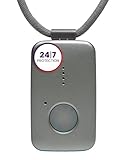
- Small Device, Big Backup: MGMini is a discreet medical alert necklace that supports your independence at home and on the go. Wear the device your way with the included lanyards or belt clip, for steady protection that fits your lifestyle. Hourly location updates and step counting features are available to view on our online portal or app.
- Press. Speak. Get Help: Press the emergency button to connect with Medical Guardian’s 24/7 monitoring team through the device’s two-way speaker. One of our trained, U.S. based operators will contact EMS, family, or friends to get you the exact type of help you need.
- Activate Before First Use: 24/7 emergency monitoring services must be activated online or by phone prior to device use. For a limited time, get 1 free month of 24/7 monitoring. After trial, service is $43.95/month. Cancel anytime. During activation, consider extra protection with our optional fall detection add-on for an additional $10/month.
- A Trusted Name in Care: Founded on one man's mission to protect his grandmother and trusted by over 630,000 members, Medical Guardian supports older adults and their care partners with connected safety solutions designed for independence and peace of mind.
- Industry-Leading Battery Life: Enjoy 3 days of protection on a single charge, plus a fast 4-hour recharge. Battery life may vary based on network connection and cellular signal strength. Note: only one device can be active per member at a time.
What can connected data contribute to care?
When relevant device information reaches the right person and record with its meaning and context intact, it can support coordination and informed decisions. For example, a clinician may need to consider a device measurement in relation to a patient’s other health information rather than as an isolated value. Patients and caregivers may also need access to electronic health information to manage and coordinate care.
The Office of the National Coordinator for Health Information Technology (ONC) describes interoperability as important to safe, effective, patient-centered care and to individuals’ and caregivers’ access to information. That general goal does not establish that any particular device will exchange information with a particular system. Compatibility, the meaning of the data and where it appears in the care process must be established in practice.
Data availability alone also does not establish that an alert, trend or recommendation is clinically useful. Device outputs need to be interpreted in context, and the people responsible for care need a clear way to understand what the information represents and what action, if any, is appropriate.
Why is interoperability more than a connection?
A device may communicate with another system yet still fail to deliver usable information. The receiving system must be able to interpret the data, preserve relevant context and make it available where it belongs in the clinical workflow. A technically successful transfer is not enough if information is ambiguous, incomplete, delayed or difficult to find.
Free tools Windows power users keep installed
One-click scans. No signup required.
Interoperability is therefore a system-level property, involving devices, software, networks, information systems and the people who use them. The 2009 NITRD report identified proprietary architectures and poor interoperability as barriers to dependable integration. That account shows that integration has long been recognized as a challenge; it should not be read as a description of every device or system in use today.
What conditions make data-driven devices safe to use?
Verification and validation
Verification asks whether a system was built and functions according to its specifications; validation asks whether it is suitable for its intended use. For connected devices, those questions extend beyond the instrument itself to software behavior, interfaces, data handling and interactions with other components. Evaluation should reflect the conditions and workflow in which the device is meant to be used. The NITRD report identified validation and dependable integration as important concerns for medical cyber-physical systems.
Rank #4

- NOMO SMART CARE ESSENTIAL KIT – A complete elderly monitoring security system featuring a Smart Hub, two Satellite range extenders, and wearable Tags for fall detection and emergency alerts; provides 24/7 protection over secure WiFi with no landline required.
- FAST SETUP, NO HASSLE – Quick plug-and-play installation; simply connect the Hub and Satellites to wall outlets and place Tags on key items or wear them for personal protection; no special wiring, technician visits, or hidden fees.
- TWO-WAY VOICE COMMUNICATION – Clear, reliable two-way talk through the Hub ensures instant communication during emergencies; a powerful alternative to traditional life alert systems for seniors aging in place; range extenders for thorough coverage, wearable tags with panic button.
- 24/7 MONITORING WITH EMERGENCY RESPONSE – Includes a 30-day trial of 24/7 monitoring with RapidSOS emergency services through the Nomo app; after the trial, a monthly subscription applies; cancel anytime. Our elderly assistance products track movement and provide comprehensive monitoring.
- FALL DETECTION AND CAREGIVER NOTIFICATIONS – Tags detect unusual movement patterns and fall events, sending instant alerts to your trusted Care Circle; ideal for seniors, caregivers, and families seeking a modern, easy-to-use medical alert system for seniors.
Cybersecurity across the device lifecycle
A connected device brings cybersecurity into the safety picture because software, communications and system integration are part of how it operates. Security needs to be considered during design and over the device lifecycle, not treated as a separate technical add-on.
For the United States, the FDA’s February 2026 final guidance, Cybersecurity in Medical Devices: Quality Management System Considerations and Content of Premarket Submissions, describes FDA recommendations for premarket cybersecurity information and addresses cyber devices under section 524B of the Federal Food, Drug, and Cosmetic Act. The FDA says this version supersedes its final guidance issued June 27, 2025. It is regulatory guidance, not a guarantee that any individual product or deployment is secure.
Windows Errors? Fix Them Before They Spread
Repair common Windows errors and clear accumulated junk for a smoother, more stable PC - no reinstall needed.Free scan · no reinstallCrashes, No Sound, or Screen Glitches?
Random freezes, missing sound and display glitches usually trace back to one bad driver. Find and replace yours safely.Free scan · under a minutePrivacy and responsible information handling
Device data may be sensitive, so safe exchange requires attention to who can access it, how it is shared and how it is protected. The 2009 NITRD report identified privacy and security among the challenges for connected medical-device systems. The practical requirements depend on the devices, systems and setting; connectivity alone does not ensure that information is handled appropriately.
Best Value

- EASY ACTIVATION + MONTHLY SUBSCRIPTION: Elevate your safety and security with our straightforward medical alert pendants. For just $39.99 per month, you can rest assured that help is always just a button press away. Upon receiving your order, please contact us for a seamless activation process. Scan the QR code or call us! ItÍs that simple. Take charge of your well-being and protect yourself or your loved ones today!
- 24/7 EMERGENCY MONITORING: Ensure your safety with our 24/7 medical alert monitoring service. Whether at home or on the move, pressing your button connects you to a trained operator prepared to assist you. With a rapid response time of just seconds, you can have confidence that help is always within reach. Your well-being is our utmost priority.
- NATIONWIDE COVERAGE: Our medical alert pendants provide comprehensive nationwide coverage on VERIZON + AT&T Networks, ensuring your safety at all times. Equipped with 4G LTE technology, these devices function effectively wherever cellular signals are available, allowing for immediate assistance at the press of a button. We prioritize your safety and well-being, peace of mind wherever you may be.
- OPTIONAL FALL DETECTION: Stay safe with our optional fall detection add-on, designed to detect potential falls and alert our trained professionals for immediate assistance. Falls are the leading cause of injury for ages 65 and older, making feature a valuable addition to your safety plan. Get peace of mind for just $4.99 per month.
- WATER RESISTANT: Introducing our water-resistant medical alert pendant, designed for your peace of mind. This stylish and functional accessory can be worn in the shower, ensuring you stay connected and safe at all times. With its durable design, you can trust it to withstand daily activities while providing essential support when you need it most. We recommend charging the pendant daily, however a charge can last up to 5 days. Stay secure and confident with our reliable medical alert solution.
Human factors and workflow
People remain part of the system. Clinicians need outputs that are interpretable and timely enough to fit the work they must do; patients and caregivers need information they can understand and use appropriately. Poorly placed information, unclear outputs or a mismatch with established tasks can undermine the value of an otherwise capable device. Human factors are therefore part of dependable design, not cosmetic polish.
Independent reader supportYour contribution helps us test, update, and keep practical guides available for everyone.How should readers judge claims about connected devices?
Assess a device or system by asking how well its capability and evidence match its intended use—not by assuming that more data or newer software automatically means better care.
- Intended use: What medical purpose is the device meant to serve, and who is expected to use its output?
- Evidence: What supports the specific use being claimed? A regulatory listing or authorization record is not a universal claim of improved outcomes in every setting.
- Information flow: Can the relevant data reach the right record and user with its meaning and context preserved?
- Safety and security: How are software behavior, system interactions, cybersecurity and information handling addressed?
- Real-world fit: Can the intended users understand and act on the information within their actual workflow?
The direction of change is clear: medical devices increasingly operate as connected, data-enabled systems. Their practical value, however, depends on evidence and on the safe coordination of hardware, software, information systems and people.
Do these 3 things before closing this tab:
1Repair Windows errors before they cause bigger problems2Fix the driver behind crashes, sound loss and screen glitches3Clear out junk files and repair common Windows errorsQuick Recap
Product prices and availability are accurate as of the date/time indicated and are subject to change. Any price and availability information displayed on Amazon at the time of purchase will apply.




