Scientists usually do not determine a dinosaur fossil’s age by dating the bone itself. They establish the age of the rock layers around it, using the order of those layers, fossils that can be correlated between sites, and numerical ages from suitable volcanic or igneous material. That combined timeline helps researchers work out when dinosaurs lived and how their forms changed—but a date alone cannot prove which species descended from another or why a trait evolved.
Why dinosaur fossils are usually dated indirectly
Most dinosaur fossils are preserved in sedimentary rock: material deposited in layers by rivers, lakes, deserts, or other environments. The fossil and the sediment formed or were buried together, but the sedimentary minerals themselves often cannot be dated with the radiometric methods commonly used to establish geological ages. A fossil’s position in the rock sequence therefore matters as much as the fossil itself.
As an Amazon Associate I earn from qualifying purchases.
Geologists look for material in or near the fossil-bearing sequence that can be dated, especially volcanic ash or igneous rock. They then use its position, the sequence of surrounding layers, and correlations with other sites to constrain when the fossil-bearing sediment accumulated. The result is an age estimate for the geological context, not necessarily a direct measurement of the fossil’s own formation.
This distinction is important: the numerical age of a crystal in an ash deposit does not automatically equal the age of every fossil found nearby. The relationship between the dated material and the fossil layer must be established and interpreted carefully.
#1 Best Overall

- 【3 Kinds of Different Digging Fun】: 1. Dinosaur head fossil: Child can excavate 5 real dinosaur fossils including 2 tyrannosaurus teeth, 1 tyrannosaurus claw & 2 lava stones! 2. The dinosaur bones inside Brick can assemble a 3D T-rex skeleton. 3. 6 pieces Dino Eggs Dig Kit & discover 6 unique dinosaur designs. Feel like a real paleontologist excavating up unique toy dinosaurs from 3 digging styles.
- 【Fun and Educational】: A science project usually can be engaging, but not so funny. But the science kit achieves both! Great set for individual play or as a group activity. It fascinates children as soon as they pull it out of the box and is a perfect STEM project. It fosters a love for science and paleontology in a fun and exciting way.
- 【Environmentally Safe Materials】: The fossil digging dig kit is composed primarily of gypsum. No Pollution, Odorless, Safe and Non-toxic.
- 【A Gift with An Activity Inside】: The dinosaur toys will be dinosaur party favors for dino dino-themed birthday party. It is a great birthday gift/ dinosaur easter eggs gift/Christmas gift/graduation gifts for boys, girls, kiddos, nephews, nieces, or grandchild or even to your imaginative pupils in the kindergarten as fun educational toys.
- [Plan Your Dig]: Designed for kids ages 5-7, 8-12. Use a covered work surface or tray to catch plaster debris, and follow the included instructions. A hands-on activity for family afternoons and rainy-day play
Two kinds of dating answer different questions
| Evidence | What it establishes | What it cannot establish on its own |
|---|---|---|
| Relative dating | The order of layers or geological events: which came before or after another. | How many years ago an event happened. |
| Radiometric dating | A numerical age estimate for suitable minerals or rocks, based on radioactive decay. | The age of a fossil in a neighboring layer unless the geological relationship is understood. |
| Stratigraphic and fossil correlation | How rock sequences at different sites may correspond, and where a fossil layer fits in a broader sequence. | A numerical age without calibration against datable material. |
Relative dating gives the sequence
In an undisturbed stack of sedimentary layers, lower layers were deposited before the layers above them. That basic relationship lets geologists establish a relative order without knowing the age of any layer in years. A fossil in a lower layer is generally older than one in an overlying layer, provided the sequence has not been overturned or otherwise disturbed.
Fossils can also help correlate layers. If distinctive fossils or fossil assemblages occur in separate rock sequences, paleontologists may use them to identify corresponding intervals. The National Park Service explains that relative dating determines the order of geological events, but not how long ago those events took place. Relative dating is therefore a framework for arranging evidence, not a calendar.
Radiometric dating supplies numerical ages
Some atoms are unstable and decay into other isotopes at characteristic rates. In an appropriate mineral or rock, geologists measure the relationship between parent isotopes and the daughter products formed by decay. With a suitable sample and geological context, that measurement can estimate when the mineral formed or the rock cooled.
Quick wins for a faster PC:
Fix the driver behind crashes, sound loss and screen glitchesFind Drivers →Repair Windows errors before they cause bigger problemsFix Now →Scan for outdated or missing drivers - takes under a minuteDriver Scan →Different isotope systems are suited to different materials and geological circumstances. No single method dates every kind of rock or every age range. The essential point is that radiometric dating measures a geological sample; it does not directly date any fossil simply because the fossil is nearby. The National Park Service and U.S. Geological Survey describe radiometric dating as a way to determine ages for appropriate geological materials.
Rank #2

- Includes 2 Kinds of Dino Toys: 1. The dinosaur bones inside the Brick can assemble two 3D dinosaur puzzles: a T-rex and a triceratops skeleton Puzzles. 2. 2 pack 6.5” Realistic Looking dinosaur figurines Including T-Rex, Triceratops. Your little archeologist would be thrilled to see this dinosaur dig kit, would share and enjoy the discovery.
- Educational and Fun: A science project usually can be engaging, but no so funny. But this dinosaur fossil science kit achieves both! Great set for individual play or as a group activity. It fascinates children as soon as they pull it out of the box and is a perfect STEM project. It fosters a love for science and paleontology in a fun and exciting way. Very good teaching tool for young minds!
- Awesome Kids Birthday Activity: The fossil digging kit for kids will be dinosaur party favors for Dino themed birthday party. The Dino dig would be a great project to do with dinosaur-loving kids. Once complete the excavation. Kids paleontologists have to construct two Dino puzzles. The assembly Dino skeleton and the dinosaur figures can keep in kid's room on display.
- Environmentally Safe Materials: The dinosaur kit is composed primarily of gypsum. No Pollution, Odorless, Safe and Non-toxic.
- Great Gift for Dino Lovers: This dinosaur toys It is very giftable, will be a great Easter, Thanksgiving, Christmas gift for boys, girls, kiddos, nephews, nieces or grandchild or even to your imaginative pupils in the kindergarten as fun educational toys. Excellent discovery toys for kids that like to find and crack things open.
How scientists bracket a fossil-bearing layer
A volcanic eruption can leave an ash layer within or near sedimentary rocks. If the ash contains suitable crystals, those crystals may be dated. The position of that ash relative to the fossil-bearing bed can then constrain the bed’s age.
A dated layer below the fossils
If an undisturbed, dated ash layer lies beneath a fossil-bearing layer, the ash was deposited earlier. Its date supplies an older bound: the fossil-bearing sediment must have accumulated after that ash layer, subject to the integrity of the sequence and the ash context.
A dated layer above the fossils
If a dated layer lies above the fossil-bearing bed, it was deposited later in an undisturbed sequence. Its date supplies a younger bound: the fossil-bearing sediment must have accumulated before the overlying dated layer.
What’s actually slowing this PC down?
Pick the symptom - the matching free tool is one click away.
Two dates can narrow the interval
When dated layers lie both below and above a fossil-bearing bed, the bed can be bracketed between them. The dates do not necessarily tell researchers the exact day, year, or moment the sediment was deposited; they constrain it to an interval. Additional samples and reliable correlations can make that interval more useful and improve confidence in the interpretation.
Rank #3
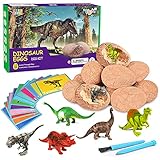
- Dino Eggs Kit: Discover 12 unique dinosaurs.With dig tools,feel like a real paleontologist excavating up unique toy dinosaurs.
- Knowledge Cards: Includes 12 dinosaur cards, each describing the history of a different dinosaur. After digging up a dino, match up the appropriate card to your dinosaur and learn more about it.
- 2 ways: Dig it up directly or put dinosaur eggs in water before digging,will be easier to dig up.A great learning and interaction toy for boys and girls.It fosters a love for science and paleontology in a fun and exciting way.
- 12 x Dinosaur Eggs (with a unique dinosaur toy in each), 12 x Chisel,12 x Brushes, 12 x Knowledge Cards.The best choice for kids, Easter gift, Birthday gift or Christmas gift.
- Perfect Easter Eggs Gift: Color packing box.A fun and educational gift for all ages. It fosters a love for science and paleontology in a fun and exciting way.
One-sided evidence is less restrictive. A dated layer on only one side gives a bound rather than a bracket. In either case, the stratigraphic position must be sound: an apparent layer above or below the fossils cannot be treated as a simple chronological limit if geological processes have disturbed the sequence.
Why ash context and sample quality matter
Volcanic ash is useful only when its history is understood. Ash may settle soon after an eruption and become part of the sedimentary sequence. But it can also be eroded, transported, and redeposited later. If crystals from old ash are mixed into younger sediment, their measured age may be older than the deposition of the sediment containing them. In that setting, the ash age is a maximum-age constraint for the host sediment, not the exact date when that sediment accumulated.
Contamination or mixing of old and young material can also distort measurements. Researchers therefore need to consider where a sample came from, what minerals it contains, and whether its geological setting supports the proposed interpretation. A numerical result without dependable context can create a misleading impression of precision.
Recommended Free Tools
Cross-checks help. Geologists compare multiple samples, the order of rock layers, fossil evidence, and correlations between formations. If suitable materials permit more than one dating approach, those results can be compared. Agreement among independent lines of evidence strengthens a chronology; disagreement can signal that a sample was reworked, a sequence was disturbed, or a correlation needs reassessment.
Rank #4

- EXCAVATE A T-REX FOSSIL: Chip and brush through the plaster block to uncover hidden dinosaur bones, then assemble them into a detailed Tyrannosaurus rex skeleton.
- COMPLETE DINOSAUR DIG KIT: Includes a fossil excavation block, dinosaur bones, hammer-and-pick tool, chisel, brush, sponge, dinosaur figure, and illustrated instructions.
- HANDS-ON STEM LEARNING: Introduces children to paleontology and archaeology through an engaging science activity that encourages curiosity, patience, and discovery.
- DIG, BUILD & DISPLAY: After the excavation is complete, kids can assemble the bones into a 3D T-Rex skeleton for imaginative play, classroom learning, or shelf display.
- GIFT FOR YOUNG DINOSAUR FANS: A screen-free educational activity for children ages 6 and up—ideal for birthdays, holidays, homeschool projects, and rainy-day play.
How rock dates become part of a geological timeline
A radiometric age becomes more useful when it can be connected to fossil-bearing strata. Geologists establish that connection through stratigraphy—the study of rock layers and their relationships—and through fossil-based correlations. The U.S. Geological Survey describes how isotopically dated rocks can be linked to fossil-based relative ages to build a numerical time scale.
In practice, a date from a suitable igneous layer can calibrate the nearby sedimentary sequence. Fossils in that sequence can then be compared with fossils from other formations, including places where there is no directly datable volcanic material. Those correlations are not a shortcut around geological context: their reliability depends on the layers and fossil assemblages being matched appropriately.
Geological time scales are calibrated frameworks, not immutable lists of exact dates. As new samples, improved measurements, and better correlations become available, age estimates and boundaries may be refined. A revision does not mean that the sequence of evidence has become useless; it means the numerical calibration has improved or changed in light of additional evidence.
What a dated sequence reveals about dinosaur evolution
It puts fossils in chronological order
Once fossil-bearing layers have a defensible chronology, researchers can compare specimens in temporal order. They can ask which anatomical forms appear earlier or later in the record, and whether a feature is present in fossils from one interval but absent in those from another. Without ages, a collection of fossils might show anatomical diversity but leave the timing of that diversity unclear.
Best Value

- Dinosaur Archaeological Dig Kit: The Tyrannosaurus sensory bin toy includes a bag of cassia as sensory materials, 18 skeleton bones puzzle pieces, a paint brush and a scoop as sensory tools, a wooden storage box with cover, and a cloth storage bag
- Fossil Explore Sensory Play: Our dinosaur dig game is ideal to keep your little dinosaur lover entertained for hours. Simply bury the dinosaur skeleton bones in the sensory materials and let kids use scoop to dig them up, and use paint brush to uncover the delicate bones. Then collect all the skeleton pieces, and put them together, finish the dinosaur fossil puzzle
- Skills and STEM Development: Kids will love to dig and explore in this dinosaur fossils sensory bin. It’s great for fine motor practise as well as science learning, children can learn how archaeologist uncover their finds. It also helps to promote sensory development
- Quality Wood Material and Safe Toys: Our unique dinosaur archaeology dig kit are made from locally sourced wood, it is crafted with smooth corners and edges for your child safety. The sensory materials are made of cassia instead of sand, cleaner, easier and reusable for your kids to play again and again
- Ideal for Boys and Girls Age 3+: Every child will love this dinosaur dig sensory bin. It is super easy to set up but tons of fun for toddlers and preschoolers. Introduce your child to the exciting world of archeology
It helps test evolutionary hypotheses
Age estimates help paleontologists place organisms on evolutionary trees and compare fossils from different formations or regions. A proposed relationship can be checked against the order in which the relevant fossils appear. A chronology can also help estimate when lineages or anatomical changes may have arisen, while recognizing that the oldest known fossil of a group is not necessarily the first member of that group to have existed.
It connects biological change with geological context
Rock sequences preserve more than fossils. Their order and context let scientists compare fossil changes across environments and regions. That makes it possible to ask whether a pattern is local to one formation or appears in multiple places. Such comparisons can help refine explanations, but age alone does not identify the cause of a biological change.
Dates do not prove ancestry or explain a trait
A fossil’s age is one part of an evolutionary argument, not a verdict by itself. Establishing ancestry or a close relationship also depends on anatomical similarities and differences, the placement of taxa on evolutionary trees, geographic context, and the completeness of the fossil record. Likewise, a date can show when a trait was present in known fossils; it cannot alone explain why that trait evolved.
These limits matter because the fossil record is incomplete. A gap between known fossils does not by itself show that a lineage did not exist during that interval. Dating provides a temporal framework within which paleontologists assess the available anatomical and geological evidence; it does not fill missing evidence automatically.
Common misunderstandings about dinosaur fossil ages
- “Scientists date the bone itself.” Usually, they date suitable geological material associated with the fossil bed and infer the fossil’s age from the stratigraphic relationship.
- “A radiometric result is the exact age of the fossil.” It is an age estimate for the sampled mineral or rock. Its relevance to the fossil depends on how the sample relates to the fossil-bearing layer.
- “An ash date always dates the sediment around it.” Reworked ash crystals can be older than the sediment in which they are later deposited, so their age may provide only a maximum-age constraint.
- “A sequence of dated fossils proves a particular ancestor-descendant relationship.” It establishes timing that can support or challenge an evolutionary interpretation, but relationships also require anatomical and other evidence.
- “Radiocarbon dating is the way to date dinosaur fossils.” The methods relevant to dinosaur fossil beds are radiometric dating of suitable geological materials and stratigraphic correlation, not a direct radiocarbon date of Mesozoic bones.
How to read an age claim about a dinosaur fossil
When you see an age attached to a dinosaur fossil, ask what exactly was dated and how it relates to the fossil. A careful account should distinguish the measured material from the fossil, describe whether the age is a bound or an interval, and explain whether the sample’s context could have been disturbed or reworked.
- Identify the sample: Was it a mineral in volcanic ash, an igneous rock, or another suitable material?
- Check its position: Was the dated layer above, below, or within the fossil-bearing sequence?
- Look for the type of constraint: Is the result a one-sided bound or an interval narrowed by dates on both sides?
- Consider context: Is there a reason the material might have been eroded, redeposited, contaminated, or mixed?
- Separate age from interpretation: Does the claim say when the geological material formed, or does it make a further claim about evolutionary ancestry or cause?
That distinction makes age claims easier to understand: a fossil’s place in time is built from linked geological evidence, and the strength of the conclusion depends on the quality of those links.
Quick Recap
Product prices and availability are accurate as of the date/time indicated and are subject to change. Any price and availability information displayed on Amazon at the time of purchase will apply.
Free tools Windows power users keep installed
One-click scans. No signup required.




