Do these 3 things before closing this tab:
1Clear out junk files and repair common Windows errors2Scan for outdated or missing drivers - takes under a minute3Repair Windows errors before they cause bigger problemsDroplet microfluidics can test individual T cells for functional responses to tumor targets, then recover promising clones for further study. In a 2018 preclinical proof-of-concept, researchers tracked T-cell activation in tiny droplets and confirmed selected cells by sequencing their T-cell receptors. The work suggests a way to accelerate early-stage T-cell discovery; it does not establish a patient-ready test or treatment-selection service.
What the droplet-screening platform is designed to find
The approach screens T-cell receptor (TCR) T cells for whether they activate in response to target cells. That functional readout differs from identifying cells solely because they bind a target: binding alone does not establish that a T cell responds in a useful way. Chemistry World described this as a reason for pursuing activation-based screening, not as evidence that every binding-based method fails. Chemistry World, 5 April 2019


As an Amazon Associate I earn from qualifying purchases.
The study focused on TCR-T research for adoptive cell therapy. It should not be conflated with CAR-T therapy or checkpoint inhibitors, which are different approaches to cancer immunotherapy.
How the researchers screened and recovered T-cell clones
- Pair cells in droplets. The researchers co-encapsulated an individual TCR T cell with a target cell in a small droplet.
- Monitor activation. They observed the T cell’s response over time, allowing them to assess function at single-cell resolution.
- Track and sort candidates. Activated cells were tracked as individual clones, and selected clones were sorted for follow-up.
- Confirm identity. The team used single-cell reverse-transcription PCR and TCR-chain sequencing to validate selected cells.
For the model experiment, target cells expressed an HLA/NY-ESO-1 antigen peptide complex. This is a specific experimental setup, not evidence that the workflow works for every tumor antigen or patient. The method and validation are described in the 2018 paper in Lab on a Chip.
#1 Best Overall
What the reported results establish—and what they do not
Segaliny and colleagues reported 100% specificity for sorting validated through downstream single-cell RT-PCR and TCR sequencing in their described experiment. This is a result from that validation context, not a clinical test-accuracy estimate or a guarantee of performance in other experiments.
Chemistry World reported that the platform could screen up to one million clones in a single experiment and described identification of target-reactive cells within days, contrasting that with conventional identification taking months or years. Those figures are the news report’s account of the platform’s potential workflow; they are not a clinical outcome or a controlled head-to-head benchmark. The sources describe comparison axes such as activation versus binding, clone resolution versus serial dilution, and workflow time, but do not provide a formal comparison of multiple commercial platforms.
Rank #2

- Neubaur-Improved (NI) Grid Pattern Version
- Microfluidic Chambers: Two chambers per slide with depths and volumes of 0.10 mm & 10 µL. Eliminates the need for coverslips and prevents sample carry over. Designed for convenience and cleanliness.
- High-Light Transmittance: For improved sample visibility and clarity.
- Uniform Sample Distribution: Microfluidic Air-walls and hydrophillic treatments of the chambers allow for the even distribution of sample cells and the prevention of air bubbles.
- Compatibility: Compatible with phase contrast microscopes and most available Automated Cell Counters.
Could droplet screening personalize cancer immunotherapy?
Potentially, a workflow that finds functional T-cell clones more efficiently could help research teams discover candidates for future therapies. In 2019, researchers discussed clinical translation and personalization as goals and possibilities. Those statements describe expectations at the time, not demonstrated patient outcomes.
The cited paper and report do not establish a validated patient-specific workflow, routine clinical use, or a commercially available instrument or service. They also do not show that this prototype selects an effective treatment for an individual. The evidence supports an experimental screening method in a model system, with clinical use remaining unestablished by these sources.
Rank #3
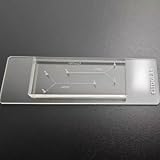
- VERSATILE STANDARD CHIP: Dual-width channels (50µm & 100µm) in a simple layout — perfect for proof-of-concept experiments and protocol development.
- ENTRY-LEVEL & AFFORDABLE: The most cost-effective way to start microfluidics — ideal for students, teaching labs and teams testing new protocols.
- STARTER KIT INCLUDED: Comes complete with PTFE tubing and a syringe, giving students and researchers everything needed to begin microfluidics experiments right out of the box.
- QUALITY PDMS/GLASS BUILD: RTV615 PDMS plasma-bonded to borosilicate glass; optical clarity for fluorescence and brightfield imaging.
- PRACTICAL FORM FACTOR: Compact 45x20mm size with multiple inlet/outlet ports for flexible fluid routing.
Why the distinction matters for patients
- Screening is not treatment. Finding a T-cell clone that responds in an experimental assay does not by itself show that it can be manufactured, safely administered, or control a patient’s cancer.
- A model antigen is not every tumor. The reported HLA/NY-ESO-1 setup cannot be assumed to represent other antigens or a particular patient’s tumor.
- Laboratory performance is not clinical accuracy. The reported sorting specificity concerns validation in the study’s experiment, not clinical diagnosis or treatment success.
Research reference
Aude I. Segaliny and colleagues published “Functional TCR T cell screening using single-cell droplet microfluidics” in Lab on a Chip, volume 18, issue 24, pages 3733–3749. It was first published online on 6 November 2018; the issue publication date recorded by PubMed is 4 December 2018. PubMed record.
Quick Recap
Best Value
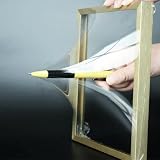
- 【Microfluidic Chip Packaging Film】 Full transparency, low temperature flexibility, good air permeability, thermal and chemical stability
- 【Microfluidic Chip Packaging Film】 Shore Hardness (A): 50, tensile strength (MPa): 4, tear strength (KN/m): 7
- 【Microfluidic Chip Packaging Film】 Elongation at break (%): 100, Elastic modulus: 1.7, Refractive index: 1.41, Transmittance (%): >95(2mm)
- 【Microfluidic Chip Packaging Film】 Using temperature range (C): -40 to 200, Dielectric strength (kV/mm): 12, Dielectric constant (1MHz): 2.7
- 【Microfluidic Chip Packaging Film】 1 Pcs/package
Rank #4
Product prices and availability are accurate as of the date/time indicated and are subject to change. Any price and availability information displayed on Amazon at the time of purchase will apply.




