IoT helps us obtain information by connecting devices that sense physical conditions with computing and communication systems. A sensor produces a reading; a network carries it to a digital system; and software or people can use the result to monitor a condition or make a decision. Some systems also use the information to trigger an action in the physical world.
How does IoT turn a physical condition into information?
The process links the physical world to digital systems through sensing, computing, communication and, in some designs, actuation. NIST describes these as core IoT functions in its SP 800-183.
As an Amazon Associate I earn from qualifying purchases.
- Observe: A sensor or other transducer interacts with the physical world and produces a reading. NIST’s working definition of an IoT device includes a sensor or actuator for this physical interaction.
- Connect: A network interface carries information between the device and digital systems. Interfaces can include Ethernet, Wi-Fi, Bluetooth, LTE, Zigbee and UWB, according to NIST’s IoT program FAQ.
- Process or relay: Computing and communication components can store, analyze or pass the reading to another application. The precise arrangement depends on the system.
- Use: People or software can use the resulting information to monitor a condition or inform a decision. If the system includes an actuator, it may also change something in the physical environment.
What does IoT information look like in practice?
Consider environmental monitoring. A sensor measures a physical condition, and connectivity can make its readings available to a remote system. An organization might use such sensors to monitor environmental conditions, as described by NIST’s IoT program FAQ. The example does not mean every device reports continuously or uses the same network; those details depend on the product and deployment.
Quick wins for a faster PC:
Repair Windows errors before they cause bigger problemsFix Now →Scan for outdated or missing drivers - takes under a minuteDriver Scan →What makes IoT data useful?
A sensor reading by itself is only an observation. Communication makes it possible to move that reading beyond the device, while computing can help organize or analyze it. Together, these capabilities can let people or software monitor conditions and make decisions using information about the physical world. Depending on the system, data may also support action or help anticipate future events; these are possible capabilities, not guaranteed outcomes. NIST discusses these functions in SP 800-183.
#1 Best Overall

- Two Ways to Connect: Easily monitor temp and humidity data in real time from anywhere. With stable WiFi and Bluetooth connection via the Govee Home app, you'll have more opportunities to react to changes in your air quality (not support 5G WiFi).
- Fast & Accurate: Equipped with a Swiss made sensor, this humidity gauge provides precise readings. Temperature is accurate to ±0.54℉/±0.3℃, and humidity is ±3%RH. By refreshing every 2s, you'll stay regularly updated. Now supports widget function.
- Alert Function: Set preset temp and humidity ranges, and receive an app alert immediately whenever levels fall out of that range. This function helps you react faster to sudden changes in your basement, baby room, etc. Only supports Bluetooth settings.
- Free Data Storage & Export: Our room humidity meter uploads data to the App when connected via Bluetooth or WiFi. Enjoy a 20 days online data storage view and export up to 2 years worth of data seen through clear historical trends and graphs.
- Easy to Place: With the lanyard loop, you can easily place this indoor temperature gauge anywhere. Package contents 1 x Govee Temp Humidity Gauge, 1 x Lanyard Loop, 1 x User Manual.
When assessing an IoT application, consider what it measures, how readings are transmitted and processed, and what monitoring or decision the resulting information supports. The appropriate arrangement depends on the application.
Independent reader supportYour contribution helps us test, update, and keep practical guides available for everyone.What privacy and security issues should users consider?
Connected devices can collect information about or from people, and their interaction with the physical world can create privacy and cybersecurity risks. NIST notes that IoT risks can differ from those associated with conventional IT devices and addresses risk management across device lifecycles in SP 800-213.
Rank #2
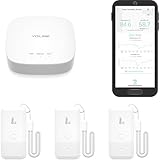
- LORA > WIFI! YoLink devices don’t use your WiFi, ensuring no crowding or slowing down of your network. Instead, they operate with a unique LoRa-based, long-range, low-power wireless protocol. Place smart devices in areas WiFi can’t reach—outdoors, several floors away, in fridges, gun safes, or beyond WiFi range! Using YoLink’s industry-leading technology, this sensor monitors up to 2034 feet in open air.
- Temperature & Humidity Monitoring: Accurately track temperature and humidity levels with high precision, delivering regular updates to the YoLink app. Manage environmental conditions in your home, greenhouse, fridge or freezer, barn, bedroom, chicken coop, dog kennel, plant nursery, or child's nursery—anywhere you need reliable monitoring. Perfect for maintaining optimal conditions across a wide range of locations and uses.
- Customizable Alerts & Notifications: Stay informed with multiple alert options! Set custom thresholds for temperature and humidity, and choose to receive alerts via text, email, or push notifications. Apple users can bypass silent mode with "Critical Alerts," while Android offers similar options. SMS messages are limited to the total of 5 times each device plus 5. A hub and one sensor provides you with 15 free SMS per month.
- Battery-Powered with Extended Lifespan: Powered by two AA batteries, the sensor delivers up to 5 years of continuous operation, depending on usage and environmental conditions. Receive real-time low battery alerts via the YoLink app, ensuring you're notified when it’s time for a replacement. Designed for convenience, its long-lasting battery life minimizes the need for frequent replacements, making it perfect for hard-to-reach areas and critical monitoring applications.
- IFTTT & Alexa Integration: trigger IFTTT applets based on high or low temperature set points reached (when device alerts). Voice query Alexa for the temperature (only; humidity not supported at this time). Triggering Alexa routines is not supported at this time.
Security capabilities to consider include protecting stored and transmitted data, restricting access to device interfaces, enabling secure software updates, and making cybersecurity state available to authorized entities. NIST’s technical catalog identifies these as possible device capabilities, not features present in every IoT product.
Recommended Free Tools
Quick Recap
Rank #4

- 2 Years Of Cellular Service Included: Start monitoring immediately with no contracts, no monthly fees, and no SIM card setup. Includes 2 years of cellular service, with affordable renewal at only $29.99 per year after expiration
- Protect What Matters Most: Monitor RVs, pets, freezers, cabins, greenhouses, and other remote spaces. Receive alerts before overheating, freezing temperatures, humidity issues, or power failures lead to costly damage or emergencies
- No Wifi Required: Built-in 4G cellular connectivity automatically connects through available networks, allowing reliable remote monitoring wherever cellular coverage exists. Suitable for RV travel, vacation homes, off-grid cabins, and remote properties
- Instant Alerts For Critical Events: Receive notifications by SMS, email, sound and light alerts for temperature, humidity, power outages, low battery, or device offline conditions. Customize thresholds and notify unlimited contacts
- 60-Day Rechargeable Battery Backup: Continues monitoring during extended power outages with up to 60 days of battery operation. Unlike WiFi-only monitors, 4G connectivity helps maintain visibility even when internet service is unavailable
Rank #3

- 【*REQUIRES Tapo Hub】To utilize Tapo motion sensor T310, a Tapo hub H100 (sold separately) and a secured 2.4 GHz Wi-Fi network connection are required. Tapo T310 communicates with the hub via the Sub-1G Low-Power Wireless protocol, which provides extended battery life for the sensor and a wider coverage area compared to Wi-Fi.
- 【Real-Time & Accurate Monitoring】Featuring the Swiss-made sensor, Tapo T310 provides high accuracy and real-time data updating every 2 seconds. (Accuracy: ±0.54°F, ±3% RH)
- 【Free Data Storage & Visual Graphics】Records temperature and humidity data and generates periodic data summaries. 2 Years of Data Export for Free!
- 【Long-Lasting Performance】Using only 1 CR2450 battery (included in package), the device performs more than 1 year. (*Battery life of more than 1 year is based on TP-Link’s laboratory results under normal use. Actual battery life may vary depending on working conditions.)
- 【Home Automation】Automatically turns on/off other Tapo Smart devices when settings fall outside their preset ranges.
Product prices and availability are accurate as of the date/time indicated and are subject to change. Any price and availability information displayed on Amazon at the time of purchase will apply.




