Free tools Windows power users keep installed
One-click scans. No signup required.
A 2018 laboratory concept paired two actions: an engineered enzyme called OPAA breaks down nerve-agent compounds, while the reaction-associated movement of fluid is intended to carry an antidote through a hydrogel. The work was reported as a laboratory demonstration—not a miniature autonomous robot, an available treatment, or proof of protection in a real attack.
What the “nanobot” actually is
The 2018 report used “nanobot” in its headline, but the described device is more accurately understood as an experimental enzyme-powered pump. It consists of organophosphorus acid anhydrase (OPAA) immobilized on a support within a hydrogel. OPAA catalyzes the hydrolysis of organophosphate compounds, including nerve agents such as sarin. The proposed pump effect uses reaction-associated mechanical force to move fluid around the immobilized enzyme.
As an Amazon Associate I earn from qualifying purchases.
In practical terms, the enzyme performs the chemical breakdown; the resulting fluid movement is intended to transport a separate substance through the gel. The researchers proposed carrying an antidote such as atropine or pralidoxime. The gel is therefore a concept for combining localized agent degradation with delivery—not an antidote in itself. Chemistry World’s 2018 report quotes Penn State researcher Ayusman Sen describing the idea as: “It’s a one-two punch – it’s destroying the nerve agent, using it as a fuel and pumping out antidote.” That phrase summarizes the proposed mechanism, not demonstrated clinical efficacy.
How the proposed pumping action works
- OPAA is held in the gel. Immobilizing the enzyme on a support gives the reaction a connection to the surrounding material rather than leaving the enzyme freely dispersed.
- The enzyme hydrolyzes an organophosphate. Hydrolysis is the chemical breakdown step; the 2018 report describes OPAA as acting on nerve agents such as sarin.
- Reaction-associated force moves nearby fluid. With the enzyme attached to a support, the force associated with its catalytic activity can be transmitted to the surrounding fluid, producing directional flow.
- The flow is meant to carry another compound. The proposed application is to move an antidote such as atropine or pralidoxime through the hydrogel while the enzyme acts on the hazardous compound.
The unusual feature is that the hazardous compound is described as both the target of hydrolysis and the fuel for the pumping effect. The 2018 account presents this as a promising mechanism; it does not establish how much antidote the material can transport, how quickly, or whether the proposed delivery would help a person after exposure.
#1 Best Overall

- MOISTURE-ENRICHED GEL FOR QUICKER HEALING: This hydrogel wound gel uses hydroxyethyl cellulose and glycerin to keep wounds hydrated while absorbing excess fluids. It creates the perfect environment for healing wounds like diabetic ulcers, venous ulcers, and surgical incisions.
- PROTECT AGAINST DRYNESS AND BACTERIA: The hydrogel forms a protective layer to shield wounds from dehydration and bacterial exposure, helping reduce infection risk. This wound gel is ideal for first and second-degree burns, cuts, or abrasions.
- SOOTHING RELIEF FOR SENSITIVE SKIN: Oil-free hydrogel for cooling and soothing relief from pain. This wound gel is great for delicate wounds, like post-surgical sites. Ensure comfort and prevent irritation during recovery.
- VERSATILE WOUND CARE FOR MULTIPLE INJURIES: Enhanced with allantoin and schizophyllan to promote cell growth, this hydrogel aids in removing necrotic tissue and speeds healing of partial and full-thickness wounds, from minor cuts to chronic skin ulcers.
- VIVE GUARANTEE: 30-day guarantee so you can purchase with confidence.
What was tested—and what that establishes
Chemistry World reported that the team tested the OPAA pumps in its own laboratory using diisopropyl fluorophosphate (DFP), a sarin mimic. The report also says the system was sent to the U.S. Army chemical and biological warfare laboratory at Edgewood, Maryland, where it was shown to work with real Soman. These are reported laboratory demonstrations. They do not show human testing, field performance, or a commercially available formulation.
The same report says the work was presented at the 256th American Chemical Society meeting in Boston. It discusses an ointment as a possible future form and says real-world administration remained a next step. A separate account noted that effectiveness against inhaled nerve agents was unclear. The evidence described in these reports does not establish protection against inhaled exposure or practical performance in an attack.
Rank #2
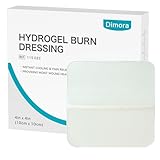
- Instant cooling to relieve minor burns - When the hydrogel wound dressing comes into contact with the burned skin, it quickly absorbs and disperses the heat released from the burn area, helping to reduce pain in the burn wound.
- Keep the wound moist to promote healing - The moist environment of burn bandages promote cell regeneration, keep the wound surface moist and relieves pain, which accelerates wound healing.
- Sterile & hypoallergenic - The burn dressing is sterile and latex-free, which effectively reduces the risk of wound infection. It is suitable for people with sensitive skin and provides safe care for wounds.
- Essential for home first aid kit - 4X4 inch hydrogel burn pads are suitable for minor burns, scald blisters, cuts, abrasions and other superficial wounds. Especially for burns caused by daily cooking, steam burns, and hot water burns, hydrogel burn dressings can provide effective help.
- Application steps - Gently apply the moist side and cover the burn or wound. Burn bandage can be covered again with a transparent dressing to strengthen the fixation. The wound dressing is for single use only.
A specific peer-reviewed paper with full experimental details for this 2018 hydrogel pump is not identified in the sources cited here. Quantitative pump performance, reproducibility, safety, stability, and subsequent development therefore remain unverified. The headline should not be read as evidence that an autonomous nanobot has been built or that an antidote ointment is ready for use.
How this pump relates to other OPAA research
Other studies support the broader idea of using engineered or immobilized enzymes against organophosphates, but their results are not measurements of the self-pumping hydrogel. The test materials, exposure conditions, and intended use differ.
Rank #3

- Hydrate Dry Skin and Slough - Dimora Hydrogel can hydrate the dry wound to improve healing by the active ingredients in wound exudate to soften the necrotic tissue in a longlasterd moist environment created by its oil-free hydrogel, it is gentle for the wounds without any pain
- Useful for Burns and Painful Wounds - Hydrogels can be cooling and soothing effect on the skin, which is effective in slight burns, Essentials for a seaside vacation sunburn and some painful wounds
- Professional Care for Elderly - Perfect for elderly care of chronic diseases and daily care of the pressure ulcers, venous stasis ulcers with slight exudation
- More Flexible for Any Positions - Dimora Hydrogel dressings conforms to the irregular contours of a wound bed and the tiny position, such as cracked fingers and nails gap, tightly fit the joints to support substantial exercise and your little one have fun
- Must Read - Infected wounds should be inquired by doctor before use. It is normal for the dressing to bulge and turn white after absorption, It should be changed after it happened. It is not suitable for wounds with a large amount exudate
| Research | Reported finding | How it relates to the hydrogel pump |
|---|---|---|
| OPAA enzyme mutants, 2018 | Reported several-fold enhanced catalytic efficiency against sarin, Soman, and GP; the Y212F/V342L variant had enhanced sarin stereospecificity. Study record | Enzyme-engineering context only; these results do not measure fluid pumping or antidote delivery. |
| OPAA immobilized in NU-1003, 2016 | For 300 nm carrier particles, the study reported complete conversion of the sarin mimic DFP after two minutes under its test conditions and complete Soman degradation after 30 minutes. The initial Soman hydrolysis rate for this formulation was reported as more than three times that of free OPAA. ACS Nano study | A separate metal-organic-framework carrier study, not a self-pumping hydrogel. |
| Enzyme-based surface decontamination, 2021 | Reported 97.6% decontamination of Soman-contaminated surfaces and 99.4% of VX-contaminated surfaces under the study’s specified surface-assay conditions. Study record | Surface decontamination results, not evidence of pump performance or treatment of a person. |
These figures cannot be used to estimate how well the hydrogel pump works. They come from distinct formulations and assays; a useful comparison would need to account for the compound tested, exposure route, enzyme format, delivery method, and evidence stage.
Independent reader supportYour contribution helps us test, update, and keep practical guides available for everyone.What would need to be resolved before practical use
Promising enzyme chemistry does not by itself establish a safe, stable, deliverable medical countermeasure. A review of catalytic bioscavengers identifies safety, stability, delivery, and production as issues that still require research for clinical application. For this pump concept, the proposed ointment and real-world administration also remain developmental possibilities rather than demonstrated solutions.
Quick Recap
Rank #4

- McKesson
- McKesson
- Health & Household
- Delivery route: The proposed gel must be shown to deliver an antidote in a useful way; the cited report does not establish a clinical route or dose.
- Exposure type: Effectiveness against inhaled nerve agents was not established in the reporting, and should not be inferred from a surface or gel experiment.
- Performance and repeatability: Detailed quantitative pump output and reproducibility data for this specific hydrogel are not established in the cited sources.
- Safety, stability, and production: These are broader translational challenges identified for catalytic bioscavengers, not solved merely by demonstrating enzyme activity in a laboratory.
Product prices and availability are accurate as of the date/time indicated and are subject to change. Any price and availability information displayed on Amazon at the time of purchase will apply.
What’s actually slowing this PC down?
Pick the symptom - the matching free tool is one click away.




