For a production Hermes Agent deployment, start with an isolated execution boundary, persistent and protected state, explicit authorization, and deliberate network exposure. Hermes supports multiple profiles and supervised per-profile gateways in its Docker deployment, but its official documentation does not establish a supported load-balanced, multi-replica architecture or published capacity figures. In particular, do not run two gateway containers against the same data directory: Hermes warns that session files and memory stores are not designed for concurrent writes.
What production hosting can—and cannot—mean for Hermes
Hermes offers controls for running an agent more deliberately: configurable command-execution backends, Docker resource limits, a concurrency cap for the API server, profiles that keep agent state separate, and supervision for profile gateways in the official Docker image. These help with isolation and day-to-day operations; they do not by themselves establish horizontal scaling or high availability.
As an Amazon Associate I earn from qualifying purchases.
The official documentation does not specify a supported load-balanced multi-replica API topology, coordination between gateway replicas, a shared state backend safe for concurrent gateway writes, failover semantics, benchmarked throughput, or capacity recommendations. Treat “scale” as a deployment requirement to validate with current project guidance and workload-specific testing—not as an outcome guaranteed by a concurrency setting or multiple profiles.
Choose where commands run
Hermes separates the agent process from the environment used to execute shell commands. Choose the terminal backend according to the commands’ trust level and the isolation and persistence your workload requires. The official configuration guide lists local, Docker, SSH, Modal, Daytona, and Singularity/Apptainer; the security documentation describes Modal and Daytona as isolated sandbox choices, SSH as a remote-machine boundary, and Singularity as an HPC option.
#1 Best Overall

- [CPU] AMD Ryzen 7 5700G Processor (8 Cores, 16 Threads, 3.8 GHz Base Clock Speed up to 4.6 GHz Max Boost Clock Speed) for Gaming and Content Creation with 7nm Leading Edge Technology | [STORAGE] 1TB PCIe NVMe M.2 SSD - Experience Hyper-Fast Bootup and Data Transfer thats up to 30x Faster Performance than a Traditional Hard Drive.
- Graphics: Integrated AMD Radeon Graphics | [RAM] 32GB DDR4 RAM 3200 Gaming Memory for Seamless Multitasking from Multiple Web Pages to Playing Games Online Simultaneously | [OS] Windows 11 Pro x64
- 2x 3.5" Drive Bays | 4x Expansion Slots | mATX Motherboard | ATX PSU
- [BUY WITH CONFIDENCE] Empowered PCs are Assembled in the USA, Rigorously Stress-Tested Before Shipping, and Supported with Lifetime Technical and Diagnostic Support and 3-Year Limited Hardware Warranty.
| Execution choice | Documented boundary or use | Operational consideration |
|---|---|---|
| Local | Commands run directly on the host machine, with the host user’s access; no isolation is provided. | Use only when that host-level access is intended. |
| Docker | Container isolation, with configurable CPU, memory, disk, and persistence settings. | Set resource limits and decide deliberately which state and environment variables enter the container. |
| SSH | Commands run on a remote machine. | Account for the remote host’s permissions and operational controls; the sources do not establish that its security or performance is equivalent to Docker. |
| Modal or Daytona | Identified in the security documentation as isolated sandbox choices. | Evaluate the execution and persistence behavior needed by the workload; the sources do not provide directly comparable performance figures. |
| Singularity/Apptainer | Identified as an option for HPC environments. | Fit the backend to the site’s HPC environment and policies. |
These backends are not interchangeable security guarantees. Local execution inherits host-user access, while a container or remote execution boundary has its own configuration and trust assumptions.
Deploy with Docker and protect Hermes state
The official Hermes Docker setup runs the application with gateway run, mounts a persistent data directory, uses a restart policy, and permits container resource limits. It identifies /opt/data as the source of truth for Hermes state. That volume may contain configuration and secrets, profiles, sessions, memories, skills, scheduled jobs, hooks, and logs, so handle it as sensitive application data.
Rank #2

- 【Powerful Load-bearing】12U Network Rack Open Frame is constructed from durable cold rolled steel; Rack shelf supports enhance stability, wall-mounted capacity of 130lbs, the ground-mounted up to 260lbs
- 【Considerate Designs】Open-frame layout, including a top panel adding space, anti-slip shelf stops fixing devices and compatible racks for stack and expansion to meet requirements of home server rack
- 【Complete Accessories】A 12U open frame server rack, two ventilated shelves, four shelf stops, four velcro straps and a set of equipment mounting screws
- 【Versatile Application】Ideal for space-efficient multi-device setups in warehouses, retail, classrooms, offices and more; Excellent choices as AV Rack/IT Rack
- 【Effortless Setup】 Network Rack includes hardware, a comprehensive manual, mounting hole drilling template and an online assembly video to simplify setup
- Choose the execution backend. Decide whether shell commands should run in Docker or another supported environment, based on the access those commands need.
- Mount persistent state. Preserve the Hermes data directory across container replacement or restart. Include it in access-control, backup, and restore planning.
- Set resource controls. Configure the CPU, memory, and disk limits appropriate for the workload. The documentation provides configuration options, not a universal sizing recommendation.
- Run the gateway under supervision. The official Docker image supervises profile gateways, restarts a profile gateway after a crash, maintains per-profile rotated logs, and restores gateways recorded as running after a container restart.
- Protect the deployment. Restrict access to state and secrets, review execution permissions, and monitor logs as part of routine operations.
Backups should cover the state that matters to your deployment, and a restore procedure should be tested against the state and configuration you intend to recover. The documentation identifies the data volume’s contents but does not prescribe a backup schedule or recovery-time target.
Keep agent state separate with profiles
A Hermes profile is a separate home for an agent’s settings and data. Profile separation covers configuration, environment credentials, personality, memories, sessions, skills, scheduled jobs, and gateway state. Use profiles when agents should not share that state.
Rank #3
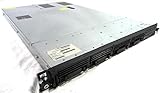
- Up to 2 Six-Core Intel Xeon CPUs 5600 Series
- 18 x slots DDR3 memory
- Up to four SFF Hot-Swappable Hard Drives 2.5" SAS or SATA
- HP Smart Array P410i-512MB FBWC RAID
- 4 x NC382i GigaBit NIC
The official Docker deployment recommends one container hosting all profiles by default. It provides supervised per-profile gateway slots and separate rotated logs. A separate container per profile can be appropriate when a workload needs its own CPU or memory limits, or when profiles need independent image pinning. That choice does not make it safe to share a writable data directory between concurrent gateway containers.
Expose the API deliberately
The API server presents Hermes as an OpenAI-compatible HTTP endpoint. It requires a configured provider and tool backends to perform useful work. Its documented default bind address is 127.0.0.1, its default port is 8642, and API_SERVER_KEY is required for every deployment, including one bound to loopback.
Rank #4

- 【Powerful load-bearing】12U Network Rack Open Frame is constructed from durable Cold Rolled Steel; Rack Shelf Back Support enhances stability; load-bearing capacity of 260lbs
- 【Sliding&Considerate】Open-frame layout, including four wheels easy to move, a top panel adding space, anti-slip shelf stops fixing devices and compatible racks for stack and expansion to meet requirements of home server rack
- 【Complete Accessories】A 12U open frame server rack, two ventilated shelves, four shelf stops, four casters, four velcro straps and a set of equipment mounting screws
- 【Versatile Application】Ideal for space-efficient multi-device setups in warehouses, retail, classrooms, offices and more; Excellent choices as AV Rack/IT Rack
- 【Effortless Setup】Server rack with wheels includes hardware, a comprehensive manual, mounting hole drilling template and an online assembly video to simplify setup
The API gives callers access to Hermes’ tools, including terminal operations. Treat it as a privileged interface rather than a harmless chat endpoint. Use a strong bearer key, avoid broad unauthenticated network exposure, and keep CORS origins narrow if browser access is explicitly enabled. Binding to loopback does not remove the documented API-key requirement.
Quick wins for a faster PC:
Clear out junk files and repair common Windows errorsFree Scan →Fix the driver behind crashes, sound loss and screen glitchesFind Drivers →- Keep authorization explicit: use allowlists rather than allowing every user, and periodically review command allowlists.
- Use isolated command execution and resource limits where appropriate to the threat model.
- Store API keys securely and avoid forwarding unnecessary credentials into terminal containers.
- Use a deliberate working directory for messaging integrations and run the gateway as a non-root user.
- Monitor logs and keep the deployment current with security updates.
The security guide’s Docker hardening example drops Linux capabilities, prevents privilege escalation, limits process count, and constrains temporary filesystems. These are documented controls to consider, not a substitute for reviewing the actual image, configuration, network exposure, and threat model.
Best Value

- Spacious Chassis: This massive 4U server case has 8 internal 3.5" HDD bays plus room for 3 additional 5.25" devices
- Expandable & ATX/CEB Compatible: 7 PCI expansion slots and ATX and CEB motherboard compatibility give you growth options for all of your needs
- Quiet Cooling: 4 pre-installed cooling fans provide excellent airflow and heat protection at reduced noise. 2 front 120mm PWM fans and 2 rear 80mm fans ensure your drives and chassis avoid overheating
- Desired Features: Front panel LED indicators for power, HDD, and LAN status monitoring allow quick, easy visual assessment. Additional utility with 2 x USB 3.0 port and built-in front panel lock provides extra security for your server case
- Rackmount Design: Standard 4U rackmount form factor allows easy installation in server racks and data center environments with included mounting hardware for professional deployment
Limit credentials passed into command containers
Hermes can forward environment variables into a terminal container, but commands running there can see credentials that were explicitly forwarded. Keep docker_forward_env restricted to only the variables a workload needs. A container boundary does not protect a secret that is intentionally injected into that container.
Understand concurrency before planning capacity
The API server supports a configurable max_concurrent_runs cap. It limits concurrent runs; it is not a throughput guarantee, a requests-per-second figure, or a capacity forecast. The official material does not publish API latency under load, users per instance, or CPU and memory requirements by workload.
Likewise, multiple profiles and supervised gateways are documented operating features, not evidence that multiple gateway containers can safely act as replicas. Hermes explicitly warns against running two gateway containers simultaneously against one data directory because session files and memory stores are not designed for concurrent writes. Do not use a shared Hermes data volume as an assumed scale-out state layer.
What’s actually slowing this PC down?
Pick the symptom - the matching free tool is one click away.
If you require horizontal scaling or high availability, get current project guidance on a supported topology and validate it before relying on it. Until that is established, use the documented profile and resource controls within a deployment boundary, and measure the behavior of your own workload without treating the results as general Hermes capacity claims.
Quick Recap
Product prices and availability are accurate as of the date/time indicated and are subject to change. Any price and availability information displayed on Amazon at the time of purchase will apply.




