The Tool Desk
Outbyte Driver Updater FREEFix the driver behind crashes, sound loss and screen glitchesFind Drivers →Outbyte PC Repair FREEClear out junk files and repair common Windows errorsFree Scan →Stopping microplastics from reaching rivers and oceans requires reducing releases at several points: designing products to shed less, preventing industrial losses, collecting plastic waste, and capturing some fibres during laundry. No single household filter can address all these routes. The right intervention depends on how the particles are released and who can prevent them.
How do microplastics get into the environment?
Microplastics do not come from one source. Some particles are deliberately added to products; plastic pellets can spill during handling and transport; tyres, paints and synthetic textiles shed particles through wear; and larger plastic litter breaks into smaller fragments. These pathways occur at different stages of a product’s life, so their solutions are not interchangeable.
As an Amazon Associate I earn from qualifying purchases.
The European Environment Agency (EEA) identifies tyres, paints and synthetic textiles among prominent sources in its EU indicator. Mismanaged plastic waste adds another route: once larger items escape collection or responsible disposal, they can fragment. The EEA’s indicator page describes its source categories and estimates.
Which interventions address each release pathway?
| Release pathway | Where prevention can happen | Who can act |
|---|---|---|
| Particles intentionally added to products | Product formulation and sale | Manufacturers and regulators |
| Plastic pellet spills and losses | Handling, storage, processing and transport | Operators, carriers and regulators |
| Wear from tyres and paints | Product design, use, standards and transport patterns | Manufacturers, governments and users |
| Synthetic textile fibres | Textile design and production, garment care, laundering and end-of-life processing | Manufacturers, households, wastewater utilities and governments |
| Fragments from larger plastic litter | Waste prevention, collection and end-of-life management | Product makers, governments, waste services and users |
The table shows why a practical laundry measure cannot solve releases from tyres, paints, pellet handling or litter. Broad progress depends on measures across product design, production, use and waste management.
#1 Best Overall

- Ultra-Fine Mesh Design: The 3.07x6.02-inch filter features an ultra-fine mesh that effectively traps lint and debris, ensuring your washing machine operates efficiently and your clothes come out cleaner.
- Easy to Install: Our washing machine lint catcher is designed for hassle-free installation and replacement, allowing you to quickly set it up and get back to doing laundry without any fuss.
- Enhanced Performance: By catching lint before it clogs your machine, this filter not only improves washing performance but also helps extend the lifespan of your washing machine, saving you money on repairs.
- Compatible with Most Machines: This lint trap is a versatile replacement part, compatible with a wide range of washing machines, making it a practical for any household.
- Eco-Friendly: By preventing lint from washing down the drain, this filter helps reduce microplastic pollution, contributing to a cleaner environment while enhancing your laundry routine.
What can households do about microfibres from laundry?
Synthetic fibres can be released during textile manufacturing, everyday wear, washing and waste handling. At home, a reusable microfiber-catching laundry bag or washing-machine filter is an optional way to capture some fibres from laundry water. The EEA discusses filters and laundry behaviour as part of a wider prevention approach, but a capture accessory cannot stop fibres released at other stages or address other sources.
- Follow garment-care instructions and avoid unnecessary washing where practical.
- If you use a laundry bag or machine filter, follow its instructions and empty captured lint into solid waste rather than rinsing it down a drain.
- Treat capture as one limited measure, not a guarantee that a wash releases no fibres.
Wastewater treatment can retain a large share of microplastics, but it does not remove every micro- or nanofibre. Captured particles may also remain in treatment residues, so treatment is not a substitute for preventing releases upstream. The EEA’s 2020 briefing on textile microplastics describes prevention across design and production, care during use, and end-of-life processing.
Rank #2

- 【Complete Accessories Kit】Package includes 2 filters, 4 brass thread adapters, 6 thick black flat gaskets, 6 thin rubber rings and 2 blue sealing rings, meet different pipe connection needs.
- 【50 Micron Precision Filtration】50 micron reusable stainless steel mesh screen efficiently traps sediment, rust, sand and debris, effectively protects washing machine and other water appliances from clogging and damage.
- 【Solid Brass & Clear Housing】Heavy-duty brass connector + transparent filter housing. You can visually check dirt buildup easily, durable for long-time water supply use.
- 【Easy Installation & Clean】Quick screw-on installation without extra tools. Detachable design allows you to rinse the mesh repeatedly for reuse, no frequent replacement needed.
- 【Wide Application】Works for washing machines, water heaters, garden hoses and other household water equipment, filters raw tap water before entering appliances.
What do the European estimates and targets mean?
The EEA briefing reports an estimate by Eunomia and ICF that 13,000 tonnes of textile microfibres—about 25 grams per person—are released to European surface waters annually. This is an attributed estimate, not a new measurement. Its geography is Europe; it should not be read as a global figure.
The European Commission’s Zero Pollution Action Plan sets a target to reduce microplastic releases by 30% by 2030. That is a policy target, not a result already achieved. The EEA’s 2025 assessment, meanwhile, estimates a slight 7–9% increase for selected sources in the EU over 2015–2022. That figure comes from a composite proxy indicator for the EU27, not direct official monitoring: the EEA says official monitoring of microplastic releases is absent, and the indicator’s source mix and estimates carry methodological uncertainty. The target and the indicator describe different things: one is a goal, the other an estimate of selected-source trends. See the EEA indicator assessment and the European Commission microplastics policy page.
Rank #3

- 【Efficient Floating Hair Collection】The floating mesh lint catcher moves freely with the water during every wash cycle to help collect pet hair, lint, fuzz, tissue pieces and loose fibers before they stick back onto clothing.
- 【Fine Mesh Filter Bag Design】Designed with an ultra-fine cone-shaped mesh bag that promotes water circulation while trapping hair, lint and small debris. Helps keep clothes looking cleaner after every load.
- 【Reusable & Durable Material】Made from durable PP and high-strength nylon mesh for repeated use. Simply remove collected hair and rinse clean after washing for convenient everyday laundry maintenance.
- 【Easy to Use】No installation, tools or extra setup required. Just place the floating lint catcher into your top-load washing machine before starting the wash cycle for hassle-free operation.
- 【Ideal for Everyday Laundry】Perfect for pet owners and families washing clothes, towels, blankets, bedding and other washable fabrics. Designed for most top-load washing machines. Not compatible with front-load washers.
What EU rules address microplastics?
EU policy addresses two distinct routes. A REACH restriction on microplastics intentionally added to products was adopted in 2023. The restriction’s scope and transition provisions determine which products and deadlines it covers; consult the regulation rather than assuming it applies to every plastic-containing product.
Regulation (EU) 2025/2365, adopted in November 2025, addresses plastic pellet losses. The European Commission describes operator duties that include prevention, containment, cleanup, risk plans and records. These are EU-specific measures; they should not be presented as rules that apply worldwide. The Commission’s policy page summarizes both actions.
Rank #4

- 【Anti-Scale Water Filter for Washing Machine】Designed as an inline water filter for washing machine, this system effectively reduces calcium and magnesium ions to prevent scale build-up. Acts as a reliable calcium inhibitor filter to protect internal components and improve washing performance.
- 【Inline & Garden Hose Compatible Design】This in-line water filter features a standard 3/4" GHT connection, making it easy to install as a water filter for washing machine, garden hose filter, or swamp cooler water line—no tools required.
- 【Protects Washing Machines & Water Heaters】By reducing mineral scale and anti-scale buildup, this water filter helps extend the lifespan of washing machines, water heaters, and swamp coolers while maintaining stable water flow and efficiency.
- 【High Flow Rate, No Pressure Loss】Engineered to support up to 7 GPM, this inline water filter ensures consistent water pressure for washing machines and water heaters, without restricting flow or affecting daily household use.
- 【Multi-Purpose Inline Water Filtration】Ideal for use as a water filter for washing machine, swamp cooler, water heater, or garden hose, this system works with tap water and well water to reduce scale build-up and deliver cleaner, softer water throughout your home or RV.
How should progress be judged?
There is no single global ranking of the most effective interventions in the available evidence. A useful assessment asks which release route a measure addresses, which lifecycle stage it reaches, who is responsible, how well releases are monitored, and where the policy applies. A laundry filter may capture some wash-water fibres; it cannot demonstrate reductions in textile manufacturing, tyre wear or pellet spills. For those sources, prevention and measurement need to be evaluated separately.
Recommended Free Tools
Quick Recap
Best Value
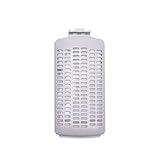
- PERFECT COMPATIBILITY - Specifically designed for 0.9 cubic foot portable washers including Black+Decker, Magic Chef and similar 0.9 cu ft models
- SUPERIOR LINT CAPTURE - High-density mesh filter effectively traps lint, hair, and debris while maintaining optimal water flow for thorough cleaning
- EASY INSTALLATION - Simple snap-in replacement for worn or damaged filters - no tools required, just remove old filter and insert this replacement
- DURABLE CONSTRUCTION - Made from corrosion-resistant plastic and stainless steel mesh for long-lasting performance and repeated use
- MAINTAIN MACHINE PERFORMANCE - Regular filter replacement prevents clogging, reduces wear on your washer, and ensures clean laundry every time
Product prices and availability are accurate as of the date/time indicated and are subject to change. Any price and availability information displayed on Amazon at the time of purchase will apply.




