Crashes, No Sound, or Screen Glitches?
Random freezes, missing sound and display glitches usually trace back to one bad driver. Find and replace yours safely.Free scan · under a minutePC Slower Than It Used to Be?
A free scan shows the junk files, broken settings and background clutter dragging Windows down - then fixes them in one click.Free scan · Windows 10 & 11Neither the GameCube nor the PlayStation 2 is simply “more powerful” in every respect. Nintendo lists higher CPU and graphics-chip clock rates for the GameCube, while contemporary PS2 reporting lists higher main-memory bandwidth. Their processors, graphics hardware, and memory paths are different enough that those figures cannot be reduced to one fair, universal score. The practical answer depends on the work a game asks each system to do.
GameCube vs. PS2 at a glance
| Specification | Nintendo GameCube | PlayStation 2 | How to read it |
|---|---|---|---|
| CPU | Gekko at 485 MHz, according to Nintendo’s technical specifications. | GameSpot’s 2006 hardware report lists a 300 MHz system clock. Sony’s 2003 announcement of an integrated Emotion Engine and Graphics Synthesizer design specifies 294.912 MHz for that chip. | Clock rates are not a direct performance comparison across different processor designs. |
| Graphics processor | Flipper at 162 MHz, according to Nintendo. | Graphics Synthesizer at 150 MHz in GameSpot’s contemporary report; Sony’s 2003 announcement identifies it as the PS2 graphics processor. | Frequency alone does not capture architecture, workload, or game performance. |
| Memory | 24 MB main memory and 16 MB A-memory, plus about 2 MB embedded frame buffer and 1 MB embedded texture cache, according to Nintendo. | 32 MB RDRAM and 4 MB embedded graphics memory, according to GameSpot’s 2006 report. | These pools serve different roles. Adding them together or comparing totals obscures how each system accesses and uses memory. |
| Bandwidth | Nintendo lists 2.6 GB/s peak main-memory bandwidth and 10.4 GB/s peak texture-read bandwidth. | GameSpot lists 3.2 GB/s memory bandwidth. | The figures describe paths that are not established as equivalent; retain each source’s label and “peak” qualification. |
| Graphics features | Nintendo lists multi-texturing, bump and environment mapping, filtering, and S3TC texture decompression, among other features. | Sony identifies the Graphics Synthesizer as the graphics processor; GameSpot describes it as receiving computation from the Emotion Engine. | Feature lists describe design, not a guaranteed result in every game. |
| Storage medium | Proprietary GameCube discs of approximately 1.5 GB, according to Nintendo. | DVD and CD-ROM, according to GameSpot. | Storage capacity affects asset budgets and convenience, not processing power by itself. |
Why the clock-speed numbers do not settle it
Nintendo lists the GameCube’s Gekko CPU at 485 MHz and its Flipper graphics chip at 162 MHz. GameSpot’s 2006 PS2 report lists a 300 MHz system clock and a 150 MHz Graphics Synthesizer. Sony’s 2003 announcement for an integrated Emotion Engine and Graphics Synthesizer design gives a 294.912 MHz figure. These numbers are useful descriptions of each design, but MHz measures clock frequency—not how much useful work a processor completes on a particular game task.
| # | Preview | Product | Price | |
|---|---|---|---|---|
| 1 |

|
Gamecube Console Platinum (Renewed) | $156.00 | Buy on Amazon |
| 2 |

|
Nintendo Gamecube System Console - Jet Black (Renewed) | $140.00 | Buy on Amazon |
| 3 |
|
GameCube (Jet Black) (Renewed) | $172.42 | Buy on Amazon |
| 4 |
|
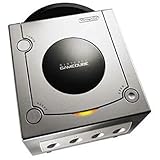
Gamecube Console Platinum | $146.38 | Buy on Amazon |
| 5 |

|
GameCube Console - Indigo (Renewed) | $188.84 | Buy on Amazon |
As an Amazon Associate I earn from qualifying purchases.
The two consoles divide work differently. Sony identifies the Emotion Engine and Graphics Synthesizer as the PS2’s CPU and graphics processor. GameSpot describes the Graphics Synthesizer as receiving computation from the Emotion Engine. Nintendo’s specifications describe the Gekko and Flipper components and list their own graphics capabilities. Comparing only the headline frequencies leaves out architecture, memory access, and the way software assigns work.
Memory capacity and bandwidth need context
Nintendo lists 24 MB of main memory and 16 MB of A-memory for GameCube, alongside about 2 MB of embedded frame buffer and 1 MB of embedded texture cache. Those are distinct resources rather than one interchangeable pool. Nintendo also labels 2.6 GB/s as peak main-memory bandwidth and 10.4 GB/s as peak texture-read bandwidth. The separate labels matter: the texture-read figure is not a second measure of main-memory bandwidth.
#1 Best Overall
- Includes Nintendo Platinum GameCube Console, Power Cable, AV Cable, and Nintendo Platinum Controller
- Supports instructions for incredible effects -- your games will be brighter, faster, and more dramatic
- External bandwidth of 3.2GB/sec, for really fast gameplay
- The processor creates 6 to 12 million ploygons per second -- no more slowdowns in the middle of the game
For PS2, GameSpot’s 2006 report lists 32 MB of RDRAM, 4 MB of embedded graphics memory, and 3.2 GB/s memory bandwidth. That bandwidth number should not be treated as a directly matched equivalent to either of Nintendo’s two figures; the available specifications do not establish that they describe the same access path under the same measurement method. Nor does a larger listed memory capacity automatically mean better performance: capacity and the speed and design of each memory path answer different questions.
What the graphics specifications can—and cannot—prove
Nintendo lists a peak of 6 million to 12 million polygons per second for GameCube, explicitly under an assumption of complex, fully textured, fully lit models. Treat that as a qualified manufacturer peak, not a typical game result. Polygon figures can be counted under different conditions, so a number from another system is not comparable unless the methods and workload match.
Rank #2
- Includes Nintendo GameCube Jet Black Console, Power Cable, AV Cable, and Nintendo Jet Black Controller for Nintendo GameCube
- The 485MHz processor makes loading & starting the games faster than ever -- no more long load times
- The processor creates 6 to 12 million ploygons per second -- no more slowdowns in the middle of the game
- Supports instructions for incredible effects -- your games will be brighter, faster, and more dramatic
Nintendo’s feature list includes multi-texturing, bump and environment mapping, filtering, and S3TC texture decompression. These details help explain what Flipper was designed to support, but a feature’s presence does not show how well a particular game used it. Similarly, knowing that the PS2 used the Graphics Synthesizer and Emotion Engine explains the division of hardware responsibilities, not which console produces the better result in every title.
Recommended Free Tools
Which console performs better in actual games?
There is no matched-game benchmark in the cited specifications and technical accounts that establishes a universal winner. To compare real performance, an analysis would need to examine the same game and comparable versions, account for the work developers assigned to each system, and assess results such as frame rate or image quality under consistent conditions. Peak specifications alone cannot supply that answer.
Rank #3
- Comes with console, 1 controller, power cord, video cord
- Controller is original OEM (not 3rd party)
- Tested and works well. Nice condition
Developers’ choices matter because each console has a different architecture and different memory paths. A game that leans heavily on one kind of processing may make different demands from a game built around another. Without a controlled, title-by-title comparison, claims that one system always has better graphics, smoother performance, or more detailed games go beyond what these specifications establish.
Does the PS2’s DVD support make it more powerful?
No. Nintendo lists the GameCube’s proprietary disc capacity at approximately 1.5 GB, while GameSpot lists DVD/CD-ROM storage for PS2. A larger or different medium can affect how much content a developer can include and how players access it; it does not directly measure CPU or graphics performance. Storage is a separate practical difference between the consoles.
Rank #4
- Includes Nintendo Platinum GameCube Console, Power Cable, AV Cable, and Nintendo Platinum Controller
- Supports instructions for incredible effects -- your games will be brighter, faster, and more dramatic
- External bandwidth of 3.2GB/sec, for really fast gameplay
- The processor creates 6 to 12 million ploygons per second -- no more slowdowns in the middle of the game
- It also includes 64 sound channels -- you'll feel like you're in the game, with the top-quality audio
So, which retro console is more powerful?
The most accurate answer is that the evidence does not support one system as universally more powerful. GameCube has higher listed CPU and graphics-chip clocks, dedicated embedded graphics memory, and documented graphics features. PS2’s contemporary specification reporting lists higher main-memory bandwidth, and its Emotion Engine and Graphics Synthesizer use a different division of work. Those are architectural contrasts, not a decisive overall ranking. For a particular game, a fair verdict requires evidence from that game’s actual performance on both systems.
The Tool Desk
Outbyte PC Repair FREERepair Windows errors before they cause bigger problemsFix Now →Outbyte Driver Updater FREEFix the driver behind crashes, sound loss and screen glitchesFind Drivers →Sources: Nintendo, “Technical Details — Nintendo GameCube”; Sony Interactive Entertainment, “EmotionEngine and Graphics Synthesizer Used in the Core of PlayStation Become One Chip”; Brad Shoemaker, GameSpot, “PlayStation 2 Special Report: The Hardware” (May 17, 2006).
Quick Recap
Best Value
Product prices and availability are accurate as of the date/time indicated and are subject to change. Any price and availability information displayed on Amazon at the time of purchase will apply.




