Cyborg insects are living bugs fitted with small electronic systems that can influence their movement or collect information. Researchers have demonstrated controlled turns, navigation over cluttered ground and sensor-equipped prototypes; NTU Singapore also reports that ten cyborg insects accompanied a civil-defence team to Myanmar after the 2025 earthquake. That is an early field deployment, not evidence that the insects are established rescue equipment or have independently found survivors.
What is a cyborg insect?
A cyborg insect is a living insect fitted with electronics. The animal supplies its own locomotion, while researchers use stimulation, sensors or algorithms to influence how it moves or to assess its state. The insect is not a miniature conventional robot: it has a biological body and its own behaviour, combined with a researcher-designed electronic system.
As an Amazon Associate I earn from qualifying purchases.
There is no single standard design. Work described by NTU Singapore and The University of Osaka includes cockroaches, while University of Queensland researchers have demonstrated remotely guided darkling beetles. Species, payloads and control strategies differ, so a capability shown by one team should not be attributed to every cyborg insect.
What’s actually slowing this PC down?
Pick the symptom - the matching free tool is one click away.
How do researchers guide them?
Electrical stimulation
NTU describes electrodes implanted in a cockroach and connected to a lightweight circuit board. Gentle electrical stimulation prompts movement changes while the insect walks using its own limbs. In a separate development, NTU researchers built a prototype assembly process using computer vision and a robotic arm to place electrodes and attach the electronics backpack.
#1 Best Overall
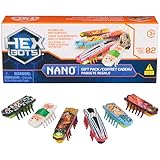
- HEX BOTS NANO: Watch as these autonomous robotic crawling toys, featuring cool street art decorations, use vibration technology to explore every nook and cranny, or build your own playground and watch them crawl
- ROBOT TOYS: These autonomous robotics HEX BOTS nano kids toys crawl and move completely on their own, watch as they scurry across the floor, flip themselves over and bounce off walls
- SENSORY KID TOYS: The nano bots are the perfect sensory toy for kids and pets, with light-up fun designs and insect-like crawling motion to keep them engaged. Promote creativity and learning with the Nano toy building sets (each sold separately)
- COLLECT THEM ALL: Build your collection of nanos and create your own playground with the HEX BOTS toy figures & playsets Add tracks and obstacles to create a whole new world of Nano Bots
- ROBOTIC KIDS TOYS & GAMES: These robot toys and toys for boys age 8-10 are a fantastic addition to your collection of cool stuff Unleash mechanical mayhem with HEX BOTS
Navigation that intervenes only when needed
The University of Osaka and Diponegoro University describe another approach: combine obstacle and motion sensors with the insect’s natural behaviour, then issue a command when the system needs to redirect it. The goal is not continuous joystick-like control. It is to let the insect navigate where possible and intervene when sensors indicate a need.
State-aware control
A 2026 report from The University of Osaka describes a distinct method that uses heartbeat activity, neural-signal features and movement data to estimate the insect’s state and decide whether stimulation is appropriate. Professor Keisuke Morishima called the shift “from ‘controlling’ to ‘listening.’” That is a description of the research approach, not proof of rescue readiness.
What has been demonstrated so far?
Controlled movement and small-area coverage
In the experiments described by NTU in July 2025, its insects made turns exceeding 70 degrees and reduced speed by up to 68%. A group of four covered more than 80% of an obstacle-filled test area in 10.5 minutes. These figures describe the reported laboratory tests; they are not guaranteed performance in rubble or an operational search.
Windows Errors? Fix Them Before They Spread
Repair common Windows errors and clear accumulated junk for a smoother, more stable PC - no reinstall needed.Free scan · no reinstallCrashes, No Sound, or Screen Glitches?
Random freezes, missing sound and display glitches usually trace back to one bad driver. Find and replace yours safely.Free scan · under a minuteRank #2

- HEX BOTS NANO BUGS: Watch as these autonomous fake insect crawling toys use vibration technology to explore every nook and cranny. Featuring a Cicada, Cockroach, Japanese Beetle, Water Scorpion and an Assassin Bug
- PRANK TOYS: Real Bugs are the perfect prank Choose one or all 5 of these insect imposters to scurry on any hard surface and start the scares
- SENSORY KID TOYS: The HEX BOTS nano bugs are the perfect realistic sensory toy for kids and pets, with light-up fun designs and insect-like crawling motion to keep them engaged
- BATTERIES INCLUDED: 2 LR44 Button cells are included so you can have endless fun with these Hex Bugs crawling toys
- ROBOTIC KIDS TOYS & GAMES: These robot toys and toys for boys age 8-10 are a fantastic addition to your collection of cool stuff Unleash mechanical mayhem with HEX BOTS
The same NTU report says its automated assembly prototype prepared one insect in 1 minute 8 seconds, compared with a manual process that often took more than an hour. Faster assembly could make it more practical to prepare multiple insects, but it does not by itself establish field reliability.
Movement over difficult terrain
The University of Osaka reported obstacle-course tests over sandy ground containing stones and wood, where insects reached a target in unfamiliar terrain. At the University of Queensland, remotely guided darkling beetles demonstrated sideways movement and wall climbing. UQ notes that the climbing demonstration used a tethered power supply; the researchers also demonstrated climbing with a battery equivalent to the beetle’s body weight. These are different species and experiments, not a head-to-head comparison.
Underwater movement
NTU and Waseda researchers reported a flexible, oxygen-generating suit for cockroaches. In their tests, the insects remained active and moved underwater for up to three hours. The account also describes durability work and integration of sensors and navigation systems as ongoing, alongside further simulated-disaster testing. The result is a prototype demonstration, not proof of a rescue-ready underwater system.
Rank #3

- Crawl on any terrain: Enjoy the creepy-crawly movement of this autonomous robot insect as it crawls across any room, floor, or outdoor space The circular movement allows the Skitter Bot to travel across any terrain with ease
- Creepy Insect Design: The robotic insect design with 8 legs and a creepy, realistic head is sure to scare friends and family for the ultimate prank
- Batteries Included: 3 LR44 Batteries are included to operate your Skitter Bot so you can have endless fun with this HEX BOTS crawling toy
- Sensory Kid Toys: The Skitter Bots are the perfect sensory toy for kids and pets, with light-up fun designs and insect-like crawling motion to keep them engaged. Promote creativity and learning with the Nano toy building sets (each sold separately)
- Robotic Kids Toys & Games: These robot toys and toys for boys age 4-6 are a fantastic addition to any collection and sure to be a top wish list gift Unleash mechanical mayhem with HEX BOTS
Have cyborg insects been used in a real disaster?
NTU reports that ten cyborg insects accompanied Singapore’s Civil Defence Force contingent to Myanmar on 30 March 2025, after the 28 March earthquake. NTU describes this as the first humanitarian operation and first field deployment of insect-hybrid robots. The report says the deployment demonstrated potential for reaching areas that may be difficult for conventional robots to access.
The report does not establish that the insects verified survivor detections, changed rescue outcomes or became part of routine response procedures. It is accurate to call this a reported field deployment; it is not accurate to treat it as evidence of a mature, independently validated rescue service.
Can they find survivors under rubble?
Some designs are intended to carry sensors that may help search teams assess rubble. NTU’s 2022 account describes a backpack designed to sense movement, carbon dioxide emissions and heat signatures. Those are design aims for that system, not a universal capability, and the account does not establish that the insects autonomously located survivors in a disaster.
Rank #4

- Remote Control Fly Toy: TERRA by Battat RC Climbing Fly is a Blue Bottle Fly toy for indoor play. Included contents are 1 RC fly, 1 remote control, and 1 USB-C charging cable for a clearly defined fly-themed toy set.
- Included Components: This RC bug toy comes with 1 RC fly, 1 remote control, and 1 USB-C charging cable. Batteries are required, and batteries are included. The product is fully assembled.
- Blue Bottle Fly Style: RC Climbing Fly features a Blue Fly design in the TERRA by Battat line. This remote control insect toy combines a fly-themed look with indoor play use in a compact printed closed box package.
- Package And Material Details: Package dimensions are 9.17 x 2.36 x 6.1 inches, and package weight is 0.69 lb. Listed material information is 58 percent metal, 30 percent plastic, and 12 percent package material.
- Age And Safety Info: Intended for children 5 Years +. Warning - choking hazard, small parts. Not for children under 3 years. Please remove all packaging materials before giving to children.
A separate Osaka University result illustrates why performance numbers need context. In its 2026 report, the best-performing offline Random Forest model reached 93% overall accuracy when classifying five experimental conditions from biological and movement data. Classification was strongest for natural and food-related states, with overlap among ultraviolet, chemical and heat conditions. This is a result for that experimental classification task—not 93% accuracy at finding people, detecting survivors or operating in rubble.
How do the approaches differ?
| Research approach | Insect and method | What was reported | Evidence boundary |
|---|---|---|---|
| NTU assembly and movement-control prototype (2025) | Cockroaches; implanted electrodes, stimulation and a backpack, with computer vision and a robotic arm for assembly | Laboratory movement results and small-group coverage tests; NTU also reports a field deployment in Myanmar | The reported field account does not establish verified survivor detections or improved rescue outcomes. |
| Osaka–Diponegoro navigation system (2025) | Cockroaches; obstacle and motion sensing combined with natural behaviour, with commands when needed | Obstacle-course navigation over sandy ground with stones and wood | A controlled terrain test is not a live disaster evaluation. |
| University of Queensland beetle demonstrations (2025) | Darkling beetles; remote guidance, including sideways movement and climbing | Movement and climbing demonstrations; tethered power was used in the climbing test, and a battery equivalent to body weight was also demonstrated | These demonstrations do not establish a complete search-and-rescue sensing system. |
| Osaka state-aware control (2026) | Cockroaches; heartbeat, neural-signal features and movement data inform whether stimulation is appropriate | Offline classification of five experimental conditions, with a best-performing model reporting 93% overall accuracy | The accuracy figure applies to the stated classification experiment, not survivor detection. |
| NTU–Waseda underwater suit (2026) | Cockroaches; flexible oxygen-generating suit | Underwater activity and movement for up to three hours in tests | Further durability, simulated-disaster testing and sensor/navigation integration were still in development. |
These are research systems rather than equivalent purchasable rescue products. Their results use different insects, equipment, tasks and test conditions, so the figures do not support ranking them as rescue tools.
Quick wins for a faster PC:
Scan for outdated or missing drivers - takes under a minuteDriver Scan →Clear out junk files and repair common Windows errorsFree Scan →Fix the driver behind crashes, sound loss and screen glitchesFind Drivers →What still stands between a prototype and a first-responder tool?
For emergency services, the relevant question is not simply whether an insect can move through a gap. A usable system would need to deliver dependable, interpretable information to rescuers under demanding conditions. The work described so far leaves several practical issues active:
Best Value

- The Cockroach is So Real-like, which can Scares Your Friends, Family Members or Even Yourself. Great Gift for Birthday, Halloween, Christmas or Other Holiday Events!
- Infrared Remote Control Technology, Two Buttons to Operate, Easy to Play!
- Functions: Crawl Forward, Back Rotation, Glowing Eyes; Remote Control Distance: 6-8 m, Running Time: Above 10 Minutes
- Comes with Screwdriver Tool. So That You Can Install or Replace the Battery Easily.
- Cockroach Battery: 3 x LR44 Battery (Included); Controller Battery: 3 x LR44 Battery (Included)
- Power: carrying electronics and operating for useful periods without a tether or an impractical battery load remains a design constraint.
- Sensing and navigation: integrating cameras, environmental sensors and reliable navigation with the insect’s own behaviour is still development work, not a settled capability across systems.
- Durability: a device must withstand the environments in which it is intended to operate; the underwater-suit report identifies durability work as ongoing.
- Validation: laboratory obstacle courses, controlled sensor tests and a reported field deployment do not substitute for repeated simulated-disaster trials or independent validation in live operations.
- Useful interpretation: a sensor reading or biological-state classification must translate into trustworthy information rescuers can act on; the reported 93% model result is not a measure of that end-to-end task.
Professor Hirotaka Sato of NTU said of the assembly prototype, “Our innovation makes the dream of deploying large numbers of cyborg insects in real-life scenarios far more practical.” That statement reflects the researchers’ ambition; the reported assembly-speed result does not by itself resolve the operational challenges above.
Are cyborg insects ready for first responders?
Not as routine, independently validated rescue equipment on the evidence described here. Researchers have shown that living insects can be fitted with electronics, guided through selected movement tasks, equipped with experimental sensing payloads and, in NTU’s account, included in an early humanitarian field deployment. Whether these systems can consistently provide useful information in real rescue conditions remains to be demonstrated.
Quick Recap
Product prices and availability are accurate as of the date/time indicated and are subject to change. Any price and availability information displayed on Amazon at the time of purchase will apply.
Do these 3 things before closing this tab:
1Fix the driver behind crashes, sound loss and screen glitches2Repair Windows errors before they cause bigger problems3Scan for outdated or missing drivers - takes under a minute



