Quick wins for a faster PC:
Repair Windows errors before they cause bigger problemsFix Now →Fix the driver behind crashes, sound loss and screen glitchesFind Drivers →Clear out junk files and repair common Windows errorsFree Scan →AMD’s AI accelerator roadmap is moving from a single-chip competition story into a broader platform strategy. After MI300 established the company as a serious alternative in high-performance AI compute, the planned MI350, MI400, and MI500 generations are meant to push AMD deeper into the data center, where memory capacity, bandwidth, interconnects, software maturity, and rack-scale efficiency matter as much as raw accelerator throughput.
The MI350 generation is expected to extend AMD’s current Instinct momentum with higher performance and improved high-bandwidth memory capabilities, while later roadmap steps point toward more integrated systems designed for hyperscale AI clusters. By the time AMD reaches the planned MI500 era in 2027, the company is signaling ambitions that go beyond catching up with Nvidia toward competing for large cloud deployments, enterprise AI infrastructure, and next-generation training and inference workloads.
As an Amazon Associate I earn from qualifying purchases.
AMD’s AI Accelerator Strategy in Context
AMD’s AI accelerator roadmap is built around a straightforward goal: turn Instinct GPUs from a strong alternative into a mainstream platform for large-scale AI training and inference. The MI300 generation gave AMD a credible entry point for hyperscale deployments, especially with the MI300X, which emphasized very large HBM capacity for memory-heavy models. The planned progression from MI350 to MI400 and then MI500 shows AMD trying to sustain that momentum through faster compute, higher-bandwidth memory, more advanced packaging, and tighter system-level integration.
Do these 3 things before closing this tab:
1Fix the driver behind crashes, sound loss and screen glitches2Clear out junk files and repair common Windows errors3Scan for outdated or missing drivers - takes under a minuteThe strategy is also shaped by timing. AI infrastructure buyers are no longer evaluating accelerators as isolated chips; they are planning multi-year capacity expansions, power envelopes, networking fabrics, software stacks, and model-serving economics. Nvidia remains the dominant supplier, but supply constraints, high platform costs, and the desire for vendor diversity have created openings for AMD. For cloud providers and large enterprises, a second high-performance accelerator source can improve negotiating leverage, reduce dependency risk, and support differentiated AI services.
#1 Best Overall

- 48GB AI graphics accelerator
AMD’s approach relies on several strengths it has developed across CPUs, GPUs, chiplets, and advanced packaging. The company can pair Instinct accelerators with EPYC CPUs, lean on chiplet design to improve yields and scalability, and use high-bandwidth memory aggressively to target large language models, recommender systems, and multimodal workloads. The Instinct roadmap is not just about peak floating-point performance; it is about feeding increasingly dense compute engines with enough memory capacity and bandwidth to keep real workloads efficient.
Software remains the hardest part of the strategy. ROCm has improved substantially, and major frameworks such as PyTorch have broader AMD support than in earlier generations, but Nvidia’s CUDA ecosystem still has a deep lead in libraries, developer familiarity, performance tuning, and production tooling. AMD’s roadmap through 2027 therefore depends on both hardware execution and software maturity. If MI350, MI400, and MI500 arrive with stronger out-of-the-box performance, better framework coverage, and smoother deployment paths, AMD can become a more serious default option for hyperscalers and enterprise AI buyers rather than a niche alternative used only when Nvidia capacity is unavailable.
MI350: The Next Step Beyond MI300
The MI350 generation is expected to be AMD’s near-term bridge between the MI300 family and the more ambitious rack-scale systems planned later in the roadmap. Where MI300 established AMD as a serious accelerator supplier for large language model training and inference, MI350 is positioned to refine that formula: higher throughput, better memory efficiency, improved software maturity, and a smoother deployment path for cloud operators already qualifying Instinct platforms.
The Tool Desk
Outbyte PC Repair FREEClear out junk files and repair common Windows errorsFree Scan →Outbyte Driver Updater FREEScan for outdated or missing drivers - takes under a minuteDriver Scan →AMD has framed the MI350 series as a meaningful performance step rather than a minor refresh. The company has pointed to large gains in AI compute, with particular emphasis on lower-precision formats that matter for transformer workloads, including FP8 and related inference-friendly data types. That focus reflects where accelerator demand is moving. Training frontier models remains a prestige workload, but hyperscalers and enterprises are increasingly spending on high-volume inference, retrieval-augmented generation, coding assistants, agents, and multimodal services that need strong performance per watt and strong performance per dollar.
Compared with MI300X, MI350 is expected to preserve AMD’s core advantage around high-bandwidth memory capacity while pushing bandwidth, compute density, and platform efficiency forward. MI300X gained attention by offering 192GB of HBM3 memory, making it attractive for running larger models with fewer GPUs or with less aggressive model partitioning. MI350 is likely to build on that memory-centric design philosophy, because capacity remains one of AMD’s clearest differentiators against competing accelerators. For buyers running large context windows, mixture-of-experts models, or memory-heavy inference pipelines, the ability to keep more parameters and cache closer to the accelerator can reduce system complexity and improve utilization.
The other major change is not just silicon, but readiness. MI300 entered a market where Nvidia’s CUDA ecosystem, networking stack, and reference system designs were deeply entrenched. MI350 arrives after another development cycle for ROCm, framework support, kernel optimization, and customer validation. That matters as much as raw teraFLOPS. Hyperscalers need predictable cluster behavior, stable drivers, strong PyTorch and Triton integration, and clear upgrade paths. Enterprise buyers need supported software images, containerized deployment, and compatibility with the model-serving tools they already use.
Expected areas of improvement
- AI throughput: stronger performance for FP8 and other low-precision operations used in modern training and inference.
- Memory subsystem: continued emphasis on large HBM capacity and high bandwidth for large models and long-context workloads.
- Power efficiency: better performance per watt, a critical metric as data center power availability becomes a limiting factor.
- Software maturity: broader ROCm support, improved libraries, and more optimized paths for mainstream AI frameworks.
- Deployment continuity: a platform that can appeal to MI300 evaluators looking for a higher-performance follow-on without waiting for MI400.
For AMD, MI350 also serves a strategic timing function. It gives the company a fresh product cycle to compete with Nvidia’s Blackwell generation while preparing the market for more integrated systems beyond individual accelerator modules. If AMD can deliver MI350 in volume, with stable software and credible cluster-level performance, it can convert more proof-of-concept deployments into production commitments. That is especially relevant for cloud providers seeking a second source for AI compute and for enterprises that want leverage on pricing, availability, and supply chain flexibility.
The success of MI350 will therefore be measured by more than benchmark slides. Buyers will look at real model throughput, total cost of ownership, availability of qualified servers, networking options, and the effort required to move workloads from Nvidia-based infrastructure. As the next step beyond MI300, MI350’s job is to make AMD’s accelerator roadmap feel less experimental and more operational: a credible, scalable alternative for AI deployments heading into 2026.
Memory, Packaging, and Interconnect Advances Driving the Roadmap
AMD’s path from MI350 toward MI500 is not defined only by raw compute. For large AI training and inference systems, the constraints are increasingly memory capacity, memory bandwidth, package-level integration, and the ability to move data efficiently across accelerators. The MI300 generation already put AMD in a strong position with high-bandwidth memory and an advanced multi-die design, and the next phases of the roadmap are expected to push those same levers harder: more HBM, faster HBM, denser chiplet integration, and tighter system-level interconnects.
For MI350-class accelerators, memory is likely to remain one of AMD’s most visible competitive tools. Large language models, mixture-of-experts systems, retrieval-augmented generation pipelines, and long-context inference all benefit from higher memory capacity per GPU. More on-package HBM can reduce the need to split models across additional accelerators, which can simplify deployment and improve utilization. Higher bandwidth also helps keep compute engines fed during transformer workloads, where attention, matrix operations, and parameter movement can expose bottlenecks quickly. As Nvidia pushes HBM3e and prepares broader adoption of newer HBM generations, AMD’s ability to secure sufficient HBM supply and package it efficiently will be central to whether MI350 can scale beyond selective hyperscaler wins.
Rank #2

- Professional AI & Creator Workstation: AMD Radeon AI PRO R9700 GPU with 32GB GDDR6 is engineered for AI development, professional content creation, and compute-intensive workloads.
- Massive 32GB Memory Capacity: 32GB of GDDR6 memory on a 256-bit bus provides ample bandwidth for large AI models, 8K video editing, and complex 3D rendering.
- Advanced RDNA 4 with AI Accelerators: 64 Compute Units with 3rd Gen Ray Tracing and dedicated 2nd Gen AI Accelerators for groundbreaking AI performance and visual computing.
- Professional Blower Cooling: Efficient single blower design exhausts heat directly out of the chassis, ideal for multi-GPU workstation and server configurations.
- Enterprise-Grade Thermal Solution: Vapor chamber heatsink with industrial Honeywell PTM7950 thermal interface material ensures reliable cooling under sustained professional loads.
Packaging is the second major pillar. AMD has leaned heavily into chiplets across CPUs and GPUs, and Instinct accelerators extend that philosophy into AI. Advanced 2.5D packaging, silicon interposers, high-density die-to-die links, and stacked memory allow AMD to combine compute dies, I/O functions, and HBM stacks into a single accelerator package. This approach can improve yields versus one enormous monolithic die, while giving AMD flexibility to mix process nodes and reuse design blocks across products. By the MI400 and MI500 timeframe, packaging may matter as much as the GPU architecture itself, because total system performance will depend on how much compute and memory AMD can place close together without exceeding power, thermal, and manufacturing limits.
What’s actually slowing this PC down?
Pick the symptom - the matching free tool is one click away.
Interconnect advances will be equally as AMD moves from selling individual accelerators to competing in rack-scale AI infrastructure. In today’s largest clusters, performance depends on the speed and efficiency of communication between GPUs, CPUs, memory, network adapters, and storage. AMD has Infinity Fabric as a foundation, but the company must keep expanding bandwidth, lowering latency, and improving topology options if it wants MI-series systems to compete with Nvidia’s tightly integrated NVLink and NVSwitch ecosystem. Support for open standards such as PCIe, CXL, Ethernet-based AI fabrics, and UALink-related efforts could also help AMD appeal to customers that want alternatives to proprietary infrastructure.
These advances have direct purchasing implications. Hyperscalers care about accelerator performance, but they also evaluate supply availability, rack density, networking architecture, power efficiency, and how easily a platform fits into existing data center designs. Enterprise AI buyers, meanwhile, may value configurations that offer more memory per accelerator, strong virtualization support, and open software integration over absolute benchmark leadership. If AMD can deliver predictable gains in HBM capacity, package density, and accelerator-to-accelerator bandwidth through MI350, MI400, and MI500, it can position Instinct not simply as a lower-cost alternative, but as a credible platform for memory-intensive and open-ecosystem AI deployments through 2027.
MI400 and the Path Toward Rack-Scale AI Systems
The MI400 generation is expected to mark AMD’s shift from selling accelerators primarily as discrete GPUs toward delivering more complete rack-scale AI platforms. After MI300 established AMD’s credibility in high-bandwidth-memory accelerators and MI350 is positioned to improve performance, memory capacity, and efficiency, MI400 is where the roadmap points more directly at full-system design. For hyperscalers training frontier models, the accelerator itself is only one part of the purchase decision. Cluster topology, power delivery, cooling, node-to-node bandwidth, software orchestration, and serviceability increasingly determine total performance.
AMD has signaled that MI400 will be tied to a broader “Helios” rack architecture, aimed at competing with Nvidia’s increasingly integrated AI systems. This matters because large AI deployments are moving from server-level procurement to rack-level and cluster-level procurement. Buyers want predictable throughput per megawatt, consistent scaling across thousands of GPUs, and validated networking designs that reduce deployment risk. In that environment, MI400 is less about a single peak FLOPS figure and more about whether AMD can provide a tightly engineered platform that cloud providers can install, operate, and scale with fewer custom integration burdens.
What rack-scale design changes for AMD
A rack-scale MI400 platform would likely combine next-generation Instinct accelerators with EPYC host processors, high-capacity HBM, high-speed scale-up links, and Ethernet-based scale-out networking. The goal is to reduce bottlenecks between accelerators inside a node and across nodes, especially for training workloads that depend on fast synchronization. As model sizes expand and inference moves toward larger mixture-of-experts and workloads, memory bandwidth, memory capacity, and interconnect efficiency become just as valuable as raw compute density.
- Higher accelerator density: More compute per rack can improve training throughput and reduce datacenter footprint, provided power and thermals are controlled.
- Improved scale-up fabric: Faster GPU-to-GPU connectivity inside a rack can help reduce communication overhead during distributed training.
- Liquid-cooling readiness: Rack-scale AI systems increasingly require direct liquid cooling to support higher power envelopes.
- Open networking alignment: AMD’s support for Ethernet-based AI networking gives hyperscalers an alternative to proprietary fabric strategies.
The competitive target is clear. Nvidia’s GB200 and future Vera Rubin-class systems are not simply GPUs; they are full AI factories with compute trays, NVLink fabrics, networking, CPUs, software, and reference architectures wrapped into a validated platform. MI400 will need to answer that model with comparable cluster-level efficiency and a credible deployment path. AMD does not need to match Nvidia feature-for-feature in every customer environment, but it must show that large buyers can achieve strong performance at scale without excessive software tuning or infrastructure redesign.
For cloud providers, MI400 could become an inflection point if it offers a compelling mix of performance, memory capacity, availability, and cost. Hyperscalers want leverage in AI infrastructure sourcing, and a rack-scale AMD platform gives them a stronger second source for both training and inference fleets. For enterprise buyers, MI400’s impact may arrive indirectly through cloud instances rather than on-premises purchases, as most enterprises will consume this class of hardware through managed AI platforms. By pushing toward rack-scale systems, AMD is positioning MI400 as the bridge between today’s accelerator competition and the more integrated AI infrastructure battles expected through 2027.
MI500 in 2027: What AMD Is Signaling for the Next Generation
With MI500 targeted for 2027, AMD is signaling that its AI accelerator roadmap is moving beyond incremental GPU refreshes and toward a more complete platform strategy. The MI300 generation established AMD as a credible supplier for large-scale AI training and inference, while MI350 and MI400 are expected to improve compute density, memory bandwidth, and rack-level integration. MI500 points to the next phase: systems designed around massive model throughput, higher utilization, and tighter coupling between accelerators, CPUs, memory, and networking.
The clearest signal is that AMD expects future AI performance gains to come from the full stack rather than from silicon alone. MI500 will likely build on the chiplet and advanced packaging direction already visible in AMD’s data center products, with more sophisticated combinations of compute dies, high-bandwidth memory, and I/O. By 2027, HBM capacity and bandwidth will be even more central to accelerator value, especially as frontier models, long-context inference, recommender systems, and multimodal workloads place sustained pressure on memory subsystems. A credible MI500 platform will need not only stronger matrix math performance, but also enough memory per accelerator and enough fabric bandwidth across accelerators to keep large clusters efficient.
Rank #3
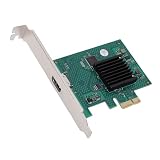
- HIGH COMPATIBILITY: The graphics card supports multiple displays and panels with a maximum resolution of 1920x1440, making it compatible with a wide range of systems for diverse applications.
- QUICK ROTATION: With the ability to quickly rotate screen images at 90°, 180°, and 270°, this graphics card enhances versatility in display orientation for improved user eerience and flexibility.
- POWERFUL 2D GRAPHICS ACCELERATION: Equipped with a robust 2D graphics accelerator, the card supports various graphic processing functions, ensuring efficient performance for demanding applications.
- VERSATILE APPLICATION: This accelerator card supports video display layers, making it ideal for a variety of applications, including industrial computers, POS systems, ensuring reliable performance across different fields.
- WIDE OPERATING TEMPERATURE RANGE: Designed for reliable operation in harsh environments, the card functions effectively within a wide temperature range of -40°C to +85°C, ensuring durability and stability in challenging conditions.
AMD’s public roadmap also suggests a more aggressive move toward rack-scale design. Rather than treating the accelerator as the primary product and the server as an implementation detail, MI500-era systems are likely to be specified around rack power, cooling, interconnect topology, and software orchestration. That matters because hyperscalers increasingly buy AI capacity as a factory-like unit: racks of accelerators, networking, storage, and software that can be deployed predictably across regions. If AMD can deliver MI500 as part of validated rack designs with strong performance-per-watt and repeatable cluster behavior, it can compete more directly for large AI infrastructure buildouts.
What MI500 is likely to emphasize
- Higher memory capacity and bandwidth: Larger HBM stacks and wider data paths will be essential for training dense and mixture-of-experts models, as well as serving high-volume inference workloads.
- More advanced packaging: AMD is expected to continue using chiplet-based designs to scale compute, memory, and I/O while managing yield and manufacturing flexibility.
- Rack-level interconnect improvements: Faster accelerator-to-accelerator communication will be needed to reduce bottlenecks in distributed training and large-model inference.
- Better software maturity: ROCm, compiler support, model libraries, and deployment tooling will need to feel less like an alternative path and more like a mainstream production stack.
- Stronger CPU-GPU platform integration: AMD can use its EPYC server presence to tune systems around data movement, host memory, PCIe/CXL evolution, and cluster efficiency.
For buyers, the MI500 timeframe is significant because it overlaps with a period when AI infrastructure decisions may shift from urgent capacity acquisition to long-term fleet optimization. In 2023 and 2024, many organizations prioritized access to accelerators above almost everything else. By 2027, cloud providers and enterprises are likely to compare platforms across total cost of ownership, power availability, model portability, developer productivity, and supply diversity. MI500 gives AMD an opportunity to position itself not merely as a lower-cost alternative to Nvidia, but as a platform supplier with its own strengths in memory-rich design, chiplet scaling, and open ecosystem development.
The challenge is execution. Nvidia’s roadmap will not stand still, and hyperscaler custom silicon will keep improving for internal workloads. To make MI500 a meaningful inflection point, AMD will need timely silicon delivery, competitive rack-scale performance, strong OEM and ODM support, and a software experience that reduces migration friction. If those pieces come together, MI500 could mark the point where AMD’s AI accelerator business becomes a sustained second pillar in the global AI compute market rather than a periodic challenger tied to individual product cycles.
Crashes, No Sound, or Screen Glitches?
Random freezes, missing sound and display glitches usually trace back to one bad driver. Find and replace yours safely.Free scan · under a minuteWindows Errors? Fix Them Before They Spread
Repair common Windows errors and clear accumulated junk for a smoother, more stable PC - no reinstall needed.Free scan · no reinstallCompetitive Pressure Against Nvidia and Custom Silicon
AMD’s MI350-to-MI500 roadmap is aimed squarely at a market where Nvidia remains the default choice for frontier AI training, high-volume inference, and turnkey data center deployments. Nvidia’s strength is not only GPU performance; it is the combination of accelerators, NVLink and NVSwitch fabrics, Grace CPUs, rack-scale reference designs, mature software, and broad developer familiarity with CUDA. For AMD to keep gaining share, each Instinct generation must compete on more than peak FLOPS. Buyers will compare delivered tokens per watt, cluster utilization, memory capacity, networking efficiency, supply availability, and the time needed to bring large models into production.
The MI350 generation gives AMD a clearer opening because memory capacity and bandwidth are becoming decisive constraints for large language models and mixture-of-experts workloads. If AMD can pair strong FP8 and lower-precision performance with generous HBM configurations, it can appeal to cloud providers that want to serve larger models with fewer nodes or reduce the cost of inference at scale. Nvidia’s Blackwell platform sets a high bar with tightly integrated rack designs and a large installed software base, but AMD can pressure it where customers value open networking options, x86 server continuity, and alternatives to single-vendor procurement.
Where AMD can create leverage
- Memory-heavy inference: Larger HBM pools can reduce model sharding complexity and improve economics for long-context workloads, retrieval-augmented generation, and high-concurrency serving.
- Open ecosystem deployments: Hyperscalers that already operate large Ethernet-based fabrics may prefer accelerators that fit their existing networking and orchestration models.
- Supply diversification: Major cloud providers are reluctant to let one supplier control accelerator pricing, allocation, and platform cadence across the entire AI stack.
- CPU-GPU platform alignment: AMD can combine EPYC CPUs and Instinct accelerators in systems tuned for dense compute, memory bandwidth, and power efficiency.
At the same time, AMD is not only competing with Nvidia. It is also competing with custom silicon from Google, Amazon, Microsoft, Meta, and other large-scale AI operators. TPUs, Trainium, Maia, and internally optimized inference ASICs are designed around known workloads, controlled software stacks, and massive fleet-level economics. These chips do not need to win the broader merchant accelerator market; they only need to lower cost per token or cost per training run inside their owners’ infrastructure. That puts pressure on AMD to offer enough flexibility, performance, and pricing advantage to justify buying general-purpose accelerators instead of expanding in-house silicon programs.
This dynamic can still work in AMD’s favor. Custom accelerators are expensive to design, hard to keep on leading process nodes, and less accessible to enterprises that need commercially supported hardware. Many AI teams want portability across PyTorch, ROCm, Kubernetes, Slurm, vLLM, Triton, and common model-serving frameworks rather than committing to a proprietary internal platform. If AMD continues improving ROCm compatibility, kernel coverage, profiling tools, and out-of-the-box model performance, Instinct systems can become a credible second platform for organizations that want bargaining power without building chips themselves.
Through 2027, the competitive contest will likely be measured rack by rack rather than chip by chip. Nvidia will defend its lead with integrated systems and software depth, while custom silicon will absorb workloads inside the largest hyperscalers. AMD’s opportunity is to occupy the middle ground: high-performance AI infrastructure with strong memory economics, open deployment options, and a faster cadence from MI350 to MI400 and MI500. If it executes, AMD can shift from being a capacity alternative to becoming a strategic platform choice for cloud providers and enterprise AI buyers.
What the Roadmap Means for Cloud Providers, Enterprises, and the AI Ecosystem
For cloud providers, AMD’s roadmap from MI350 through MI500 creates a clearer second source for large-scale AI capacity at a time when demand for training and inference remains constrained by power, memory, networking, and supply. Hyperscalers do not need every accelerator in their fleets to be identical; they need predictable performance per watt, stable software support, high-volume availability, and enough architectural continuity to qualify platforms without restarting every deployment cycle. If AMD can execute on MI350, MI400, and MI500 as planned, cloud operators gain more negotiating leverage, more SKU diversity, and another path to building dense AI clusters for both internal workloads and customer-facing GPU instances.
The near-term impact is likely to be strongest in inference, fine-tuning, retrieval-augmented generation, and enterprise model serving, where buyers can tune around specific accelerator characteristics and where total cost of ownership often matters as much as peak benchmark leadership. MI350-class parts are expected to extend the MI300 family’s high-bandwidth memory strengths, while later generations push toward more integrated rack-scale designs. That progression matters because AI infrastructure purchasing is shifting from individual accelerator cards to complete systems: accelerators, CPUs, memory, NICs, switches, optics, cooling, firmware, and orchestration software all have to work as one platform.
Rank #4

- Hpe AMD WX4100 Graphics module
How buyers should interpret the roadmap
- Hyperscalers can use AMD platforms to diversify capacity, reduce dependency on a single accelerator supplier, and target cost-optimized services for open models, private model hosting, and high-throughput inference.
- Enterprise AI teams should watch availability through cloud instances first, since most organizations will consume MI350 and later accelerators through managed services rather than direct cluster ownership.
- Model developers gain more incentive to validate workloads across ROCm and open software stacks, especially if AMD-backed cloud capacity becomes more widely available and competitively priced.
- OEMs and system integrators can plan denser AI servers and racks around a roadmap that points toward higher memory bandwidth, larger memory pools, and tighter node-to-node interconnects.
For enterprises, the main benefit is not simply having another chip option. It is the possibility of more accessible AI capacity, more predictable pricing, and a broader set of deployment models. A bank fine-tuning domain models, a pharmaceutical company running molecular workloads, or a retailer deploying recommendation and customer-service models may not need the same accelerator mix as a frontier model lab. AMD’s roadmap gives infrastructure teams more room to match workloads to hardware profiles, particularly when memory capacity and bandwidth are more valuable than absolute top-end training speed.
Free tools Windows power users keep installed
One-click scans. No signup required.
The ecosystem effect depends heavily on software maturity. AMD has made progress with ROCm, framework support, and partnerships, but buyers will still evaluate developer experience, kernel coverage, model compatibility, observability, and migration cost. If MI400 and MI500 arrive with stronger rack-level integration and better software tooling, AMD could move from being a tactical alternative to becoming a strategic platform choice. Through 2027, the most practical outcome is a more segmented AI infrastructure market: Nvidia remains deeply entrenched at the premium end, custom silicon expands inside the largest clouds, and AMD competes for scale-out deployments where memory, openness, supply diversity, and cost efficiency carry significant weight.
Frequently Asked Questions
When is AMD expected to move from MI350 to MI400 and MI500 accelerators?
AMD’s roadmap points to MI350 as the next major step after MI300, followed by MI400-class products around the mid-decade window and MI500 targeted for 2027. Exact launch timing, configurations, and customer availability can shift, especially because these accelerators depend on advanced packaging, HBM supply, and large-scale system validation.
How much faster will MI350 be compared with MI300?
AMD has positioned MI350 as a significant performance step over MI300, particularly for AI inference and training workloads that benefit from faster memory and improved compute density. Real-world gains will depend on model size, precision format, software optimization, and whether customers deploy individual accelerators or full rack-scale systems.
Can AMD realistically compete with Nvidia in AI accelerators by 2027?
AMD can compete more effectively if it keeps improving accelerator performance, HBM capacity, networking, and ROCm software support at the same time. Nvidia still has a major advantage in CUDA, mature developer tools, and tightly integrated systems, so AMD’s best opportunity is with hyperscalers and enterprises that want pricing leverage, supply diversity, or open software alternatives.
Recommended Free Tools
What role do HBM memory and advanced packaging play in AMD’s roadmap?
HBM capacity and bandwidth are central to AMD’s AI strategy because large language models need fast access to massive amounts of data during training and inference. Advanced packaging allows AMD to combine compute chiplets, memory, and high-speed interconnects more efficiently, which should help improve performance per watt and enable larger accelerator designs.
What should cloud providers and enterprise AI buyers take from AMD’s MI500 plans?
Buyers should view the MI500 era as a signal that AMD intends to compete not just at the chip level, but at the full system and rack level. For cloud providers, that could mean more options for large AI clusters; for enterprises, it may create better pricing, broader availability, and more deployment choices if AMD’s software ecosystem continues to mature.
Bottom Line
AMD’s path from MI350 to the planned MI500 era signals a serious push to make Instinct accelerators a durable alternative for large-scale AI training and inference. The roadmap’s focus on higher compute density, next-generation HBM, advanced packaging, and rack-level designs gives hyperscalers another lever as they balance performance, supply, power, and total cost against Nvidia’s dominant ecosystem.
For enterprise AI buyers, the right move is to track software maturity, availability, and platform support as closely as raw specs through 2027. If AMD continues closing the gap while offering competitive pricing and open infrastructure options, MI350, MI400, and MI500 systems could become increasingly viable choices for organizations scaling AI beyond pilot projects.
Quick Recap
Product prices and availability are accurate as of the date/time indicated and are subject to change. Any price and availability information displayed on Amazon at the time of purchase will apply.




