What’s actually slowing this PC down?
Pick the symptom - the matching free tool is one click away.
Low engagement is a real management problem, but it does not have one creative fix that works everywhere. The most defensible response is to find out which workplace conditions employees say are weak, change how managers handle those conditions in daily work, and track results over time. Most of the evidence below comes from Gallup, which is the main source for engagement measurement and manager research. Its findings are associations and recommended practices, not proof that any specific program will work in a given workplace.
Start by defining the engagement problem
“Engagement” is a vague word, so the first task is to say what is going wrong. Engagement problems usually show up as one of four things: low survey scores, rising turnover, falling morale, or lower productivity. Each points to different causes, and an intervention aimed at one may do little for another. Pick one primary symptom before choosing a solution.
As an Amazon Associate I earn from qualifying purchases.
What engagement measurement looks at
Gallup’s Q12 is a 12-item instrument that measures workplace conditions rather than employees’ general mood. Among the conditions it covers are:
- Role clarity: whether people know what is expected of them
- Resources: whether they have the materials and tools to do the work
- Recognition: whether good work is noticed
- Development: whether there are chances to learn and grow
- Connection to purpose: whether the work feels meaningful to the employee
Q12 is one named measurement approach, not a requirement. Any survey that tells you which conditions are weak in which teams will serve the same diagnostic purpose.
#1 Best Overall
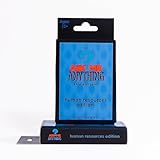
- Dynamic Team Building Games for Work Boost employee engagement and foster collaboration with conversation cards that create meaningful discussions and enhance teamwork during workplace activities.
- Employee Onboarding and Office Games A perfect addition to onboarding sessions, this card game encourages new hires to connect, share, and learn in an engaging and fun environment.
- HR Training and Team Tactics Cards Improve HR strategy and training sessions with scenario-based challenges, role-playing opportunities, and insights into conflict resolution and talent management.
- Encourage Positive Affirmations and Diversity Conversations Dive deep into workplace topics like inclusion, ethics, and team dynamics with cards that promote thought-provoking discussions and foster a positive office culture.
- Versatile for Counselors and Substitute Teachers Not just for HR teams—these cards are a great resource for counseling offices or educators, offering an engaging way to facilitate conversations and build connections.
What the research links engagement to
Gallup’s 11th-edition meta-analysis of the Q12, published in May 2024 and updated in July 2024, covered 736 studies, 347 organizations, 53 industries, employees in 90 countries, and more than 180,000 teams. Gallup reported a relationship between engagement and each of 11 business outcomes it studied. These are reported associations across a very large body of data, not guaranteed causal effects of any one change.
Gallup’s 2024 summary also reports median differences between top-quartile and bottom-quartile groups, including 23% in profitability, 78% in absenteeism, 63% in safety incidents, and 70% in wellbeing. Use one report’s figures consistently, and keep its definitions and comparison groups with each number, because the same outcomes are presented slightly differently across Gallup’s publications.
Rank #2

- 1 to 100 players
- 25 minutes average playtime
- Number of players: 1-100
- Package Weight: 1.7 pounds
Why the manager is the most practical place to start
Gallup attributes 70% of the variance in team engagement to the manager. That is a statement about how much of the difference between teams the manager accounts for in Gallup’s analysis (from its article How to Engage Frontline Managers by John Pitonyak and Rob DeSimone, first published in 2022 and updated in January 2024). It does not mean that one change in a manager’s behavior will reliably move a team’s score by a set amount.
Quick wins for a faster PC:
Clear out junk files and repair common Windows errorsFree Scan →Scan for outdated or missing drivers - takes under a minuteDriver Scan →Repair Windows errors before they cause bigger problemsFix Now →Conversations matter more than programs
In Gallup’s study of nearly 15,000 employees, 16% said their last conversation with their manager was extremely meaningful. That low share suggests that most managers are not yet using one-to-one time well. Gallup’s article A Great Manager’s Most Important Habit (publication date not stated in the version reviewed) makes the case that regular, meaningful conversations are where managers have the most direct influence.
Rank #3

- How Well do you Know Each Other? - Couples activities to play one-on-one with your partner to deepen your connection and discover new things about each other.
- Who Knows Who Better? - The first to answer 10 questions correctly wins the game. You will learn a lot about each other.
- Couples Game - Play with your partner or invite other couples - It's the perfect game for a double or triple date. The couple who knows each other best wins the game. Great game for couples date night. Suitable for 1, 2 or 3 couples.
- Exciting Date Night - This card game is not just another deck of conversation cards, but a fun and exciting couples game to play. Laughter guaranteed.
- A Perfect Gift - A thoughtful anniversary gift for men and women. Whether you're searching for Engagement Gifts for couples, Valentine's Day gifts, Christmas Gifts, Anniversary gifts or long-distance relationship gifts, Answer This is a great idea!
In the same article, Gallup reports that meaningful feedback produced about four times the engagement lift that it associated with getting the “right number” of office days. That comparison is specific to that study and should not be read as a universal rule about office policy.
What managers need to do this well
Expecting managers to run better conversations without support rarely works. Before asking for change, check whether managers have:
Rank #4
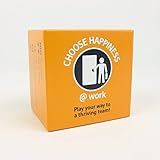
- TRANSFORM TEAM CONNECTION & ENGAGEMENT: A fun, lighthearted “Apples-to‑Apples” style game that sparks meaningful conversations and builds rapport through real workplace scenarios and evidence-based solutions.
- SCIENCE-BACKED POSITIVE PSYCHOLOGY– 50+ workplace scenarios paired with 100+ neuroscience-approved strategies in four categories: Positivity, Stress‑Management, Flow, and Relationship‑Building—designed to boost happiness and therefore productivity by 10–25% (according to solid science).
- PERFECT FOR TEAMS, MEETINGS, and TRAININGS– Facilitator guide, seven gameplay variants, and easy pick-up‑and‑play rules make it ideal for breaks, icebreakers, staff retreats, and leadership development sessions.
- TRUSTED BY ORGANIZATIONS like NBC, Nike & Intel – Used by Fortune 500s (including Kaiser-Permanente and DreamWorks) and HR leaders for team engagement and culture-building.
- PORTABLE, REUSABLE, & HIGHLY REPLAYABLE – Durable small box with top-quality cards—playable with 3–10 people per box--even more if you play in teams, which works great!
- Enough time in their schedules for one-to-one conversations and team check-ins
- Coaching skills to set expectations, give feedback, and discuss development
- Organizational backing, such as clear policies and leaders who model the same behavior
Recognition and feedback: making them count
Gallup and Workhuman’s recognition research, dated September 17, 2024, found that employees who were well recognized were 45% less likely to have left their employer two years later. This is an association observed in that research, not a measured effect of a recognition scheme.
Do these 3 things before closing this tab:
1Clear out junk files and repair common Windows errors2Fix the driver behind crashes, sound loss and screen glitches3Repair Windows errors before they cause bigger problemsRecognition works best when it is strategic: tied to specific contributions and delivered as part of normal management, not as an annual award or a points system that stands in for other things. Gallup and Workhuman also list meaningful feedback, wellbeing support, and upskilling among practices employers can put in place. Recognition cannot compensate for unfair pay, unmanageable workloads, or poor management. If those problems exist, recognition will not fix them.
Best Value

- 17" x 10-3/4"
- 10-point White stock
- Prints in Black & Green ink
- 50 red pull tabs
- Packaged 1 board
Comparing the main approaches
The evidence supports a set of practice areas, not a ranking of competing products. Compare options on three questions: which diagnosed need each one addresses, how it changes the employee’s routine experience, and what outcome the organization will monitor. The table applies those questions to the approaches discussed above.
| Approach | Diagnosed need it addresses | Change to routine experience | What to monitor |
|---|---|---|---|
| Survey-based diagnosis (for example, Q12 or a comparable instrument) | Which conditions (role clarity, resources, recognition, development, purpose) are weak, and in which teams | Indirect: results inform decisions but do not change daily work by themselves | Changes in the condition scores for the teams where action was taken |
| Manager coaching and regular one-to-one conversations | Expectations, feedback, and development conversations that managers are not yet holding well | Direct: changes how managers and employees talk each week | Share of employees rating their last manager conversation as meaningful, if the employer measures it; sources do not give a standard frequency |
| Strategic recognition | Employees whose contributions are not visible | Direct: changes how and when good work is acknowledged | Recognition-related survey items and voluntary turnover over time; not stated whether a specific timeline applies |
| Upskilling and learning opportunities | Lack of development, as identified in the diagnosis | Direct: changes available learning paths and time allocated to them | Development-related survey items; not stated in the sources reviewed |
| Wellbeing support | Wellbeing concerns identified in the diagnosis | Depends on the specific support offered | Wellbeing measures used by the employer; the sources do not identify a specific metric |
No single row is the best choice for every employer. The strongest case in the Gallup evidence cited above is for manager-led practice, because it is the most direct way to change routine experience and it is tied to the largest share of team-level variation.
A step-by-step plan for a small first cycle
- Name the primary problem. Decide whether you are responding to low survey scores, turnover, morale, or productivity. Write down the measure you will use to judge success.
- Diagnose the conditions. Run a survey that asks about role clarity, resources, recognition, development, and purpose, and break the results down by team so that differences are visible.
- Select one to three changes. Tie each change to a specific finding. For example, if development scores are low in one department, start with learning opportunities there rather than launching a company-wide program.
- Prepare managers before asking for change. Confirm that they have time, coaching support, and backing from senior leaders. Then set a clear expectation for regular conversations.
- Build recognition into normal work. Set a routine for acknowledging specific contributions, and check that it does not replace fixing pay, workload, or management problems.
- Review results on a schedule you set in advance. Compare the same conditions and outcomes after the change. The sources do not specify a required trial length, so choose one that fits your planning cycle and be clear about what the results can and cannot show.
What the evidence does not establish
- The figures above are associations and reported differences. They do not show that a specific creative program will raise engagement or profitability in a particular company.
- Most of the evidence comes from Gallup, including its own measurement and consulting work. Other frameworks exist, and a single vendor’s model should not be treated as the only valid approach.
- The sources do not describe country, sector, or company-size differences in how these practices perform, so results from one setting should be applied to another with caution.
What the research does support is a disciplined way to respond: measure the conditions employees describe, give managers the means to act on them, and judge the results against outcomes you chose before you started.
Quick Recap
Product prices and availability are accurate as of the date/time indicated and are subject to change. Any price and availability information displayed on Amazon at the time of purchase will apply.




