An Electronic Product Code (EPC) is a standardized identifier for a physical object, such as a serialized trade item, an asset or a location. It is not an RFID tag: the EPC identifies the object, while RFID is one way to carry and capture that identifier.
What is an Electronic Product Code?
GS1 defines EPC as “an identification scheme for universally identifying physical objects (e.g., trade items, assets and locations) via RFID tags and other data capture techniques.” The definition appears on its page What is an Electronic Product Code (EPC)?, modified 30 May 2025.
As an Amazon Associate I earn from qualifying purchases.
In use, an EPC lets information systems refer to an identified object. The code may be encoded in a form suitable for a tag or represented as text for sharing between enterprise systems. RFID is a common capture method, but the identifier and the technology used to carry or capture it are separate concepts.
How is an EPC different from an RFID tag?
An EPC is identification data; an RFID tag is a physical data carrier that can store that data and communicate it to a reader. A reader captures the tag’s contents over radio. Calling an EPC “an RFID tag” mixes the identifier with the hardware that may carry it.
#1 Best Overall

- RFID Reader Scanner read both 125KHz/13.56Mhz 1326 family ISO Prox whole family cards & EM ID EM4100 cards together, MF S50 S70 bank card and other 14443A protocol labels that support ISO14443-A/B protocol, ID card and other 14443B protocol labelsHID USB device no driver request.
- 125KHz/13.56Mhz Dual-frequency RFID reader supports EM4100 ID cards and also 1326 1346 1386 ISO Prox card, H10301 H10304 format etc.
- RFID Reader with 40 output formats for EM4100 ID card UID, max. 40 bits card number in 10H or 13 digital decimal format, configurable with config card by user.
- Proximity card reader sends 125KHz/13.56Mhz Dual-frequency proximity card 1326 family card number in 40 type formats or in raw wiegand bit data format, from 24 bit to 80 bits data, easy for understanding 1326 family card type.
- USB Inteface,Card reader only, Open the software or document that needs to be read,simulate keyboard input, works in Linux Andriod Windows Mac IOS.
GS1’s explanation of EPC/RFID architecture describes EPCs in both binary forms for RFID tags and text-based forms for data exchange, including EPC URIs and class or pattern forms. Thus, an EPC does not have to be read from an RFID tag in every application.
How does an EPC differ from a GTIN?
A GTIN identifies a trade item class, such as a particular product type. A serialized EPC can identify an individual instance of that type. For example, a GTIN can identify a model of an item, while an EPC that combines the relevant GS1 key with a serial component can distinguish one physical unit from another.
Rank #2
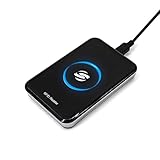
- New Metal Case RFID Reader Durable, Beautiful and More Accurate Reading.Note: 1. Not compatible with Mac, need to use with USB converter. 2. Windows system if you can not use, you need to install a patch in Windows: VCRedist 2008 SP1 (x64). 3. H10301, 8310 card does not support reading, setup tools, please go to the last link to download, thanks!
- RFID Reader Scanner read both 125KHz/13.56Mhz 1326 family ISO Prox whole family cards & EM ID EM4100 cards together, MF S50 S70 bank card and other 14443A protocol labels that support ISO14443-A/B protocol, ID card and other 14443B protocol labelsHID USB device no driver request.
- RFID Reader with 40 output formats for EM4100 ID card UID, max. 40 bits card number in 10H or 13 digital decimal format, configurable with config card by user.
- Proximity card reader sends 125KHz/13.56Mhz Dual-frequency proximity card 1326 family card number in 40 type formats or in raw wiegand bit data format, from 24 bit to 80 bits data, easy for understanding 1326 family card type.
- USB Inteface,Card reader only, Open the software or document that needs to be read,simulate keyboard input, works in Linux Andriod Windows Mac IOS.
This distinction matters for inventory and traceability: identifying a product type answers “which kind?”; identifying a serialized instance can answer “which particular unit?” GS1 explains the relationship in its EPC overview and related explanation of EPC and serialized identification.
The Tool Desk
Outbyte Driver Updater FREEFix the driver behind crashes, sound loss and screen glitchesFind Drivers →Outbyte PC Repair FREERepair Windows errors before they cause bigger problemsFix Now →What does the EPC Tag Data Standard specify?
The GS1 EPC Tag Data Standard (TDS) defines EPC formats and how they correspond to GS1 keys and other codes. It also specifies data carried on EPC-encoded RAIN RFID tags. The standard is the appropriate reference for technical format and encoding details; consult its current published edition before implementing an encoding, since instructions can depend on the relevant format and version.
Rank #3

- RFID Reader read both 125KHz 1326 family ISO Prox whole family cards & ID 4100 RF/64 RF/32 cards together, USB device no driver request.
- 125KHz RFID reader supports 4100 ID cards and also 1326 1346 1386 ISO Prox card, 10301 10304 format etc.
- RFID Reader with 40 output formats for ID card UID, max. 40 bits card number in 10H or 13 digital decimal format, configurable with config card by user.
- Proximity card reader sends 125KHz proximity card 1326 family card number in 40 type formats or in raw wiegand bit data format, from 24 bit to 80 bits data, easy for understanding 1326 family card type
- Advanced config process allow user to choice 20 clients format output and set prefix/suffix, ingore leading zero. This is read only. If you want to write card with ID/FC number, you may go ASIN:B0BCYRSLSF
See GS1’s EPC Tag Data Standard for the standard and its current materials.
Independent reader supportYour contribution helps us test, update, and keep practical guides available for everyone.What is required to use an EPC?
The requirements depend on how an organization represents, stores and captures the identifier. Understanding the term itself does not require RFID equipment. For a physical RFID implementation, the tag, reader, radio frequency and air-interface protocol must be compatible; not every tag and reader combination will work together.
Rank #4

- 【Instant Plug & Play Setup】: No external power supply or battery needed. Simply connect the contactless card reader to your computer’s USB port, and it’s ready to use instantly—no complicated setup, and no additional software or drivers required, saving your time on installation.
- 【Lightning-Fast Performance】:Boost your efficiency with a high-speed response time of less than 0.2s. This 125kHz reader offers a stable reading distance of up to 8cm (depending on the tag type used), ensuring quick and reliable data capture without the frustration of repeated swipes.
- 【Universal OS Compatibility】:Designed for seamless integration across all your devices. This contactless reader fully supports Windows, Mac OS, Linux, Chrome OS, and Android 7.0+. Whether you're using a PC, laptop, or tablet, it provides consistent performance across multiple platforms.
- 【Standardized Data Output】:Specifically engineered for EM4100, EM4200, and TK4100 cards/tags. It automatically outputs the first 10 digits in a standardized format, making it perfect for office attendance, library management, and inventory tracking without manual entry errors.
- 【Standardized & Customizable Output】:Specifically engineered for EM4100, EM4200, and TK4100 cards/tags. By default, it automatically outputs the first 10 digits, making it perfect for office attendance and inventory tracking. Need a different format? Use our exclusive configuration tool to customize data output (such as 8-digit HEX, reversed formats, or adding a suffix like "Enter"), Setting tool is compatible with Windows system Only.
- For system-to-system exchange: use an appropriate text or URI representation and ensure the participating systems interpret it consistently.
- For RFID capture: choose tags and readers that support the required frequency and air-interface protocol, then follow the relevant GS1 encoding standard.
- For item-level identification: use a serialized identifier when the application needs to distinguish individual instances, rather than relying only on a product-class identifier.
GS1’s EPC/RFID architecture framework provides implementation context. A tag does not itself create or register an EPC; the identifier and the organization’s data practices must be established separately.
Free tools Windows power users keep installed
One-click scans. No signup required.
Quick Recap
Best Value

- . IC card USB reader, Send data to cursor location, HID USB no driver is requested
- . usb reader supports iso14443A protocol cards
- .Support 4 byte UID and 7 byte UID 13.56M card
- .Emualte USB keyboard output, so easy interfaced into RFID system without changing the original software or program, selectable 28 formats are suitable for most common system
- .Default setting is 8H 10D format, Send card data in 10 digital datas to focused window as an external input device
Product prices and availability are accurate as of the date/time indicated and are subject to change. Any price and availability information displayed on Amazon at the time of purchase will apply.




