Free tools Windows power users keep installed
One-click scans. No signup required.
Puget Systems’ December 30, 2021 report found Samsung SSDs to be its most reliable hardware category, based on the company’s own production and customer-support records. The result is historical and company-specific—not a current ranking of every PC part. Puget sold, assembled, stress-tested and supported the systems in its dataset, so another builder or a self-built PC may produce different failure rates.
What Puget measured—and what it did not
Puget’s report covers products it actively sold in 2021, using records from 2019 through 2021 where enough sales and time in service existed. “Shop failures” were dead-on-arrival parts or defects found during assembly and burn-in. “Field failures” were problems customers reported after shipment.
As an Amazon Associate I earn from qualifying purchases.
Every system went through physical inspection, benchmarking for irregular performance and temperature monitoring under heavy load. Puget excluded failures it attributed to shipping or accidental damage and omitted product groups it considered too small for meaningful comparison. That qualification process can produce lower rates than an industry-wide population and makes the figures unsuitable as a universal failure-rate benchmark. Puget also warned that some content would be out of date because the article was written and last updated on December 30, 2021. Read the full report at Puget Systems.
Windows Errors? Fix Them Before They Spread
Repair common Windows errors and clear accumulated junk for a smoother, more stable PC - no reinstall needed.Free scan · no reinstallCrashes, No Sound, or Screen Glitches?
Random freezes, missing sound and display glitches usually trace back to one bad driver. Find and replace yours safely.Free scan · under a minuteHeadline findings from the 2019–2021 records
| Category | Puget’s observation | Important qualification |
|---|---|---|
| Samsung SATA SSDs | More than 1,000 Samsung 870 EVO and QVO drives sold in the period with zero recorded failures | Puget stock and support data, not a market-wide test |
| CPUs | Xeon W-2200 showed no failures; AMD processors generally failed more often than Intel in Puget’s records | Xeon W-2200 had the fewest sales; Intel 11th Gen consumer CPUs showed an unusual failure pattern |
| Memory | ECC memory failed less often than normal RAM | Non-registered ECC’s higher field-failure rate came from a smaller sample |
| Graphics cards | NVIDIA RTX 30-series Founders Edition cards were markedly more reliable than the third-party RTX 30-series group | Professional RTX 4000 results were heavily affected by a VirtualLink-port defect |
| Power supplies | Super Flower had lower shop-failure rates; both Super Flower and EVGA had very low field-failure rates | Higher-wattage groups showed more field failures, and some groups combined models or revisions |
Why Samsung SSDs won Puget’s reliability award
Samsung SSDs received Puget’s overall reliability award. The company says it sold more than 1,000 Samsung 870 EVO and 870 QVO SATA drives during the comparison period and recorded no failures in that group. Across its entire historical record—separate from the 2019–2021 window—Puget says it had sold more than 35,000 Samsung SSDs with fewer than 100 failures.
#1 Best Overall

- 14th Gen Intel Core i9-14900K 2.40GHz Processor (upto 6.0GHz, 36MB Cache, 24-Cores, 32-Threads, 8 Performance-cores); GeForce RTX 5080, VR Ready 16GB GDDR7, PCIe 5.0, 2.62 GHz Boost Clock
- 64GB DDR5 DIMM; Wi-Fi 6E AX211, Bluetooth 5.2, RJ-45, No
- 1000W PSU; RGB Lighting 360mm AIO Black Color
- 2TB PCIe NVMe SSD; 4 USB 2.0, HDMI, 1 Display Port, 2 USB 3.2 Type-C, 1 x Headphone/Microphone Combo Jack
- Windows 11 Pro-64, 1 Year Manufacturer warranty from MichaelElectronics2 (Professionally upgraded by MichaelElectronics2)
The comparison also included Samsung 860 Pro SATA drives and Samsung 980 Pro M.2 NVMe drives, alongside Seagate FireCuda 520 NVMe SSDs. FireCuda 520 had a higher shop-failure rate than the Samsung groups in the report, but Puget had received no field-failure reports for it at that point. These observations describe Puget’s models, sales mix and time in service; they do not establish that every Samsung SSD, or a current model, is the most reliable choice. The named SATA family is the Samsung 870 EVO.
Component-by-component results
Motherboards: too complex for a broad brand ranking
Puget said motherboards are difficult to compare fairly by brand, chipset or platform because failures can originate in many separate onboard components. Its notable example was the Asus Prime X299 Deluxe II: more than 100 sold, with no shop or reported field failures in Puget’s records at publication. That is evidence about one model, not a verdict on Asus motherboards generally.
CPUs: cooling and specification compliance matter
Processors were generally reliable when kept cool and operated within their design specifications. The comparison covered AMD Ryzen 5000, Threadripper 3000 and Threadripper Pro 3000, plus Intel Core 10th and 11th Gen, Core X 10000, Xeon W-2200 and second-generation Xeon Scalable families.
Rank #2

- 【Powerful Multi-Core Performance, Smooth Multitasking】 Equipped with the Ryzen 5 3500X 6-core, 6-thread processor, featuring a base frequency of 3.6GHz and a maximum boost up to 4.1GHz. Whether for daily office tasks, content creation, or simultaneous multitasking, it delivers smooth and efficient responsiveness, effortlessly handling programming, image processing, and mainstream design software demands.
- 【Entry-Level Gaming Graphics Card for Mainstream Esports and Online Games】 Equipped with an Radeon RX 560 4GB GDDR5 discrete graphics card supporting DirectX 12 and Vulkan API, it delivers smooth gameplay for popular esports titles like League of Legends, CS:GO, and Overwatch. It also handles light AAA titles at medium-low settings, meeting the entertainment needs of casual gamers and students
- 【Efficient Cooling and Stable Power Delivery for Long-Term Reliability】 Features a custom air-cooling system with optimized airflow design, ensuring CPU and GPU remain cool and stable under heavy loads.
- 【Flexible Upgrade Path for Future-Proof Expansion】 The motherboard includes multiple reserved slots, an M.2 SSD interface, and DDR4 memory slots, supporting future additions like hard drives, memory upgrades, or graphics card replacements. The case features a well-organized internal layout, allowing users to expand components as needed while balancing affordability and long-term value.
- 【Ready to Use Out of the Box with Thoughtful Pre-Installation and Support】 Plug and play with no complicated setup required. Includes detailed manuals and online technical support. Backed by a 1-year manufacturer warranty with fast response to service issues for worry-free purchasing.
Puget recorded no Xeon W-2200 failures, although that category had the fewest sales. The Xeon groups combined had few shop failures and none in the field. AMD CPUs generally had higher failure rates than Intel in this dataset, while consumer Intel 11th Gen showed an unusually high failure pattern compared with 10th Gen. The newer Intel Core 12th Gen and Xeon W-3300 lines were too new for inclusion.
Memory: ECC looked better, with a sample-size warning
Instead of ranking manufacturers, Puget grouped DDR4 memory (used at 3200 MHz in its systems) as normal, ECC or registered ECC because supplier availability and motherboard compatibility changed over time. ECC had lower failure rates than normal RAM, consistent with Puget’s earlier reports. Non-registered ECC had a somewhat higher field-failure rate in this comparison, but its smaller sales sample could explain that result.
GPUs: Founders Edition versus board partners
Puget separated NVIDIA GeForce RTX 30-series Founders Edition cards from Asus, EVGA, Gigabyte, MSI and PNY RTX 30-series cards because third-party availability and sales were limited. In its records, Founders Edition cards were markedly more reliable.
Rank #3

- Zen 5 Gen Ryzen 7 9800X3D 4.7GHz Processor (upto 5.2 GHz, 96MB Cache, 8-Cores, 16-Threads, ); GeForce RTX 5080, 16GB GDDR7, PCIe 5.0, 2.62 GHz Boost Clock
- 32GB DDR5 DIMM; 802.11be, Bluetooth 5.4, RJ-45, No
- 1000W PSU; RGB Lighting 360mm AIO Black Color
- 2TB PCIe NVMe SSD; 5 USB 3.0 Type-A, USB 3.1 Gen2, 4 USB 2.0, HDMI, 1 x Headphone/Microphone Combo Jack
- Windows 11 Home-64, 1 Year Manufacturer warranty from MichaelElectronics2 (Professionally upgraded by MichaelElectronics2)
Professional Quadro RTX results contained a major outlier. Almost 15% of RTX 4000 cards Puget received were considered failed, largely because of a manufacturing problem with the USB-C VirtualLink port on cards received from May 2020 onward. Puget eventually blocked the port and warned customers not to use it. This finding should not be generalized to every Quadro model. RTX A-series products also had less time in the field.
The Tool Desk
Outbyte Driver Updater FREEScan for outdated or missing drivers - takes under a minuteDriver Scan →Outbyte PC Repair FREEClear out junk files and repair common Windows errorsFree Scan →Hard drives and NVMe drives
The storage comparison included Western Digital Red and Ultrastar hard drives, Samsung 870 EVO/QVO and 860 Pro SATA SSDs, Samsung 980 Pro M.2 NVMe SSDs and Seagate FireCuda 520 M.2 NVMe SSDs. The two Western Digital hard-drive groups had similar failure rates in Puget’s data. The Samsung SATA group had the strongest combination of sample size and zero recorded failures during the period, while FireCuda 520’s higher shop-failure rate was offset by no field failures reported to Puget at that time.
Power supplies: wattage and serviceability changed the picture
Puget primarily supplied Super Flower power supplies in 2021 and used EVGA as a backup. Its comparison covered 850W, 1200W and 1600W groups, with some entries combining multiple models or revisions. Higher-wattage supplies showed a greater likelihood of field failure, while Super Flower had lower shop-failure rates. Both brands had very low field-failure rates.
Rank #4
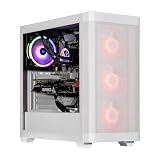
- [AMD Ryzen 7 5700X Gaming Processor] 3rd Gen Ryzen 7 5700X with 8 cores, 16 threads, 3.40GHz base, up to 4.6GHz boost, and 32MB cache. Built for high‑FPS gaming, streaming, and multitasking.
- [GeForce RTX 5060 Graphics] Latest RTX 5060 GPU with 8GB GDDR7, PCIe 5.0, DLSS 4, and 2.50GHz boost. Delivers ray tracing, AI rendering, and VR‑ready performance.
- [High‑Speed RAM & SSD Storage] 32GB DDR4 memory with 1TB NVMe SSD for smooth multitasking, faster load times, and lightning‑fast boot. Perfect for buyers seeking a gaming PC with high RAM and fast SSD storage.
- [750W PSU with RGB Liquid Cooling] Reliable 750W PSU with RGB lighting and 120mm AIO liquid cooler (white). Stable, stylish, and optimized for RGB or liquid‑cooled towers.
- [Advanced Connectivity] Wi-Fi 5, Bluetooth 5.0, RJ‑45 Ethernet, 4× USB 2.0, USB 3.2 Type‑C, HDMI, DisplayPort, and audio combo jack.
Fully modular units also made tower-workstation replacements easier: technicians could replace the supply without necessarily sending the entire system in for repair. That is a serviceability advantage, not a claim that modular designs cannot fail.
Independent reader supportYour contribution helps us test, update, and keep practical guides available for everyone.How to interpret a “zero failures” result
- Check the denominator: more than 1,000 Samsung 870 EVO/QVO drives provide more context than a newly introduced product with only a few sales.
- Separate shop from field: burn-in catches early defects; customer reports capture failures that survive shipment and use.
- Consider exposure time: a part sold late in 2021 had less opportunity to fail than one deployed for years.
- Look at the grouping: a model-specific result can disappear when capacities, revisions or vendors are combined.
- Match the environment: Puget’s cooling, firmware, assembly and validation process differs from a self-built or differently configured PC.
As report author William George put it: “Computer hardware is very complex, and our qualification process takes place with small sample sizes – so there is always the chance that a small number of parts can be defective once we start carrying them en masse.”
Quick Recap
What the report means for a 2021-era workstation build
- Use the report as a signal about the specific models and configurations Puget qualified, not as a timeless brand leaderboard.
- Give greater weight to products with substantial sales and meaningful time in service.
- For critical systems, prioritize validated cooling, proper power sizing, burn-in testing and replaceable components alongside the part’s brand.
- Investigate known model-specific defects—such as the RTX 4000 VirtualLink issue—rather than assuming every product in a family shares the same risk.
Product prices and availability are accurate as of the date/time indicated and are subject to change. Any price and availability information displayed on Amazon at the time of purchase will apply.




