What’s actually slowing this PC down?
Pick the symptom - the matching free tool is one click away.
A custom GPT is less likely to answer generically when you define its job, audience, workflow, sources, and output in concrete terms—and then test it against realistic requests. Treat this as an iterative way to improve fit, not a guarantee of accuracy or identical answers.
Important: As of October 11, 2026, OpenAI’s GPT creation guide displays a notice about planned retirement of custom GPTs. It gives December 11, 2026, as the planned date for affected Enterprise workspaces and says other plans are expected to follow the same timeline. Check the notice for your own account or workspace before building a workflow you expect to keep.


As an Amazon Associate I earn from qualifying purchases.
Start by defining the GPT’s job
Before writing instructions, decide what the GPT is meant to do and what a successful answer looks like. A broad assignment such as “help with writing” leaves many decisions open, so the model may fall back on general-purpose advice. Narrow the task enough that it can tell what to prioritize.
Free tools Windows power users keep installed
One-click scans. No signup required.
- Purpose: What specific task should it handle?
- Audience: Who will use it, and what do they already know?
- Inputs: What information must the user provide?
- Workflow: What should it do, and in what order?
- Output: What format, sections, and level of detail should it return?
- Success criteria: What makes an answer useful for this task?
OpenAI’s GPT configuration guide describes the name, description, and conversation starters as ways to explain the GPT’s purpose and help people begin. Use those fields to set user expectations; put the operating rules in the instructions.
#1 Best Overall

- Cover - Art board with foil stamping
- Pages - 240
- Paper - Acid-Free, High-Quality Cream Sketching Paper
- Binding - Open Smyth-Sewn
- Layout - Blank with writing prompts
Write instructions that direct behavior
Use short, explicit rules that tell the GPT what to do in recognizable situations. For a multi-step task, put the steps in order and describe the trigger for each one. OpenAI recommends explicit step structures such as “When X happens → do Y,” and clear section delimiters.
- State the intended task and audience.
- List the steps the GPT should follow when it receives a relevant request.
- Say what it should do when required details are missing.
- Define how it should handle requests outside its scope.
- Specify the response format and the standard for a complete answer.
Prefer actionable directions over a long list of prohibitions. For example, “If the user does not provide a target audience, ask who the material is for before drafting” gives the GPT a next step; “Don’t make assumptions” does not explain what to do instead. OpenAI similarly advises preferring positive, concrete instructions where possible.
If a decision needs to be applied consistently, include one or two brief examples of acceptable and unacceptable outcomes. Examples are especially useful for explaining a boundary or a classification, but they should illustrate the rule rather than introduce exceptions that conflict with it.
Specify the answer you want
“Be detailed” can mean different things to different users. Name the format and the information it must contain. For instance, ask for a recommendation followed by reasons and next steps, or require a table with specified columns. Also tell the GPT how to handle missing facts: ask a clarifying question, state what is unknown, or proceed with clearly labeled assumptions.
Rank #2
OpenAI’s general prompting guidance recommends clarity about context, outcome, length, format, and style. Its API prompt guidance likewise emphasizes making the task and desired output explicit. Apply those ideas to the GPT’s recurring behavior, not just to a single user prompt.
Keep behavior rules separate from reference material
Instructions tell the GPT how to work; knowledge files give it information to draw on. Put workflow, tone, boundaries, and formatting rules in the instruction field. Put reference facts, policies, product documentation, or other source material in uploaded knowledge files. OpenAI summarizes the distinction as: “Use knowledge for reference material, not rules or behavior.”
Make files easy to use: favor clear, text-forward documents, organize material so relevant facts can be found, and tell the GPT which file covers which subject. If the answer should quote or cite those files, specify the citation format in the instructions. When a response remains generic, check that the needed facts are actually in the files and that the test prompt points clearly to the relevant material. OpenAI notes that images alone may not be reliably interpreted.
Enable only capabilities the task needs
Capabilities such as web search or image generation can help when they serve the GPT’s defined job; enabling tools without a clear purpose adds setup and possible failure points. GPTs can also connect to apps or custom API actions, but a GPT can use apps or actions—not both at once.
Actions need API details and an OpenAPI schema. Workspace domain restrictions may block them. Test an action in Preview, and if a GPT with actions is made public, provide a valid privacy policy URL. OpenAI’s actions configuration guide covers these requirements. Choose a capability only when its benefit to the task outweighs the access and configuration constraints.
Use this instruction template as a starting point
This template is an original starting point, not a universal recipe. Replace each bracketed item with details from the actual task, and remove any rule that does not apply.
Purpose: Help [audience] accomplish [specific task].
Recommended: PC Feels Slow? A Free Scan Shows What's Dragging Windows Down →Recommended: Crashes or Glitches? A Free Driver Scan Usually Finds the Culprit →Recommended: Fix Windows Errors and Clear Junk Files in Minutes - Free Scan →Special offer. See more information about Outbyte and uninstall instructions. Please review EULA and Privacy policy.Workflow: When the user provides [input], first [step 1], then [step 2], then [step 3]. If a required detail is missing, ask for it before proceeding. If the request is outside this purpose, explain the boundary and offer the closest in-scope help.
Rank #4
Sale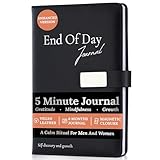 Tayri End of Day Journal – 5 Minute Daily Gratitude & Reflection Notebook
- Transform Your Day In Just 5 Minutes: Build a meaningful nighttime routine with this 5 minute gratitude journal for women and men. Guided daily prompts help you reflect on your wins, release stress, practice gratitude, and end each day with greater peace and clarity. Spend just five minutes creating habits that support happiness, confidence, mindfulness, and lasting personal growth.
- No More Staring At A Blank Page: Journaling doesn't have to feel intimidating. Unlike a blank notebook, this guided gratitude and self reflection journal provides thoughtful daily prompts that gently lead your writing, so you always know where to begin. Questions like "How are you feeling today?" help you track emotions, identify patterns and triggers, process your experiences, celebrate your wins, and build greater self-awareness, making it easier to create a journaling habit you'll actually stick with.
- Premium Quality Designed For Everyday Use: Crafted with a luxurious vegan leather hardcover, durable perfect binding, eco-conscious storage pouch, and premium 120 GSM thick paper that resists bleed-through for an exceptional writing experience. Complete with a magnetic closure, ribbon bookmark, and elastic pen holder, this elegant guided journal for women and men is built to become part of your everyday self-care, mindfulness, and productivity routine.
- Build Better Habits, Mindfulness & Emotional Wellbeing: End every day feeling calmer, more focused, and emotionally balanced. This gratitude journal, mental health journal, and mindfulness journal helps strengthen positive habits, reduce stress, cultivate gratitude, improve emotional awareness, and develop a healthier mindset through small, consistent nightly reflections inspired by Kaizen-style continuous improvement. A simple daily practice that supports self-care, productivity, and personal growth.
- A Meaningful Gift For Women & Men: A thoughtful self care gift for women and men who value mindfulness, gratitude, and intentional living. Perfect for birthdays, New Year's resolutions, wellness journeys, entrepreneurs, students, professionals, graduates, friends, and family. Whether they're starting a self-improvement journey or simply looking to end each day with more clarity and purpose, this beautifully designed journal makes a gift they'll use and appreciate every day.
Use of sources: Use the uploaded files for [defined factual topics]. If the answer depends on information absent from those files, say what is missing rather than inventing it. When quoting or citing a file, use [specified format].
Output: Return [sections or format], for [audience], at [level of detail]. Include [required specifics].
Example: For [representative input], a good answer should [short description of the desired result].
Special offer. See more information about Outbyte and uninstall instructions. Please review EULA and Privacy policy.
Review the template against the real task before saving it. A GPT can still produce a weak answer if its instructions contradict each other, ask for too many things at once, or leave the intended outcome unclear.
Best Value
Test for generic answers in Preview
Write a small set of test prompts that covers ordinary use as well as cases likely to expose gaps. OpenAI’s troubleshooting guidance recommends testing in Preview and making smaller changes when addressing inconsistent behavior.
- Typical request: A normal, well-specified task the GPT is meant to handle.
- Underspecified request: A prompt missing a key input; check whether the GPT asks for it or follows your stated fallback.
- Boundary case: A request outside the GPT’s purpose; check whether it explains the limit and redirects appropriately.
- Knowledge-file request: A question whose answer depends on a specific uploaded source; check whether the response uses that material.
For each response, identify the exact failure rather than simply marking it “bad”: was it too broad, did it skip a step, make an unsupported claim, use the wrong format, or fail to use a source? Then check whether the cause is an ambiguous or conflicting instruction, a missing or unreadable source, or an unnecessary or unavailable capability.
- Open the GPT in the editor and select Preview.
- Run the same representative prompts and note the specific mismatch between the answer and the intended result.
- Change one relevant instruction or source file at a time.
- Rerun the same prompts and compare the result before making another change.
When troubleshooting, OpenAI advises removing conflicting or overly broad rules, shortening instructions, structuring multi-step behavior, adding one or two examples, and testing smaller changes in Preview. Keeping the test prompts constant makes it easier to see whether a change addressed the failure.
The Tool Desk
Outbyte Driver Updater FREEScan for outdated or missing drivers - takes under a minuteDriver Scan →Outbyte PC Repair FREERepair Windows errors before they cause bigger problemsFix Now →Check access and migration plans before committing
Availability to create, edit, or publish GPTs depends on plan and workspace conditions described in OpenAI’s GPT overview and creation guide. The same overview says GPTs do not use saved memory, custom instructions, or previous conversations, so do not rely on those features to supply missing context.
The creation guide currently displays a retirement notice: affected Enterprise workspaces are planned for retirement on December 11, 2026, while other plans are expected to follow the same timeline, with notices to be reviewed when available. This is a time-sensitive product notice, not a confirmed account-specific deadline for every user. Check the latest guidance and your own workspace notice before starting a workflow that depends on GPT availability.
What better instructions can—and cannot—do
Specific instructions, relevant knowledge files, appropriate capabilities, and repeated testing can make responses more closely match the task you designed. They cannot guarantee factual correctness, eliminate unsupported answers, or force identical responses. OpenAI’s cited configuration and troubleshooting guidance gives setup and iteration advice; it does not establish a measured percentage reduction in generic answers.
Quick Recap
Product prices and availability are accurate as of the date/time indicated and are subject to change. Any price and availability information displayed on Amazon at the time of purchase will apply.
Do these 3 things before closing this tab:
1Clear out junk files and repair common Windows errors2Scan for outdated or missing drivers - takes under a minute3Repair Windows errors before they cause bigger problems



