Counter-depth refrigerators are designed to sit closer to the line of nearby counters and cabinets, while standard-depth models usually extend farther into the kitchen and often offer more interior storage. Neither label guarantees a flush fit, a particular capacity, or enough room for the doors to open. Compare the exact model’s dimensions, clearances, usable capacity, and price before you buy.
What “counter-depth” and “standard-depth” mean
A counter-depth refrigerator has a shallower body intended to align more closely with surrounding counters and cabinets. A standard-depth refrigerator generally projects farther into the room. The distinction is about the appliance’s depth and its placement in the kitchen—not a guarantee that the refrigerator’s front will sit exactly even with the counter.
As an Amazon Associate I earn from qualifying purchases.
Depth figures can refer to different parts of the appliance. A specification may list the cabinet or case depth separately from the depth with doors or handles. Doors, handles, hinges, and installation clearance can all add projection, so check the dimensional drawing for the specific model rather than relying on the category name. Whirlpool’s refrigerator buying guide, Samsung’s size guide, and GE Appliances’ buying guide describe these distinctions in their own product guidance.
Counter-depth vs. standard-depth at a glance
| What matters | Counter-depth | Standard-depth | What to compare |
|---|---|---|---|
| Projection | Designed to sit closer to the line of counters and cabinets; doors and handles may still extend beyond it. | Typically extends farther into the room. | Case depth, door depth, handle depth, and depth with doors open. |
| Storage | May have less capacity, though some models use width, height, or internal design to provide more room. | Often offers more interior storage. | Published capacity and the actual shelf, bin, and freezer layout. |
| Kitchen circulation | A shallower body may preserve more aisle space. | Its greater projection may intrude into a walkway or reduce clearance near an island. | Available aisle space and the fully open door position. |
| Installation | Requires model-specific ventilation and opening clearances. | Requires the same checks; its greater projection can affect surrounding space. | The installation guide, door swing, drawers, and delivery route. |
| Price | No universal price premium is established. | No universal relative price is established. | Current prices for comparable models, including configuration and offers. |
Which type is right for your kitchen?
Choose counter-depth when projection is the main concern
Consider counter-depth if a refrigerator that sticks farther into the room would make a walkway or kitchen work area feel cramped, or if you want the appliance to align more closely with the surrounding cabinetry. The shallower case can help with circulation, but measure the appliance’s complete depth and the clearance it needs when its doors are open.
#1 Best Overall

- Premium French Door Refrigerator – The KoolMore Stainless-Steel Refrigerator Provides All The Storage And Accessibility You Need With Plenty Of Room For Food And Drinks, And Double Crispers With Humidity Control
- Spacious Capacity And Adjustable Shelving – At 18.5 Cu. Ft. This Refrigerator Clearance Lines Up With Your Kitchen Counters But Still Provides Two Large Freezer Drawers, 6 Door Bins, And Adjustable Glass Shelving For All Your Food Items.
- Modern Stainless-Steel Design – A Flat Finish With Easy-Open Handles This Counter Depth French Door Refrigerator Fits In Seamlessly With Your Other Appliances And Sits At Just The Right Height And Depth For Contemporary Kitchens
- Precision Temperature Control Designed with a double-flow cooling system and digital temperature control our stainless-steel fridge offers equal distribution of cool temperatures to keep fruit, vegetables, and meat fresher, longer.
Choose standard-depth when storage matters more
Consider standard-depth if you prioritize interior space and have enough room for the refrigerator’s projection and door swing. Standard-depth models often provide more storage, but width, height, configuration, and interior layout also affect how much usable room a particular refrigerator offers.
Compare the actual models, not just the labels
Check the published capacity, shelf and bin arrangement, and freezer layout against your household’s shopping and storage habits. LG advertises its Counter-Depth MAX product line at up to 27 cubic feet; that is a claim about that line, not a capacity guarantee for counter-depth refrigerators generally. The category label alone cannot tell you whether a specific model will hold more than another.
Rank #2
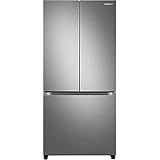
- COUNTER DEPTH: Built-in look for a seamless fit. The smooth and streamlined exterior design features beautiful flat doors and easy-to-open recessed handles that blend seamlessly into your cabinetry, adding function and style to your kitchen.
- WiFi CONNECTIVITY: Wi-Fi connectivity on your fridge isn’t just a nice-to-have. It’s essential for safety and energy conservation. You’ll get immediate notifications if the temperature drops due to a power outage or if you accidentally leave the door open.
- TWIN COOLING PLUS: Independent fridge and freezer controls keep food fresher, longer.
- ENERGY STAR CERTIFIED: Eco-friendly and energy-efficient.
- FINGERPRINT-RESISTANT FINISH: Finish that withstands everyday smudges so you spend less time cleaning.
How to measure for a refrigerator
- Measure the opening. Record width, height, and depth. Measure width and height at more than one point if cabinets or walls are uneven, and use the tightest measurements.
- Measure the available depth. Measure from the back wall to the counter edge. Account for the plug, water line, rear clearance, and the model’s specified installation depth.
- Check every part of the appliance’s projection. In the manufacturer’s dimensional drawing, compare case depth, depth with doors, handle depth, and depth with the doors open.
- Check door and drawer movement. Account for the refrigerator’s door swing and extended drawers near walls, cabinets, and islands. A counter-depth label does not ensure that doors will open fully in a tight location.
- Confirm usable access and delivery. Check whether nearby walls or cabinets allow doors to open far enough to remove bins and drawers. Measure the delivery path through exterior doors, halls, and turns, and check the refrigerator’s width and height along that route.
- Follow the selected model’s installation guide. Use its ventilation and side, top, and rear clearance requirements. Do not assume another model’s clearance guidance applies.
Manufacturers offer model-specific guidance: see Bosch’s refrigerator measuring guidance and the clearance and door-opening advice in Whirlpool’s guide and Samsung’s guide. Treat broad brand-level depth ranges as orientation, not as a substitute for the chosen model’s specifications.
Do these 3 things before closing this tab:
1Fix the driver behind crashes, sound loss and screen glitches2Clear out junk files and repair common Windows errors3Scan for outdated or missing drivers - takes under a minuteDoes a counter-depth refrigerator cost more?
There is no established universal price premium for counter-depth refrigerators. Price depends on the brand, configuration, finish, features, retailer, and current offers. Compare like-for-like models at current prices, and verify the exact dimensions and capacity before treating one as a value alternative to another.
Quick Recap
Rank #3

- Large Capacity, 21 Cu. Ft.
- Factory Installed Automatic Ice Maker
- ENERGY STAR Qualified
Product prices and availability are accurate as of the date/time indicated and are subject to change. Any price and availability information displayed on Amazon at the time of purchase will apply.




