Possibly—but the evidence so far is an early proof of concept, not a working spacecraft oxygen system. A 2025 study explored using magnets to help separate the oxygen and hydrogen bubbles created when water is split in microgravity. In brief drop-tower tests, the devices reached up to 240% higher current density than versions without a magnet, according to Chemistry World’s account of the study. That result does not mean 240% more breathable oxygen was produced for astronauts.
How magnets could help an electrolyser in microgravity
Water electrolysis uses electricity to split water into hydrogen and oxygen. On Earth, gravity helps bubbles rise away from the electrodes. In microgravity, bubbles do not rise in the same way and can cling to electrode surfaces, complicating gas removal and collection.
As an Amazon Associate I earn from qualifying purchases.
The 2025 work investigated magnetic effects as a way to move bubbles without relying on pumps or centrifuges. As aerospace engineer and study team member Álvaro Romero-Calvo told Chemistry World: “What we’re ultimately trying to do is to separate gas bubbles – oxygen and hydrogen – from the water or the electrolyte, without moving parts or centrifuges or pumps or anything like that,”
Do these 3 things before closing this tab:
1Scan for outdated or missing drivers - takes under a minute2Repair Windows errors before they cause bigger problems3Fix the driver behind crashes, sound loss and screen glitchesTwo prototype approaches
- Proton-exchange-membrane electrolyser: The team used diamagnetic forces to help guide gas bubbles toward collection regions.
- Magnetohydrodynamic drive cell: The device generated vortical motion in the gas-liquid mixture. The reported magnetic effects helped detach bubbles from the electrode and move them through the liquid.
The proposed advantage is passive bubble management: magnets and magnetic-field effects may help with separation without adding moving mechanical parts. That could matter in a spacecraft system, where handling gas-liquid mixtures in microgravity is difficult.
#1 Best Overall
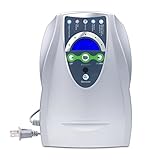
- Multipurpose Ozone Generator: Ozone machine can used for home room kitchen office.Ozone water can be used to clean hands, skin, face,foods.
- Large Ozone Output:This Ozone Generator is portable and lightweight unit, over 500mg/h ozone production, allowing you to use it anytime and anywhere, suitable for air, water, vegetables, fruits, bath, utensils, feeding bottle.
- Ozone Generator with Timer: 5 levels adjustable from 5mins to 60mins, which are 5min,10min,15min, 30min,60min.You can set the working time that you need.
- Small & Portable:This ozone machine is easy to install and convenient to carry out, home kitchen office using, even hunting,car, on vacation, travel,really anywhere you need to clean.
- Customer Service Support:We offer WSTA customer service support, including refund or free replacement if any defective or unsatisfied.
What the experiment showed—and what the 240% figure means
According to Julia Robinson’s 22 August 2025 Chemistry World report on Ö. Akay and colleagues’ paper in Nature Chemistry, the team tested the devices in a Bremen drop tower. The free-fall tests provided 9.3 seconds of total microgravity time. In those brief tests, the report says, magnets improved current density by up to 240% compared with devices without a magnet.
Current density measures electrical current per electrode area. It is a performance measure for the tested electrolyser, not a direct measure of how much oxygen a crew could breathe. The “up to” result comes from short prototype tests; it should not be read as a demonstrated increase in mission-scale oxygen output.
Chemistry World also reports a current density around 150 mA/cm² for the devices. Electrochemist Mark Symes, quoted by the publication, contrasted that figure with at least 1 A/cm² for a conventional terrestrial electrolyser. That is Symes’s comparison as relayed in the report, not a separate head-to-head result established by the microgravity experiment.
Quick wins for a faster PC:
Scan for outdated or missing drivers - takes under a minuteDriver Scan →Repair Windows errors before they cause bigger problemsFix Now →Fix the driver behind crashes, sound loss and screen glitchesFind Drivers →Rank #2

- FILLED WITH 99.5% OXYGEN: All-natural, prescription-free respiratory support that can be used by anyone, anytime, anywhere for non-medical purposes.. Breathe Better!
- NATURAL: Our most popular product, Boost Oxygen NATURAL is pure breathing oxygen, no aroma added. NATURAL is for those looking for the benefits of supplemental oxygen without aromatherapy
- CONVENIENT, LIGHTWEIGHT, AND RECYCLABLE: this 3-pack of Boost Oxygen comes with portable oxygen canisters for on-the-go lifestyles that are completely recyclable. Each canister contains 10 liters
- HEALTHY ENERGY FOR YOUR BODY: Every cell in the human body requires oxygen to function properly. Boost Oxygen provides supplemental oxygen to support healthy brain and cellular function
- MADE IN THE USA: Boost Oxygen, the most trusted brand and worldwide leader in supplemental oxygen canisters since 2007, directly manufactures every canister at our headquarters in Connecticut. As Seen On Shark Tank
Why this is not yet a crew oxygen system
A short drop-tower test can show that magnetic effects may help move bubbles; it cannot establish how a complete system would perform through a long spaceflight. The prototypes have not demonstrated a validated supply of breathing oxygen for a crew, safe long-duration separation and handling of oxygen and hydrogen, or operation on Mars.
The team was reported to be pursuing longer microgravity tests, potentially on a suborbital rocket or in orbit, while working on scale-up. Symes also raised unresolved engineering questions about oxygen purity and current density. These are important system-level requirements: improving bubble movement in a prototype does not by itself establish gas purity, reliable operation, or production at the rate a mission would need.
Romero-Calvo described the broader challenge to Chemistry World: “In the case of a Mars transit mission, the reliability of the oxygen production system … is still not high enough to support a long-term mission,”
Rank #3

- ✨ ERASE TOUGH ODORS, DON'T JUST COVER THEM: Breathe deeply in a truly refreshed space. Our powerful ozone generator permanently eliminates the most stubborn odors at the molecular level—from lingering smoke and heavy cooking smells to pet accidents and damp, musty odors—leaving behind nothing but crisp, clean air.
- 🏠 WHOLE-HOME POWER FOR ANY SPACE, BIG OR SMALL: Conquer odors anywhere with incredible versatility. Effectively treat compact areas like cars and bathrooms (as small as 5 sq ft) or large, open spaces like basements, offices, and entire homes (up to 2,000 sq ft+). It’s the ultimate solution for vehicles, kitchens, pet areas, and rental properties.
- ✅ EFFORTLESS OPERATION WITH BUILT-IN SAFETY: Achieve professional-grade results with simple, set-it-and-forget-it convenience. Just turn the timer dial (up to 120 minutes) or select the "HOLD" function, leave the room, and let it work. The unit shuts off automatically, and you can safely return after a short 30-minute waiting period.
- ✨ A US BRAND SINCE 2018: Invest with confidence, backed by over 7 years of specialized experience in ozone technology and air purification. We are a dedicated US brand supported by thousands of positive Amazon reviews and a stateside customer service team, all committed to your complete satisfaction and healthier indoor air.
- ⚠️ IMPORTANT SAFETY & USAGE GUIDELINES: For optimal and safe use: Please operate only in unoccupied spaces. Ensure all people and pets are out of the room during treatment and wait 30 minutes after the cycle finishes before re-entering to allow ozone to dissipate completely. *Note: This item is not available for sale in California. EPA Est. No. 94720-CHN-1.*
How this differs from NASA’s MOXIE experiment on Mars
The magnet-assisted devices split water and are most directly relevant to electrolysis and gas separation in microgravity, such as during a journey. NASA’s MOXIE used a different feedstock and operated on the Martian surface: it processed carbon dioxide from the atmosphere to make oxygen aboard the Perseverance rover.
Recommended Free Tools
| Comparison | Magnet-assisted water electrolysis | NASA’s MOXIE |
|---|---|---|
| Feedstock and setting | Water; the proposed application is microgravity, including spacecraft transit. | Carbon dioxide from Mars’s atmosphere; tested on the Martian surface aboard Perseverance. |
| Problem addressed | Helping gas bubbles detach from electrodes and move toward collection points in microgravity. | Producing oxygen from the Martian atmosphere. |
| Evidence reported | Prototype drop-tower tests with 9.3 seconds of total free-fall microgravity time; up to 240% higher current density than devices without a magnet, as reported by Chemistry World. | NASA reports 16 oxygen-production runs and 122 grams of oxygen overall; the peak rate was 12 grams per hour at 98% purity or better. |
| Remaining system needs | Longer microgravity testing, scale-up, and resolution of oxygen-purity and performance questions. | NASA says a future full-scale oxygen system would need oxygen liquefaction and storage and a generator about 100 times larger than the test model. |
NASA’s MOXIE instrument reference lists the test unit at 300 watts, 17.1 kg Earth mass, and 23.9 × 23.9 × 30.9 cm. These specifications describe MOXIE, not the magnet-assisted prototypes.
NASA Deputy Administrator Pam Melroy said after MOXIE’s Mars demonstration: “MOXIE’s impressive performance shows that it is feasible to extract oxygen from Mars’ atmosphere – oxygen that could help supply breathable air or rocket propellant to future astronauts,”
Rank #4

- Soft Curved Nose Piece: Experience unparalleled oxygen therapy comfort with ResOne's soft nasal cannula, egonomically designed to gently curve with your nose's contours, ensuring a comforable fit and enhanced usability.
- Crush-Resistant Tubing, 7 Feet: Our adult-sized oxygen cannula comes with 7-feet of crush-resistant oxygen supply tubing, providing durability without compromising flexibility. The 5-channel interior tube design provides added protection against tubing kinks and pinches, allowing you to move freely during oxygen therapy without constantly worrying about oxygen flow obstructions.
- Super-Soft Nasal Cannula for Optimal Comfort: Crafted with ultra-soft materials, ResOne's oxygen cannula delivers a gentle touch to your nose and ears. Say goodbye to discomfort and experience soothing oxygen therapy, whether you're using it for home or on the go.
- Standard Connector for Universal Fit: Equipped with a standard connector, fits most oxygen therapy devices and machines; such as, oxygen tubing straight and swivel connectors, Christmas-tree swivel nipple connectors, oxygen regulator barb connectors, home and portable oxygen concentrator connectors.
- Rated for Standard Flow: This nasal cannula is designed to handle standard flow oxygen therapy, up to 6 liters per minute. Breathe easy knowing that ResOne's standard flow cannula has been optimized for sustained standard flow oxygen delivery.
What the result could mean for a Mars mission
The study points to a possible way to simplify one part of water electrolysis in microgravity: separating gas bubbles without adding pumps or centrifuges. That makes it relevant to future spacecraft life-support research, but the reported result is still about prototype performance in very short tests. It is not evidence that magnets have already solved oxygen production for a Mars journey.
It is also separate from the problem MOXIE addressed. MOXIE demonstrated oxygen production from Martian atmospheric carbon dioxide at the surface; the magnetic study examined splitting water and managing the resulting bubbles in microgravity. A future mission may need different systems for transit and for operating on Mars.
Quick Recap
Sources
- Julia Robinson, Chemistry World, “Magnets could be simple way to enhance oxygen generation on a mission to Mars,” 22 August 2025; reports on Ö. Akay et al., Nature Chemistry (2025), DOI 10.1038/s41557-025-01890-0.
- NASA Jet Propulsion Laboratory, “NASA’s Oxygen-Generating Experiment MOXIE Completes Mars Mission,” 6 September 2023, updated 22 June 2026.
- NASA Science, “Perseverance Science Instruments,” MOXIE entry and specifications, accessed 2026.
Product prices and availability are accurate as of the date/time indicated and are subject to change. Any price and availability information displayed on Amazon at the time of purchase will apply.




