The Tool Desk
Outbyte PC Repair FREEClear out junk files and repair common Windows errorsFree Scan →Outbyte Driver Updater FREEFix the driver behind crashes, sound loss and screen glitchesFind Drivers →There is no documented, controlled performance comparison that establishes Claude Code, Qwen Code, or Codex as the universal coding-agent winner. Choose by the workflow and provider setup you want: Claude Code is documented as a local development tool with several Anthropic and enterprise authentication routes; Qwen Code is an open-source terminal agent with multiple provider options; and Codex’s developer materials describe a managed harness and API runtime. Their setup, control models, and billing bases differ, so compare the specific product surface and account you plan to use.
How the three coding agents differ
These are software coding agents, not interchangeable model benchmarks. The reviewed official documentation describes different interfaces and runtime arrangements, so feature differences do not prove that one writes better code. No controlled head-to-head benchmark is established by these sources.


As an Amazon Associate I earn from qualifying purchases.
| Agent | Documented workflow | Provider and access routes | What to keep in mind |
|---|---|---|---|
| Claude Code | Local development tool with interactive and print modes, piping, session continuation, model selection, and tool and permission controls. | Anthropic Console with active billing, Claude Pro or Max plan, or enterprise platforms including Amazon Bedrock and Google Vertex AI. | Requires an internet connection for authentication and AI processing; local setup requirements apply. Official setup documentation and CLI reference. |
| Qwen Code | Open-source coding agent centered on terminal use; documentation also points to desktop, web, and editor interfaces. | Alibaba ModelStudio, third-party providers, and custom providers. | Qwen OAuth was discontinued on April 15, 2026. Choose another documented authentication route. Official overview and quickstart and Quickstart. |
| Codex | OpenAI developer materials describe a managed harness that can run code in a sandbox, edit files, connect to MCP servers, and produce artifacts. | The materials reviewed describe an OpenAI-managed Codex runtime and API model billing. | API model rates do not represent the price of every Codex product or a complete estimate of end-user costs. Agents API overview. |
Which one should you choose?
Choose Claude Code if you want a local development workflow with several documented account routes
Claude Code fits developers who want to work through a local development tool and may need authentication through an Anthropic account, a Claude subscription, or an enterprise cloud platform. Its CLI documentation includes interactive and print modes, piping, and session continuation, along with ways to select a model and limit or allow tools. These are workflow and control options, not proof of coding quality or safety superiority.
Choose Qwen Code if provider choice and an open-source terminal agent matter most
Qwen Code’s documentation makes provider selection an explicit part of setup: it describes Alibaba ModelStudio, third-party providers, and custom providers. Its quickstart describes reading and editing project files and running commands, with approval requested before file modification in the documented workflow. The OAuth route ended on April 15, 2026; older setup instructions that depend on Qwen OAuth are out of date. See the current quickstart for the available setup paths.
#1 Best Overall
Choose Codex if the managed runtime and API model fit your integration
The Codex developer materials are most relevant when you are evaluating an OpenAI-managed harness or API runtime: the overview describes sandboxed code execution, file editing, MCP-server connections, and artifact production. This framing is distinct from comparing two local CLI tools, so decide whether the managed runtime matches your intended development or integration workflow before comparing costs.
Setup and authentication requirements
Claude Code
Anthropic’s setup documentation lists macOS 10.15 or later, Ubuntu 20.04 or later or Debian 10 or later, and Windows through WSL or Git for Windows. It specifies at least 4 GB of RAM and Node.js 18 or later for the documented npm installation route. The tool needs an internet connection for authentication and AI processing. The listed authentication options are Anthropic Console with active billing, a Claude Pro or Max plan, or enterprise platforms including Amazon Bedrock and Google Vertex AI. Installation and plan details can change; check the official setup page for current requirements and alternate installation methods.
Rank #2

- 🖥POWERFUL PROCESSOR and SUPERIOR STORAGE: Configured with top of the Intel Core i5 processor for lightning-fast, reliable and consistent performance to ensure an exceptional PC experience. 16GB RAM memory to smoothly run multiple applications and browser tabs all at once. 2TB HDD storage space to store apps, games, photos, music, and movies. Loaded with 16GB to zip through multiple tasks in a hurry without lag.
- 🖥️New 22 Inch Full HD (1920x1080) LED monitor: with 75hz, High-Quality panel with quick refresh rate and response time. With 1080p resolution, you can enjoy gaming or a modern computing experience. 22 Inch monitor has a Smart Contrast to provide optimized image quality. Bezel-less and sleek design with glossy finish, crisp edge-to-edge visuals. Wide Viewing Angles for clarity from any viewpoint. VESA Mountable and built-in tilt options allow for a variety of monitor configurations.
- ⌨️ +🖱️ RGB KEYBOARD AND MOUSE | RGB SPEAKER: 3 LED Colors - Blue, red, green, Backlight LED Lights for use at night time, looks amazing. The keyboard mouse and speaker are responsive, reliable, and probably plastered in RGB lights. It's important you pick the right one for your desktop.
- 💿 WINDOWS 10 Pro LATEST: A new installation of the latest Microsoft Windows 11 Professional 64 Bit Operating System software, free of bloatware commonly installed from other manufacturers. As Microsoft's latest and best OS to date, Windows 10 Pro 64 Bit will maximize the utility of each PC for years to come. Optional software such as Anti-Virus and Office 365 can also be easily downloaded through the Microsoft Windows App Store.
Qwen Code
The official project documentation describes installation with a standalone installer, npm, or Homebrew. Its manual npm route requires Node.js 22 or later. For authentication, the quickstart lists Alibaba ModelStudio, third-party providers, and custom providers; Qwen OAuth ended on April 15, 2026. Start with the Qwen Code quickstart rather than relying on older OAuth-based instructions.
Codex
The Codex material cited here concerns developer resources and a managed harness, not a complete installation guide for every Codex product surface. The Agents API overview describes runtime capabilities and API billing; use documentation for the particular Codex product or integration you intend to use for its applicable access and setup details.
Independent reader supportYour contribution helps us test, update, and keep practical guides available for everyone.How to compare control and execution
Permission prompts and sandboxing are not interchangeable guarantees. The documentation describes different controls in different product contexts, so inspect how the agent can access files and run commands in the configuration you will actually use.
- Claude Code: The CLI reference documents permission modes and ways to allow or disallow tools. Check which mode and tool permissions are active in your workflow.
- Qwen Code: The quickstart describes asking approval before file modification, alongside reading and editing project files and running commands. Confirm the behavior and provider setup in the version you install.
- Codex: The Agents API overview describes a sandboxed harness that can execute code and edit files. Treat that as a feature of the described runtime, not as evidence that all Codex surfaces have identical controls.
These descriptions do not establish equivalent isolation, default permissions, or safety guarantees across the products. Review the applicable documentation and configuration before granting access to sensitive files or allowing commands to run.
Rank #4
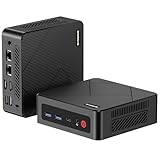
- 【Ryzen 5 3500U Processor】The BOSGAME mini pc is driven by the Ryzen 5 3500U (4C/8T, up to 3.7GHz) , with integrated Radeon Vega 8 Graphics, delivering reliable power, 4K video streaming and multitasking. Handle daily workloads like spreadsheet calculations, web browsing, and HD video editing effortlessly.
- 【8GB DDR4 & 256GB SATA SSD】E4 Air mini computers with 8GB DDR4 RAM and a 256GB SATA SSD, this mini desktop ensures quick app launches and efficient multitasking. while the SSD accelerates file transfers—ideal for office documents, media storage, and everyday computing.
- 【4K Triple Display & USB-C & USB3.2】The mini desktop computer Drives three 4K monitors via HDMI, DisplayPort and USB-C for multi-window productivity or immersive home theater setups;USB 3.2 meets your multi-interface transfer needs.
- 【Dual RJ45 LAN & Wi-Fi 5 & BT5.0】Equipped with Dual Gigabit Ethernet, dual-band Wi-Fi 5, and Bluetooth 5.0, this ryzen mini pc ensure stable connections for 4K streaming, video calls, and file transfers. Wirelessly connect keyboards, headphones and speakers via BT5.0 ideal for office productivity and home entertainment.
- 【3-Year Reliable Customer Services】 All of our BOSGAME mini pc gaming have FCC, ROHS, CE certifications. BOSGAME enjoy a 1-year wa-rranty for the entire machine and a 3-year wa-rranty for parts, ensuring your long-term peace of mind. If you have any questions about your purchase, please let us know through Amazon.
How pricing compares—and what it does not tell you
The available figures and access routes do not support a reliable cheapest-overall ranking. Claude Code lists subscription, Console billing, and enterprise authentication routes; Qwen Code supports multiple provider configurations; and the cited Codex prices are model API rates. Those are different billing bases, and total cost depends on the account, provider, and usage configuration.
OpenAI’s pricing page listed GPT-5.3-Codex at $1.75 per million input tokens, $0.175 per million cached input tokens, and $14 per million output tokens in its standard fast-mode table at the time of the reviewed page. These are API model rates, not subscription prices or a complete estimate of Codex usage, and rates and model availability can change. Check the OpenAI API pricing page for current rates. The Agents API overview also notes that model use is billed at selected model API rates, with standard rates for tools and hosted sandboxes; factor those charges into an API-runtime estimate.
For a meaningful estimate, compare the exact plan or API configuration you will use, the provider’s current rates, and any applicable tool or hosted-sandbox charges. Do not compare a subscription entitlement directly with a token price as if they were equivalent measures.
Quick Recap
A practical decision checklist
- Pick the product surface first: local CLI, a documented desktop, web, or editor interface, or a managed API runtime.
- Confirm the operating system and runtime prerequisites for the installation route you intend to use.
- Choose an authentication route that is still available. In particular, do not plan a Qwen Code setup around the discontinued OAuth option.
- Check how the selected configuration handles file edits, tool permissions, command execution, and sandboxing.
- Estimate cost using the actual subscription or API configuration, including applicable tools and hosted-sandbox charges.
- Evaluate coding quality on your own tasks if performance is decisive; the reviewed documentation does not establish a head-to-head winner.
Product prices and availability are accurate as of the date/time indicated and are subject to change. Any price and availability information displayed on Amazon at the time of purchase will apply.




