Co-managed IT lets a business keep its internal IT team while sharing defined work with an outside managed service provider (MSP). The company might retain user relationships and business application knowledge while the provider adds after-hours coverage, monitoring, security expertise, or project capacity. The arrangement works only when both sides agree in writing who handles each service, who approves changes, and how issues are escalated.
What is co-managed IT?
Co-managed IT is a shared operating arrangement between a company’s internal IT staff and an MSP. The business retains internal capability and ownership of selected areas; the provider takes on agreed responsibilities that supplement it. The exact division varies by company, so “co-managed” alone does not specify who resolves a ticket, responds to an alert, or authorizes a change.


As an Amazon Associate I earn from qualifying purchases.
For example, internal IT may continue to handle employee relationships, onboarding, business-specific applications, and technology-roadmap decisions. An MSP might provide overnight support, infrastructure monitoring, patching, security operations, backup oversight, or specialist engineering for a project. Documentation, vendor coordination, or project delivery may involve both teams. These are possible divisions, not a standard package: the agreement should identify the owner and approver for each relevant task.
How does a co-managed IT arrangement work?
A practical setup starts by understanding the current environment and then defining how work will move between teams. Providers describe different processes, so treat the following as a useful pattern rather than a universal industry standard.
#1 Best Overall
- Map the environment and workload. List systems, tools, support workflows, existing responsibilities, recurring workload, and the gaps the company wants to address.
- Assign responsibility service by service. For each area, record whether internal IT leads, the MSP leads, or both participate. Specify who performs the work, who approves changes, and who owns an incident through resolution.
- Set routing and escalation rules. Define where tickets and alerts go, who is contacted, which hours are covered, and when an issue moves to the other team or to a decision-maker.
- Agree on tools, permissions, and visibility. Decide whether the provider works in the company’s ticketing and monitoring systems or integrates with them. Establish the access it needs and how internal staff can see work status and documentation.
- Plan the handoff and review the arrangement. Transfer the knowledge needed to begin work, then schedule reviews of service performance, risk, capacity, project priorities, and whether the responsibility split still fits.
A responsibility matrix makes this concrete. It should cover routine work as well as exceptions such as after-hours incidents, staff leave, and changes that require business approval. Shared responsibility should not mean unclear accountability.
When might a growing business need co-managed IT?
There is no universal employee-count threshold. The more useful question is whether the company has a specific capacity, coverage, or expertise gap while still wanting its own IT capability.
Rank #2

- Visitor Register Book - Great for keeping a log of visitors and guests. Our Hardcover Visitor Register Book is designed to streamline the process of tracking visitors and guests. It provides a structured and organized format for recording essential information, ensuring that every entry is accurate, complete, and easily accessible.
- Essential for Any Business or Center - Track who comes in and out and when they do it.This can be an important security feature. This book can be used to track visitors of companies large and small. Help your staff feel safe and secure by always knowing who’s in the building. This book is the perfect front desk bookfor schools, clinics, offices, spas, gyms, hospitals, hotels, and more.
- Efficient Size - this visitor sign in book measures approximately 9 x 7 inches, with 120pages, providing enough space for detailed records, while being compact enoughfor easy storage.
- Double Sided and Landscape Format - Printed on both sides, this tabletop sign for offices leverages space effectively while maintaining a neat appearance. The landscape format of our sign in book facilitates easy writing and reading, enhancing theoverall experience.
- Premium Quality - The Visitor sign-in book with thick premium paper to prevent ink bleed-through. We’re confident that you will be satisfied with the visitor log. Join thousands of happy customers and order now!
- Routine user requests and project work are crowding out monitoring or security tasks.
- A small internal team lacks specialist experience in an area such as cybersecurity or cloud infrastructure.
- Nights, weekends, holidays, leave, or staff turnover leave a support or continuity gap.
- A migration, office move, or security initiative would overwhelm the team if added to its normal workload.
- The company values its internal team’s business knowledge but needs additional bandwidth, tools, or specialist support.
These signals point to questions to investigate, not proof that co-management is the answer. Identify the work that is going uncovered and decide whether the business needs outside help for particular hours, skills, or projects—or wants to move primary IT responsibility elsewhere.
Recommended Free Tools
How is co-managed IT different from fully managed IT?
The central difference is where primary responsibility sits. In a fully managed arrangement, the provider generally takes primary responsibility for the IT environment. In co-managed IT, internal staff remain involved and divide defined work with the provider.
Rank #3

- EASY TO USE - The inventory and sales log book are easy-to-use inventory books that help you track inventory, purchases, sales, balances, unit and total costs, and manage reorders - all in one place. Easy track your inventory for small businesses.
- MONITOR YOUR DATAS - Using a sales inventory book to store all your data, you can consult your records whenever needed. Optimize your business and generate the most benefit.
- UNIQUE DESIGN - We make sure you can tailor this inventory log book to your enterprise business needs to take full advantage of its capabilities. It will work for online, consignment, home or in-store businesses.
- HIGH QUALITY - This sales book for your business, sales book size of 5.8" x 8.5", just the perfectly size to fit in your backpack, purse or laptop case. Is used to high quality 100gsm pure white paper, elastic band and a back pocket for extra space.
- THE PERFECT GIFT - Use inventory and sales log book for your personal or samll business finances, give it to your friends, family as a gift for Birthday| Easter|Children's Day|Halloween|Thanksgiving|Christmas|Back to school and New Year's Day.
| Question | Co-managed IT | Fully managed IT |
|---|---|---|
| Who retains an internal IT role? | The company keeps internal IT staff and responsibilities. | The provider generally has primary IT responsibility; the company’s internal role may be limited or absent. |
| How is work allocated? | Internal IT and the MSP share agreed areas, with ownership defined in the service scope. | The provider generally leads the covered IT services. |
| Which situation may warrant evaluation? | An existing team needs extra capacity, coverage, or specialist expertise. | A company without internal IT staff, or one seeking to place primary responsibility with a provider, may evaluate this model. |
These are broad distinctions, not guarantees about a particular provider’s contract. Compare the actual scope and retained responsibilities rather than relying on the service label.
How should we decide what the provider handles versus our team?
Start from the work the business needs done, then assign an accountable owner for every service. A workable split might leave employee-facing support and business application decisions with internal IT while assigning overnight monitoring or a defined security function to the MSP. Another company may divide those responsibilities differently.
For each service, document:
- Scope: Which systems, users, devices, and tasks are included?
- Execution: Which team performs the work, and which team is responsible for following it through?
- Authority: Who can approve changes, and which changes require company sign-off?
- Escalation: Who is contacted, by what channel, during which hours, and under what conditions?
- Records: Where are tickets, decisions, and technical documentation kept, and who can access them?
- Exceptions: What happens during an outage, staff absence, or work outside the agreed scope?
Pay particular attention to tasks involving both teams. If the MSP detects an issue but internal IT must approve remediation, define how quickly that approval is requested and what happens if the approver is unavailable. If both teams participate in a project, identify who coordinates it and who accepts the result.
Crashes, No Sound, or Screen Glitches?
Random freezes, missing sound and display glitches usually trace back to one bad driver. Find and replace yours safely.Free scan · under a minutePC Slower Than It Used to Be?
A free scan shows the junk files, broken settings and background clutter dragging Windows down - then fixes them in one click.Free scan · Windows 10 & 11What should we compare before choosing a provider?
Compare at least two proposals against the same written needs. A low headline fee is difficult to assess if the scope, coverage, or responsibilities differ.
Best Value
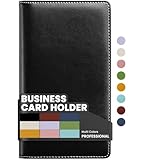
- Large capacity business card storage: This book-style business card organizer can hold up to 240 business cards, two cards back-to-back in each pouch. It is very compact & professional. Enough capacity for your different cards: business cards, credit card, social security, gift cards, insurance cards, name cards, personal IDs, mini photos, and more
- Sturdy & Long-lasting card book: Name card holder is made from high-quality pu leather cover and PVC pocket sheets. Long-lasting and sturdy
- Easy to find & read: Card holder book transparent slots are good for reading and finding information on the business card
- Compact size business card folder: The slim profile and lightweight design make carrying a breeze – Carry it in your hand, pocket or handbag when on the go. Dimension: 7.7"x 4.5" x 0.7"
- Scope and accountability: Check the systems and services covered, the division of work, ticket ownership, change approval, and responsibility for incident resolution.
- Hours and service commitments: Confirm coverage windows, contact channels, escalation paths, response commitments, and any documented service-level agreement (SLA). Distinguish a response commitment from a promise to resolve an issue by a particular time.
- Security and access: Ask what permissions the provider needs, how access is reviewed, what activity is logged, and which party owns each security task. Do not assume that a provider uses least-privilege access or supplies audit evidence without verifying the controls and records relevant to your environment.
- Tools and visibility: Find out whether the MSP can use existing ticketing, monitoring, and communication tools, and whether internal IT will be able to see work status and maintain usable documentation.
- Coverage and specialist work: Verify whether after-hours support, security operations, infrastructure monitoring, backup oversight, or project assistance is actually included—not merely available as an extra.
- Continuity and change: Ask how documentation is maintained, how leave or turnover is handled, how often the arrangement is reviewed, and how changes to the responsibility split are approved.
- Total cost: Compare the quoted fee for its defined scope plus the cost of retained internal staffing with alternatives such as hiring for the gap or outsourcing more broadly. Proposals may vary with users, devices, hours, systems, infrastructure complexity, and security or compliance demands; provider descriptions do not establish a neutral market price.
How much do co-managed IT services cost?
There is no dependable single price to apply across businesses. A provider’s proposal depends on what it covers, including users and devices, support hours, systems, environment complexity, and security or compliance requirements. The price also needs to be read alongside what the company continues to pay for internal IT.
To compare cost fairly, ask providers to price the same scope and show what is included, excluded, or billed separately. Then compare that fee and retained staffing cost with the cost of adding internal capacity or transferring more responsibility to a provider. Without matching scope and terms, comparing headline prices can be misleading.
Quick Recap
Product prices and availability are accurate as of the date/time indicated and are subject to change. Any price and availability information displayed on Amazon at the time of purchase will apply.
Quick wins for a faster PC:
Scan for outdated or missing drivers - takes under a minuteDriver Scan →Clear out junk files and repair common Windows errorsFree Scan →



