The Cisco 8102-28FH-DPU-O is not simply a 12.8Tbps Ethernet switch. It is a 2RU, 28-port 400GbE smart switch that combines 11.2Tbps of Cisco Silicon One Q200L switching capacity with up to eight AMD Pensando DPU modules providing a stated 1.6Tbps of aggregate service-processing capacity.
The design moves some infrastructure functions—such as security, storage, virtualization, encryption, and network services—from individual servers into the switching layer. That makes it mainly relevant to hyperscalers, cloud providers, AI infrastructure operators, and large multi-tenant data centers rather than ordinary enterprise networks.
![Cisco CBS350-8FP-2G Business Series 8-Port PoE+ Managed Smart Switch [Cisco Refresh] (Renewed)](https://m.media-amazon.com/images/I/31R5tx0hUpL._SL160_.jpg)
As an Amazon Associate I earn from qualifying purchases.
What is the Cisco 8102-DPU?
“Cisco 8102-DPU” is shorthand for Cisco’s more specific product identifier, 8102-28FH-DPU-O. The “28FH” configuration has 28 high-speed front-panel ports, while the “O” identifies Cisco’s open-software/open-networking variant. Cisco also sells non-DPU 8102 models, so the DPU capability should not be assumed across the entire 8102 family.
According to Cisco documentation, the platform combines:
#1 Best Overall

- SWITCH PORTS: 8 ports 10/100/1000 + 2x 1GE copper/SFP combo (total PoE power budget: 120W, PoE, PoE+)
- SIMPLE: Intuitive Cisco Business mobile app, local web interface, and Cisco Business Dashboard allows you to set up, manage, and monitor the switch, with step-by-step instructions to install and configure your network in minutes - no IT expertise required
- SECURITY: Integrated with IEEE 802.1X port security to control access to your network, denial-of-service (DoS) attack prevention increases network uptime during an attack, while access control lists (ACLs) protect the network from unauthorized users
- ENERGY EFFICIENT: Optimizes power usage to lower operational cost. Compliant with IEEE 802.3az Energy Efficient Ethernet. Fanless in select models
- PERFECT FOR SMALL BUSINESS: Requires no subscription or licenses to use, and offers limited lifetime hardware warranty with complimentary 1-year technical support
- A 2RU chassis
- 28 × 400GbE QSFP-DD ports
- Cisco Silicon One Q200L switching silicon
- Four field-replaceable DPU sled positions
- Up to eight AMD Pensando DPU modules
- SONiC and DASH-oriented software architecture
Cisco documentation refers to the DPU hardware as AMD DSC-200, while ServeTheHome describes the installed modules as AMD Pensando Elba-generation DPUs. DSC-200 is the Cisco product or module designation; Elba identifies the AMD Pensando generation.
Sources: Cisco 8100 Series data sheet and ServeTheHome’s product overview.
Published specifications
| Specification | Detail |
|---|---|
| Product | Cisco 8102-28FH-DPU-O |
| Form factor | 2RU |
| Front-panel ports | 28 × 400GbE QSFP-DD |
| Switching silicon | Cisco Silicon One Q200L |
| Conventional switching capacity | 11.2Tbps |
| DPU service-processing capacity | 1.6Tbps aggregate |
| Stated combined bandwidth | 12.8Tbps |
| DPU sleds | Four |
| Maximum DPU modules | Eight, or two per sled |
| Software direction | SONiC and DASH |
What the 12.8Tbps figure means
The headline number is Cisco’s system-level accounting:
Crashes, No Sound, or Screen Glitches?
Random freezes, missing sound and display glitches usually trace back to one bad driver. Find and replace yours safely.Free scan · under a minuteWindows Errors? Fix Them Before They Spread
Repair common Windows errors and clear accumulated junk for a smoother, more stable PC - no reinstall needed.Free scan · no reinstall28 × 400GbE = 11.2Tbps switching capacity
8 × approximately 200Gbps = 1.6Tbps DPU service capacity
11.2Tbps + 1.6Tbps = 12.8Tbps stated totalThis does not mean the switch has 32 independent 400GbE-equivalent ports, nor that the DPUs add 1.6Tbps of ordinary front-panel Ethernet switching. The 11.2Tbps figure describes the switching plane. The 1.6Tbps figure describes aggregate DPU service-processing capacity, approximately 200Gbps per DPU.
Those figures should therefore not be treated as interchangeable performance measurements. Actual throughput depends on the service being performed, packet size, traffic pattern, encryption or storage functions, software configuration, and contention between workloads.
How the four DPU sleds work
The chassis provides four DPU sled positions. Each sled can contain two DPU modules, allowing a fully populated system to contain up to eight AMD Pensando DPUs. Public Cisco material confirms the physical arrangement, but does not fully document every service-to-DPU mapping rule, redundancy mode, or mixed-workload performance limit.
That matters operationally. Eight DPUs do not necessarily represent eight completely isolated service domains. Capacity may be allocated according to the software architecture, traffic flows, tenant design, and orchestration system.
Cisco provides documentation for checking DPU status and installing SONiC on both the smart switch and DPU modules:
Why put DPUs in a switch?
The conventional DPU model installs one accelerator in each server. That provides local infrastructure processing, but it also adds cards, cabling, power, firmware, and lifecycle management to every host.
Cisco’s smart-switch model centralizes multiple DPUs in the network layer. In a suitable deployment, the switch can provide shared infrastructure services to a fleet of servers. Potential benefits include:
- Fewer DPU cards and cables inside servers
- More consistent policy enforcement across hosts
- Reduced host-CPU consumption
- Shared acceleration capacity across a server fleet
- Centralized management of some networking, security, storage, and virtualization services
- Potentially simpler server designs
These are architectural benefits, not guarantees. Centralization can also make the switch a more important dependency, concentrate failure impact, and create more complicated traffic paths and service-allocation rules.
The Tool Desk
Outbyte PC Repair FREEClear out junk files and repair common Windows errorsFree Scan →Outbyte Driver Updater FREEScan for outdated or missing drivers - takes under a minuteDriver Scan →Rank #2
Silicon One, Pensando, SONiC, and DASH
The platform’s components have different responsibilities:
- Silicon One Q200L: Handles the conventional high-speed switching and routing plane.
- AMD Pensando DPUs: Provide programmable infrastructure-service processing.
- SONiC: Supplies the open network operating system model for the switch side.
- DASH: The Disaggregated API for SONiC Hosts, providing an approach for running and managing disaggregated networking functions on DPUs.
Cisco’s Smart Switch architecture documentation describes the switch NPU running SONiC while the DPU modules run DASH-related functionality. Cisco also documents the broader SONiC architecture.
This software boundary is central to the product’s value. A conventional switch can forward packets at high speed, but a smart switch can host or disaggregate selected infrastructure services. The trade-off is that the buyer must evaluate SONiC release support, DASH feature coverage, DPU firmware, observability, automation, upgrades, rollback, and integration with cloud, Kubernetes, or virtualization tooling.
What services can the DPUs provide?
AMD describes Elba as a programmable DPU designed for networking, storage, security, encryption, network virtualization, and complex traffic processing. AMD also describes P4 programmability and dual-200Gbps line-rate capability for the Elba generation.
In practice, the services available on a Cisco 8102 deployment depend on Cisco’s supported software image, firmware, DASH implementation, and orchestration stack. AMD’s complete platform capability should not be read as a guarantee that every listed function is enabled or supported in every Cisco configuration.
Potential use cases include offloading infrastructure work that would otherwise consume general-purpose server CPU cycles. This can be especially valuable where the same security, overlay, storage, or virtualization function must be applied consistently across many hosts.
Relevance to cloud and AI infrastructure
The architecture is aimed at environments with dense 400GbE connectivity, large server fleets, multi-tenancy, and substantial infrastructure-processing overhead. AI clusters and cloud platforms may benefit when host CPUs need to remain available for applications, orchestration, storage, or control tasks.
ServeTheHome references a Cisco, Microsoft, and AMD demonstration presented in the context of Microsoft Azure. The cited case study claimed that accelerated infrastructure could save up to 22 CPU cores per server while reducing jitter and improving service processing. That is a partner or vendor claim tied to particular workloads and conditions—not an independent performance result for every Cisco 8102 deployment.
What’s actually slowing this PC down?
Pick the symptom - the matching free tool is one click away.
A careful interpretation is that Cisco and AMD have presented switch-integrated infrastructure offload as a way to return host CPU capacity to application workloads. Buyers should request workload-specific measurements for their own encryption, storage, overlay, security, and east-west traffic patterns.
Centralized DPU versus server-installed DPU
| Model | Strengths | Trade-offs |
|---|---|---|
| DPUs in the switch | Shared capacity, centralized policy, fewer server cards and cables | Greater switch dependency, shared-resource contention, concentrated failure domain |
| DPU in every server | Local processing, per-host control, distributed failure domains | More hardware, cabling, power, firmware, and deployment effort |
The Cisco 8102 does not universally replace server DPUs. It is an alternative placement model. Centralization may be attractive when services are shared across many hosts and centrally enforced. Server-local DPUs may be preferable where locality, tenant isolation, or independent scaling is more important.
Limitations and questions buyers must resolve
Public documentation establishes the main architecture, but not every deployment detail. Before purchasing, an operator should confirm:
Rank #3
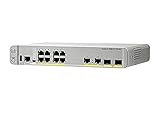
- CISCO REFRESH: Remanufactured is the Cisco certified, pre-owned equipment business. Refresh (-RF) carries the same warranty and access to software updates as with new products. To guarantee product direct from Cisco on Amazon; Ships From, Sold By Amazon
- ETHERNET PORT CONFIGURATION: 8 10/100/1000 Gigabit Ethernet (GbE) ports; 8 PoE+ output ports; 2 1G SFP uplinks; 2 1G copper uplinks
- POWER CONSUMPTION: 24.4W at 100% throughput
- FANLESS DESIGN: Silent operation
- DEFAULT SOFTWARE: IP Base (IP Services with RTU License); PEACE OF MIND: Enhanced limited lifetime warranty
- Which SONiC and DASH features are supported in the intended release
- Exact DPU firmware and image compatibility requirements
- Per-service throughput, packets-per-second, latency, and jitter
- Encryption and storage-service performance
- Behavior under mixed workloads and DPU contention
- DPU-to-port and DPU-to-tenant allocation rules
- Whether sled replacement is hot-swappable
- Whether the system supports active/active or active/standby DPU operation
- How a failed sled affects assigned services and traffic
- Whether the chassis operates in a degraded state with fewer sleds
- State recovery after DPU replacement
- Power, cooling, acoustics, optics qualification, and geographic availability
No public list price, independent benchmark, complete failover matrix, or universal availability statement was established in the cited material. Pricing is likely configuration-dependent and may include chassis population, support, software, optics, and deployment services.
Quick wins for a faster PC:
Scan for outdated or missing drivers - takes under a minuteDriver Scan →Repair Windows errors before they cause bigger problemsFix Now →Fix the driver behind crashes, sound loss and screen glitchesFind Drivers →Optics and cabling are part of the design
The 28 × 400GbE interfaces require compatible QSFP-DD transceivers, DACs, AOCs, breakout options, and fiber infrastructure. Reach, power draw, interoperability, and Cisco qualification can materially affect both cost and operational risk.
The Cisco data sheet is the appropriate starting point for supported connectivity. A low-cost third-party optic should not be assumed to be supported for the exact hardware and software configuration.
Who should consider the Cisco 8102-DPU?
The platform is most appropriate for:
- Hyperscale cloud providers
- Large service providers
- AI and high-performance data-center operators
- Multi-tenant infrastructure providers
- Organizations with dense 400GbE server connectivity
- Teams that can operate SONiC, DASH, DPU firmware, and automation at scale
The likely poor fits are small and medium businesses, campus networks, conventional server rooms, deployments without 400GbE infrastructure, and buyers seeking a simple turnkey Ethernet switch. If the requirement is only high-density Layer 2 and Layer 3 switching, a conventional Cisco 8100 model may offer a simpler architecture.
Alternatives by architecture
Conventional Cisco 8100 switch
A non-DPU Cisco 8100 is the more natural choice when the requirement is high-density 400GbE switching without centralized DPU service processing. It avoids the additional DPU and DASH operational model.
Server-installed AMD Pensando DPU
A server-local Pensando DPU is better when infrastructure services must remain close to each host or tenant. It provides local control and distributed scaling, but requires more cards, cabling, power, and lifecycle management.
NVIDIA BlueField
NVIDIA BlueField is a major server-side DPU alternative with an ecosystem around DOCA, security, networking, and AI infrastructure. It is not a direct performance comparison with the Cisco 8102 and represents a different topology unless deployed alongside a compatible switching design.
Intel IPU and DPU platforms
Intel’s IPU/DPU family may suit Intel-centric cloud and infrastructure environments, but it does not automatically reproduce Cisco’s switch-integrated DPU architecture.
x86 service appliances
Security, storage, NAT, load-balancing, and overlay functions can also run on x86 servers or dedicated appliances. These approaches may be familiar and easier to troubleshoot, but can require more servers and network hops while consuming more general-purpose CPU resources.
Recommended Free Tools
Bottom line
The Cisco 8102-28FH-DPU-O’s important innovation is not the 12.8Tbps headline by itself. Its significance is the combination of a high-density 400GbE switching plane with centralized, programmable AMD Pensando infrastructure processing.
For a hyperscaler or AI data-center operator, that can create a compelling alternative to installing a DPU in every server. For a conventional enterprise, it is likely excessive. The right decision depends on whether centralized service offload, SONiC/DASH expertise, and shared DPU capacity justify the added software, failure-domain, and operational complexity.
Product and software references: Cisco SONiC release documentation, AMD Pensando, and ServeTheHome’s October 13, 2024 overview.
Quick Recap
Product prices and availability are accurate as of the date/time indicated and are subject to change. Any price and availability information displayed on Amazon at the time of purchase will apply.
Free tools Windows power users keep installed
One-click scans. No signup required.




