Do these 3 things before closing this tab:
1Clear out junk files and repair common Windows errors2Scan for outdated or missing drivers - takes under a minute3Repair Windows errors before they cause bigger problemsThe biggest difference is what the keyboards prioritize: Chromebook top-row keys commonly control ChromeOS and browser functions, and a Search or Launcher key provides system access; Windows laptops commonly use a Windows-logo key for Start and Windows shortcuts. Many everyday editing combinations, including Ctrl+C and Ctrl+V, work as familiar starting points on both. Exact keys and behavior still depend on the device, layout, settings, and app.
What is different about a Chromebook and Windows laptop keyboard?
A Chromebook keyboard is similar to a conventional keyboard, but its top row commonly has dedicated ChromeOS actions rather than a row of standard function keys by default. These can include browser Back and Forward, Refresh, full screen, window overview, screenshot, brightness, audio, and media controls. Some models also have privacy-screen or keyboard-backlight controls. The particular keys vary by device. Google summarizes the distinction this way: “Your Chromebook keyboard works just like a regular keyboard, with a few differences.” Google Chromebook Help: Use your Chromebook keyboard.
As an Amazon Associate I earn from qualifying purchases.
Chromebooks also have a Search or Launcher key. The labels vary, but the key serves as a route to search and app access and appears in ChromeOS-specific shortcuts. A Windows laptop commonly has a Windows-logo key that opens or closes Start and is used in Windows system shortcuts. The size, position, spacing, and Fn-layer behavior of keys beyond these broad roles vary by laptop maker and model; neither platform has one physical layout that covers every device.
That distinction is more useful than comparing the keyboards as if each operating system dictated one exact shape. A Chromebook’s built-in top row may emphasize common ChromeOS actions, but an external keyboard can have a more conventional function-key row. A Windows laptop may put media and brightness controls on function keys or make them available through an Fn layer. Key labels and settings tell you more about the particular keyboard than the operating-system name alone.
#1 Best Overall
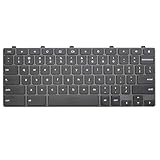
- Compatible With:Dell Chromebook 3100 2-in-1 Series keyboards;For Dell Chromebook 3110 2 in 1 keyboard is designed for those who demand a dynamic typing experience, offering enhanced responsiveness and comfort;For Chromebook 3100, our keyboard replacement ensures compatibility and durability, providing seamless integration with your device;Experience the convenience of the Chromebook 3100 keyboard lock key, ensuring your privacy and security with just one touch
- Keyboard P/N: 0RFXCF 0H06WJ TPN-136US001909, AE09U018, NSK-EJ1SW
- Compatible With:Dell Chromebook 11 3100 3110 3120 5190 keyboard keys replacement surface was UV-processed, make it still clear after being repeated 10 million times
- Upgrade your study routine:with our compatible replacement keyboard designed for Dell Chromebook 11 series—models 3100 2-in-1, 3110 2-in-1, and 5190; Engineered to seamlessly fit, this keyboard ensures uninterrupted productivity whether you're typing essays or coding projects; With its precise key alignment and sturdy construction, it's the solution for students seeking efficiency without compromising on the original typing experience; Don't let a worn keyboard slow you down
- Warranty: provide a 120-day warranty against any manufacturer defective such as dead-on arrival (DOA), lines, video failure, and outage
Top-row actions versus function keys
On a Chromebook, the top row is commonly arranged around device and system actions. On a Windows laptop, function keys and media or brightness controls may share the top row, with behavior depending on the model and Fn settings. These defaults are not a reliable way to identify every key: inspect the key legends, try the Fn modifier if appropriate, and check the device’s keyboard settings when a key behaves differently from what you expect.
On Chromebooks, the top row can combine browser navigation with system controls. Back and Forward move through browser history, while Refresh reloads a page; full screen and window overview serve different display and window-management tasks. Brightness and sound controls act at the device level, while media controls may be available on some keyboards. The icons and exact set of actions are not identical across Chromebook models, so use the legends on your own keyboard rather than assuming a control shown on another device must be present.
Function-key behavior is a setting as well as a hardware question. ChromeOS offers a way to change top-row/function-key behavior, and some Windows laptop keyboards also use an Fn modifier or related device setting to access alternate functions. If a key does not produce the action you expect, check its printed icon and the keyboard’s settings before concluding that the shortcut is unavailable. A change in top-row behavior can also explain why a familiar action now requires a modifier.
Quick wins for a faster PC:
Repair Windows errors before they cause bigger problemsFix Now →Fix the driver behind crashes, sound loss and screen glitchesFind Drivers →Search/Launcher and Windows keys
Think of Search/Launcher and the Windows key as the system-level keys to learn first, but do not assume they are interchangeable across operating systems. ChromeOS shortcuts often pair Search/Launcher with another key; Windows shortcuts often pair the Windows key with another key. If you connect an external Windows keyboard to a Chromebook, Google says its Windows key can act as Search/Launcher.
Search and Launcher are alternative names used for the Chromebook’s app-search/system key. Its role is different from a Windows key even if both occupy a prominent modifier-key position and help reach system features. On a Chromebook, pressing Search/Launcher gives access to search and apps; combinations such as Search/Launcher+L use it as part of a system shortcut. On Windows, the Windows-logo key opens or closes Start when pressed by itself and combines with other keys for Windows features.
When switching between machines, do not expect a key bearing the Windows logo to trigger Windows features while connected to a Chromebook. In that setup, Google documents it as Search/Launcher. Other keys on an external keyboard may also have behavior that depends on the keyboard and ChromeOS settings. This is useful if you want a familiar physical layout, but it does not make every key mapping or shortcut identical between devices.
Which shortcuts transfer between platforms?
Common text-editing combinations are a useful bridge. Ctrl+C copies, Ctrl+V pastes, Ctrl+X cuts, Ctrl+A selects all, and Ctrl+Z undoes in many familiar workflows on both platforms. Microsoft cautions that common shortcuts may not work in every application, and app-specific behavior can differ. Google’s Chromebook shortcut reference also documents many Ctrl-based browser combinations. Microsoft Support: Windows keyboard tips and tricks.
These are good first combinations to try when moving between devices because they use Ctrl rather than either operating system’s main system key. They are conventions, not a promise about every app: an application can assign keys differently, and context can matter. For example, a shortcut used while a browser page has focus may not behave the same way in a different program. If an editing shortcut seems not to work, verify that the intended text field or app is active and consult that app’s shortcut help.
Rank #2

- Full Sized Keyboard: The US QWERTY keyboard features a tilt angle for the great typing position, which provides you with a comfortable and accurate typing experience, prevents wrist fatigue. Quiet clicks allow you to focus on your work or play without disturbing others
- Stable 2.4G Wireless Connection: Plug and play without any drivers. Advanced 2.4GHz wireless technology provides a powerful and reliable connection up to 33 ft with virtually no delays or dropouts, even in the busiest wireless environments. Note: The USB dongle is stored in the compartment next to the keyboard battery slot, and can be found by opening the keyboard battery cover
- Auto Sleep & Power Saving: The keyboard features automatic sleep function, when you stop using it for more than 15 minutes, it will go into sleep mode to save power and you can click any button to activate it, the battery life up to 6 months. The external keyboard is powered by 1 AAA battery (Batteries Not Included)
- Wide Compatibility: Easy to use, simply plug the USB receiver into the USB port and start working. This wireless keyboard compatible with Windows 11, 10, 8, 7, Vista, XP, Chrome OS, Linux and Mac OS. Works well with desktop, computer, PC, laptop, Chromebook, notebook and more. Perfect for office & home work, business travel. Enjoy your wireless freedom and keep your desk clean and tidy
- Multimedia Shortcuts: The full-sized cordless keyboard with numeric keypad features 12 multimedia hotkeys for instant access to your media player, E-mail, Internet, volume, play/pause, mute, computer and favorites, so you can easily check out your favorite sites. Ideal for office work and entertainment, it saves you time and makes work and life easier. Note: the 12 shortcuts are not fully compatible with the Mac system
Browser tab shortcuts are another familiar example: Ctrl+T opens a new tab and Ctrl+W closes the current tab in common browser workflows. These are browser shortcuts, not proof that every shortcut works the same in every app. When a combination produces a different result, first check which app has focus and whether that app assigns the keys another action.
It helps to sort shortcuts into three buckets. Editing combinations such as Ctrl+C are often shared starting points. Browser combinations such as Ctrl+T and Ctrl+W are tied to browser behavior, even though they are familiar on both platforms. System combinations, such as Search/Launcher+L or Windows+L, belong to the operating system and should be learned separately. This simple distinction prevents the mistaken expectation that every shortcut from one laptop will transfer unchanged to the other.
Chromebook and Windows shortcut examples
The table gives useful equivalents and contrasts. Treat them as documented examples, not guarantees for every device, app, keyboard layout, or OS configuration. Google Chromebook Help: Chromebook keyboard shortcuts and Microsoft Support: Keyboard shortcuts in Windows provide the platform references.
| Task | Chromebook example | Windows example |
|---|---|---|
| Open a new browser tab | Ctrl+T | Ctrl+T in common browsers |
| Close the current browser tab | Ctrl+W | Ctrl+W in common browsers |
| Lock the screen | Search/Launcher+L | Windows+L |
| Open system search | Press Search/Launcher for search and app access | Windows+S opens Windows search |
| Take a screenshot | Ctrl+Show windows; other capture options use Shift/Ctrl combinations | Windows+Shift+S opens the screen-capture flow |
| See open windows or switch apps | Show windows opens window overview; Alt+Tab switches windows | Windows+Tab opens Task view; Alt+Tab switches apps |
| Toggle Caps Lock | Alt+Search/Launcher; other methods may be available on supported keyboards | A dedicated Caps Lock key appears on many layouts |
The table compares the task, not necessarily the physical key position. “Show windows” refers to a Chromebook top-row key; it is not a key labeled Windows. It opens a window overview, while Alt+Tab is a separate way to switch windows. In Windows, Windows+Tab opens Task view and Alt+Tab switches apps. These pairs may all help you move among open work, but they are not the same interface or identical actions.
Screenshot combinations are another place where a quick transfer assumption can fail. The Chromebook example uses Ctrl with Show windows, and Google documents other capture options using Shift/Ctrl combinations. Microsoft lists Windows+Shift+S for the screen-capture flow. If you need a different kind of capture or the combination does not work as expected, consult the current platform help or the shortcut viewer on the device rather than assuming the table includes every capture action.
What the comparison means in practice
For quick tab work and basic editing, you may not need to relearn much. For system actions, learn the modifier that belongs to the OS: Search/Launcher on a Chromebook and the Windows key on a Windows laptop. The Chromebook’s Show windows key is a top-row control; it is not the same as Windows Task view, even though both help you get to open windows. Likewise, a familiar task such as taking a screenshot can use a different combination on each platform.
Caps Lock illustrates why the physical layout matters. On a Chromebook, Alt+Search/Launcher is a documented way to toggle it, and other methods may be available on supported keyboards. Many Windows keyboard layouts have a dedicated Caps Lock key. If you are on a Chromebook and reach for a key in the place you expect Caps Lock to be, check the actual key legends and shortcut reference instead of assuming the Windows arrangement.
System shortcuts are especially sensitive to the platform key. On Windows, Windows+E opens File Explorer, Windows+I opens Settings, Windows+L locks the device, and Windows+Left or Windows+Right Arrow places a window, according to Microsoft’s shortcut reference. These are Windows features, not combinations to substitute mechanically on a Chromebook. Some functions depend on the app, settings, or Windows version, so use Microsoft’s current reference when you need to confirm behavior.
Rank #3

- KEYBOARD: The keyboard works for Windows with hot keys that enable easy access to Media, My Computer, Mute, Volume up/down, and Calculator
- EASY SETUP: Experience simple installation with the USB wired connection
- VERSATILE COMPATIBILITY: This keyboard is designed to work with multiple Windows versions, including Vista, 7, 8, 10 offering broad compatibility across devices.
- SLEEK DESIGN: The elegant black color of the wired keyboard complements your tech and decor, adding a stylish and cohesive look to any setup without sacrificing function.
- FULL-SIZED CONVENIENCE: The standard QWERTY layout of this keyboard set offers a familiar typing experience, ideal for both professional tasks and personal use.
For less-obvious combinations, check the shortcut viewer or current official help for your device. Google’s shortcut reference explicitly applies to customers in the US using a standard English QWERTY keyboard and directs users with international keyboards to keyboard settings and the shortcut view. Microsoft’s Windows shortcut material covers Windows 10 and Windows 11, and some behavior depends on the app, setting, or version.
This layout caveat matters when a shortcut contains punctuation or a key whose location differs across keyboard layouts. A chart written for standard English QWERTY may not map neatly to a national layout, even if the task is the same. The shortcut reference and the settings on the device are the better guides in that situation. Similarly, Windows documentation covers Windows behavior but does not promise that every laptop maker puts keys in the same place or assigns the same Fn-layer behavior.
How to find the shortcut or key behavior on your device
- Identify the keyboard and operating system. Confirm whether you are using the Chromebook’s built-in keyboard, an external keyboard, or a Windows laptop. External keyboards may label or position keys differently.
- Check the key legends and modifiers. On a Chromebook, look for Search or Launcher and the top-row action icons. On a Windows laptop, look for the Windows logo and check whether Fn changes top-row behavior.
- Test the shortcut in the intended app. Start with the task you want—such as opening a tab or locking the screen—and use the relevant platform combination. Verify the result rather than assuming a combination is universal.
- Consult the platform shortcut reference. Use Google’s Chromebook keyboard shortcuts or Microsoft’s Windows keyboard shortcuts. On Chromebook, Google recommends using Search in the system shortcuts view to find shortcuts and reduce conflicts with browser apps.
- Review settings if the key is remapped or the top row acts differently. Chromebook keyboard settings can change supported key mappings and top-row/function-key behavior. External keyboards have their own available settings and may behave differently from the built-in keyboard.
A practical check is to start with the action you actually need, not to memorize a long list all at once. If you want to take a screenshot, look up the capture shortcut for that OS and identify the relevant key on your keyboard. If you want to lock the screen, use the system-key combination for the laptop you are using. Then test it and note whether the result matches the task. This keeps app shortcuts, system shortcuts, and top-row controls from getting mixed together.
Recommended Free Tools
If an expected shortcut appears to do something else, check a few things in order: whether the right app or field has focus; whether the key label matches the keyboard you are using; whether an Fn or top-row setting changes the key; whether a key has been remapped; and whether the shortcut reference applies to your layout and OS version. This approach is more reliable than assuming the combination is broken or that the other platform must use the same keys.
Can you customize Chromebook keyboard shortcuts?
ChromeOS lets users remap supported keys, adjust top-row/function-key behavior, and manage eligible shortcuts. In the Shortcuts app, categories include General, Device, Browser, Text, Windows and desks, and Accessibility. Google notes that some shortcuts are locked, some combinations are unavailable, and top-row keys cannot be assigned as part of a custom shortcut. For system shortcuts, Google advises including Search to reduce conflicts with browser apps. See Google Chromebook Help: Customize your keyboard shortcuts.
Customization has boundaries. “Remap” does not mean every key or combination can be reassigned: Google says certain shortcuts are locked, some combinations are unavailable, and a top-row key cannot be used as part of a custom shortcut. If the combination you want is rejected, choose an eligible combination rather than repeatedly trying the same unavailable one. For a system shortcut, the guidance to include Search is intended to reduce conflicts with browser apps, which may already use familiar combinations for their own actions.
The categories in the Shortcuts app also help narrow the search. A change related to accessibility, text, or device behavior may be grouped differently from a browser shortcut or a window-and-desk action. Reviewing the relevant category is more direct than changing unrelated keyboard settings. The categories do not imply that every possible action is customizable; availability still depends on the shortcut and supported options.
Free tools Windows power users keep installed
One-click scans. No signup required.
Input settings also cover built-in and external keyboards, but customization is limited to supported keys and options. If you are using a Windows keyboard with a Chromebook, the Windows key can serve as Search/Launcher, while other key behavior depends on the keyboard and ChromeOS settings. Google’s Create input shortcuts help explains input-device configuration.
Rank #4
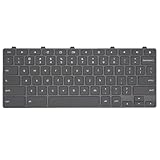
- Compatible With: Dell Chromebook 11 3100 3110 3120 5190 2-in-1 Series Laptop
- MPN:0RFXCF 0H06WJ TPN-136US001909 AE09U018
- Replacement Lock Key:for Dell Chromebook 11 3100 3110 3120 5190 Keyboard US layout
- Condition&Quality: 100% Original Brand New; Each One Will Be 100% Tested and Working before Packing and Shipping
- Warranty:120-Day Warranty Against any Manufacturer Defective;BUT No Man-Made Scratch or Damage when Returning or Exchanging
That makes settings worth checking when a Chromebook’s built-in keyboard and an external keyboard seem to behave differently. The hardware can expose different keys, and ChromeOS settings allow configuration for built-in and external input devices. Google specifically documents the Windows key as the Search/Launcher equivalent when a Windows keyboard is connected; that does not guarantee that every other key on every external keyboard has a Chromebook-specific counterpart.
Independent reader supportYour contribution helps us test, update, and keep practical guides available for everyone.Which keyboard is easier to switch to?
There is no universally easier layout. The transition is usually simpler when you separate shared editing habits from operating-system controls: keep using familiar Ctrl-based editing combinations where the app supports them, then learn the system key and top-row actions for the device in front of you. Keyboard layout, model-specific controls, settings, and personal habits all affect the experience.
If you are moving from Windows to Chromebook, first locate Search/Launcher and learn the Chromebook top-row legends. Keep trying familiar Ctrl-based editing and browser shortcuts where appropriate, but look up ChromeOS-specific actions such as screen lock or screenshot rather than substituting the Windows key. Moving from Chromebook to Windows works in the opposite way: find the Windows-logo key, recognize that it operates Windows system shortcuts, and check the laptop’s Fn behavior for top-row actions.
What’s actually slowing this PC down?
Pick the symptom - the matching free tool is one click away.
There is no need to replace a keyboard just to use the other operating system. An external keyboard may be useful if you prefer its physical layout, but it is optional. Google documents external keyboard support and says a connected Windows keyboard’s Windows key can act as Search/Launcher on a Chromebook. Exact connection and other key behavior depend on the keyboard and device, so check compatibility and the available settings before expecting a specific mapping.
If you prefer one physical layout across devices, an external keyboard compatible with Chromebook is an option. Google documents Chromebook support for external keyboards and Windows-key-to-Search/Launcher behavior, but the exact connection and other key behavior depend on the keyboard and device.
Frequently asked questions
What is the difference between a Chromebook and Windows keyboard?
Chromebook keyboards commonly use the top row for ChromeOS actions and include a Search/Launcher key for search and app access. Windows laptops commonly use a Windows-logo key for Start and Windows system shortcuts. Physical layout, key labels, and Fn behavior vary by model on both platforms.
Do Chromebook and Windows keyboards use the same Ctrl shortcuts?
Many common editing combinations, including Ctrl+C, Ctrl+V, Ctrl+X, Ctrl+A, and Ctrl+Z, are useful starting points on both platforms. Browser shortcuts such as Ctrl+T and Ctrl+W are also common examples. Apps can define different behavior, so shared conventions are not guaranteed in every program.
What is the Chromebook equivalent of the Windows key?
Search or Launcher is the Chromebook system key used in ChromeOS shortcuts. If you connect a Windows keyboard to a Chromebook, Google says its Windows key can act as Search/Launcher. The Windows key on a Windows laptop is used for Windows system actions, so the keys are not interchangeable in every context.
Best Value

- 【Type in Comfort & Smooth】 The foldable stand of the keyboard provides two tilt angles, which help relieve wrist pressure and increase comfort. 3mm short keystroke distance, lighter keystroke force, and standard 104 keys full size American QWERTY layout make typing more sensitive, smooth, and soft.
- 【Less Noise, More Quiet】The mouse is 100% quiet without any clicking sound. The keyboard is not super quiet, but it is more than 95% quieter than other similar keyboards, so you can without worrying about disturbing others.
- 【Lag-free, Plug & Play】2.4GHz wireless technology provides automatic frequency recognition and stable signal, plug and play, connection range up to 33ft without any delays. Cut the cord and enjoy the freedom.【𝐍𝐨𝐭𝐞】Keyboard and mouse 𝐬𝐡𝐚𝐫𝐞 𝐨𝐧𝐞 𝐫𝐞𝐜𝐞𝐢𝐯𝐞𝐫, 𝐰𝐡𝐢𝐜𝐡 𝐢𝐬 𝐬𝐭𝐨𝐫𝐞𝐝 𝐢𝐧 𝐭𝐡𝐞 𝐦𝐨𝐮𝐬𝐞.
- 【Sleep Mode Extends Battery Life】 Idle for 6 mins, the keyboard will sleep, idle for 15 mins, the mouse will sleep, by typing or double clicking any keys to wake. Saving you the trouble of changing batteries frequently. The keyboard needs 2 x AAA batteries, the mouse needs 1 x AA / 1 x AAA battery (𝐁𝐚𝐭𝐭𝐞𝐫𝐲 𝐍𝐨𝐭 𝐈𝐧𝐜𝐥𝐮𝐝𝐞𝐝).
- 【Wide Compatibility】 This wireless keyboard mouse combo is compatible with all Windows system versions, Linux, Chrome OS. Works well with computer, laptop, Chromebook, PC, desktops, TV. 【𝐍𝐨𝐭𝐞】𝐓𝐡𝐞 𝟏𝟐 𝐬𝐡𝐨𝐫𝐭𝐜𝐮𝐭𝐬 𝐚𝐫𝐞 𝐧𝐨𝐭 𝐟𝐮𝐥𝐥𝐲 𝐜𝐨𝐦𝐩𝐚𝐭𝐢𝐛𝐥𝐞 𝐰𝐢𝐭𝐡 𝐭𝐡𝐞 𝐌𝐚𝐜 𝐬𝐲𝐬𝐭𝐞𝐦.
How do I lock a Chromebook or Windows laptop with the keyboard?
The documented examples are Search/Launcher+L on Chromebook and Windows+L on Windows. Check your device’s shortcut reference if the combination behaves differently, since settings and keyboard configuration can affect behavior.
Are Chromebook keyboard shortcuts the same on every layout?
No. Google’s cited Chromebook shortcut reference is scoped to US customers using a standard English QWERTY keyboard and directs users with international keyboards to keyboard settings and the shortcut view. Device model and settings can also affect which keys and controls are available.
Can I change Chromebook key mappings or shortcuts?
ChromeOS supports remapping some keys, changing top-row/function-key behavior, and customizing eligible shortcuts. Some shortcuts are locked, some combinations are unavailable, and top-row keys cannot be assigned as part of a custom shortcut. Google recommends including Search in system shortcuts to reduce conflicts with browser apps.
The Tool Desk
Outbyte PC Repair FREERepair Windows errors before they cause bigger problemsFix Now →Outbyte Driver Updater FREEScan for outdated or missing drivers - takes under a minuteDriver Scan →Frequently Asked Questions
What is the difference between a Chromebook and Windows keyboard?
Chromebook keyboards commonly use the top row for ChromeOS actions and include a Search/Launcher key for search and app access. Windows laptops commonly use a Windows-logo key for Start and Windows system shortcuts. Physical layout, key labels, and Fn behavior vary by model on both platforms.
Do Chromebook and Windows keyboards use the same Ctrl shortcuts?
Many common editing combinations, including Ctrl+C, Ctrl+V, Ctrl+X, Ctrl+A, and Ctrl+Z, are useful starting points on both platforms. Browser shortcuts such as Ctrl+T and Ctrl+W are also common examples. Apps can define different behavior, so shared conventions are not guaranteed in every program.
What is the Chromebook equivalent of the Windows key?
Search or Launcher is the Chromebook system key used in ChromeOS shortcuts. If you connect a Windows keyboard to a Chromebook, Google says its Windows key can act as Search/Launcher. The Windows key on a Windows laptop is used for Windows system actions, so the keys are not interchangeable in every context.
How do I lock a Chromebook or Windows laptop with the keyboard?
The documented examples are Search/Launcher+L on Chromebook and Windows+L on Windows. Check your device’s shortcut reference if the combination behaves differently, since settings and keyboard configuration can affect behavior.
Windows Errors? Fix Them Before They Spread
Repair common Windows errors and clear accumulated junk for a smoother, more stable PC - no reinstall needed.Free scan · no reinstallOutdated Drivers Are Slowing You Down
One free scan finds every outdated or missing driver and matches the right update for your exact hardware.Free scan · exact hardware matchAre Chromebook keyboard shortcuts the same on every layout?
No. Google’s cited Chromebook shortcut reference is scoped to US customers using a standard English QWERTY keyboard and directs users with international keyboards to keyboard settings and the shortcut view. Device model and settings can also affect which keys and controls are available.
Can I change Chromebook key mappings or shortcuts?
ChromeOS supports remapping some keys, changing top-row/function-key behavior, and customizing eligible shortcuts. Some shortcuts are locked, some combinations are unavailable, and top-row keys cannot be assigned as part of a custom shortcut. Google recommends including Search in system shortcuts to reduce conflicts with browser apps.
The Bottom Line
Chromebook keyboards commonly prioritize ChromeOS actions on the top row and use Search/Launcher for system access; Windows laptops commonly use a Windows-logo key for Windows features. Many Ctrl-based editing habits transfer, but system and capture shortcuts differ. Check the legends, settings, and current shortcut reference for your keyboard, layout, and app before assuming a combination is universal.
Quick Recap
Product prices and availability are accurate as of the date/time indicated and are subject to change. Any price and availability information displayed on Amazon at the time of purchase will apply.




