Quick wins for a faster PC:
Clear out junk files and repair common Windows errorsFree Scan →Scan for outdated or missing drivers - takes under a minuteDriver Scan →TrailBird AI is described by its author as a bird-call identifier that can run without cell service, with a smartphone-browser interface and a Python command-line tool. It is aimed at hikers and birdwatchers who want a species suggestion on the trail, then a prompt to look and listen rather than stay on the screen. Those capabilities, its claimed open-source license, and its offline behavior have not been independently verified from a linked repository.
What TrailBird AI is meant to do
In two project posts published on DEV Community on October 5 and 6, 2026, Sudhir Sharma describes TrailBird AI as software for identifying birds from their calls in places with no internet connection. The proposed workflow is to capture a call, receive a species suggestion and a physical sighting tip, then put the phone away and observe.



As an Amazon Associate I earn from qualifying purchases.
The author presents two ways to use it: a progressive web app in a smartphone browser and a Python terminal tool. The posts name files including index.html, app.js, styles.css, trailbird.py, and models/species_db.json. These are descriptions in the posts, not files inspected from a public code repository.
Free tools Windows power users keep installed
One-click scans. No signup required.
How the author says identification works
The posts describe microphone capture, local audio processing, feature extraction, and matching against acoustic profiles. The October 6 post specifically mentions the Web Audio API and FFT extraction, and says the PWA uses a cache. The author’s account is the only evidence available here; there is no repository link or independently tested build to confirm the implementation or that it continues to work offline after setup.
#1 Best Overall
Sharma also says recordings and GPS location stay on the user’s device. That is a privacy design claim, not a verified finding from a network inspection or a published privacy policy. Anyone considering using the tool for sensitive location data should verify the app’s behavior before relying on that assurance.
What the example results do—and do not—show
The October 5 post illustrates an American Robin result at 98.2% confidence and a dominant pitch of 3100 Hz. The October 6 post instead shows a Black-capped Chickadee at 93.7% and 3600 Hz. These are examples presented by the project author; the different outputs do not establish repeatable accuracy, and the posts provide no validated accuracy rate, confidence calibration, evaluation method, or complete supported-species list.
The October 5 post also claims processing takes less than 15 ms, but gives no device, measurement method, or independent benchmark. Treat that as an unverified claim rather than a speed expectation for a particular phone or computer.
Open-source status and what to check before relying on it
The author says the code is MIT-licensed. Because the retrieved posts do not link a source repository, the license and source files could not be checked. A license claim alone does not establish that the project is publicly available, installable, maintained, or suitable for a specific region.
Rank #3
- Find a public repository or runnable demo and confirm it corresponds to the described project.
- Check the license file and installation instructions directly.
- Test airplane-mode operation on the device and browser you plan to take on the trail; distinguish first-time setup from subsequent offline use.
- Look for a supported-species list and documented evaluation before treating a suggestion as a confirmed identification.
- Verify microphone, location, and network behavior if privacy is important.
Who it may suit
TrailBird AI’s stated audience includes hikers, backpackers, trail runners, birdwatchers, and outdoor naturalists. Its most distinctive idea is not merely offline identification: it is the intended handoff from a digital suggestion to a real-world search for the bird. Until a working build and its species coverage can be checked, it is best regarded as a project concept with author-described capabilities, not a validated field identification tool.
For identification in the field, use any automated suggestion as a lead to investigate rather than a definitive result. A printed regional bird guide can provide a screen-free reference, but the project posts do not endorse a particular guide or say one is required.
Quick Recap
Best Value

- Each entry is accompanied by facts about a bird's (annoying) call its (dumb) migratory pattern its (downright tacky) markings and more.|The essential guide to all things wings with migratory maps tips for birding musings on the avian population and the ethics of birdwatching.|Matt Kracht is an amateur birder writer and illustrator who enjoys creating books that celebrate the humor inherent in life's absurdities. Based in Seattle he enjoys gazing out the window at the beautiful waters of Puget Sound and making fun of birds.|A perfect coffee table or bar top conversation-starting book|Makes a great Mother's Day Father's Day birthday or retirement gift
Rank #4
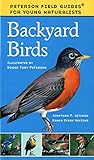
- Guide for young naturalists backyard birds
- Features the original art of celebrated naturalist Roger Tory Peterson
- The most effective method for bird identification and uses a straightforward design
- Pinpoints key field marks for quick recognition and easy comparison of species
- By Lang Elliott and Marie Read
Product prices and availability are accurate as of the date/time indicated and are subject to change. Any price and availability information displayed on Amazon at the time of purchase will apply.




