You can use ToolJet MCP to have an MCP-compatible AI coding agent create and modify a ToolJet invoice-review app, but the generated interface is only a starting point: your team still needs to verify its data connections, matching logic, exception routing, and approval rules. A useful implementation keeps the invoice image beside editable extracted fields, surfaces duplicate and purchase-order matching context, and gives reviewers a visible approval queue.
What the invoice verification app is meant to do
ToolJet’s example is a review workflow rather than a stand-alone invoice form. A reviewer can view the invoice scan alongside extracted values, correct those values, see duplicate warnings and purchase-order or receipt matching context, and take an approval action. The proposed app also includes an approval queue and a monthly summary. These are features in ToolJet’s tutorial example, not evidence that the app independently guarantees accurate extraction, compliant approvals, or safe payment processing. ToolJet’s invoice verification tutorial is the source for the sample workflow.
As an Amazon Associate I earn from qualifying purchases.
The tutorial describes a contractor scenario and uses “about 900 scanned supplier invoices a month” as an example input. That figure is not an industry benchmark. Its sample approval threshold is also a scenario value, not a recommended control limit. Set volume assumptions, thresholds, and routing rules from your own operation’s needs and policies.
Start with your data and review rules
Before asking an agent to build the interface, identify the system that holds your supplier and purchasing records, and decide how your accounts-payable team handles exceptions. ToolJet’s example assumes an existing PostgreSQL datasource and a schema covering suppliers, purchase orders and lines, goods receipts, invoices and lines, tolerance logs, roles, and settings. Use those entities as a checklist, not a schema to copy blindly: table names, identifiers, relationships, and available fields must match the records in your environment. The tutorial provides the example model.
#1 Best Overall

- PORTABLE SCANNER FOR USE ON-THE-GO — The fastest and lightest mobile single-sheet-fed compact document scanner in its class¹
- QUICK DOCUMENT SCANNING ― This Epson ultra-fast scanner scans a single page as quickly as 5.5 seconds²; Windows and Mac compatible
- VERSATILE PAPER HANDLING ― Portable scanner scans documents up to 8.5 x 72 in; Also easily digitizes receipts and ID cards to make accounting, bookkeeping, and organizing simpler
- INTUITIVE, HIGH-SPEED SOFTWARE — Epson ScanSmart Software³ is a smart tool allowing you to easily scan, review, and save; Stay organized easily with the help of this Epson scanner
- EASY SETUP — USB-powered connect to your computer for quick and simple scanning; No batteries or external power supply required to operate portable document scanner; Standard Connectivity: USB 2.0
- Invoice intake: Identify where invoice records and original scans come from, and which extracted values reviewers may correct.
- Matching: Define how an invoice links to a supplier, purchase order, PO lines, and goods receipts. Specify your own tolerances and what happens when a match is incomplete or outside policy.
- Duplicates: Decide which fields or records your workflow uses to flag a possible duplicate, and what a reviewer must do when one is flagged.
- Approval: Set roles, approval limits, rejection and send-back paths, and the reason recorded for an exception. Do not adopt the tutorial’s sample threshold as policy.
The goal is to connect a submitted bill to extracted values and relevant supplier, PO, receipt, duplicate, and matching information so a person can make a review decision. The tutorial’s example mentions Textract as the source of extracted fields. Document extraction is a separate dependency: you must configure and validate the service and its connection to your app. The tutorial does not establish extraction accuracy.
Connect an AI client to ToolJet MCP carefully
ToolJet MCP gives an MCP-compatible AI client a structured way to interact with a ToolJet workspace. ToolJet says MCP can build and modify native apps, interact with connected data, and manage workspace resources within the token owner’s permissions. A personal access token is tied to a workspace; operations inherit that owner’s permission context. ToolJet also documents audit events associated with actions by the authenticated token owner. MCP does not itself approve invoices or provide an accounting control framework. See ToolJet MCP overview.
Rank #2

- FAST SPEEDS - Scans color and black and white documents a blazing speed up to 16ppm (1). Color scanning won’t slow you down as the color scan speed is the same as the black and white scan speed.
- ULTRA COMPACT – At less than 1 foot in length and only about 1. 5lbs in weight you can fit this device virtually anywhere (a bag, a purse, even a pocket).
- READY WHENEVER YOU ARE – The DS-640 mobile scanner is powered via an included micro USB 3. 0 cable allowing you to use it even where there is no outlet available. Plug it into you PC or laptop and you are ready to scan.
- WORKS YOUR WAY – Use the Brother free iPrint&Scan desktop app for scanning to multiple “Scan-to” destinations like PC, Network, cloud services, Email and OCR. (2) Supports Windows, Mac and Linux and TWAIN/WIA for PC/ICA for Mac/SANE drivers. (3)
- OPTIMIZE IMAGES AND TEXT – Automatic color detection/adjustment, image rotation (PC only), bleed through prevention/background removal, text enhancement, color drop to enhance scans. Software suite includes document management and OCR software. (4)
ToolJet’s documented prerequisites include a ToolJet personal access token, Node.js 20 or newer available to the AI client, and an MCP-compatible client. The setup guide lists client-specific setup paths, including Codex and Claude Code. Client support and setup details can change, so follow the current instructions for the client you use.
Do these 3 things before closing this tab:
1Scan for outdated or missing drivers - takes under a minute2Repair Windows errors before they cause bigger problems3Fix the driver behind crashes, sound loss and screen glitchesScope access before connecting. ToolJet’s app-generation guidance says the agent can inspect configured datasources, and reachable data may be read as it explores. Use a development workspace and development data for generation, and grant only the workspace permissions needed for the task. Do not connect an agent to operational invoice data simply to make the initial build easier. See ToolJet’s app-generation documentation.
Rank #3
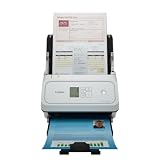
- Fast and Efficient: Scans both sides of a document at the same time, in color, at up to 45 pages per minute, with a 60 sheet automatic feeder, and one touch operation. Innovative Feeding System.
- Reliably Handles Many Different Document Types: Receipts, business cards, reports, contracts, long documents, thick or thin documents, and more. Monochrome LCD Display.
- Designed exclusively for the included Canon CaptureOnTouch software;TWAIN and ISIS drivers are not supported.
- Easy Setup: Simply connect to your computer using the supplied USB-C cable.
- Bundled Software: Includes easy-to-use Canon CaptureOnTouch scanning software.
Prompt for a reviewable first version
ToolJet’s tutorial consolidates its example into a prompt for three pages: invoice capture and review, an approval queue, and a monthly summary. It asks for native ToolJet components, a dense accounts-payable layout, a PostgreSQL-backed model, queries and bindings, and a review screen with the scan beside editable extracted values. It also calls for duplicate warnings, three-way match context, routing, approve/reject/send-back actions, and supplier or trend summaries. Name your actual datasource and business entities in the request, and spell out the desired pages and workflow rules; ToolJet says these details help the agent produce a more useful first version. The tutorial’s consolidated example is specific to its contractor scenario.
Do not expect one prompt to produce a finished, validated application. ToolJet’s tutorial says its build took several passes before the prompt was consolidated. Treat the generated app as a draft to inspect and iterate on.
Rank #4

- OUR MOST ADVANCED SCANSNAP. Large touchscreen, fast 45ppm double-sided scanning, 100-sheet document feeder, Wi-Fi and USB connectivity, automatic optimizations, and support for cloud services. Upgraded replacement for the discontinued iX1600
- CUSTOMIZABLE. SHARABLE. Select personalized profiles from the touchscreen. Send to PC, Mac, mobile devices, and clouds. QUICK MENU lets you quickly scan-drag-drop to your favorite computer apps
- STABLE WIRELESS OR USB CONNECTION. Built-in Wi-Fi 6 for the fastest and most secure scanning. Connect to smart devices or cloud services without a computer. USB-C connection also available
- PHOTO AND DOCUMENT ORGANIZATION MADE EFFORTLESS. Easily manage, edit, and use scanned data from documents, receipts, photos, and business cards. Automatically optimize, name, and sort files
- AVOIDS PAPER JAMS AND DAMAGE. Features a brake roller system to feed paper smoothly, a multi-feed sensor that detects pages stuck together, and skew detection to prevent paper damage and data loss
Review the generated app before using it
ToolJet’s app-generation documentation describes a flow in which the agent inspects available datasources, builds the app, adds queries, binds components, and returns links for editing and testing. Use those links to check what was actually created rather than assuming the requested behavior is wired correctly.
- Inspect datasource bindings and queries. Confirm each component uses the intended development datasource and that queries refer to the right entities and relationships.
- Walk through the capture screen. Check that the original image remains available beside the extracted fields and that edits affect the intended invoice record.
- Exercise exception paths. Use representative development records to see how duplicate warnings, missing PO or receipt matches, tolerance exceptions, and routing reasons appear. Confirm that approve, reject, and send-back actions update the expected state.
- Ask AP owners to validate policy. Have people responsible for purchasing and approvals confirm the matching criteria, tolerance values, roles, and routing behavior before operational use.
- Test permissions and release through your normal process. Check app, page, and query access, then promote changes according to your organization’s release workflow.
These are prudent validation steps, not reported test results from ToolJet’s example. The tutorial does not publish measured OCR accuracy, duplicate-detection completeness, or production validation outcomes.
Best Value

- FAST DOCUMENT SCANNING — Document scanner with feeder allows you to speed through stacks with a 50-sheet Auto Document Feeder (ADF); Efficient office scanner to help you scan more productively
- INTUITIVE, HIGH-SPEED SOFTWARE — Quickly scan with this desktop document scanner; Epson ScanSmart Software lets you easily preview scans, email files, upload to the cloud, and more; Plus, automatic file naming saves even more time
- SEAMLESS INTEGRATION — Easily incorporate your data into most document management software with the included TWAIN driver; Office document scanner integrates seamlessly with business workflows
- EASY SHARING — Duplex scanner allows you to scan straight to email or popular cloud storage2 services like Dropbox, Evernote, Google Drive, and OneDrive for simple storage and sharing
- SIMPLE FILE MANAGEMENT — Scanner allows the creation of searchable PDFs with Optical Character Recognition (OCR) and convert scans to editable Word or Excel files effortlessly; Designed for home and office document scanning
Keep generation separate from production use
ToolJet says MCP and ToolJet AI operate in the development environment by default and read datasources configured there, rather than staging or production. That makes the development environment the appropriate place to generate and test the workflow; it does not remove the need to check the resulting queries and permissions or follow your own promotion process. Before using operational invoices, confirm the app’s behavior with representative test cases and obtain the relevant business owners’ approval of the rules. ToolJet’s app-generation guide explains the environment behavior.
For a broader implementation checklist, ToolJet’s supported tools documentation describes the MCP capabilities available in the workspace. The exact operations remain bounded by the authenticated user’s permissions.
Quick Recap
Product prices and availability are accurate as of the date/time indicated and are subject to change. Any price and availability information displayed on Amazon at the time of purchase will apply.
Free tools Windows power users keep installed
One-click scans. No signup required.




