A productive local small-language-model (SLM) setup is not just a model that fits in memory. It is a combination of model, inference engine, runtime, interface, and hardware that performs well on the tasks you actually do. Start with the workflow you want to improve, then test the complete setup on your computer: long-input work depends heavily on prompt processing, while interactive use depends more on response start time and generation speed.
What makes up a local AI stack?
Local AI tools often appear to compete because they all let you interact with a model. In practice, they can occupy different layers and work together. The inference engine loads model weights and generates tokens; a runtime or packaging layer helps install, update, and serve an engine; an interface gives you a way to use it. An API server can expose the model to other software.
As an Amazon Associate I earn from qualifying purchases.
| Layer | What it does | Examples in Princeton Research Computing’s Spring 2026 course material |
|---|---|---|
| Inference engine | Runs the model and generates output. | llama.cpp, ExLlamaV2, TensorRT-LLM, MLC LLM |
| Runtime or terminal tool | Packages, launches, or serves a model, often through commands or a local service. | Ollama and llamafile are listed as CLI/terminal examples. |
| Desktop GUI | Provides a desktop interface for finding and using models. | LM Studio, Jan, GPT4All, Msty |
| Browser frontend | Provides a browser-based way to interact with a model served elsewhere in the stack. | Open WebUI, Text Generation WebUI |
| Local API server | Makes a local model available to other applications through an API. | LocalAI, vLLM |
These are examples from a course overview, not guarantees about current support, licensing, compatibility, or quality. Check the current documentation for any tool you plan to use. The key distinction is functional: a frontend can sit on top of a runtime or API endpoint, so you may combine components rather than choose just one.
The Tool Desk
Outbyte PC Repair FREEClear out junk files and repair common Windows errorsFree Scan →Outbyte Driver Updater FREEFix the driver behind crashes, sound loss and screen glitchesFind Drivers →Choose the stack by the job you need done
| Your priority | What to look for | What to verify |
|---|---|---|
| Low-friction desktop chat | A desktop GUI that helps with model discovery and interactive use. | Whether the app supports the model format and acceleration your computer can use, and whether its setup options are understandable to you. |
| Connecting other tools | A runtime or local API server that exposes the model to applications. | Whether the applications you want to connect can use that API and whether the setup meets your operational needs. |
| More control over inference | Direct access to an inference engine and its configuration. | Whether you can manage the settings and compatibility trade-offs required for your workload. |
| Browser access | A web frontend connected to a model-serving layer. | Whether the frontend and serving layer work together for your intended use, including access by multiple users if needed. |
A desktop app can reduce the effort of launching a model, but it cannot make every selection for you. You still need a model and settings that fit your hardware, context needs, and task. That is why a beginner may feel that an app is making them do the “heavy lifting”: the interface simplifies interaction, but the underlying fit decisions remain.
#1 Best Overall

- EVOLUTION AMD RYZEN AI MAX+ 395 MINI PC - GMKtec EVO-X2 is the next evolution in AI mini PC Ryzen Strix Halo series. Thanks to AMD Simultaneous Multithreading (SMT) the core-count is effectively doubled, to 32 threads. Ryzen AI Max+ 395 has 64 MB of L3 cache and can boost up to 5.1 GHz, depending on the workload. The Ryzen AI Max+ 395 is currently rated as the "most powerful x86 APU" on the market for AI computing.
- AI NPU with XDNA 2 ARCHITECTURE - Powered by 16 “Zen 5” CPU cores, 50+ peak AI TOPS XDNA 2 NPU and a truly massive integrated GPU driven by 40 AMD RDNA 3.5 CUs, the Ryzen AI MAX+ 395 is a transformative upgrade and delivers a significant performance boost over the competition. The Ryzen AI Max+ 395 excels in consumer AI workloads like the llama.cpp-powered application: LM Studio. Shaping up to be the must-have app for client LLM workloads, LM Studio allows users to locally run the latest language model without any technical knowledge required and unleash their creativity and productivity.
- AMD RADEON 8090S iGPU GAMING PC - The AMD Radeon RX 8060S offers all 40 CUs with up to 2.9 GHz graphics clock and uses the new RDNA 3.5 architecture. The powerful iGPU is positioned between an RTX 4060 and 4070 laptop GPU and therefore enables gaming in FHD at maximum details in most demanding games. The 8060S can also utilize the full 128GB pool, which is perfect for running LLMs such as Deepseek 70B Q8, which runs comfortably on this machine.
- EIGHT CHANNEL LPDDR5X - LPDDR5X is a new ground breaking memory small form factor installed on-board. With blazing speeds up to to 8000MT/s, it runs 1.5x faster than the DDR5 SODIMMs; 90% better performance over DDR5 SODIMMs in video conferencing and photo editing; 30% better performance in productivity apps; 12% better performance in digital content workloads.
- QUAD SCREEN 8K DISPLAY SUPPORT - EVO-X2 AI Mini PC support 4-screen 4K/8K output via HDMI 2.1 (8K@60Hz), DisplayPort 1.4 (4K@60Hz), and dual USB 4 40Gbps Transfer speed (supporting PD3.0/DP1.4/DATA). Ideal for gaming, video editing, and multitasking, it provides expansive and crisp multi-display support.
Check whether the model fits your computer and workload
There is no universal minimum-memory figure established for local SLMs. Whether a particular setup fits depends on the model, its quantization, the context budget, the runtime, and the acceleration available on your machine. A model loading successfully is only an initial fit check; it does not establish that the model will handle your task well or respond at a useful pace.
- Memory: Check whether the model and the context you need fit alongside the operating system and other applications. Account for the runtime’s actual memory use, not just the model’s advertised or downloaded size.
- Context: Test the longest inputs you expect to use, such as a lengthy document, codebase, or conversation history. Longer inputs can make prompt processing the bottleneck.
- Acceleration and compatibility: Verify that the model format and runtime can use the hardware acceleration available on your system. Different engines and configurations can behave differently on the same class of hardware.
- Task quality: Check the model’s instruction following and output format on your own work. A model that responds quickly may still be unproductive if it misses requirements or produces unreliable structure.
For a hardware decision, think in categories rather than chasing a universal specification: match memory and acceleration to the models and workload you intend to run. The evidence here does not establish a single hardware minimum or justify one specific computer purchase for everyone.
Rank #2

- Built for Local AI Development: AMD Ryzen AI Halo is designed for local AI development and inference, featuring 128GB unified memory and support for up to 200B parameter models to build and run intensive AI workloads locally.
- 128GB Unified Memory: Features 128GB LPDDR5x unified memory at 8000 MT/s with 256 GB/s memory bandwidth, providing a shared memory pool across the CPU, GPU, and NPU to support larger AI models.
- AMD Ryzen AI Max+ 395 Processor: Features 16 cores, 32 threads, and Zen 5 architecture, paired with AMD Radeon 8060S integrated graphics featuring 40 RDNA 3.5 compute units and an AMD XDNA 2 NPU with up to 50 TOPS.
- Linux AI Developer Platform: Purpose-built for Linux-based AI development with full AMD ROCm software support and preloaded tools, models, and workflows optimized for local AI development.
- Compact, Connected Design: Includes a 2TB M.2 SSD, 10GbE LAN, Wi-Fi 7, Bluetooth 5.4, USB-C connectivity, and HDMI 2.1b.
Why benchmark results do not name one universally fastest runtime
Mozilla AI compared llama.cpp, llamafile, LM Studio, and Ollama with Qwen models on three different platforms: a Mac Studio M4 Max with 64 GB unified memory, a Linux server with an NVIDIA L40S GPU and 48 GB VRAM, and a Steam Deck OLED with 16 GB shared memory. The tested model sizes were 0.8B, 9B, and 27B; the 27B model was omitted on the Steam Deck. Mozilla describes the findings as a practical snapshot, not a final ranking.
Crashes, No Sound, or Screen Glitches?
Random freezes, missing sound and display glitches usually trace back to one bad driver. Find and replace yours safely.Free scan · under a minutePC Slower Than It Used to Be?
A free scan shows the junk files, broken settings and background clutter dragging Windows down - then fixes them in one click.Free scan · Windows 10 & 11The results show why a runtime name alone is not a reliable speed prediction. In Mozilla AI’s tested llamafile build on the L40S, enabling CUDA graphs increased decoding by 16.8% for the 0.8B model, 6.5% for 9B, and 4.3% for 27B. On the Steam Deck, changing Vulkan shader tooling improved prompt processing by up to 63% for the 9B model. Those are results for the specified benchmark configurations, not gains to expect on other machines.
Rank #3

- EVOLUTION AMD RYZEN AI MAX+ 395 MINI PC - GMKtec EVO-X2 is the next evolution in AI mini PC Ryzen Strix Halo series. Thanks to AMD Simultaneous Multithreading (SMT) the core-count is effectively doubled, to 32 threads. Ryzen AI Max+ 395 has 64 MB of L3 cache and can boost up to 5.1 GHz, depending on the workload. The Ryzen AI Max+ 395 is currently rated as the "most powerful x86 APU" on the market for AI computing.
- AI NPU with XDNA 2 ARCHITECTURE - Powered by 16 “Zen 5” CPU cores, 50+ peak AI TOPS XDNA 2 NPU and a truly massive integrated GPU driven by 40 AMD RDNA 3.5 CUs, the Ryzen AI MAX+ 395 is a transformative upgrade and delivers a significant performance boost over the competition. The Ryzen AI Max+ 395 excels in consumer AI workloads like the llama.cpp-powered application: LM Studio. Shaping up to be the must-have app for client LLM workloads, LM Studio allows users to locally run the latest language model without any technical knowledge required and unleash their creativity and productivity.
- AMD RADEON 8090S iGPU GAMING PC - The AMD Radeon RX 8060S offers all 40 CUs with up to 2.9 GHz graphics clock and uses the new RDNA 3.5 architecture. The powerful iGPU is positioned between an RTX 4060 and 4070 laptop GPU and therefore enables gaming in FHD at maximum details in most demanding games. The 8060S can also utilize the full 64GB pool, which is perfect for running LLMs such as Deepseek 32B, which runs comfortably on this machine.
- EIGHT CHANNEL LPDDR5X - LPDDR5X is a new ground breaking memory small form factor installed on-board. With blazing speeds up to to 8000MT/s, it runs 1.5x faster than the DDR5 SODIMMs; 90% better performance over DDR5 SODIMMs in video conferencing and photo editing; 30% better performance in productivity apps; 4% better performance in digital content workloads.
- QUAD SCREEN 8K DISPLAY SUPPORT - EVO-X2 AI Mini PC support 4-screen 4K/8K output via HDMI 2.1 (8K@60Hz), DisplayPort 1.4 (4K@60Hz), and dual USB 4 40Gbps Transfer speed (supporting PD3.0/DP1.4/DATA). Ideal for gaming, video editing, and multitasking, it provides expansive and crisp multi-display support.
The benchmark separated prompt processing from token generation. Prompt processing matters when the model must first read a long document, codebase, or conversation history; generation affects how quickly it produces the response. The report also found no portable best speculative-decoding setting: its preferred draft lengths differed between Metal and CUDA. Test the backend and workload you will actually use.
| Reported result | Scope | How to interpret it |
|---|---|---|
| 16.8% decoding gain | Mozilla AI’s L40S test with llamafile and Qwen 0.8B after enabling CUDA graphs | A configuration-specific result, not a general runtime advantage. |
| 6.5% decoding gain | Same tested change on the L40S with Qwen 9B | Shows that the effect differed by model size in this setup. |
| 4.3% decoding gain | Same tested change on the L40S with Qwen 27B | Also specific to the reported hardware and configuration. |
| Up to 63% prompt-processing improvement | Mozilla AI’s Steam Deck test with Qwen 9B after changing Vulkan shader tooling | Applies to prompt processing in that test, not output generation generally. |
| About 0.4 ms per token on Mac, 1.8 ms on L40S, and 5.4 ms on Steam Deck | Near-constant per-token host overhead reported in Mozilla AI’s experiment | These are experimental observations, not general hardware latency estimates. |
Mozilla AI says, “This is not a final ranking.” In its methodology, each chart point came from 15 runs: one warm-up was discarded, then the two fastest and two slowest of the remaining 14 were removed before averaging the middle ten. The report gives ±1 standard deviation over post-warm-up runs and starts each run with cold weights and KV cache. That supports interpreting the reported comparison, but cannot make it representative of every computer or workload. The test kept model weights consistent and disclosed software versions, while retaining runtime-specific batching defaults, so it does not isolate every runtime effect.
Rank #4
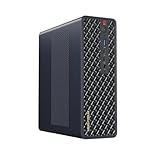
- 【Leading AI Mini Workstation】MINISFORUM AI MS-S1 Max Workstation comes with AMD Ryzen AI Max+ 395 processor, which uses AMD's latest generation Zen 5 architecture. It has 16 Cores and 32 Threads, the boost clock is up to 5.1GHz. The overall processor performance is up to 126 TOPS, and the NPU performance reaches up to 50 TOPS. AMD Ryzen AI enables improved productivity, advanced collaboration, and improved efficiency.
- 【AMD Radeon 8060S Graphics 】The MS-S1 Max Mini PC equipped with AMD Radeon 8060S Graphics which built on the new generation of RDNA 3.5 architecture AMD graphics, it brings ultra-high frame rate experiences and advanced content creation features anywhere and delivers staggering performance. It can handle all your computing and multimedia tasks efficiently.
- 【Five 8K Video Output】This MS-S1 Max Workstation comes with five video outputs, 1x HDMI (8K@60Hz), 2x USB4(40Gbps,Alt DP2.0,PD out 15W) and 2x USB4 V2(80Gbps,Alt DP2.0,PD out 15W) Outputs, which support multiple monitors display at the same time and provide a larger and wider filed of view and improve your work efficiency. It is used in fields that require high-performance computing and graphics processing, including digital signage and securities trading, as well as work that uses CAD, such as engineering design, scientific calculations, animation production, and post-production for movies and television
- 【 Fast and Stable Wire & Wireless Speed】It comes with Two 10G Lan Ports for wired connection and and Wi-Fi 7 / BT5.4 for wireless connection, which increased the network speed greatly and expand its functions and improved performance of computer to a large extent and allows you to use more networks such as software routers (OpenWRT / DD-WRT / Tomato etc.), firewalls, NAT, network isolation etc.
- 【Large Storage & Flexible Expandability】This Workstation equipped with 64GB LPDDR5-8000MHz + 2TB M.2 2280 PCIe4.0 SSD. There is another PCIe4.0 SSD slot available for up to 8TB, these SSD slots are compatible with RAID0 and RAID1, you can store movies, videos, photos, important files easily. What’s more, it also comes with 1x standard PCIex16 slot(PCIe4.0x4) inside.
A separate preprint tested MLX, MLC-LLM, Ollama, llama.cpp, and PyTorch MPS on an M2 Ultra with 192 GB unified memory, using Qwen 2.5 prompts ranging from hundreds to 100,000 tokens. It examined time to first token, sustained throughput, latency, long-context behavior, quantization, streaming, batching and concurrency, and deployment complexity. In those tested conditions, its abstract reports the highest sustained generation throughput for MLX, lower time to first token for moderate prompts with MLC-LLM, efficient lightweight single-stream use with llama.cpp, and an emphasis on developer ergonomics with Ollama. Treat those as scoped preprint findings, not an Apple Silicon ranking for other machines or tasks.
Do these 3 things before closing this tab:
1Repair Windows errors before they cause bigger problems2Fix the driver behind crashes, sound loss and screen glitches3Clear out junk files and repair common Windows errorsCompare setups using your real tasks
A short test with a convenient prompt can miss the reason a local setup does or does not work for you. Use a handful of representative tasks and the actual machine, model, and settings you intend to keep. If you compare runtimes, use the same model weights and quantization, prompts, context, and hardware where possible; record runtime versions and defaults, too.
- Choose representative tasks. Include the everyday work you expect to do, such as drafting, extracting information, or working with long documents or code. Include structured-output tasks if your workflow depends on a specific format.
- Hold the comparison steady. Use the same model and quantization, the same prompts and context, and the same hardware when comparing options. Note any version or default-setting differences that cannot be held constant.
- Judge output quality against your requirements. Check correctness for the task, instruction following, and whether the output format is usable. Speed does not compensate for output that needs extensive correction.
- Measure prompt processing and generation separately. Record how long the model takes to process the input and how quickly it generates output. For interactive use, note time to first token as well.
- Check resource use and friction. Observe memory use and whether your intended model and context fit. Note setup effort, compatibility problems, and the work involved in maintaining the runtime or frontend. For a laptop or always-on system, include energy use if you can measure it.
- Repeat enough to avoid trusting a fluke. Record the setup and conditions for each run. A single unusually quick or slow response is not a dependable comparison.
The local_bench project is one optional evaluation tool. It documents a local harness for tokens per second, time to first token, memory, a deterministic 31-task quality suite, and optional joules per token. Its fit command estimates whether a model fits using RAM, CPU, GPU or VRAM, Apple unified memory, quantization, and requested context. The project cautions that its estimates describe a laptop at a particular moment and that its small quality suite is not a definitive judgment of model capability. Use it as a screening signal, not proof that a model suits your work.
Decide whether local inference is productive for you
Keep a local stack when it performs acceptably on your own tasks and the benefits of running it on your computer outweigh the setup and maintenance effort. A setup can be productive for short drafting or extraction and still disappoint on long-context coding or document work. Make the decision from task quality, prompt-processing speed, response start time, generation speed, resource use, and the friction of keeping the stack working—not from a single tokens-per-second figure or a runtime’s reputation.
Quick Recap
Product prices and availability are accurate as of the date/time indicated and are subject to change. Any price and availability information displayed on Amazon at the time of purchase will apply.
Recommended Free Tools




