Do these 3 things before closing this tab:
1Fix the driver behind crashes, sound loss and screen glitches2Clear out junk files and repair common Windows errors3Scan for outdated or missing drivers - takes under a minuteAtlantic bluefin tuna (Thunnus thynnus) is dramatically larger than albacore (Thunnus alalunga). Both are migratory open-ocean tunas, but albacore occupies tropical and warm-temperate waters across three oceans, while Atlantic bluefin is associated with temperate Atlantic waters and regularly dives hundreds of metres. Their conservation labels also depend on the assessment: the IUCN Red List’s global categories differ from NOAA’s stock-specific findings for particular regions and years.
Bluefin and albacore at a glance
“Bluefin” can mean several species, including Atlantic, Pacific and Southern bluefin. The comparison here is specifically between Atlantic bluefin tuna, Thunnus thynnus, and albacore, Thunnus alalunga. Treating every bluefin population as one biological or management unit would produce misleading conclusions.
As an Amazon Associate I earn from qualifying purchases.
| Comparison point | Atlantic bluefin tuna | Albacore |
|---|---|---|
| Scientific name | Thunnus thynnus | Thunnus alalunga |
| Largest figure in the cited NOAA profiles | Up to 13 feet and 2,000 pounds | Pacific profile: almost 80 pounds and about 47 inches; North Atlantic profile: more than four feet and 88 pounds |
| Typical geographic description | Temperate Atlantic waters, with trans-Atlantic migrations | Tropical and warm-temperate waters of the Pacific, Atlantic and Indian oceans |
| Reported diving or depth information | Frequently dives to 500–1,000 metres | Adults can occur at least 1,250 feet deep |
| Global IUCN category in version 2021-2 | Endangered | Near Threatened |
| What a NOAA stock label means | A particular regional stock and assessment year, not every bluefin fishery | A particular ocean-basin stock and assessment year, not every albacore fishery |
The size gap is the simplest distinction: even the largest albacore figures in these profiles are tiny compared with a 2,000-pound Atlantic bluefin. The conservation comparison is more nuanced because the IUCN evaluates global extinction risk, whereas NOAA reports the condition of defined managed stocks.
PC Slower Than It Used to Be?
A free scan shows the junk files, broken settings and background clutter dragging Windows down - then fixes them in one click.Free scan · Windows 10 & 11Crashes, No Sound, or Screen Glitches?
Random freezes, missing sound and display glitches usually trace back to one bad driver. Find and replace yours safely.Free scan · under a minuteThey are separate species, not two forms of the same tuna
Atlantic bluefin and albacore are both members of the tuna family, but they have different species identities, ranges and body proportions. Atlantic bluefin is Thunnus thynnus. Albacore is Thunnus alalunga. A seafood label or conversation that says only “bluefin” leaves the species and ocean basin unspecified.
#1 Best Overall

- WILD CAUGHT TUNA IN WATER: Premium canned fish with a mild flavor, firmer texture, and large pieces is a delicious addition to pasta, salads, fish tacos, and seafood bowls.
- FISH AS FUEL: Excellent source of lean protein (29g per can), DHA & EPA Omega-3s (300mg per can), and vitamin B12. Case contains 8 five ounce cans.
- CLEAN INGREDIENTS: Non GMO Project Certified, Gluten Free, Kosher Pareve, and great for those on a low carb or ketogenic (keto) diet.
- CONVENIENT SHELF STABLE FOOD: Perfect for stocking your pantry at home or bringing on the go as a high-protein option while traveling, camping, or on the job.
- SUSTAINABLE TUNA: Wild Caught and Dolphin Safe - submit the code on the can on our Trace My Catch website to learn where and how your seafood was caught, processed, and more. Canned in the USA and packaged in recyclable packaging.
This distinction matters for three reasons. First, a size claim for Atlantic bluefin cannot be applied to Pacific or Southern bluefin without checking the species. Second, a management decision for one albacore stock does not automatically describe albacore in another ocean. Third, global conservation categories and local fishery assessments answer different questions.
How big is a bluefin compared with an albacore?
Atlantic bluefin can reach exceptional size
NOAA Fisheries’ Western Atlantic Bluefin Tuna profile, updated July 6, 2026, describes Atlantic bluefin as the largest tuna species and gives a maximum of up to 13 feet and 2,000 pounds. That is a maximum reported figure, not the expected size of every fish landed. It represents a fish several times the mass of the largest albacore figures in the cited profiles.
Atlantic bluefin’s bulk is accompanied by a robust body built for long-distance travel and bursts of speed. The NOAA description identifies a dark blue-black back and white lower sides and belly. Its pectoral fins are relatively short compared with those of albacore, a useful visual clue when the fish can be examined closely.
Albacore maxima vary by ocean and profile
NOAA uses regional profiles for albacore, so there is no single number in the cited material that should be presented as a universal maximum. The Pacific albacore profile lists fish reaching almost 80 pounds and about 47 inches. NOAA’s North Atlantic albacore page, updated July 2, 2026, says albacore grow to more than four feet and 88 pounds.
The difference between those two albacore figures is not an error to be averaged away. It reflects different regional profiles and source descriptions. Use the Pacific figures when discussing Pacific albacore and the North Atlantic figures when discussing the North Atlantic population. In either case, the fish remains far smaller than the maximum Atlantic bluefin described by NOAA.
Rank #2

- Delicious, Mild Flavor: Starkist Solid White Albacore Tuna in Water cans contain a solid fillet of delicious, wild caught albacore tuna. The mild flavor and firmer texture make it a great option for salads, pasta dishes or in your favorite recipe
- Excellent Source of Protein: White Albacore Tuna is a natural source of protein and Omega 3s, with 26g of protein and 110 calories per serving It’s soy free, gluten free and works well with Keto, Paleo, Mediterranean and Weight Watchers diets
- Add Variety to Your Diet: This dolphin safe tuna is a wholesome choice for a snack or meal StarKist Solid White Albacore Tuna in Water is a great and easy way to add seafood to your diet
- Versatile: StarKist Solid White Albacore Tuna is a versatile and easy way to liven up a meal It can be used in cool salads, hot casseroles, on sandwiches and as a substitute for chicken in your favorite recipe
- Bulk (4 Pack): Buy your tuna in Bulk with the StarKist 4-Pack of canned tuna. These tuna cans are easy to store and great to have handy for when hunger strikes, whether you’re on the go, at the office or at home
Body features that help distinguish them
Pacific albacore are noted by NOAA for exceptionally long pectoral fins that reach at least half the body length, along with a white edge on the tail. Atlantic bluefin have shorter pectoral fins, a dark blue-black upper body and pale lower sides. These characteristics can aid identification, but color changes with handling, lighting and condition. A photograph or casual glance is not a substitute for an authoritative species identification, especially where fisheries regulations depend on the exact species.
Where do bluefin and albacore live?
Atlantic bluefin: temperate Atlantic habitat and deep dives
NOAA describes Atlantic bluefin as inhabiting temperate Atlantic waters. In the western Atlantic profile, the stated range runs from Newfoundland to the Gulf of America, the current name used by that source for the body of water formerly commonly called the Gulf of Mexico. The species also crosses the Atlantic’s east–west boundary.
Bluefin may remain near the surface in suitable temperate water, yet tagging and profile information show frequent dives to 500–1,000 metres. Those dives mean “surface tuna” is an incomplete description: the same highly migratory fish can occupy very different depths during a journey.
Atlantic bluefin migrations span thousands of miles. Tagging has documented movement between eastern and western Atlantic areas, so a fishery operating in one country can be connected biologically to fish encountered far away. This is why management cannot be understood solely from a single coastal jurisdiction.
Albacore: a three-ocean distribution
Albacore occur in open waters of the Pacific, Atlantic and Indian oceans, especially tropical and warm-temperate zones. NOAA’s profiles describe them as highly migratory. Adults can be found at depths of at least 1,250 feet, while juveniles are often associated with oceanic fronts or temperate discontinuities where water masses meet.
Rank #3
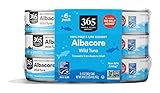
- 6-pack of 5 oz no-salt-added albacore tuna in water
- 100% pole and line caught for dolphin and sea turtle safety
- Wild-caught tuna naturally GMO-free
- Packed in water with no added salt
- Convenient protein-rich meal or snack option
In the North Pacific, juveniles typically move from waters off Japan toward the United States Pacific coast during spring and summer, then return toward the western Pacific later in the year. NOAA cautions that the timing varies with ocean conditions, so the pattern is a recurring migration framework rather than a fixed calendar for every year.
Where their habitats overlap
Both species use open-ocean environments and can cross national boundaries. Their ranges overlap in a broad ecological sense—both are pelagic, migratory tunas—but they are not interchangeable. Atlantic bluefin is the temperate Atlantic species described above; albacore has a broader ocean-basin distribution that includes the Pacific, Atlantic and Indian oceans.
Depth also separates the shorthand descriptions. Bluefin is documented making repeated dives down to 500–1,000 metres, while the Pacific albacore profile places adults at least 1,250 feet deep. Those values are not directly comparable measurements of a preferred depth: one describes frequent bluefin dives, and the other gives a depth at which adult albacore are found.
What do the conservation categories mean?
Global IUCN categories
The IUCN Red List version 2021-2 statistics table lists Atlantic bluefin tuna as Endangered and albacore as Near Threatened. These are global categories for the taxa, tied to that assessment version. They are not a 2026 update and should not be presented as if they were a current annual fishery quota or a local catch rule.
An IUCN category asks about extinction risk across the species’ global range, using the Red List’s criteria and evidence. It does not state whether a particular fleet is currently exceeding its catch limit, nor does it replace a regional stock assessment.
Rank #4

- DELICIOUS TUNA STEAK- Our Wild Albacore Tuna steak is hand-cut, hand packed and cooked only once to retain its natural juices and pristine flavor. We don't add water, broths, or fillers to our tuna, so no need to drain the can
- CONVENIENCE AND QUALITY- With a convenient pull tab, enjoy this tuna at home or on-the-go for a great-tasting, satisfying snack or healthy lunch. Our tuna steak can also be used in seafood recipes or to elevate any tuna sandwich
- EXCELLENT SOURCE OF PROTEIN- Our Wild Albacore Tuna with no salt added contains 21 g of clean protein per 3 ounces and 705 mg of DHA and EPA Omega 3s. Wild Planet tuna is Non-GMO verified, gluten-free, keto-friendly and Kosher Pareve
- NATURALLY LOW IN MERCURY- Using 100% pole & line method allows us to catch smaller, migratory tuna that are naturally lower in mercury than some conventional brands that use deep sea methods and catch larger, older tuna resulting in higher mercury
- SUSTAINABLY SOURCED WILD-CAUGHT TUNA- We catch our tuna to the highest sustainability standards. Wild Planet tuna is 100% pole & line caught, eliminating bycatch, or the capture of unintended species. Dolphin & turtle safe
NOAA stock findings for Atlantic bluefin
NOAA’s western Atlantic bluefin profile reports that the 2021 stock assessment found the stock was not subject to overfishing, while its overfished status was unknown. Those two terms are separate: “subject to overfishing” concerns the current rate of removals, while “overfished” concerns the stock’s biomass relative to a management reference point. One status can be known while the other remains uncertain.
The same NOAA profile describes 2023 management under ICCAT Recommendation 21-10. ICCAT is relevant because Atlantic bluefin migrate through international waters and are harvested by multiple nations. NOAA also says that U.S. wild-caught western Atlantic bluefin is a smart seafood choice in the U.S. management context because it is managed under a rebuilding plan that allows limited harvest by U.S. fishermen. That statement applies to the specified U.S. fishery and management framework, not to every bluefin caught worldwide.
NOAA stock findings for albacore
NOAA’s Pacific albacore page reports that the North Pacific stock was not overfished and was not subject to overfishing according to the 2023 assessment. The page reports the same two findings for the South Pacific stock according to the 2021 assessment.
NOAA’s North Atlantic albacore page says the 2023 assessment found that stock was not overfished and not subject to overfishing. This is a stock-specific result for the North Atlantic assessment, not a blanket certification covering albacore in the Indian Ocean or every fishery using the name “albacore.”
Quick wins for a faster PC:
Scan for outdated or missing drivers - takes under a minuteDriver Scan →Repair Windows errors before they cause bigger problemsFix Now →| Stock or scope | Assessment information reported by NOAA or IUCN | How to interpret it |
|---|---|---|
| Atlantic bluefin, global | IUCN Red List version 2021-2: Endangered | Global extinction-risk category for the species |
| Albacore, global | IUCN Red List version 2021-2: Near Threatened | Global extinction-risk category for the species |
| Western Atlantic bluefin | 2021 assessment: not subject to overfishing; overfished status unknown | Regional stock findings, not a global bluefin judgment |
| North Pacific albacore | 2023 assessment: not overfished and not subject to overfishing | North Pacific stock only |
| South Pacific albacore | 2021 assessment: not overfished and not subject to overfishing | South Pacific stock only |
| North Atlantic albacore | 2023 assessment: not overfished and not subject to overfishing | North Atlantic stock only |
Is albacore more sustainable than bluefin?
There is no honest one-word answer that applies to every fishery. The IUCN global categories in the cited 2021-2 table place Atlantic bluefin at a higher global extinction-risk level than albacore. However, NOAA’s regional findings show that several named albacore stocks were not overfished and not subject to overfishing in their stated assessment years, while the western Atlantic bluefin stock was reported as not subject to overfishing but had an unknown overfished status in the 2021 assessment.
Best Value

- Delicious, Mild Flavor: Starkist Albacore Chunk White Tuna in Water is wild caught and dolphin safe. Each of our nutrient dense tuna cans features select cuts of delicious, premium tuna
- Excellent Source of Protein: Our tuna is a natural source of protein and Omega 3s It has 22g of protein and 100 calories per can. It’s soy free, gluten free and works well with Keto, Paleo, Mediterranean and Weight Watchers diet plans
- Add Variety to Your Diet: StarKist Chunk White Albacore Tuna in Water can contains delicious wild caught albacore tuna that you can enjoy in a wrap or on a salad StarKist makes it easy to incorporate seafood into your lifestyle
- Versatile: Albacore’s mild flavor and firmer texture makes it a great option for salads, pasta dishes or as a substitute for chicken in your favorite recipe
- Bulk (12 Pack): Buy your tuna in Bulk with the StarKist 12-Pack. These tuna cans are easy to store and great to have handy for when hunger strikes, whether you’re on the go, at the office or at home
Those statements measure different things and should not be converted into a universal ranking of “sustainable species.” A consumer or journalist should identify the ocean basin, stock, fishing method and assessment year behind any sustainability claim. A product labeled simply “tuna” or “albacore” may not provide enough information to make that determination.
Stock conditions can change as catches, recruitment, environmental conditions and scientific estimates change. NOAA’s pages and the relevant regional fisheries organization are the appropriate places to check for newer assessments or regulatory changes before making a current purchasing or policy claim.
Why international cooperation is central
Highly migratory fish do not remain inside one country’s waters. NOAA’s Atlantic bluefin profile states: “Effective conservation and management of highly migratory species like bluefin tuna require international cooperation as well as strong domestic management.” The statement explains why domestic rules alone cannot account for the entire life cycle of a fish moving across the Atlantic.
The Tool Desk
Outbyte PC Repair FREERepair Windows errors before they cause bigger problemsFix Now →Outbyte Driver Updater FREEFix the driver behind crashes, sound loss and screen glitchesFind Drivers →NOAA’s Pacific albacore page makes the parallel point: “Management of highly migratory species, like Pacific albacore tuna, is complicated because the species migrate thousands of miles across international boundaries and are fished by many nations.” A stock assessment therefore has to be read alongside the geographic stock definition and the management body responsible for the fishery.
How to read a bluefin-versus-albacore claim
- Identify the species. Confirm that “bluefin” means Atlantic bluefin in the claim, rather than another bluefin species.
- Locate the stock. Look for terms such as western Atlantic bluefin, North Pacific albacore or North Atlantic albacore.
- Check the assessment year. A 2021 finding and a 2023 finding are not interchangeable, and the IUCN comparison here is explicitly version 2021-2.
- Separate risk from fishery status. “Endangered” and “Near Threatened” are IUCN global categories; “overfished” and “subject to overfishing” are stock-management terms.
- Check the jurisdiction and management system. A U.S. seafood recommendation describes the U.S. fishery context and should not be generalized to catches from other countries.
What these differences mean for identification and seafood discussions
For a biological comparison, size and fin shape are the most practical clues. A fish approaching the Atlantic bluefin maximum described by NOAA is in an entirely different size class from an albacore listed at 47 inches or 88 pounds. Long pectoral fins extending at least half the body length and a white tail edge point toward albacore in the Pacific description, while short pectoral fins and a dark blue-black back with pale lower sides are associated with Atlantic bluefin.
For seafood discussions, species name alone is not enough. Ask which stock supplied the fish, where it was caught, when the assessment was made and what management system applies. Canned albacore is a food category, not proof of a particular ocean origin or sustainability outcome. Verify the product’s species and sourcing information before attaching a conservation claim to it.
How current are the cited figures?
The Atlantic bluefin biology and western Atlantic status information comes from NOAA Fisheries’ page updated July 6, 2026. The North Atlantic albacore page was updated July 2, 2026. The Pacific albacore profile was accessed October 9, 2026; the captured profile gives the size and depth figures but no update date. The global categories come from the IUCN Red List version 2021-2 table.
What’s actually slowing this PC down?
Pick the symptom - the matching free tool is one click away.
Because stock assessments, quotas and management recommendations are time-sensitive, treat the dates as part of each fact. A later NOAA assessment or regional fisheries commission decision could change a stock label without changing the underlying species identities, maximum-size descriptions or broad migration patterns.
Quick Recap
Product prices and availability are accurate as of the date/time indicated and are subject to change. Any price and availability information displayed on Amazon at the time of purchase will apply.




