PC Slower Than It Used to Be?
A free scan shows the junk files, broken settings and background clutter dragging Windows down - then fixes them in one click.Free scan · Windows 10 & 11Crashes, No Sound, or Screen Glitches?
Random freezes, missing sound and display glitches usually trace back to one bad driver. Find and replace yours safely.Free scan · under a minuteFor routine caulk replacement in a bathroom, kitchen, or window joint, start with a purpose-built caulk scraper or a flexible putty knife. Which one fits depends on how the old caulk has aged and what sits on either side of the joint. No independent test establishes one tool as fastest, safest, or best on every surface, so the choice comes down to matching the tool to the caulk and the material it sits against.
Start with the condition of the caulk
The caulk’s condition narrows the field faster than any product comparison. Before picking up a tool, check which of these describes the bead you are removing:
As an Amazon Associate I earn from qualifying purchases.
- Loose or peeling: the bond has already failed along one edge. A flexible putty knife or a plastic scraper usually lifts it without much force.
- Soft or gummy: the bead is still pliable but no longer sealing well. A caulk scraper can pull it out in strips.
- Hardened or brittle: the bead has cured into a rigid layer. It typically needs deliberate scoring, more scraping pressure, or a softening product before it releases.
- Elastic but well bonded: the bead still stretches but grips the surface tightly. This is the case where scoring the edge and working slowly matters most.
Next, look at what the caulk touches. Tile, glazed ceramic, and sealed countertops tolerate a plastic or stainless scraper far better than painted trim, vinyl, acrylic tub surfaces, or freshly finished wood. Joint width and depth matter too. A narrow gap around a window frame rewards a thin, stiff blade, while a wide tub-to-tile joint may need a larger scraper head to move material efficiently.
The tools, one at a time
Purpose-built caulk scrapers
Caulk scrapers are the most direct option for ordinary household work. They have an angled or hooked edge designed to lift a bead off the substrate in one pass. Manufacturers list them for several common sealants:
#1 Best Overall
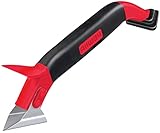
- Multifunction 3-in-1 Caulk Tool: Comfortable soft-grip and made from strong engineering plastic
- Remove Old Caulk: Push or pull the stainless-steel blade to quickly remove old caulk
- Smooth Freshly Laid Caulk: Rotatable silicone triangle features 3 bead profiles for caulk beads (narrow, medium, or wide)
- Easy Clean Up: Plastic scraper can be used for additional removal and clean-up of materials
- Versatile Design: Works with acrylic, latex, and silicone caulk and is handy for window, bath, and shower projects
- HOMAX Caulk Remover Tool (PPG): PPG says it loosens and cleans hardened caulk, works with latex, silicone, and acrylic caulk, and is intended for use around tubs, tile, and countertops.
- CRL Silicone Scraper Hand Tool: CRL lists silicone, acrylic, and latex use and names showers, windows, siding, sinks, and tubs as household applications.
- ALLWAY 3-in-1 Caulk Tool (Sherwin-Williams): the listing describes removing old caulk, scraping, and smoothing new caulk, with acrylic, latex, and silicone listed as compatible sealants.
These descriptions come from manufacturer product pages reviewed in October 2026. They establish what each product is marketed to do. They do not show how the tools compare in speed or in surface damage, and nothing in the evidence rates one brand above another.
Flexible putty knife with a scored edge
A flexible putty knife is the low-cost option and often the right first step on loose or soft caulk. Its blade can slide under a lifting edge and follow a curved joint. DAP’s caulk removal guide describes carefully scoring the edge of the remaining caulk to break its bond with the surface, and that is the step where most surface damage happens. Keep the blade low and the angle shallow, and stop if the blade begins to bite into paint, glaze, or the substrate beneath it. A putty knife is also more likely than a purpose-built scraper to slip and mark an adjoining finish, so check your pressure frequently.
Rank #2

- ❤️【Multifunctional Caulking Tools】The 5 in 1 upgraded caulking remover tools can not only help you repair the gap and clean the residual glue, but also help you fill the caulk with glue. It will improve the agglutinating quality and the aesthetic sense of surface.
- ❤️【Caulking Finishing Tool】Stainless steel scraper or finishing scraper remove stubborn old glue. The silicone trowel to remove surface bumps and dents, It's an good tool for smoothing sealing lines, caulking lines. The caulking remover tools suitable for most caulking work, and help you finishin th edges, corners, joints.
- ❤️【Reusable & Replaceable 6 Silicone Pads】The silicone caulking tools were designed with Non-slip push-pull button, replace the 6 silicone pads which you want( including 3R, 6R, 10R, 13R, 15R, 17R radius). You can install suitable sizes of silicone pads on the caulking tool according to the size of the gap to help you fill the crack with glue to reduce the waste of sealant.
- ❤️【Damage-free, Durable and not Rusty】Goopreen caulking tool kit made of high quality stainless steel metal head and plastic materials, very durable, sturdy, rust-proof and corrosion-resistant. With our caulking removal tool, it is easy to remove the old caulking and apply the new one. Won't cause scratches/any damage to the wall surfaces.
- ❤️【What You Get】The caulking tools can use for home, kitchen, bathroom, window, sink joint, tile and so on. You will get 1x upgraded 5 in 1 caulking tool, 1 x sealant cover, 1 x black removal scraper, 4 x different shapes caulking scraper, 6 x different models silicone pads and responsible after-sale service. Contact the customer service center whenever you have a problem and get a solution within 24hrs.
Electrical joint cutter with an oscillating blade
The U.S. Environmental Protection Agency’s summary of caulk removal tools, published in 2016, includes an electrical joint cutter with an oscillating blade. The EPA describes it this way: “Universally applicable tool for cutting out hard and soft caulk, especially in combination with a utility knife; suitable for all material types of adjoining structures.” That description appears in the context of removing PCB-containing caulk, which is a regulated, hazardous-material job. It is not a routine household recommendation, and it is not a tool a homeowner should reach for on a typical bathroom reseal. The EPA summary also lists protective measures such as containment and dust control for that work, and those measures are specific to the PCB context.
What’s actually slowing this PC down?
Pick the symptom - the matching free tool is one click away.
Caulk-softening gel
A remover gel is a consumable, not a tool. It is meant to soften remaining caulk so that a scraper can pull it free with less effort. Rust-Oleum’s Krud Kutter Caulk Remover, for example, is marketed for silicone, acrylic latex, and polyurethane sealants. Rust-Oleum’s product support instructions, updated 10 February 2026, describe soaking the caulk for 5 to 20 minutes or until it loosens, then scraping with a caulk scraper, stiff-bristled brush, or flexible blade, and repeating as needed. That timing applies to this product’s dry-caulk procedure. Other removers may need different dwell times, and some may not be suitable at all, so follow the label on the container you buy.
Rank #3

- 【Tips】Here's a quick tip for achieving that smooth, one-handed gliding sensation with your grout tool: consider loosening the screws on the backside ever so slightly.While a bit of loosening can enhance the user experience, be careful not to overdo it. We're aiming for a perfect balance, so keep it within the range where the tool feels comfortably snug in your hand, providing that silky-smooth maneuverability.
- 【Professional Design】 - Saker silicone caulking tools could combine 3 functions into 1,including internal angle scraper,flat angle scraper,silicone smoother,It can help you remove the seal and re-sealing and repair the gap and clean the residual glue easily.
- 【Durable Material】- The Saker 3-in-1 Caulking Tool features a sharp, hard stainless steel blade for removing common old caulk;Nice silicone trowel for the removal of bumps and dents surface;White silicone pads for smooth application of new silicone!
- 【Effectiveness】-Saker 3 in 1 sealant finishing tool grout remove scraper with versatile tools with many uses,easy to rip the old caulk and smooth the caulk well.No need for masking tape,it is convenient and quick to use and save time.
- 【Multiple Usage Scenarios】- Saker caulk remover glass glue angle scraper is a perfect tool kit;Great ideal for home,kitchen,bathroom,floor,tank,window,sink joint,frames seal and so on.The smart dimension is applicable for interior and exterior caulking.
Surface restrictions are the main reason to test first. Rust-Oleum says Krud Kutter is not recommended for painted, varnished, or refinished surfaces. A softening product that works on glazed tile may strip the sheen from a painted casing or lift a wood finish, so test an inconspicuous spot and wait for the full dwell time before judging the result.
Tool comparison at a glance
| Tool or product | Caulk types named by the source | Best-documented use | Main limitation |
|---|---|---|---|
| HOMAX Caulk Remover Tool (PPG) | Latex, silicone, acrylic | Hardened caulk around tubs, tile, and countertops | Performance versus other scrapers not stated (PPG product page, October 2026) |
| CRL Silicone Scraper Hand Tool | Silicone, acrylic, latex | Showers, windows, siding, sinks, and tubs | Performance versus other scrapers not stated (CRL product page, October 2026) |
| ALLWAY 3-in-1 Caulk Tool (Sherwin-Williams) | Acrylic, latex, silicone | Removing old caulk, scraping, and smoothing new caulk | Performance versus other tools not stated (Sherwin-Williams listing, October 2026) |
| Flexible putty knife | Not stated by a manufacturer in the sources reviewed | Loose or soft caulk, with a scored edge on bonded beads (DAP guidance) | Higher risk of scratching or marring adjoining surfaces (DAP guidance) |
| Electrical joint cutter with oscillating blade | Hard and soft caulk, per the EPA | PCB-caulk removal, with a utility knife (EPA, 2016) | Specialized, regulated context; not a household tool recommendation |
| Krud Kutter Caulk Remover (Rust-Oleum) | Silicone, acrylic latex, polyurethane | Softening dry caulk before scraping (5 to 20 minutes or until loose, per Rust-Oleum) | Not recommended for painted, varnished, or refinished surfaces (Rust-Oleum) |
Removal steps for a typical joint
The sequence below follows the general method in DAP’s removal guidance and the product instructions above. Adjust it to the caulk condition you identified at the start.
Rank #4

- Effortless Sealant Removal: Designed for ease of use, this tool simplifies the process of removing old or unwanted sealant without hassle.
- Removes All Types of Sealant: Effectively eliminates silicone, acrylic, and other common sealants from surfaces.
- Safe on Surfaces & Tiles: Gentle yet effective, the tool is safe to use on most surfaces including tiles, countertops, and bathroom fixtures.
- 2-in-1 Versatile Design: Features a sharp pointed end for precision and a flat edge for smooth scraping, making it ideal for various removal tasks.
- Professional Results: Achieve clean, residue-free surfaces with a tool trusted by professionals and DIYers alike.
- Cut or lift the leading edge of the bead with a utility knife or the corner of a putty knife, taking care not to press into the adjoining surface.
- Pull out as much loose caulk as possible by hand or with a flexible putty knife held at a shallow angle.
- On bonded material, score the remaining caulk along the surface edge with a utility knife to break the bond, then scrape with a caulk scraper.
- If the bead still resists, test a remover on an inconspicuous spot first, follow the label’s dwell time, and scrape again with a caulk scraper, stiff-bristled brush, or flexible blade. Repeat as needed.
- Remove all residue and clean the joint. DAP recommends removing residue and cleaning the surface before applying new sealant, and the new sealant manufacturer’s instructions govern the rest of the preparation.
Safety and when to stop
- Ventilation and skin protection: Rust-Oleum Canada’s instructions for its caulk remover say to use it only in a well-ventilated area, keep it away from flames and sparks, avoid breathing fumes or getting it on skin or in eyes, and wear an organic-vapor respirator and safety glasses. Those are that product’s label instructions, not a general rule for every remover, so read the label on the container you have.
- Stop on suspected legacy caulk: caulk installed in older buildings, particularly in joints around windows and masonry, may contain PCBs. The EPA’s guidance on PCB removal is written for specialists. If you suspect hazardous legacy caulk, stop and arrange testing and professional removal rather than scraping it yourself.
- Stop on a finish that lifts: if a scraper or remover begins to lift paint, glaze, or veneer, stop, rinse the area as the label directs, and assess the damage before continuing.
- Stop on a joint that is wider than the tool: forcing a scraper into a gap it does not fit tends to gouge the surfaces on both sides.
Most household reseal jobs do not require the containment or dust controls described in the EPA’s PCB-specific summary. The point of that section is that the hazard depends on what the caulk contains, not on the tool used to remove it.
Quick Recap
Best Value
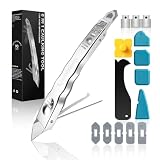
- 【Premium Stainless Steel Material】 This caulking tool, made of high‑hardness stainless steel, easily scrapes away old grout, residue and buildup. Rust‑resistant and corrosion‑proof, Caulk remover tool withstands heavy‑duty use and delivers reliable long‑term performance.
- 【Comfortable Ergonomic Handle】 Silicone caulking tool’s ergonomically curved wavy‑shaped handle fits snugly in your hand for effortless force during grout removal. Its soft silicone‑wrapped base offers cushioned comfort for long‑time use, while anti‑slip textures and built‑in grooves ensure a firm, slip‑resistant grip under heavy pressure.
- 【5 Double‑Sided Replaceable Silicone Pads】 This caulk smoothing tool comes with 5 double‑sided replaceable silicone scrapers in different angles. The C‑side creates flat beaded seal lines, while the R‑side produces rounded‑corner seal lines. You can select the proper head according to gap width for precise sealant finishing and effectively reduce material waste.
- 【Upgraded Set Contents】 Caulk finishing tool upgrade kit includes: 1 sealant cap, 1 black scraper, and 4 caulking knives in different shapes. This 6 in 1 caulking tool kit requires no additional accessories, making it more convenient and efficient.
- 【Wide Application】 Caulking removal tool compatible with most sealants, silicones, resins, grouts, and other materials. Caulking tools suitable for a wide range of applications, including home interiors, kitchens, bathrooms, floors, windows, and sink joints.
Product prices and availability are accurate as of the date/time indicated and are subject to change. Any price and availability information displayed on Amazon at the time of purchase will apply.




