Recommended Free Tools
Does “hard sci-fi” mean the science is always right? No. The label signals that scientific reasoning, technical detail, or plausible extrapolation matters to a story; it is not a certification that every claim has passed a scientific audit. A novel can be science-forward, get many details right, and still invent a premise or take a consequential liberty for the plot.
What “hard sci-fi” does—and does not—promise
Hard science fiction generally gives science or technology a prominent role in the story and pays close attention to how its premises work. The phrase has been used since the late 1950s, with early discussions emphasizing scientific accuracy and explanation. Genre historian Gary Westfahl reports that Hal Clement described avoiding scientific errors as hard SF’s primary goal—but that is one account of the form, not a rule accepted by every reader or writer.
| # | Preview | Product | Price | |
|---|---|---|---|---|
| 1 |

|
Zero-Point Prop: Hard Science Fiction Thriller | $2.99 | Buy on Amazon |
| 2 |

|
Frequency: Hard Science Fiction | $6.99 | Buy on Amazon |
| 3 |

|
Dark Matter: A Novel | $11.65 | Buy on Amazon |
| 4 |
|
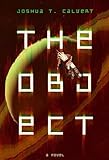
The Object: Hard Science Fiction | $7.99 | Buy on Amazon |
| 5 |

|
Children of Time | $8.69 | Buy on Amazon |
As an Amazon Associate I earn from qualifying purchases.
There is no universally accepted definition of science fiction, let alone a single test that every hard-SF novel must pass. The Science Fiction Encyclopedia surveys definitions that variously emphasize science, extrapolation, scientific method, or what imagined changes reveal about people and society. So when someone asks, “What is exactly counted as ‘hard’ sci-fi?”, the most accurate answer is that the boundary is contested.
What’s actually slowing this PC down?
Pick the symptom - the matching free tool is one click away.
A useful general standard, rather than a universal hard-SF requirement, comes from a chapter abstract in The Cambridge Companion to Science Fiction: speculation should be important to the story, and the author should make a reasonable effort to render it plausible. A story may still qualify as science-forward without satisfying every reader’s preferred definition.
#1 Best Overall
Separate errors, imagined premises, and pseudoscience
To judge a particular claim, first work out what kind of claim it is. A mistake about established science is different from an openly imagined premise that the author tries to make plausible; neither is automatically the same as pseudoscience. The Science Fiction Encyclopedia’s discussion of hard SF treats these distinctions as meaningful.
- Established science: The story invokes a well-understood fact or principle. Check whether the book applies it correctly in the circumstances it describes.
- Extrapolation: The author extends current knowledge to a possible future. Ask whether the extension is presented as a prediction, a possibility, or simply a device the story needs.
- Invented premise: The story introduces something not established in the real world. It can be internally reasoned and plausible within the novel without becoming real science.
- Apparent error or contradiction: A claim may conflict with established science, or the consequences of the novel’s own premise may not follow consistently. Those are different problems and should be assessed at the claim level.
In other words, “the author made this up” does not by itself settle whether a book is hard SF. What matters is how central the premise is, how carefully the story reasons from it, and whether the book treats conjecture as established fact.
Rank #2
Why a science-forward novel may still take a liberty
Andy Weir’s The Martian is a clear example of accuracy and narrative necessity coexisting. A 2015 TIME discussion of the novel, updated in 2023, praised its scientific and technical detail while identifying the storm that strands Mark Watney as scientifically implausible given Mars’s very thin atmosphere.
The Tool Desk
Outbyte PC Repair FREERepair Windows errors before they cause bigger problemsFix Now →Outbyte Driver Updater FREEFix the driver behind crashes, sound loss and screen glitchesFind Drivers →Weir told TIME, “I needed a way to force the astronauts off the planet, so I allowed myself some leeway.” He added, “Plus, I thought the storm would be pretty cool.” The example does not show that the novel’s science is either wholly accurate or wholly inaccurate. It shows that a story can handle many details rigorously while departing from science at a plot-critical point.
Rank #3
That distinction also helps answer “How important is scientific accuracy in Science Fiction?” It depends on the story’s aims and on the claim being examined. A reader who wants close adherence to current science may weigh a central liberty more heavily than a reader who prioritizes consistent reasoning after accepting an invented premise.
How to assess a book’s science without reducing it to a verdict
Rather than label an entire novel simply “accurate” or “inaccurate,” examine the claims that matter to your reading. These questions can help when deciding whether a book’s science feels convincing, or when comparing two novels; they are prompts for judgment, not a validated scoring system.
Rank #4
- How much does the plot depend on the scientific premise? A speculative detail at the edges of the story has a different role from an assumption that makes the entire plot possible.
- Does the story distinguish fact from conjecture? Notice whether the narration presents an idea as established knowledge, a reasoned possibility, or an admitted invention.
- Do the consequences follow from the premise? Even an imaginary technology or environment can be handled consistently—or can create contradictions within the book’s own rules.
- How much technical explanation do you want? Hard SF often foregrounds science or technical logic, but readers differ in how much explanation they find satisfying.
- Does a narrative liberty disrupt the book’s own logic? A deliberate exception may serve the plot. You can still judge whether it is acknowledged and whether the surrounding story remains coherent.
For a book-specific fact check, consult reliable sources in the relevant scientific field and account for when the novel was written: scientific knowledge can change. A genre label alone cannot establish whether a particular claim is correct, and one inaccurate scene does not by itself settle how the entire book handles science.
What the label can tell you as a reader
“Hard” is best treated as a clue about a novel’s emphasis, not a guarantee of error-free science. It suggests that scientific reasoning, technical detail, or plausible extrapolation is important to the story. How well the book delivers on that emphasis is something to assess claim by claim, with room for the difference between known science, informed speculation, and a liberty taken to make the story work.
Quick Recap
Best Value
Product prices and availability are accurate as of the date/time indicated and are subject to change. Any price and availability information displayed on Amazon at the time of purchase will apply.




