Freedom251 › Multi-Factor Authentication Software

LinOTP
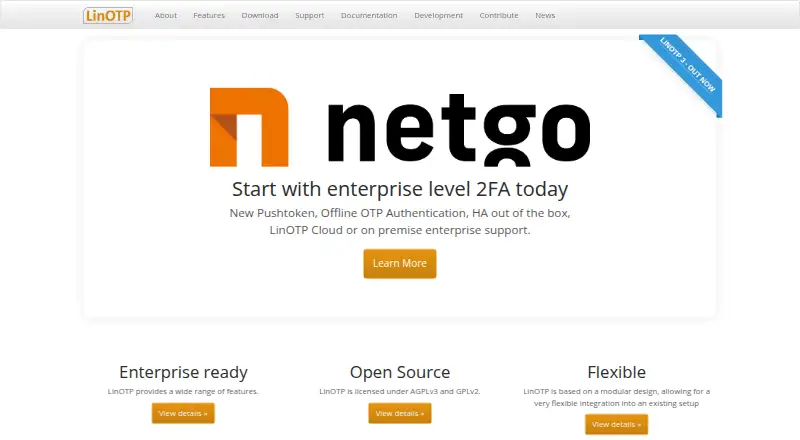
What LinOTP is
LinOTP is an open-source platform for multi-factor authentication and protecting digital identities and transactions. It supports authentication factors including HOTP, TOTP, mOTP, OCRA, SMS and email one-time passwords, push, QR, YubiKey, FIDO U2F, and WebAuthn hardware tokens. Listed integration protocols include SAML, OIDC, ADFS, and RADIUS; app integration methods also include HTTP/JSON API, PAM, OpenVPN, SSH, Apache, and WordPress. LinOTP connects to Active Directory, LDAP, and SQL databases such as PostgreSQL, MySQL, MariaDB, Oracle, and DB2. Users can register, manage, and reset tokens through a self-service portal, and hardware tokens can be automatically resynchronized. The maker describes offline authentication for Windows users without a permanent internet connection. Deployment options include a virtual appliance for common hypervisors and containers for Kubernetes and other orchestration platforms. LinOTP is available under AGPLv3 and GPLv2, and the maker says it can scale from small installations to enterprises with thousands of users and distributed setups.
Who it suits
LinOTP suits organizations seeking an open-source MFA platform with multiple token types and directory or application integrations. Its described deployment and offline-login options may also suit distributed environments and Windows users without permanent internet access.
What it does well
- Supports a wide range of authentication factors.
- Connects to Active Directory, LDAP, and SQL databases.
- Users can manage tokens through a self-service portal.
- Offers virtual-appliance and container deployment.
- Open-source software is offered under AGPLv3 and GPLv2.
What to know first
- LinOTP 3 Debian packages are listed for Debian 10 Buster.
- RPM packages are currently listed only for LinOTP 2.
- Other Linux distributions may require source or pip installation.
Limits
LinOTP 3 Debian packages are listed for Debian 10 Buster, while RPM packages are currently available only for LinOTP 2. Other Linux distributions may use source or pip installation.
Plans
| Plan | Billed and limits | Price |
|---|---|---|
| LinOTP open-source software | AGPLv3 and GPLv2; no public software price stated | Free |
| LinOTP demo license | Free demo license for the LinOTP MFA platform; request and arrange the test deployment with the LinOTP team | Free |
As linotp.org lists them, read 4 Oct 2026. The maker's own page has the final word.
Getting started
- Visit the LinOTP website.
- Choose the open-source software or request a free demo license from the LinOTP team.
- For a deployment, select a virtual appliance for a common hypervisor or containers for Kubernetes and other orchestration platforms.
- For LinOTP 3 packages, use Debian 10 Buster; other Linux distributions may use source or pip installation.
- Connect the required directories, databases, protocols, or applications.
LinOTP is a self-managed multi-factor authentication platform for organizations that need to connect varied users, directories, and applications. Its open-source licensing, broad factor support, and deployment options make it a strong fit for teams that can operate their own authentication infrastructure.
Overview
Developed and maintained by netgo software GmbH, LinOTP is intended to scale from small installations to enterprises with thousands of users, including distributed environments. It brings multiple authentication methods and integration routes together, which can suit organizations with a mixed application estate rather than a single access pattern.
LinOTP describes its architecture as auditable and its signed audit log as tamper-proof, recording authentication and management actions. The product page also cites support for requirements associated with GDPR, ISO 27001, NIS2, BSI IT-Grundschutz, PSD2, and PCI-DSS. These are useful signals for organizations with formal security obligations, but they do not substitute for evaluating a particular deployment against those obligations.
Key features
Factors and integrations
Factor choices include HOTP, TOTP, mOTP, OCRA, SMS and email OTP, push, QR, YubiKey, FIDO U2F, WebAuthn, static and daily passwords, and remote or forwarding options. That range can accommodate users and systems with different authentication needs; it also gives administrators a wider set of methods to manage than a product focused on one factor.
Integration options include SAML, OIDC, ADFS, RADIUS, an HTTP/JSON API, PAM, OpenVPN, SSH, Apache, and WordPress. LinOTP can connect to Active Directory and LDAP, as well as SQL databases including PostgreSQL, MySQL, MariaDB, Oracle, and DB2. This breadth is particularly relevant when MFA must span both directory-backed users and varied services.
Administration and deployment
A self-service portal lets users register, manage, and reset tokens, while hardware tokens can be automatically resynchronized. These features can reduce routine administration, though they do not remove the need for an organization to manage its authentication service.
Deployment choices include a virtual appliance for common hypervisors and containers for Kubernetes and other orchestration platforms. LinOTP also describes offline authentication for Windows users without a permanent internet connection, which may help in environments where connectivity is intermittent. Installation compatibility deserves particular attention: the LinOTP 3 download page lists Debian 10 Buster packages, says RPM packages are currently available only for LinOTP 2, and points users of other Linux distributions to source or pip installation.
Pricing
LinOTP offers open-source software at no cost under AGPLv3 and GPLv2, with no public software price stated. It also offers a free demo license for the MFA platform; users must request it and arrange a test deployment with the LinOTP team. The demo is therefore a route to a planned evaluation, not an instant self-serve trial.
Organizations seeking operational assistance can consider paid support offerings, including SLA support contracts, software subscriptions, integration services, possible 24/7 emergency response, SaaS, training, and remote or on-site help. Those services have custom pricing. The open-source option suits teams able to run the platform themselves; teams that need contracted assistance should budget for a separate paid arrangement.
Platforms
LinOTP lists Android, iOS, Linux, Windows, web, API, and self-hosted platforms. Its virtual appliance and container options add deployment flexibility, while the Linux package constraints make distribution choice a practical factor in planning.
Who it's for
LinOTP is best suited to organizations that want control over their MFA deployment and need to combine several authentication factors, directory sources, and integration protocols. Its stated scale and distributed deployment support make it relevant beyond small teams, provided they have the operational capacity or budget for paid assistance.
It is less compelling for teams looking for a ready-to-use hosted service with a straightforward published per-user price, or for administrators whose required Linux distribution depends on a ready-made LinOTP 3 package. Those organizations should check the installation path and support arrangement before committing.
Pros and cons
- Pros: A broad selection of authentication factors, protocols, and directory connections can serve varied environments through one platform.
- Pros: Self-service token management, hardware-token resynchronization, offline Windows authentication, and multiple deployment formats address practical administration and access needs.
- Pros: Open-source licensing and an auditable architecture offer organizations visibility into the software, while the signed audit log records authentication and management activity.
- Cons: Linux installation paths vary: LinOTP 3 packages are listed for Debian 10, while RPM packages are available only for LinOTP 2.
- Cons: A demo requires contacting the team to arrange a deployment, and operational support services carry custom pricing rather than a published rate.
Alternatives
Compare multi-factor authentication software if you want to assess a wider range of products before choosing an approach.
- LoginTC is worth considering for a small deployment that fits its Cloud Starter plan, which is free for up to 3 users and includes VPN and firewall protection.
- miniOrange Multi-Factor Authentication may suit individuals looking to start with its free plan, or teams considering a paid option from $2 a month.
- Duo Mobile is another option for a small free deployment, with Duo Free covering 10 users; its paid Duo Essentials plan is $3 a month.
- Rublon Authenticator offers a free plan for 1 user and a Business plan at $2 a month with a 15-license minimum.
- Deepnet DualShield MFA Platform is an alternative with on-premises or private-cloud deployment and quote-based pricing.
- HYPR Authenticate is an alternative with an Identity Assurance Access plan at $3 a month.
- Imprivata Enterprise Access Management is an alternative with modular licensing, where Core Access is required for all deployments.
- Secret Double Octopus is an alternative with Starter and Enterprise plans covering different application and workforce needs.
Verdict
Choose LinOTP if your organization wants open-source MFA with extensive factor, directory, and protocol coverage and can take responsibility for deployment and operation. Its flexibility is the main reason to choose it; distribution-specific installation constraints and the need for paid support when operations require it are the main reasons to look elsewhere.
Verdict
LinOTP offers a broad range of authentication methods, integrations, and deployment choices as open-source software. Check the listed installation constraints for the version and Linux distribution you plan to use.
Questions
Is LinOTP free?
The open-source software costs nothing and is offered under AGPLv3 and GPLv2. A free demo license is also available by request and arrangement with the LinOTP team.
Who develops LinOTP?
LinOTP is developed and maintained by netgo software GmbH.
Which authentication protocols does it list?
The listed protocols include SAML, OIDC, ADFS, and RADIUS.
Which platforms are listed?
The listed platforms are Android, API, iOS, Linux, self-hosted, web, and Windows.
Can users manage their own tokens?
Yes. Users can register, manage, and reset tokens through a self-service portal, and hardware tokens can be automatically resynchronized.
How can LinOTP be deployed?
The maker lists a virtual appliance compatible with common hypervisors and container deployment for Kubernetes and other orchestration platforms.
Facts from LinOTP's own pages
- Audit
- The LinOTP site says its signed audit log records authentication and management actions and is tamper-proof. · linotp.org, 4 Oct 2026
- Deployment
- The maker lists a virtual appliance compatible with common hypervisors and container deployment for Kubernetes and other orchestration platforms. · linotp.de, 4 Oct 2026
- Directories
- LinOTP connects to Active Directory, LDAP, and SQL databases including PostgreSQL, MySQL, MariaDB, Oracle, and DB2. · linotp.de, 4 Oct 2026
- Founded
- The company page says the LinOTP team has developed solutions since 2012; it does not state an exact founding year. · linotp.de, 4 Oct 2026
- Headquarters
- The netgo software GmbH legal notice gives its address as Sachsendamm 63-64, 10829 Berlin, Germany. · linotp.de, 4 Oct 2026
- Maker
- LinOTP is developed and maintained by netgo software GmbH. · linotp.de, 4 Oct 2026
- Notable install limits
- The LinOTP 3 download page lists Debian 10 Buster packages, says RPM packages are currently available only for LinOTP 2, and notes other Linux distributions may use source or pip installation. · linotp.org, 4 Oct 2026
- Offline login
- The maker describes offline authentication for Windows users without a permanent internet connection. · linotp.de, 4 Oct 2026
- Protocols
- The product page lists SAML, OIDC, ADFS, and RADIUS among its integration protocols. · linotp.de, 4 Oct 2026
- Purpose
- LinOTP is an open-source platform for strong multi-factor authentication and protecting digital identities and transactions. · linotp.de, 4 Oct 2026
- Scale
- The maker says LinOTP scales from small installations to enterprises with thousands of users and supports distributed setups. · linotp.de, 4 Oct 2026
- Security and compliance
- The product page says its open-source architecture is auditable and lists support for GDPR, ISO 27001, NIS2, BSI IT-Grundschutz, PSD2, and PCI-DSS requirements. · linotp.de, 4 Oct 2026
- Self-service
- Users can register, manage, and reset tokens through a self-service portal, and hardware tokens can be automatically resynchronized. · linotp.de, 4 Oct 2026
- Support
- Paid support offerings include support contracts with SLAs, software subscriptions, integration services, possible 24/7 emergency response, SaaS, training, and remote or on-site help. · linotp.de, 4 Oct 2026
- Tokens
- Supported token options include OATH TOTP/HOTP, push, QR, SMS, email, and hardware tokens including FIDO U2F and WebAuthn. · linotp.de, 4 Oct 2026