Freedom251 › Operating Systems
Fedora Linux
What Fedora Linux is
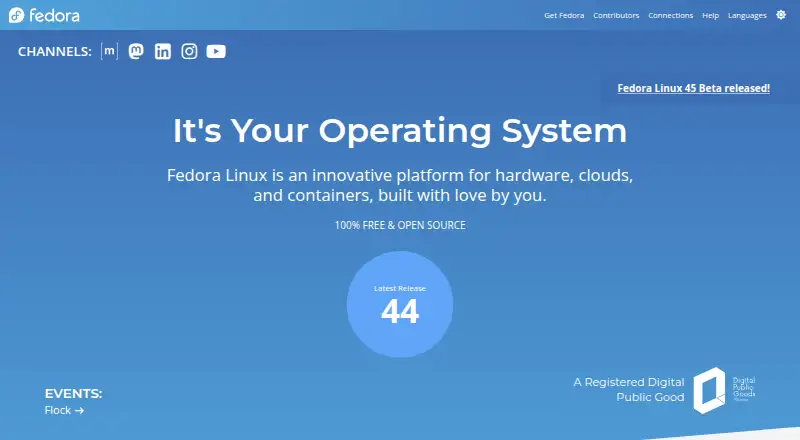
Fedora Linux is a free, open-source platform for hardware, clouds, and containers, with variants for desktops, laptops, servers, cloud virtual machines, and IoT devices. Fedora Workstation is a desktop operating system built around GNOME, with tools for developers and makers. It includes container tools from the Red Hat ecosystem and access to the Red Hat container registry without setup. Fedora Server includes libvirt and Podman for virtual machines and containers, the WildFly application runtime, and Cockpit for remote administration from first boot. Fedora Cloud supplies images for public and private clouds, including instances on AWS and Azure. Fedora CoreOS is a minimal system that updates automatically for containerized workloads. Users can install applications from Fedora repositories, Flathub, or other sources, using RPM package management and DNF. Fedora images use checksums and Fedora Project OpenPGP signatures, and package tools verify signatures before installation. The project provides documentation, a community Discussion forum, and Fedora Chat. Fedora supports x86_64 and aarch64 architectures; CoreOS also supports s390x. Workstation versions receive updates for approximately 13 months, and the project supports physical installation, live USB use, cloud images, and container base images.
Who it suits
Fedora Linux suits people who want a free, open-source operating system for a desktop, server, cloud environment, or container workload. Workstation serves developers and makers, while Server, Cloud, and CoreOS provide options for virtualization, cloud instances, and automatically updating container deployments.
What it does well
- Free and open source.
- Workstation includes GNOME and developer and maker tools.
- Server includes Cockpit for remote administration from first boot.
- Cloud images can launch on AWS and Azure.
- Applications are available from Fedora repositories, Flathub, or elsewhere.
- Images and packages use signature verification.
What to know first
- Workstation versions receive updates for approximately 13 months.
- Most variants recommend 40GB of disk space and 4GB of RAM.
- Support for s390x is listed for CoreOS only.
Limits
Most Fedora variants recommend 40GB of disk space and 4GB of RAM. Fedora Workstation versions are updated for approximately 13 months; each release is maintained until one month after two subsequent releases.
Plans
| Plan | Billed and limits | Price |
|---|---|---|
| Fedora Linux | Most variants recommend 40GB disk space and 4GB RAM | Free |
As fedoraproject.org lists them, read 1 Oct 2026. The maker's own page has the final word.
Getting started
- Visit the Fedora website and choose a variant for your intended device or deployment.
- Choose physical installation, live USB use, a cloud image, or a container base image.
- For desktop applications, use Fedora repositories, Flathub, or another source.
- Use DNF or graphical update tools to manage packages and updates.
Verdict
Choose Fedora Linux if you want a free, open-source platform with distinct options for desktop, server, cloud, and container use. Consider the Workstation update period when choosing it for a desktop, and confirm that your device uses a supported CPU architecture.
Questions
How much does Fedora Linux cost?
Fedora Linux is free. Its listed plan costs nothing.
Is Fedora Linux open source?
Yes. Fedora Linux is described as free and open source.
Which devices and architectures does Fedora support?
Device types include desktop computers, laptops, servers, cloud virtual machines, and IoT devices. Fedora supports x86_64 and aarch64; Fedora CoreOS also supports s390x.
What are the main Fedora variants?
Fedora Workstation is for desktop use; Fedora Server provides server tools; Fedora Cloud supplies cloud images; and Fedora CoreOS is for containerized workloads.
Where can I install applications from?
Applications can be installed from Fedora repositories, Flathub, or other sources.
Who sponsors Fedora?
Red Hat, Inc. is Fedora's primary sponsor and provides employee support, infrastructure, hardware, bandwidth, event funding, and legal counsel.
Facts from Fedora Linux's own pages
- Cloud
- Fedora Cloud provides images for public and private cloud use and can launch instances on AWS and Azure. · fedoraproject.org, 1 Oct 2026
- Community support
- Fedora provides documentation, a community Discussion forum, and Fedora Chat for users and developers. · fedoraproject.org, 1 Oct 2026
- Container workloads
- Fedora CoreOS is an automatically updating, minimal operating system for running containerized workloads securely and at scale. · fedoraproject.org, 1 Oct 2026
- Desktop support
- Fedora Workstation versions are updated for approximately 13 months, with quick and easy upgrades between versions. · fedoraproject.org, 1 Oct 2026
- Developer tools
- Fedora Workstation includes container tools from the Red Hat ecosystem and provides access to the Red Hat container registry without setup. · fedoraproject.org, 1 Oct 2026
- Download integrity
- Fedora images use checksums and Fedora Project OpenPGP signatures to verify security and integrity. · fedoraproject.org, 1 Oct 2026
- Origin
- Fedora Core 1 was released on November 5, 2003, marking the start of the Fedora Project. · fedoraproject.org, 1 Oct 2026
- Package security
- Fedora stable RPM packages are signed with Fedora OpenPGP keys, and dnf and graphical update tools verify signatures before installation. · fedoraproject.org, 1 Oct 2026
- Primary sponsor
- Red Hat, Inc. is the primary sponsor and provides Fedora with employee support, infrastructure, hardware, bandwidth, event funding, and legal counsel. · fedoraproject.org, 1 Oct 2026
- Server
- Fedora Server includes libvirt and Podman for virtual machines and containers, plus the WildFly application runtime. · fedoraproject.org, 1 Oct 2026
- Server administration
- Fedora Server includes Cockpit, a remote server administration tool ready to use on first boot. · fedoraproject.org, 1 Oct 2026
- Software sources
- Fedora users can install desktop applications from Fedora repositories, Flathub, or elsewhere. · fedoraproject.org, 1 Oct 2026
- What it is
- Fedora Linux is an innovative platform for hardware, clouds, and containers and is 100% free and open source. · fedoraproject.org, 1 Oct 2026
- Workstation
- Fedora Workstation is a polished desktop operating system featuring GNOME Desktop and tools for developers and makers. · fedoraproject.org, 1 Oct 2026
Where Fedora Linux stands on Freedom251
- Operating Systems#15 of 42