Freedom251 › Server Operating System
Debian
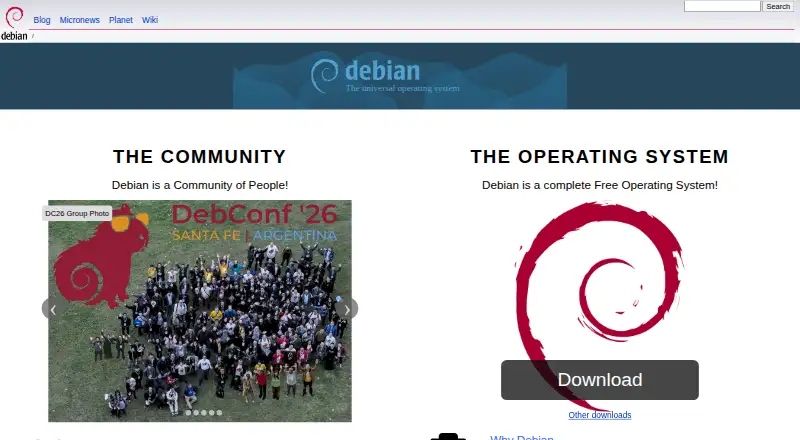
What Debian is
Debian is a free operating system created by the Debian Project, an association of individuals. Debian systems use either the Linux or FreeBSD kernel and include over 70,000 packages managed through APT. Installation choices include a live system with the Calamares installer and an installer with options such as automated network installation. It supports processor architectures including amd64, i386, ARM variants, POWER, IBM System Z, and RISC-V. Alongside stable, Debian offers testing and unstable releases for users who want newer software. It supports release upgrades and package updates, and the unattended-upgrades package can install security and other updates automatically. Debian's free Long Term Support extends stable releases to at least five years. Official cloud images are available, and Debian can also run in virtual machines or containers. Help is available through documentation, mailing lists, IRC, and consultants. Debian notes that hardware from companies that do not publish specifications may not work with GNU/Linux.
Who it suits
Debian suits people and organizations looking for a free operating system for computers or cloud environments. Its range of architectures and release choices can serve users across personal, academic, scientific, and public-sector settings.
What it does well
- Free to use and redistribute.
- Includes over 70,000 packages managed with APT.
- Offers stable, testing, and unstable releases.
- Free Long Term Support extends stable releases to at least five years.
- Official cloud images and virtual-machine use are available.
What to know first
- Some hardware may not work if makers do not publish specifications.
- Testing and unstable are separate release choices from stable.
Plans
| Plan | Billed and limits | Price |
|---|---|---|
| Debian | Free operating system · official distribution packages are free to use and redistribute | Free |
As debian.org lists them, read 30 Sept 2026. The maker's own page has the final word.
Getting started
- Visit the Debian website.
- Choose a supported computer or cloud virtual machine.
- Select a live system or Debian installer for installation.
- Use APT to install packages and manage distribution upgrades.
Verdict
Debian offers a large package collection, broad architecture support, and multiple installation and deployment options at no cost. Check hardware compatibility and select a release track that fits your need for stability or newer software.
Questions
How much does Debian cost?
The Debian plan is free. Official distribution packages are free to use and redistribute.
Does Debian offer a free plan or trial?
Debian is free to use. No free trial is offered.
Which platforms and processor architectures does Debian support?
It is available for Linux and self-hosted use, including personal computers and cloud virtual machines. Supported architectures include amd64, arm64, armhf, ppc64el, riscv64 and s390x; i386 supports 32-bit software on amd64, and additional ARM variants are listed.
Is Debian open source?
Debian is a free operating system created by the Debian Project, and its official distribution packages are free to use and redistribute.
How long is Debian supported?
The listed Debian 13 lifecycle is five years: full Debian support through August 9, 2028, followed by LTS through June 30, 2030.
Where can users get help with Debian?
Support channels include Debian documentation, mailing lists, IRC and hired consultants.
Facts from Debian's own pages
- Automatic updates
- The unattended-upgrades package can keep a computer current with security and other updates automatically. · debian.org, 30 Sept 2026
- Cloud and virtualization
- Official cloud images are available for major cloud platforms, and Debian can also run in desktop virtual machines or containers. · debian.org, 30 Sept 2026
- Founded
- 1993 · debian.org, 28 Sept 2026
- Installer
- Debian offers a live system with the Calamares installer and an installer with options including automated network installation. · debian.org, 30 Sept 2026
- Intended users
- Debian describes its uses across laptops, supercomputers, stock exchanges, automotive, academic, scientific, and public-sector settings. · debian.org, 30 Sept 2026
- Kernel support
- Debian systems currently use the Linux kernel or the FreeBSD kernel. · debian.org, 30 Sept 2026
- Long-term support
- Debian's free Long Term Support extends stable releases to at least five years; commercial Extended LTS covers a limited set of packages beyond five years. · debian.org, 30 Sept 2026
- Notable limitation
- Debian says hardware from companies that do not publish specifications may not work with GNU/Linux. · debian.org, 30 Sept 2026
- Release choices
- Alongside stable, Debian offers testing and unstable releases for users seeking newer software versions. · debian.org, 30 Sept 2026
- Security
- Debian coordinates security advisories with other free software vendors, and many advisories are published the same day a vulnerability becomes public. · debian.org, 30 Sept 2026
- Security formats
- Debian Security Advisories are CVE-compatible, and Debian publishes security information using OVAL. · debian.org, 30 Sept 2026
- Software collection
- Debian comes with over 70,000 packages, the APT package manager, and utilities for managing packages across computers. · debian.org, 30 Sept 2026
- Support channels
- Users can get help from Debian documentation, mailing lists, IRC, or hired consultants. · debian.org, 30 Sept 2026
- Supported architectures
- Debian supports architectures including amd64, i386, ARM variants, POWER, IBM System Z, and RISC-V. · debian.org, 30 Sept 2026
- Upgrade support
- Debian supports upgrades to a new release and updates to individual packages. · debian.org, 30 Sept 2026
- What it is
- Debian is a free operating system created by the Debian Project, an association of individuals. · debian.org, 30 Sept 2026
Where Debian stands on Freedom251
- Server Operating System#5 of 29
- Operating Systems#12 of 42