Freedom251 › Operating Systems
Gentoo Linux
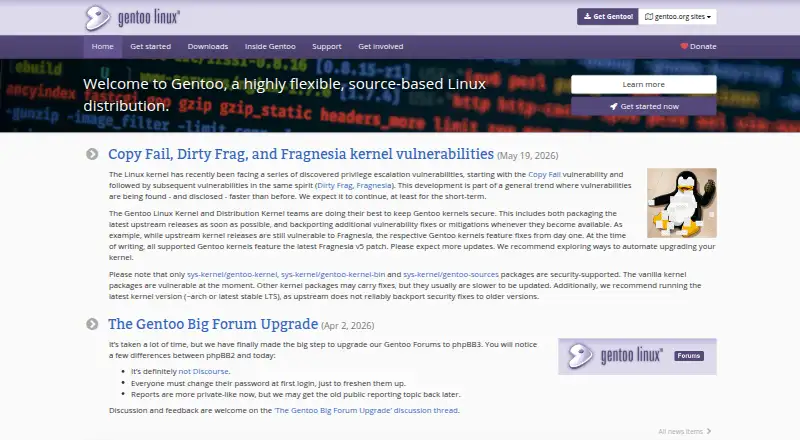
What Gentoo Linux is
Gentoo Linux is a free operating system based on Linux for desktop PCs, servers, embedded systems, small systems, and single-board computers. It can be adapted to different uses, with users choosing system settings through text files and tuning package or system-wide behavior with USE flags. Gentoo usually installs packages by compiling source code from upstream projects, while also allowing precompiled binary packages. Portage and emerge provide package installation and updates, and the ebuild repository supports both build approaches.
Gentoo does not require a particular system profile or desktop environment. OpenRC and systemd are supported init system options. Installation follows the stage3 method; Gentoo also provides minimal installation CDs and a LiveGUI USB image with KDE, built weekly for amd64. The system is available for many architectures, including x86, amd64, ARM, MIPS, PowerPC, SPARC, Alpha, IA64, HPPA, PPC64, ARM64, and 64-bit RISC-V. Stage downloads may include checksums and PGP signatures that users can verify. Gentoo maintains a security database with distribution advisories and a confidential route for reporting vulnerabilities. The operating system is free, with a listed price of $0.
Who it suits
Gentoo suits users who want to configure an operating system for particular applications, choose an init system and desktop environment, and select source or binary package installation. Its architecture and device support also make it relevant to desktop, server, embedded, and single-board computer deployments.
What it does well
- Free operating system with a listed price of $0.
- Supports source builds and precompiled binary packages.
- Users can tune package or system behavior with USE flags.
- Supports OpenRC and systemd init systems.
- Available across many architectures and device types.
- Maintains distribution security advisories and confidential vulnerability reporting.
What to know first
- Installation is supported through the stage3 method only.
- LiveGUI USB image is built for amd64.
- Package configuration is handled through text files.
Plans
| Plan | Billed and limits | Price |
|---|---|---|
| Gentoo Linux | Free operating system | Free |
As gentoo.org lists them, read 11 Oct 2026. The maker's own page has the final word.
Getting started
- Visit https://www.gentoo.org/.
- Choose a device and architecture supported by Gentoo.
- Use the stage3 installation method.
- Select minimal installation media or the LiveGUI USB image with KDE.
- Verify available checksums or PGP signatures for stage downloads.
Verdict
Choose Gentoo if you want control over package builds, system settings, and desktop or init choices across a wide range of architectures. Look elsewhere if you need a supported installation method other than stage3.
Questions
How much does Gentoo Linux cost?
Gentoo is free. Its listed price is free.
Does Gentoo have a free plan or trial?
Gentoo is a free operating system; no free trial is offered.
Which platforms and devices does Gentoo support?
It is available for Linux and self-hosted installations, including desktop PCs, servers, embedded and small systems, and single-board computers.
Which CPU architectures are supported?
Named architectures include Alpha, AMD64, ARM, ARM64, HPPA, IA64, MIPS, PPC, PPC64, 64-bit RISC-V, SPARC64, and x86.
Can Gentoo install binary packages?
Yes. Gentoo supports compiling source packages and installing precompiled binary packages.
Which init systems can I use?
OpenRC and systemd are both supported init system choices.
Facts from Gentoo Linux's own pages
- Init systems
- The handbook identifies OpenRC and systemd as fully supported init system choices. · wiki.gentoo.org, 11 Oct 2026
- Installation media
- Gentoo provides minimal installation CDs and a LiveGUI USB image with a KDE desktop environment. · wiki.gentoo.org, 11 Oct 2026
- Integrity verification
- Stage downloads may include cryptographic checksums and PGP signatures that users can verify. · wiki.gentoo.org, 11 Oct 2026
- LiveGUI architecture
- The handbook says the Gentoo LiveGUI USB image is built weekly for amd64. · wiki.gentoo.org, 11 Oct 2026
- Package configuration
- Users configure Gentoo through text files and can tune system functionality with package or system-wide USE flags. · wiki.gentoo.org, 11 Oct 2026
- Package contribution
- The handbook recommends submitting new packages to GURU before they may be added to the official repository with a developer sponsor. · wiki.gentoo.org, 11 Oct 2026
- Profiles and desktop choice
- Gentoo's development philosophy avoids requiring a particular system profile or desktop environment. · wiki.gentoo.org, 11 Oct 2026
- Security advisories
- Gentoo maintains a security database with distribution advisories and information for reporting vulnerabilities confidentially. · security.gentoo.org, 11 Oct 2026
- Source builds
- Gentoo installs packages by compiling source code from upstream projects, and also supports precompiled binary packages. · wiki.gentoo.org, 11 Oct 2026
- Stage 3 installation
- The handbook states that a stage3 installation is the only supported installation method. · wiki.gentoo.org, 11 Oct 2026
- Supported architectures
- The handbook says Gentoo is available for many computer architectures and names x86, amd64, sparc, PowerPC, MIPS, and ARM among them. · wiki.gentoo.org, 11 Oct 2026
- What it is
- Gentoo is a free operating system based on Linux that can be optimized and customized for different applications and needs. · wiki.gentoo.org, 11 Oct 2026
Where Gentoo Linux stands on Freedom251
- Operating Systems#17 of 42