Freedom251 › OS Deployment Software

Cobbler
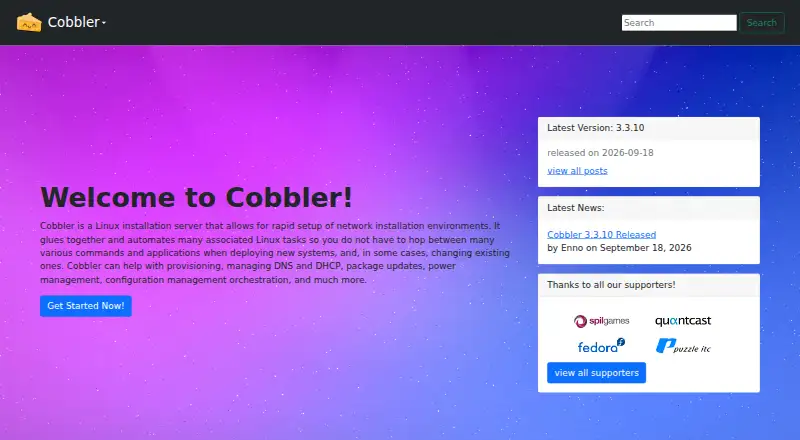
What Cobbler is
Cobbler is a Linux installation server for administrators building and automating network installation environments. It supports PXE deployments, virtualization using Xen, QEMU/KVM, or VMware, and reinstalling existing Linux systems. Its tools can coordinate DNS, DHCP, package updates, power management, and configuration management orchestration. Administrators can work through a command line, WebUI, Python API, or XML-RPC API.
For automated operating system installs, Cobbler supports AutoYaST for SUSE and openSUSE, Kickstart, and Preseed for Debian and Ubuntu. Templates and reusable snippets help generate installation files and manage services such as DNS and DHCP. It can connect to configuration management systems including cfengine3, Puppet, bcfg2, and Chef, or use its own lightweight option. Install Cobbler through Linux distribution packages or from source; pip installation is documented but not recommended. Known package options include Fedora, CentOS Stream, AlmaLinux/Rocky Linux, openSUSE Leap, and Tumbleweed.
Cobbler is free, self-hosted Linux server software with API access. It requires Python 3, and server setup calls for knowledge of Apache configuration, certificates, and server administration. The project describes it as suitable for small and large installations and says it is used by companies, universities, and government organizations. Its security guidance highlights its broad control over network services and the need to protect the server.
Who it suits
Cobbler suits administrators who need to automate Linux network installations, PXE deployments, virtualization, or system reinstalls across small or large environments. It is a fit for teams comfortable administering a Linux server and protecting services with broad network control.
What it does well
- Free, self-hosted Linux server software.
- Supports PXE, virtualization, and Linux system reinstallation.
- Offers command line, WebUI, Python, and XML-RPC interfaces.
- Supports AutoYaST, Kickstart, and Preseed automated installs.
- Integrates with cfengine3, Puppet, bcfg2, and Chef.
- Can be installed from distribution packages or source.
What to know first
- Server setup requires Python 3 and Linux administration knowledge.
- The security policy says there is no SELinux or AppArmor profile.
- Only the current version can be supported; older listed releases are end of life.
- Imported or manually added distributions need kernel and initrd sources to remain available.
Limits
Cobbler is free, with no free-plan quota stated. The current version is the only one the project says it can support; Cobbler 3.3.x has security-only support, while older listed versions are end of life. Imported or manually added distributions require their kernel and initrd sources to remain available or the daemon will not start.
Plans
| Plan | Billed and limits | Price |
|---|---|---|
| Cobbler | Linux server software · self-hosted | Free |
As cobbler.github.io lists them, read 5 Oct 2026. The maker's own page has the final word.
Getting started
- Visit the Cobbler website and installation documentation.
- Choose a supported Linux distribution package route or install from source.
- Set up a Linux server with Python 3 and knowledge of Apache configuration and certificates.
- Configure Cobbler and protect the server, given its control over DHCP and TFTP.
- Use the command line, WebUI, Python API, or XML-RPC API to manage installations.
Verdict
Choose Cobbler if you need a free Linux server to automate network installations and can manage its server and security requirements. Its multiple deployment methods, installation interfaces, and configuration management integrations suit varied environments. Look elsewhere if you need a supported older release or cannot keep distribution kernel and initrd sources available.
Questions
How much does Cobbler cost?
Cobbler is free Linux server software, listed as free.
Is Cobbler self-hosted?
Yes. The listed platforms include Linux and self-hosted deployment.
What installation methods does Cobbler support?
It supports PXE deployment, virtualization with Xen, QEMU/KVM, or VMware, and reinstalling existing Linux systems.
Which automated installation formats does it support?
Cobbler supports AutoYaST for SUSE and openSUSE, Kickstart, and Preseed for Debian and Ubuntu.
Can Cobbler integrate with configuration management systems?
Yes. Named integrations include cfengine3, Puppet, bcfg2, and Chef; it also has an internal lightweight system.
What should administrators know about its security and maintenance?
The security policy says Cobbler has no SELinux or AppArmor profile and advises protecting it because it manages DHCP and TFTP with broad network control. The project says only the current version can be supported.
Facts from Cobbler's own pages
- Autoinstall
- It supports AutoYaST for SUSE and openSUSE, Kickstart, and Preseed for Debian and Ubuntu automated installations. · cobbler.readthedocs.io, 5 Oct 2026
- Automation
- Cobbler can help manage DNS, DHCP, package updates, power management and configuration management orchestration. · cobbler.github.io, 5 Oct 2026
- Install options
- Cobbler can be installed through Linux distribution packaging systems or from source; the documentation also describes pip installation as not recommended. · cobbler.readthedocs.io, 5 Oct 2026
- Integrations
- Cobbler can integrate with external configuration management systems including cfengine3, Puppet, bcfg2 and Chef, and also has an internal lightweight system. · cobbler.readthedocs.io, 5 Oct 2026
- Intended users
- The project describes Cobbler as suitable for small and large installations and says it is used by companies, universities and government organizations. · cobbler.github.io, 5 Oct 2026
- Interfaces
- Cobbler provides a command line interface, a WebUI and Python and XML-RPC APIs. · cobbler.readthedocs.io, 5 Oct 2026
- Maintenance limits
- The security policy says only the most current version can be supported, and lists Cobbler 3.3.x as security-only support while older listed versions are end of life. · github.com, 5 Oct 2026
- Operational limit
- The limitations guide says imported or manually added distributions require their kernel and initrd sources to remain available or the Cobbler daemon will not start. · cobbler.readthedocs.io, 5 Oct 2026
- Provisioning
- It supports PXE deployments, virtualization with Xen, QEMU/KVM or VMware, and reinstallation of existing Linux systems. · cobbler.readthedocs.io, 5 Oct 2026
- Purpose
- Cobbler is a Linux installation server for setting up and automating network installation environments. · cobbler.github.io, 5 Oct 2026
- Requirements
- Cobbler requires Python 3 and its server setup requires knowledge of Apache configuration, certificates and server administration. · cobbler.readthedocs.io, 5 Oct 2026
- Security
- The security policy says Cobbler has no SELinux or AppArmor profile and advises protecting it because it manages DHCP and TFTP and has broad network control. · github.com, 5 Oct 2026
- Support
- The project directs users to its mailing list, GitHub issues and community chat for help. · cobbler.github.io, 5 Oct 2026
- Supported distributions
- The install guide lists Fedora, CentOS Stream, AlmaLinux/Rocky Linux, openSUSE Leap and Tumbleweed among distributions with known packages. · cobbler.readthedocs.io, 5 Oct 2026
- Templates
- Templates and reusable snippets can be used to generate automated installation files and manage services such as DNS and DHCP. · cobbler.github.io, 5 Oct 2026
Where Cobbler stands on Freedom251
- OS Deployment Software#5 of 29
- Bare Metal Provisioning Software#5 of 28
- IT Automation Software#16 of 77
- OS Imaging & Deployment Software#5 of 24
- Bare Metal as a Service (BMaaS) Software#3 of 12
- Data Center Automation#7 of 22