Freedom251 › Data Replication Software
Bucardo
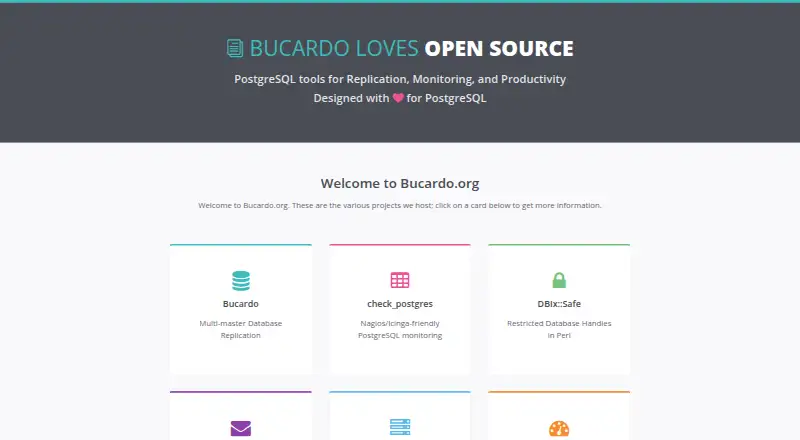
What Bucardo is
Bucardo is an asynchronous PostgreSQL replication system for copying selected data between multiple sources and targets. Users define named syncs to move specific sets of tables between a server and one or more others. It supports multi-way replication as well as one-direction master-standby setups. A Perl daemon responds to NOTIFY requests and connects to remote databases to copy data. For multi-source syncs, Bucardo can apply a standard conflict handler or a custom handler configured for each table.
The configuration and replication databases need PostgreSQL 8.1 or higher; the configuration database also requires PL/pgSQL and PL/PerlU. The daemon runs on Unix-like systems, with Linux and macOS its primary tested platforms, and it does not run natively on Windows. Bucardo can be installed from source, RPM or Debian packages, or FreeBSD Ports. It does not replicate DDL or schema changes. The project lists version 5.6.0 as its latest release. Bucardo is free and open source, under a BSD license.
Who it suits
Bucardo suits teams that need self-hosted, multi-way PostgreSQL data replication and can operate a Unix-like system. It may also fit one-direction master-standby setups, provided its database requirements and lack of schema-change replication are acceptable.
What it does well
- Supports multi-source and multi-target replication
- Offers standard or per-table custom conflict handling
- Named syncs select which tables to copy
- Free and open source under a BSD license
What to know first
- Does not replicate DDL or schema changes
- Does not run natively on Windows
- Configuration database needs PL/pgSQL and PL/PerlU
- Truncate replication fully works only for pushdelta syncs
Limits
The free plan is free and open source. Bucardo does not replicate DDL or schema changes; truncate replication requires PostgreSQL 8.4 or newer and fully works only for pushdelta syncs.
Plans
| Plan | Billed and limits | Price |
|---|---|---|
| Bucardo | Free and open source · BSD license | Free |
As bucardo.org lists them, read 9 Oct 2026. The maker's own page has the final word.
Getting started
- Visit https://bucardo.org/ for the project and its downloadable release archive.
- Choose an installation route: source, RPM or Debian package, or FreeBSD Ports.
- Use a Unix-like system such as Linux or macOS for the daemon.
- Prepare PostgreSQL 8.1 or newer for the configuration and replication databases; enable PL/pgSQL and PL/PerlU on the configuration database.
- Configure named syncs for the tables and servers to replicate.
Bucardo is an open-source, asynchronous replication system built around PostgreSQL databases. It is best suited to teams operating their own Unix-like infrastructure that need selective, multi-way data movement rather than a managed service. Its configurable synchronization and conflict handling are valuable, but schema changes and platform requirements demand careful operational planning.
Overview
Bucardo handles multi-source and multi-target replication, including one-direction master-standby arrangements. You define named syncs that copy chosen tables between a server and one or more other servers, so it can fit selective distribution patterns instead of forcing an all-database copy. That control rewards administrators who understand their data flows; it is less suitable when you want a fully managed, prescriptive replication service.
The project is licensed under BSD and is free to use. Bucardo 5.6.0 is the current published release, with a downloadable archive and signature. Usage questions, bug reports, feature requests and general discussion go through the Bucardo-general mailing list, with an IRC channel also provided. End Point Dev offers professional support, while Bucardo-announce carries release, bug and security notices.
Key features
Selective asynchronous syncs
A Perl daemon listens for PostgreSQL NOTIFY requests, then connects to remote databases to copy data. The asynchronous design suits workloads where replicas do not need every change applied immediately, while named syncs let you target specific table sets across one or many destinations.
Multi-way conflict handling
For multi-source synchronization, Bucardo can use a standard conflict handler or a custom handler assigned per table. This is a practical advantage when different tables need different resolution rules, but it puts the burden of defining safe outcomes for concurrent edits on your database team.
PostgreSQL and truncate constraints
Both the configuration database and replication databases must run PostgreSQL 8.1 or newer. The configuration database also requires PL/pgSQL and PL/PerlU. Truncate replication needs PostgreSQL 8.4 or later and is fully working only for pushdelta syncs, so teams relying on other sync types should verify behavior before designing around truncates.
Bucardo does not replicate DDL or schema changes. Table and schema migrations therefore need a separate process, making it a poor match for environments that expect structural changes to follow data automatically.
Pricing
Bucardo: free (free and open source, BSD license). There is no trial because the software itself is free. This plan fits organizations prepared to install, operate and update their own replication service. It does not provide a hosted tier or remove the Unix-like, PostgreSQL and schema-management responsibilities described above; teams wanting vendor-operated infrastructure should consider a different category of product.
Platforms
Bucardo is self-hosted and runs its daemon on Unix-like systems. It has been tested primarily on Linux and macOS and does not run natively on Windows. Installation options include source code, RPM and Debian packages, and FreeBSD Ports. The replication databases and configuration database are PostgreSQL-based, although the published supported-database list also includes Drizzle, MongoDB, MySQL, MariaDB, Oracle, Redis and SQLite.
Who it's for
Bucardo fits PostgreSQL administrators who need multi-way or master-standby replication, table-level selection and per-table conflict policies, and who can maintain a Unix-like server themselves. It is also a sensible choice when an open-source BSD license and change-data-capture capability matter. Look elsewhere if native Windows operation, automatic schema replication, synchronous guarantees or a managed deployment are requirements.
Pros and cons
Pros
- Flexible topology: Multi-source, multi-target and one-direction master-standby modes cover more than a single primary-replica pattern.
- Focused data movement: Named syncs copy selected tables, helping limit what each destination receives.
- Custom conflict policies: Handlers can be tailored per table for multi-source workloads.
- Open-source cost: The BSD-licensed software is free to run on infrastructure you control.
Cons
- No DDL replication: Schema changes must be coordinated separately.
- Unix-only daemon: Windows hosts cannot run it natively.
- Operational prerequisites: PostgreSQL version, PL/pgSQL and PL/PerlU requirements narrow deployment choices.
- Truncate caveat: Full truncate support is limited to PostgreSQL 8.4-plus environments using pushdelta syncs.
Alternatives
Data Replication Software and Database Replication Software lists provide broader choices.
- SymmetricDS is a freemium option with a free Community plan, free trial and clients spanning mobile, desktop, web and self-hosted platforms.
- MySQL is preferable when you want a database platform with replication and high-availability components, plus API, Windows and self-hosted support.
- Debezium is a free Apache-licensed distributed change-data-capture platform.
- TiCDC is a free open-source choice with no paid plans or usage caps stated.
- Amazon Database Migration Service suits teams wanting an API or web service and an AWS Free Tier with credits valid for up to 12 months.
- Artie offers a hosted/self-hosted freemium approach; its free tier allows up to 1M billable rows per month and two active pipelines.
- Couchbase XDCR is a paid web-based option for Couchbase deployments.
- Estuary provides freemium API, web and self-hosted plans, including a free tier and a $100.00-per-month pay-as-you-go plan.
Verdict
Choose Bucardo when you need free, self-hosted PostgreSQL replication with selective tables, multi-way topologies and configurable conflict rules, and your team can run a Unix-like daemon. Choose another system when native Windows support, automatic schema replication or managed operations outweigh that control.
Verdict
Bucardo provides configurable PostgreSQL replication for multi-way and master-standby setups, with conflict handling for multi-source syncs. Check its Unix-like runtime and schema-change limitation against your requirements before choosing it.
Questions
How much does Bucardo cost?
The listed Bucardo plan costs nothing. It is free and open source under a BSD license.
Which replication setups does it support?
It supports asynchronous multi-source, multi-target replication, including multi-way and one-direction master-standby replication.
Which platforms can run the daemon?
The daemon requires a Unix-like system and has been tested primarily on Linux and macOS. It does not run natively on Windows.
What PostgreSQL versions and extensions are required?
The configuration and replication databases must use PostgreSQL 8.1 or higher. The configuration database also needs PL/pgSQL and PL/PerlU.
Does Bucardo replicate schema changes?
No. Bucardo does not replicate DDL or schema changes.
Where can users get support?
The project directs community questions, bug reports, feature requests, and discussion to the Bucardo-general mailing list and an IRC channel. End Point Dev offers professional support.
Facts from Bucardo's own pages
- Community support
- The project directs usage questions, bug reports, feature requests, and general discussion to its Bucardo-general mailing list, and also provides an IRC channel. · bucardo.org, 9 Oct 2026
- Conflict handling
- For multi-source syncs, Bucardo runs a standard conflict handler or a custom handler set per table. · bucardo.org, 9 Oct 2026
- Current published release
- The project page lists Bucardo 5.6.0 as its latest version and links to a downloadable archive and signature. · bucardo.org, 9 Oct 2026
- Daemon platforms
- The daemon requires a Unix-like system, has been tested primarily on Linux and macOS, and does not run natively on Windows. · bucardo.org, 9 Oct 2026
- Data selection
- Users configure named syncs to copy specific sets of tables between a server and one or more servers. · bucardo.org, 9 Oct 2026
- How it works
- A Perl daemon listens for NOTIFY requests and connects to remote databases to copy data. · bucardo.org, 9 Oct 2026
- Installation
- Bucardo can be installed from source, with RPM or Debian packages, or through FreeBSD Ports. · bucardo.org, 9 Oct 2026
- Notable limitation
- Bucardo does not replicate DDL or schema changes. · bucardo.org, 9 Oct 2026
- PostgreSQL requirements
- The configuration database and replication databases must use PostgreSQL 8.1 or higher; the configuration database also needs PL/pgSQL and PL/PerlU. · bucardo.org, 9 Oct 2026
- Professional support
- End Point Dev offers professional support for Bucardo. · bucardo.org, 9 Oct 2026
- Purpose
- Bucardo is an asynchronous PostgreSQL replication system for multi-source, multi-target operations. · bucardo.org, 9 Oct 2026
- Replication modes
- It supports multi-source and multi-target replication, including one-direction master-standby replication. · bucardo.org, 9 Oct 2026
- Security notices
- The Bucardo-announce mailing list is used for notices about new versions, important bugs, and security warnings. · bucardo.org, 9 Oct 2026
- Truncate support
- Truncate replication requires PostgreSQL 8.4 or higher and is currently fully working only for pushdelta syncs. · bucardo.org, 9 Oct 2026
Where Bucardo stands on Freedom251
- Data Replication Software#4 of 27
- Database Replication Software#6 of 32